













This website uses cookies to help improve your user experience




Imagine this: a single platform where users stream live sports with real-time stats, binge their favorite shows across devices, and catch up on missed episodes without ever thinking about a schedule. At the same time, your team generates revenue through ads, subscriptions, and pay-per-view events. All of that is happening with the Internet Protocol Television (IPTV) engine behind it.
The streaming market is crowded and projected to grow to over 404.143 billion USD by 20351 . The platforms winning market shares aren’t just the ones with great content. They offer viewers smart delivery, monetization flexibility, and a multi-screen experience. Internet Protocol Television (IPTV) gives you all of that and more.
We’ll go over the three main types of IPTV services (live TV, VoD, and time-shifted TV) and explain how IPTV can help future-proof your platform and turn every stream into a new opportunity.
Key takeaways:
Nowadays, audiences may not care how content gets to their screens. They just want it now, in HD, on whatever device they’re using, with the ability to pause, rewind, or binge it later. That’s what IPTV is intended for.
Internet Protocol Television is TV, but smarter. It delivers content over internet networks, not outdated cables or satellites. Think live sports, on-demand series, and time-shifted TV, all streaming smoothly without the quirks of traditional broadcasting.
Unlike OTT services like Netflix, which rely on the open internet, IPTV can run on managed networks, which means more control, better quality, and fewer headaches when millions log in at once.
For content platforms, IPTV it’s a whole new way to engage and monetize. It lets you stream live events, offer a deep VoD library, and add catch-up features that today’s users expect as a baseline. Want to go multi-device? Personalize streams? Insert ads dynamically? IPTV makes all of that possible.
If you’re building the next breakout streaming platform or developing a legacy Pay TV service, IPTV gives you the tools to compete and the flexibility to grow.
So what are the types of IPTV? And how can you ride the wave instead of getting swept away? Here are the three main ones.

Let’s take a closer look at each one, diving into why they matter, how they work, and how to monetize them.

Oxagile builds for different kinds of IPTV, including VoD platforms with AI-powered personalization engines with viewer-specific carousels, segmented content suggestions, and tailored upsell prompts.
When you would like to get content streams now, live IPTV is the answer. It delivers the thrill of real-time TV: breaking news, concerts, live sports straight to users across devices, with zero need for cable, and zero patience for lag.
This IPTV kind also works well beyond entertainment. A few examples are corporate town halls and investor calls behind authentication, live shopping with clickable buy-now overlays, religious services for geographically scattered congregations, and lectures delivered to distributed cohorts.
Once the domain of telecom bundles, live IPTV may be a go-to strategy for content platforms of all sizes. Why? Because live content sparks urgency, drives spikes in viewership, and keeps audiences glued in the moment, the perfect storm for monetization.
Live IPTV starts with capturing a broadcast or on-site camera feed, then encoding and delivering it via CDNs using protocols like HLS or DASH. Adaptive bitrate streaming provides smooth performance, even on shaky networks. Behind the scenes, cloud auto-scaling and multi-CDN architecture are critical for handling massive surges in traffic, especially during peak live events.
DRM, tokenized URLs, and geo-blocking protect your premium streams from piracy and unauthorized access.
These moving parts need to work without interruption, and that’s exactly the kind of infrastructure Oxagile delivers through its custom video solutions, tailored to support real-time video delivery, monetization, and cross-device experiences at scale.
Platforms that feature live content (especially sports or news) enjoy higher session times, stronger brand loyalty, and more monetization potential.
Let’s take live sports streaming, one of IPTV’s most high-stakes use cases. To deliver that experience at scale, platforms need:
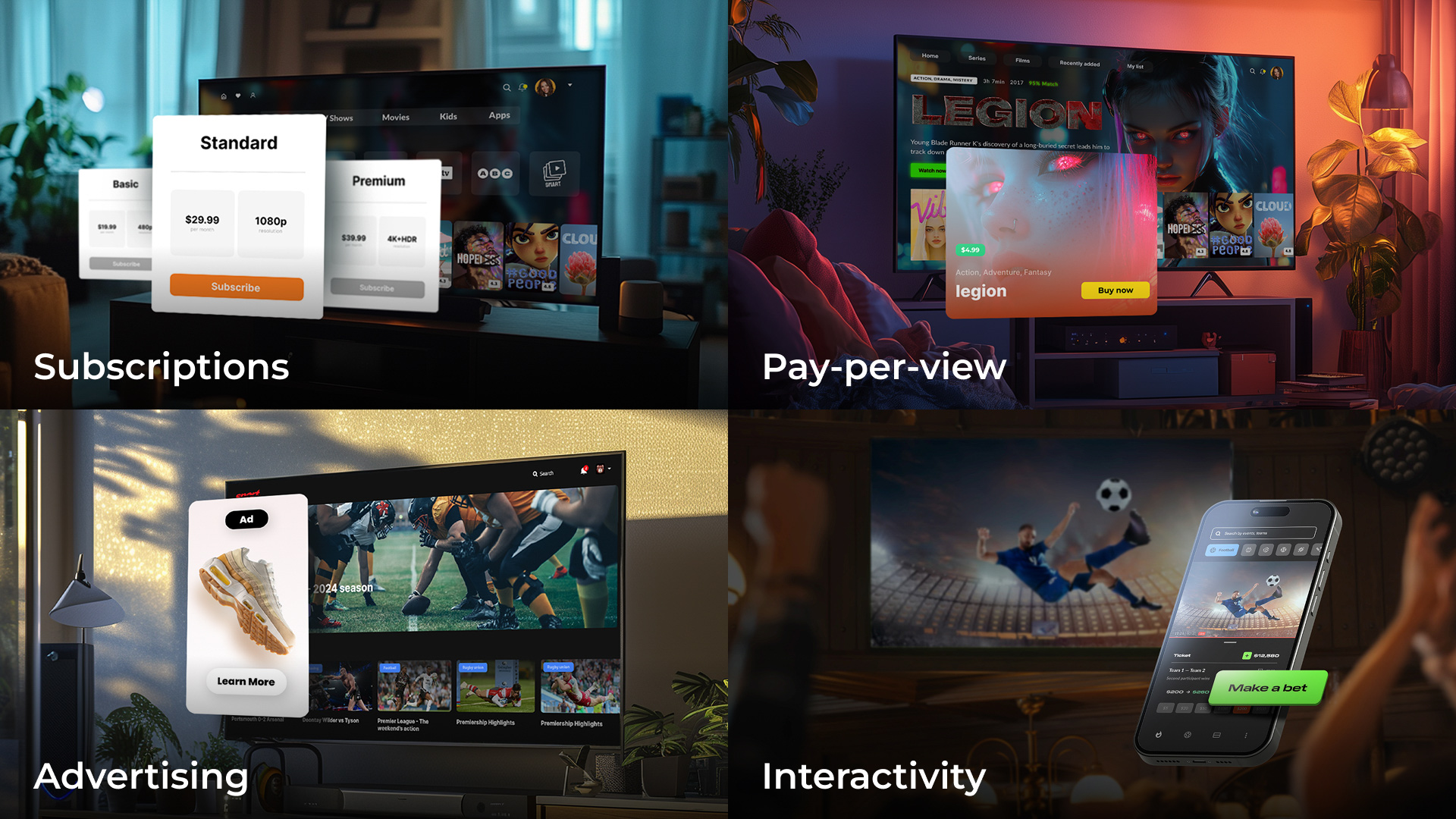
There are numerous ways to make money off IPTV live streaming:

Here’s what happens when killer content meets the right tech stack, and Oxagile’s team knows how to drive it all the way to the finish line.
A major motorsport media group came to Oxagile with a high-octane challenge: build a live and on-demand platform for racing fans around the world that could handle massive traffic, deliver flawless playback, and monetize the adrenaline.
We rolled up our sleeves and engineered a powerhouse solution using the Wowza streaming engine and multi-CDN architecture with no buffering, no delays, just smooth, real-time action across web, mobile, and set-top boxes. Adaptive bitrate streaming kept every viewer in the zone, no matter the device.
We’ve also helped build a business engine. The platform ran on a subscription video-on-demand model (SVOD) for hardcore fans, added ad-supported content for wider reach, and even offered white-label licensing to regional distributors.
And the fan experience? Next level. Live commentary, interactive chats, instant replays, and everything to keep viewers glued to the screen and coming back for more. Casual viewers may quickly become monthly subscribers.
The result? More sign-ups, more engagement, more revenue.
Capturing the moment is the essence of IPTV. VoD IPTV extends the value of content long after the live broadcast ends. It’s the cornerstone of modern streaming, the “watch anytime, anywhere” model that today’s audiences expect by default.
VoD gives users large content libraries on demand. Movies, series, niche programming, and user-generated content are available whenever viewers want to watch.
Originally bundled into IPTV packages by telcos, VoD has grown into a core offering for any serious content platform as a flexible monetization powerhouse.
The model extends easily into adjacent markets: fitness platforms selling on-demand class libraries, e-learning catalogs with progress tracking, curated kids’ services with age gating, and in-room entertainment for hotels, cruise ships, and airlines.
VoD content is uploaded, encoded, and stored in the cloud, organized through a content management system, and streamed via CDN on demand. Adaptive bitrate streaming enables smooth playback, while DRM secures premium titles.
Media asset management keeps libraries searchable and scalable. Popular features include offline viewing, watchlists, resume playback, and increasingly, hyper-personalized recommendations.
Unlike live streams, VoD titles have a long-term shelf life, viewable again and again by new users over time. That’s endless engagement potential. VoD supports binge behavior, ad inventory growth, and smart segmentation, all of which lead to better retention and revenue.
But expectations are sky-high. You’re competing with the biggest names in streaming, so your VoD offering needs to deliver:
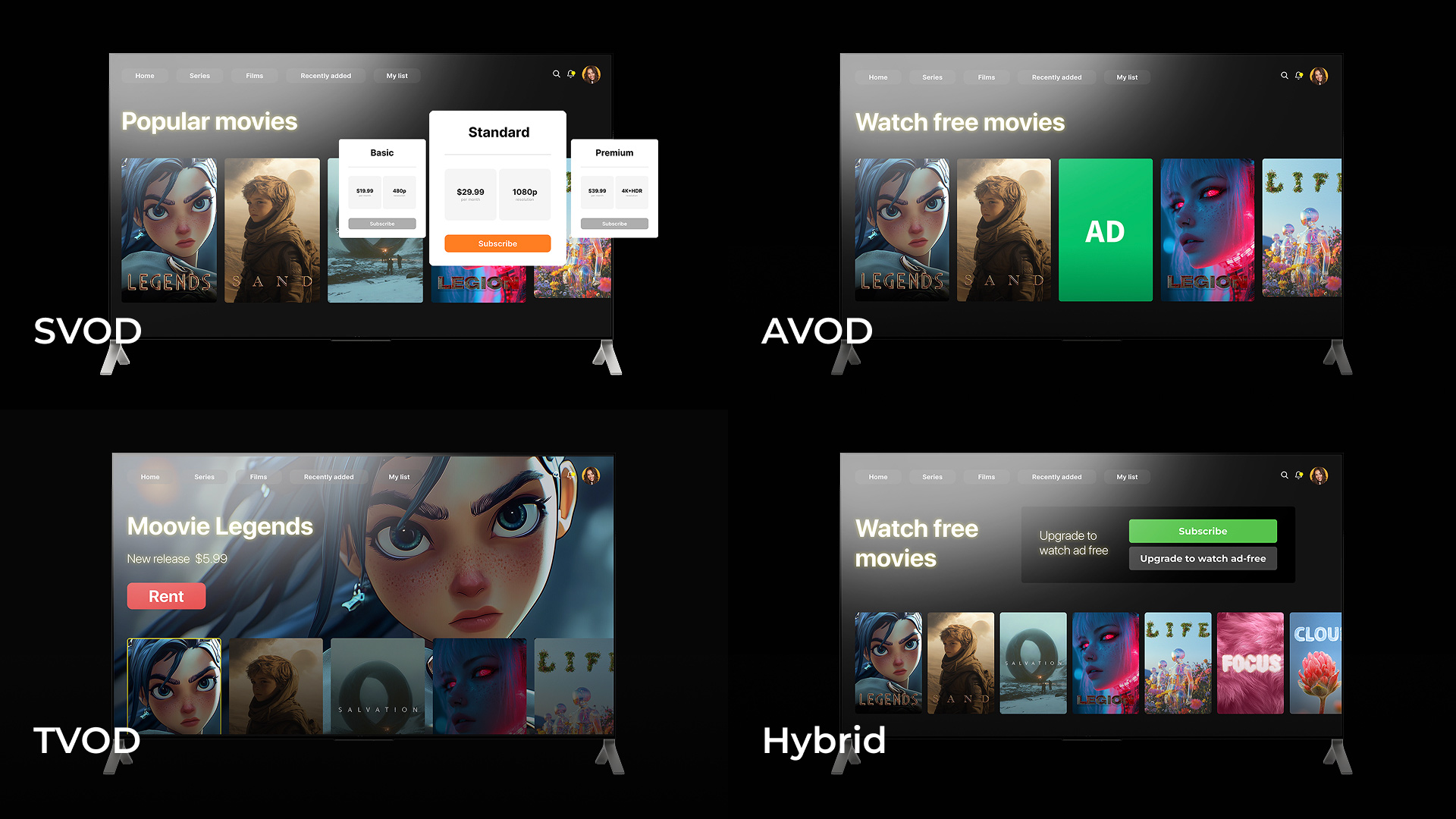
VoD’s real power? It’s a monetization playground. If you’re serving binge-watchers, casual browsers, or niche superfans, there’s a revenue model, or a mix, that fits your content, audience, and goals.
As Oxagile’s experts put it in their deep dive on OTT business models:
“Video content monetization commenced long ago, even before the era of DVD rentals, where viewers paid for temporary access to physical media, a precursor to modern OTT platform monetization. However, the advent of OTT platforms revolutionized the paradigm, introducing a new period of on-demand content delivery.”
Here are four proven VoD monetization models (and yes, the smartest platforms often blend them):
The key? Start with your audience and content, then build the revenue engine around them. What works now might develop in six months, and IPTV gives you the flexibility to adapt without breaking your platform.

When a telecom broadcaster needed to overhaul their VoD experience, they teamed up with Oxagile to make it happen and turned a basic content library into a powerful monetization machine.
We rebuilt the platform with AI-driven recommendations, a slick, responsive multi-device UX, and a custom ad module that supported both AVOD and hybrid models. The result? Smarter content discovery, more relevant ads, and a consistent experience across screens.
With advanced targeting and personalized viewing paths, Vodafone maximized the value of every user interaction. The platform’s reach grew. So did the revenue.
Lesson learned? Great content is only half the equation. With the right tech, it becomes a business engine.
Time-shifted IPTV gives viewers access to programming after its original broadcast time. A missed news bulletin, sports event, or TV episode remains available without requiring viewers to wait for a rerun or look elsewhere.
Catch-up TV, start-over, and cloud DVR handle this in different ways. Catch-up makes recently aired programs available for a set period, start-over lets viewers restart a broadcast already in progress, and cloud DVR stores selected content for later viewing.
What does this mean for content providers? Implementation of time-shifted IPTV can keep more viewing within the service and create additional opportunities for monetization.
Cloud DVR often sits in a higher-priced tier as a paid upgrade, while broadcasters use replays to insert fresh ads and expand inventory well past the original airtime.
These features provide flexibility and control, reducing the risk of users leaving your platform due to missed content.
Time-shift functionality relies on recording and temporarily storing live streams. Systems either buffer channel streams automatically or allow users to save specific programs to the cloud DVR (Digital Video Recorder). Efficient storage, fast retrieval, and uninterrupted playback are essential. User-friendly interfaces, like clickable EPGs with past programs, also matter for adoption.
Time-shifted IPTV gives content a longer window to generate value. A live broadcast does not stop earning once it ends. Catch-up viewing can continue generating views and ad impressions for days afterward, with dynamic ad insertion keeping those impressions relevant.
It also gives viewers fewer reasons to leave the service when they miss a broadcast. Catch-up and start-over cover the immediate need, and cloud DVR can add another reason to upgrade. Many providers reserve DVR storage or longer recording windows for higher-priced subscription tiers.
There is a useful data layer as well. Viewing patterns after the original broadcast show which programs retain an audience and for how long. Providers can use that information when making decisions about licensing, programming, and promotion.
The feature set itself can also matter competitively. If another service cannot offer catch-up or recording for the same content because of licensing restrictions, those rights become a meaningful product advantage.
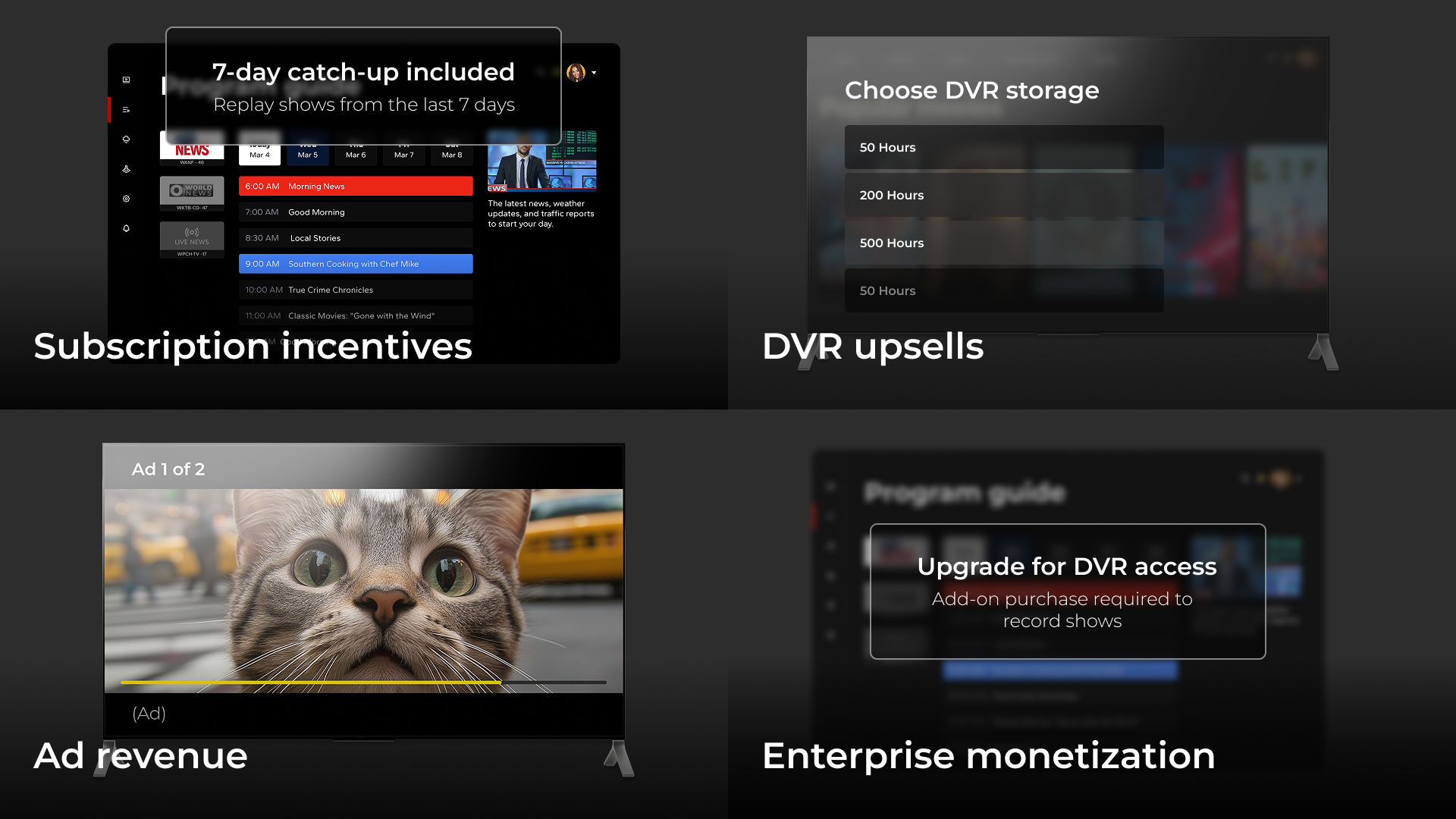
Time-shifted IPTV amplifies the lifespan and monetization of your content, explaining the expansion of this trend.
There is no single IPTV model that works for every service. Most platforms combine several based on what they offer and how viewers watch.
Live IPTV brings the real-time thrill, perfect for sports, events, and anything that thrives on urgency. VoD delivers depth and longevity, keeping users engaged with a binge-worthy catalog and flexible monetization models. Time-shifted IPTV? That’s your convenience kicker, the feature that makes sure no one ever misses out, and your content keeps paying off long after airtime.
So, what’s the right combo? That depends on your platform’s DNA:
And don’t be afraid to test. Your monetization strategy doesn’t have to be static. Start with SVOD, try AVOD for broader reach, throw in TVOD for premium releases, as IPTV lets you do it all under one roof.
What’s non-negotiable? User experience. Today’s viewer expects a jump from Smart TV to tablet to phone without friction or feature loss. That means polished, responsive apps on every screen: Tizen, webOS, Apple TV, Roku, Android TV, mobile, browser, you name it. Each platform has its quirks, so you’ll need expert hands to get it right. But when do you? That’s when users stop bouncing… and start sticking.
The quality of a streaming service depends heavily on what happens behind the content. You need the tech, the strategy, and the user experience that moves the needle. That’s what IPTV offers.
It’s your chance to combine live thrills, on-demand convenience, personalized journeys, and monetize every moment along the way. Whether your audience wants to tune in, catch up, or binge all night, IPTV gives you the power to deliver.
With Oxagile as your development partner, you get a future-proof platform built on 20+ years of hands-on video tech experience. We deliver custom IPTV solutions that perform, scale, and grow with your business.
If you’re looking to launch from scratch or supercharge your existing platform, we’ll help you turn every stream into revenue and every user into a loyal fan.
1. IPTV Market Size, Share, Growth, and Industry Analysis, Regional Insights and Forecast to 2035 — Industry Research

The main IPTV types are live IPTV for real-time broadcasts, video on demand (VoD) for watching content anytime, and time-shifted IPTV, which lets viewers replay or catch up on missed shows. Each type supports different viewing needs and monetization models.
Businesses turn to IPTV service providers for custom solutions like building or expanding their VoD offering, adding features such as catch-up TV, and more, all aimed at boosting viewer engagement and platform flexibility.
Multicast is a single stream broadcast to an unlimited number of users simultaneously. Multicast system is used for traditional IPTV live TV services.
Unicast over RTSP/RTP is a unique stream sent to each individual user. You will find it in Video on Demand (VOD) and early interactive services.
Unicast HTTP with Adaptive Bitrate chops video into tiny pieces. Then it gives each viewer a personalized stream that adapts to their connection over the regular web.
Multicast ABR is a hybrid system that combines multicast with the adaptability of ABR. It transmits one stream over a multicast network and then turns it into a standard unicast connection at the local gateway or device.
WebRTC enables sub-second latency directly in the browser, with no plugins required. It suits betting, auctions, and interactive studio formats where a few seconds of delay breaks the experience, though it needs dedicated media servers and gets expensive at scale.
China Telecom is the global leader with a 21% market share, serving 350 million subscribers. AT&T follows with a 19% market share in the U.S., serving 25 million subscribers. Overall, the Asia-Pacific region dominates the global IPTV market with 720 million subscribers, representing 52% of the global base.

