

Magento (or Adobe Commerce) is the right call when catalog complexity and custom checkout logic have outgrown a hosted platform and the team wants to own the code.







Custom eCommerce software development for storefronts that carry real catalog and traffic load:
Platform-to-platform moves with catalog, orders, and customer records intact:
A short engagement that settles the platform question before budget is committed:
Connections between the storefront and every system behind it:
Aging storefronts rebuilt on a current stack as trading continues:
Ownership after launch, including the weeks that decide the year:
Each system below is scoped to the storefront and the orders moving through it. Retailers who also trade from physical stores often pair this with retail software development.

Checkout sharing one customer and one stock record with the online store, across both channels.

A single stock pool across channels, with routing logic deciding where each order line ships from.

Finance, procurement, and merchandising synchronized with the storefront, built custom or configured on an existing platform.

One customer record across storefront, support, and marketing, so service and purchase history stay together.

Carrier selection, shipment tracking, and returns handling in one view, with exceptions surfacing early.

Funnel, cohort, and margin reporting reconciled against source systems, with predictive work through AI for retail.
A short audit of the current stack tells you what to keep,
what to move, and what a rebuild would actually cost.
 Magento
 Magento (or Adobe Commerce) is the right call when catalog complexity and custom checkout logic have outgrown a hosted platform and the team wants to own the code.
 Shopify
 Worth it when speed to market outranks control, with custom logic layered around a platform you do not modify.
 Salesforce
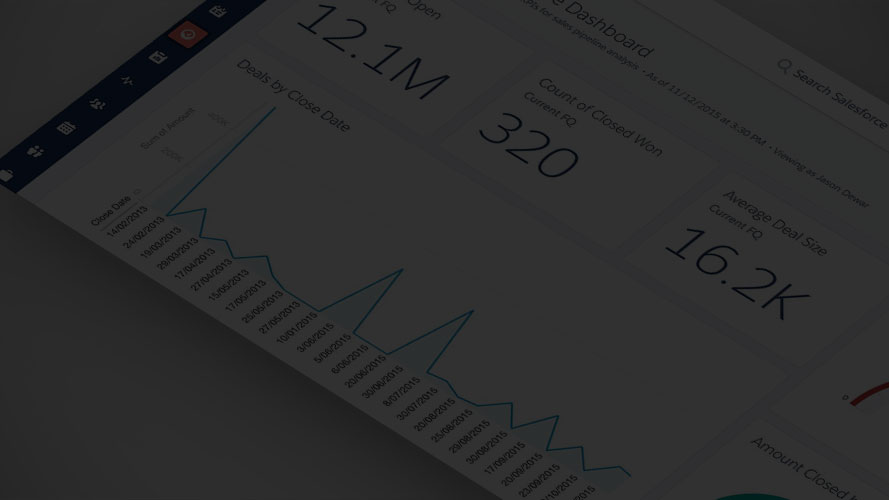
 Salesforce Commerce Cloud is a fit where the customer record is the center of gravity and commerce has to sit next to service and marketing data.
 SAP Commerce
 Makes sense for large catalogs already anchored to SAP finance and supply chain, where a separate commerce stack doubles the reconciliation work.
 BigCommerce
 Earns its place for mid-market catalogs that need open APIs and multi-storefront support without an enterprise license.

One commerce platform gained 107% transaction capacity. Another was built for launch-day spikes on microservices and autoscaling, which keeps cost down between peaks. Load testing runs ahead of every trading season.

Point of sale terminals certified for PCI compliance across 40+ payment providers, and live payment migrations run at zero downtime. Checkout goes through the same engineers who build payment infrastructure for fintech clients.

Recommendation, forecasting, and lifetime value models run on unified catalog and customer records. An eCommerce development company earns those results on the data layer, which is where Oxagile starts.
Oxagile’s eCommerce development experts work in short cycles against your live systems.
Audit and platform decision
The current stack, its constraints, and the real bottleneck get documented before anything is scoped.
Architecture and estimate
Integration points, data model, and peak load profile are designed, then priced against a defined scope.
Prototype
A working version lands within weeks, so the plan gets reviewed against running software.
Build and integrate
Delivery runs in short cycles, with payment, catalog, and fulfillment integrations tested against your live systems.
Launch and run
Cutover is planned around the trading calendar, with load testing and monitoring in place before the first peak.
Java • PHP • Python • Node.js • .NET • Go
React • Next.js • Angular • TypeScript • JavaScript
Swift • Kotlin • React Native • Progressive web apps
Adobe Commerce • Shopify • Salesforce Commerce Cloud • SAP Commerce • BigCommerce • commercetools
PostgreSQL • MySQL • MongoDB • Redshift • Snowflake • Power BI • Tableau
AWS • Azure • Google Cloud • Kubernetes • Docker • Terraform
REST • GraphQL • Webhooks • Stripe • PayPal • Apple Pay • Checkout.com • Contentstack
Selenium • Jenkins • CircleCI • GitHub Actions • JMeter

Cost tracks scope and how much of the existing stack has to be touched. Delivered projects in the portfolio range from 10 man-months for a targeted platform build to 720 man-months for a multi-year commerce ecosystem. Oxagile’s stack audit replaces the range with a number specific to your systems.

According to Oxagile’s experience, a working prototype takes up to three weeks. A focused platform has reached production in four months. A full marketplace with payments and vendor logic runs around twelve months. Replatforming is usually faster than a greenfield build, because the requirements already exist in the system being replaced.
Dedicated managed teams, scope-driven milestone delivery, and team extension. Clients who outsource eCommerce development services to Oxagile typically start with a fixed-scope audit, then move to a dedicated team once the roadmap is set. Teams scale up before a peak season and back down afterwards.
Yes. Contract pricing per account, bulk and repeat ordering, quote and approval workflows, and credit terms are standard requirements on trade portals and wholesale storefronts, which Oxagile has built for distributors and manufacturers.
As an eCommerce development firm working across domains, Oxagile has delivered commerce for retail, food delivery, automotive marketplaces, ticketing, laboratory supplies, media, and AdTech. Brands, wholesalers, retailers, distributors, manufacturers, and suppliers are all represented.