














This website uses cookies to help improve your user experience


Television isn’t confined to bunny-ear antennas or cable hookups, as now it rides on the internet. IPTV, or Internet Protocol Television, delivers television content over the internet instead of traditional cable, satellite, or terrestrial broadcast signals. It brings the freedom to watch live channels, on-demand shows, and recorded programs on any device.
Unlike conventional TV distribution, IPTV transmits video as data packets through managed IP networks. This gives operators and content distributors more control over quality, interactivity, and monetization.
If you’ve been searching for what is IPTV, you’re likely evaluating how this delivery model can fit into your video strategy and what is essential for reducing churn, improving viewer experience, and building infrastructure that scales. This article covers the core technology behind IPTV, the service types available, key benefits for both viewers and providers, and what “IPTV connections” really means from an engineering and operations standpoint based on Oxagile’s ample IPTV development experience.
Key takeaways:
IPTV works by encoding video content into IP packets and delivering those packets to viewers through a managed broadband network. Unlike traditional broadcast, which sends the same signal to all users simultaneously, IPTV operates on a request-based model. When you select a channel or video, the system routes only that specific stream to your device.
Here’s how the process typically unfolds. Content from providers (like TV networks or studios) is encoded and stored on servers, then sent out as data packets over broadband networks to the viewer’s device on demand. When you select a channel or a movie on an IPTV service, that request goes to the IPTV provider’s server, which then instantly delivers the video stream to you via your internet connection. It’s a two-way interactive communication where your device talks to the server, unlike old one-way cable broadcasts.
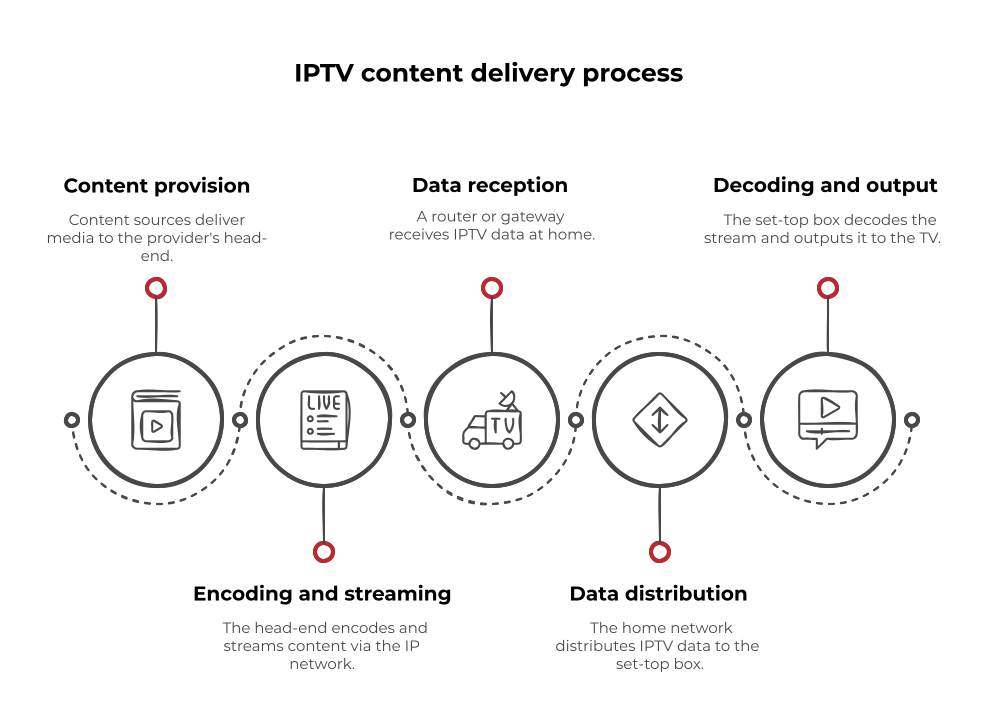
The infrastructure behind IPTV typically includes:
Most IPTV services use a set-top box or specialized app as the receiver. This device connects to your internet through Ethernet or Wi-Fi and handles the task of decoding and decrypting the video streams for display. Many telecom providers bundle these IPTV boxes with broadband. You plug the box into your router and TV, and it delivers channels via the internet instead of through cable lines. But modern IPTV doesn’t require a dedicated box if you have a Smart TV or streaming device. Apps on Smart TVs, phones, or tablets can serve the same role as the set-top box, turning any screen into a television.
IPTV and OTT (over-the-top) streaming both deliver video over IP, but they differ in network architecture. IPTV runs on a managed, closed network controlled by the service provider. OTT streams over the open internet, relying on public infrastructure.
This distinction affects quality of service guarantees, delivery costs, and how much control you have over the viewer experience. Many operators now run hybrid architectures, using IPTV for core offerings and OTT for expanded reach.

Fast streams. Seamless UX. Built to keep viewers hooked and your business growing.
We’ll handle the tech. You lead the market.
Browse Oxagile’s professional IPTV development services.
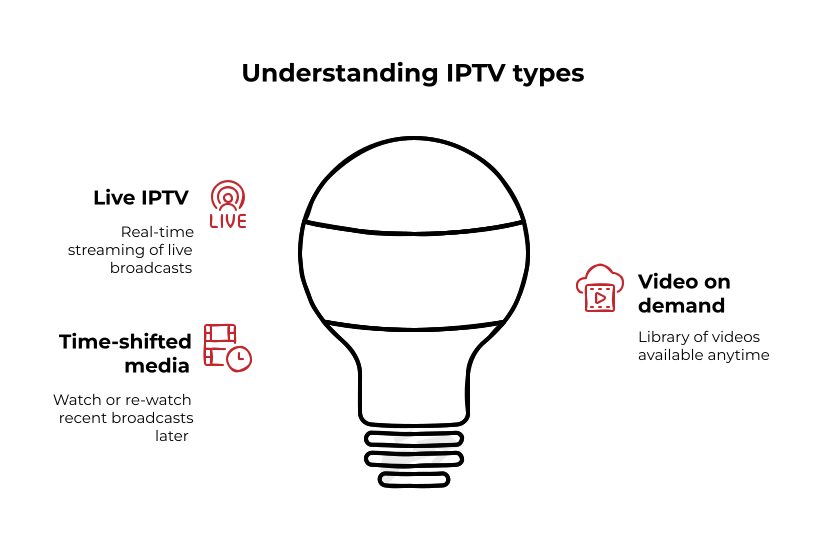
IPTV services generally fall into five categories, each serving different viewer needs and provider monetization strategies.IPTV takes a few different shapes, each geared toward a specific way of streaming content. Let’s go over the common IPTV types.

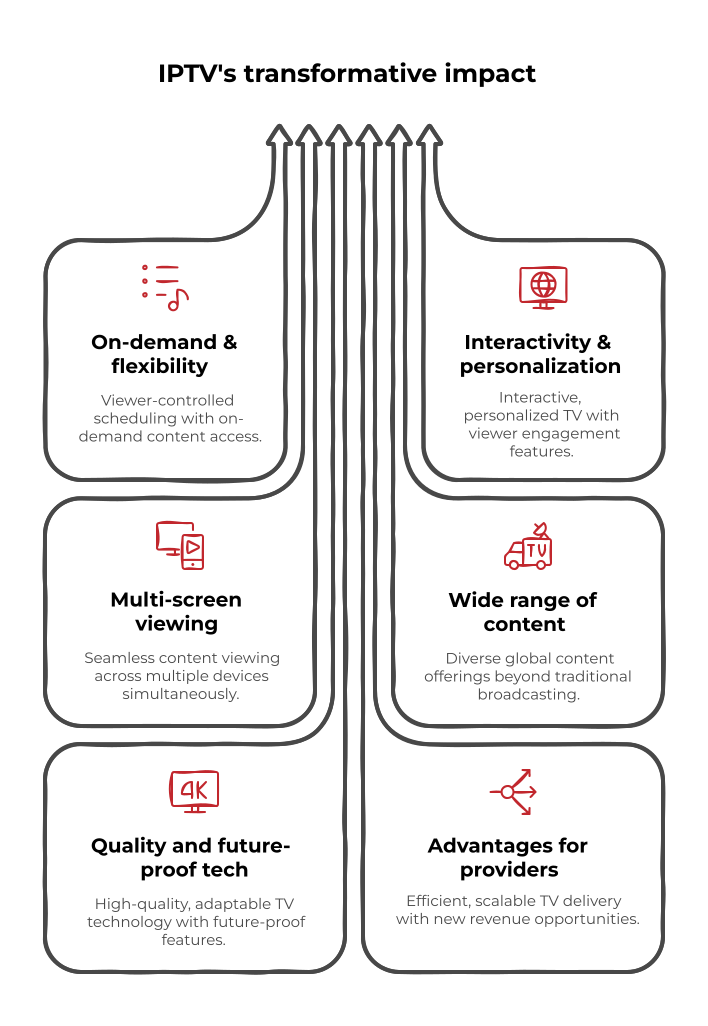
IPTV offers advantages that matter to both viewers and the teams responsible for building and operating video platforms. Here’s what differentiates it from traditional broadcast.
Viewers aren’t tied to broadcast schedules. They can pause, rewind, and restart content on their own terms. For product teams, this translates into longer session times and more opportunities to surface relevant content.
IPTV supports two-way communication between the viewer and the platform. That means personalized recommendations, interactive program guides, voting during live shows, and targeted advertising. These features give you more levers for engagement and revenue.
IPTV content can be delivered to TVs, smartphones, tablets, and laptops. A consistent cross-device experience reduces friction for viewers and improves retention. For platform owners, it also opens up additional monetization channels through mobile-first audiences.
Because IPTV doesn’t face the channel-capacity limits of traditional broadcast, providers can offer larger content libraries. Niche programming, international channels, and long-tail VOD catalogs become viable without the infrastructure constraints of legacy systems.
IPTV supports adaptive bitrate streaming, which adjusts video quality based on network conditions. Codecs like H.265/HEVC and AV1 deliver better compression, reducing bandwidth costs while maintaining picture quality. These technologies help you prepare for 4K, HDR, and future format upgrades.
IPTV simplifies content updates, supports detailed analytics, and integrates tightly with advertising platforms, which are all good news for operators. You can track viewing behavior in real time, A/B test UI changes, and push software updates without truck rolls. The market trends reflect this momentum: over 250 million IPTV subscribers worldwide, with over 25 million IPTV users in US households alone1. The global IPTV market is projected to reach $330.19 billion by 20342.
PCCW launched Now TV, its IPTV service, in Hong Kong in September 2003. By the end of June 2007, the platform had grown to an installed subscriber base of almost 820,000, offering a choice of 143 TV channels3. The service combined live TV, VOD, and interactive features over PCCW’s broadband network. This early deployment demonstrated that IPTV could scale in dense urban markets and deliver a compelling alternative to cable and satellite.
In short, IPTV combines the vast content choice of the internet with the familiarity of the TV experience. It brings together live broadcasting, binge-worthy on-demand shows, and interactive capabilities into one, resulting in a more modern, flexible, and engaging way to watch television.
“IPTV connections” typically refers to the number of concurrent streams a subscriber account can use. For content distributors, managing this number is a balancing act between user convenience, infrastructure costs, and content protection.
Concurrent stream limits define how many devices can watch simultaneously under one account. Set the limit too low, and you frustrate households with multiple viewers. Set it too high, and you risk credential sharing at scale, eating into subscriber growth.
Most providers set limits of two to four concurrent streams per account. The right number depends on your target audience, pricing tiers, and licensing agreements.
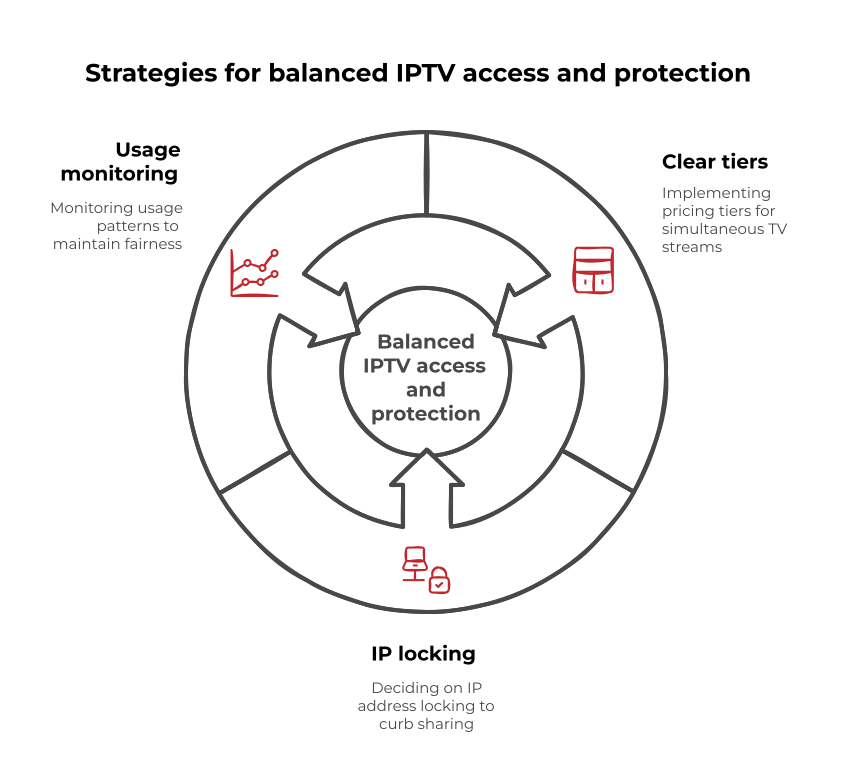
Set clear tiers
If you offer multiple subscription levels, tie stream limits to each tier. A basic plan might support two streams; a premium plan might support four or more.
IP lock or not
Some providers restrict streaming to a single IP address or geographic region. This reduces unauthorized sharing but can frustrate legitimate users who travel or switch networks.
Usage monitoring
Track abnormal patterns, such as simultaneous streams from geographically distant locations. This data can inform enforcement decisions without imposing blanket restrictions that hurt paying customers.
You might offer multiple connections, but can your infrastructure handle the load? Here’s what to mind while developing IPTV apps and how to keep those streams flowing:
IPTV as a technology is legal. The legal questions arise around content licensing and distribution rights.
Licensed IPTV services operate with proper agreements from content owners, broadcasters, and rights holders. They pay for the programming they distribute and comply with regional broadcast regulations. Major telecom providers and established streaming platforms fall into this category.
Unlicensed services, by contrast, redistribute content without authorization. They often offer suspiciously low prices, lack official app store presence, and provide no verifiable business information.
Here are three signals that help distinguish a legitimate IPTV provider:
If a service promises hundreds of premium channels for a few dollars per month, that’s a red flag. From a compliance perspective, working with unlicensed providers exposes your organization to legal risk and can damage viewer trust.

A Canadian Internet TV service provider with more than 300 broadcasting partners in 75+ countries turned to Oxagile’s online video experts to build a media content distribution management system for their Internet TV service and make a highly scalable backend system.
In 12 months, Oxagile’s team delivered a completely customizeable content distribution and substitution system to replace their existing Internet TV solution.
IPTV gives content distributors and platform owners a flexible way to deliver television over IP networks that grows with demand. The technology supports live, on-demand, and hybrid content models, with infrastructure that can grow alongside viewer expectations.
For Heads of Video and OTT product teams, the key decisions involve balancing quality of experience with cost, managing concurrent streams responsibly, and choosing the right mix of IPTV and OTT delivery for your audience. The providers who get this right see lower churn and stronger engagement.
Upgrading your broadcast tech? Expanding into new markets? We build custom IPTV solutions that go beyond the basics: personalized, high-performing, and ready to scale.
1. Industry Research: 250M+ global IPTV subscribers, 25M+ US householdsA — Industry Research
2. Fortune Business Insights: Global IPTV market to reach $330.19 billion by 2034 — Fortune Business Insights
3. PCCW now case study: Now TV subscriber base of almost 820,000 — IESE Publishing

Giving the simplest IPTV meaning, IPTV stands for Internet Protocol Television and refers to the delivery of television content over IP networks, using internet infrastructure instead of traditional broadcast methods like cable, satellite, or antenna. It includes live channels, video on demand, and time-shifted programming. The “IP” in IPTV describes the underlying data transmission method, not necessarily access via the public internet.
IPTV technology powers a range of video services, from telecom-operated TV platforms to enterprise video distribution and hospitality entertainment systems. Providers use IPTV to deliver live broadcasts, on-demand libraries, and interactive features like program guides and targeted advertising. The technology suits any scenario where controlled, high-quality video delivery over managed networks is required.
IPTV encodes video content into IP packets and transmits them through a broadband network to the viewer’s device. When you select a channel or video, the system routes that specific stream to you instead of broadcasting everything at once. Set-top boxes, Smart TVs, or apps decode the stream for playback. Operators use middleware for authentication, billing, and content navigation.
Yes, IPTV technology is legal. The legality of any specific IPTV service depends on whether the provider holds proper content licenses. Services operated by established telecom companies and platforms distributed through official app stores are typically licensed. Unlicensed services that redistribute content without authorization operate illegally. Look for transparent business information and recognized content partnerships.

