












This website uses cookies to help improve your user experience



Most provider shortlists get built from feature matrices, and most of them mislead. Choose an OTT IPTV provider on three things instead: proven device certification work, a written post-launch support model, and multi-year total cost of ownership.
Feature parity is easy to claim and hard to ship because a polished demo can make every bidder look ready. The real test comes later, when certification, peak traffic, billing integration, or a post-launch incident exposes unclear ownership. Therefore, evaluate the operating reality behind the demo, not the demo alone.
Practical evaluation methods state that it’s wise to start with the service you need to run: delivery model, device matrix, monetization, integrations, QoE targets, and the work your team will retain. Below you’ll find proof checks, a three- to five-year TCO comparison, a weighted scorecard, and contract checks for ownership, lock-in, and exit risk.
Key takeaways:
In-house delivery works when you already employ engineers who have shipped and maintained apps on living-room devices. If your team owns a Roku, Tizen, or Fire TV release cycle today, adding features internally is usually cheaper.
The math changes when device coverage is new to you. Certification queues, firmware quirks, and DRM integration are where first-time teams lose quarters, and churn accrues while releases slip. A specialist partner absorbs part of that risk because the mistakes have already been made on someone else’s project.
Oxagile has spent 20+ years on video engineering. More than 70% of our team holds senior positions, and we’ve supported over 350 companies across 40+ countries. Some client relationships have run past 15 years, which is the number that matters here: OTT platforms get maintained for years, not shipped once. If you want the decision pressure-tested first, OTT technology consulting is the cheaper starting point.
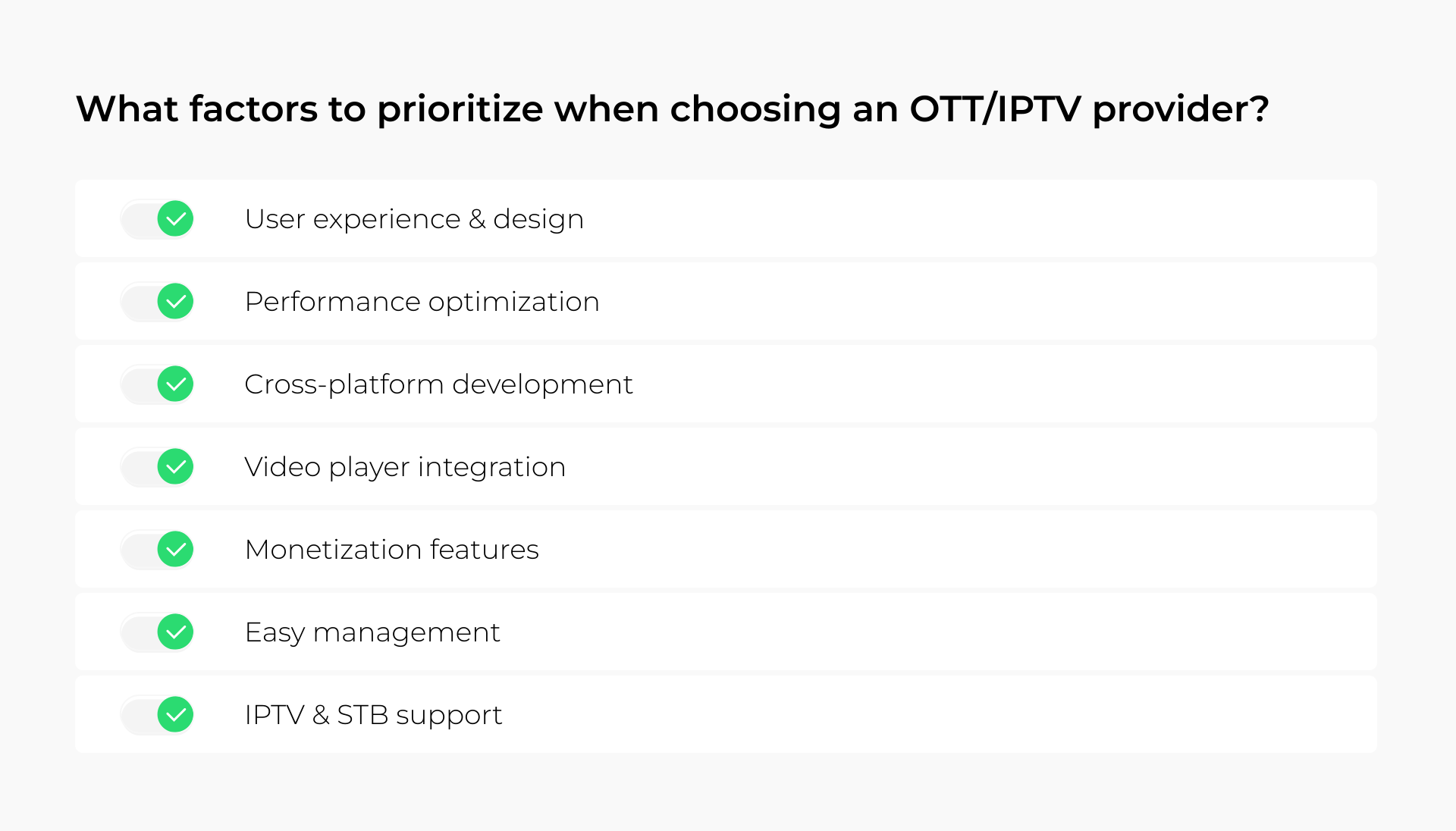
The right technology partner decides whether you launch a competitive video platform or a slow one, and the evaluation starts with the difference between IPTV and OTT in your own delivery model. Broadcasters, telecom operators, and content aggregators all need more from a provider than raw development capacity. Look for proven work in UX, playback performance, monetization, and integration with the rest of your video stack.
An intuitive, accessible interface has a direct effect on retention and watch time. Your OTT/IPTV provider should have a track record of interfaces built on user-centered design principles. Look for case studies showing they:
IPTV and OTT platforms must run seamlessly on fragmented devices, operating systems, and firmware versions. Your development partner should:
Scalability belongs on the evaluation checklist, not in an architecture appendix nobody reads. A stream that fails at kickoff costs you more subscribers than any missing feature on the roadmap.
Cross-platform development with React Native, Flutter, or a custom framework can shorten time to market and reduce build cost. However, the provider must know how to:
Reliable OTT experience depends on more than a video player. Your provider should understand how to:
The monetization models, FAST, AVOD, SVOD, or hybrid each put different demands on the player and the ad stack. Treat monetization as a day-one requirement. Your provider must be able to:
Content managers and operators should run daily work without filing a ticket with engineering. Your provider should deliver:
If your roadmap includes IPTV or hybrid delivery via Android-powered set-top boxes, you need extra expertise on the provider side. Two areas deserve direct questions.
Your provider should know both the ready-made and custom versions of Android TV Operator Tier. Ideally the team can:
An IPTV launch depends on hardware partners as much as on software. A reliable provider will talk directly to your hardware vendors to define correct STB specifications. Confirming middleware compatibility with the AOSP version you select and managing pre-deployment testing and fix integration issues on your chosen devices are musts as well.
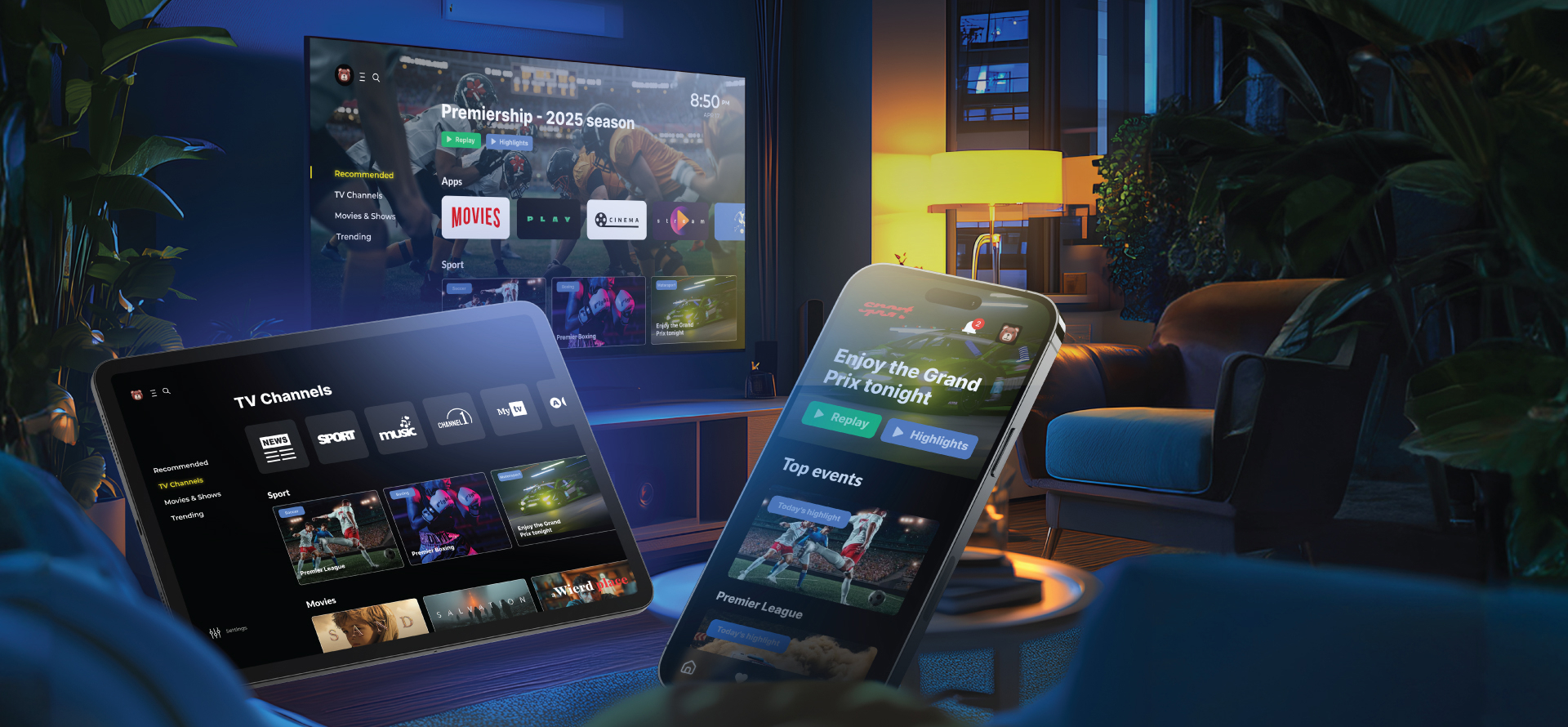
Oxagile delivered a modular white-label OTT app for a video platform provider, enabling rapid deployment across 13 platforms and 25 devices with a single codebase. The solution supports STBs, TV, web, and mobile apps, and includes region-specific branding, advanced UX features, and automated QA for flawless performance.
The vendor market splits into three rough groups. No-code SaaS platforms get you live in weeks with fixed capabilities. Configurable white-label products sit in the middle, trading some flexibility for speed. Custom development teams build to your specification and hand over the code.
Which group fits depends on how much of your product is a real differentiator and how much is plumbing. If you want the detailed list, we keep a comparison of leading technology partners separately.
Oxagile works as a strategic development partner, building custom IPTV and OTT solutions afrom scratch, extending existing streaming platforms, and improving media solution performance. With 20+ years in video technology, our teams cover multiscreen frontend development across web, mobile, Smart TVs, and set-top boxes. We also work on CTV and addressable TV advertising, media asset management, performance tuning, and digital rights management for broadcasters, telecom operators, content owners and aggregators, and media software providers.
This company offers white-label OTT apps (NoraGO) across major platforms, complete with content discovery, personalization, DRM, and analytics which is ideal for quick deployment and broad device reach.
The team provides cost-effective OTT solutions with multi-DRM, extensive monetization options, powerful dashboards, and support for 4K, 8K streaming.
Their services offer AI-powered features such as smart thumbnails, skip intro, binge-watching, and intelligent ad cueing designed for platforms focused on viewer engagement and automation.
A low-code SaaS platform for rapid deployment (4–6 weeks), full code ownership, and 100+ integrations. It’s; suited for businesses that need speed and scalability.
Delivers an all-in-one, no-code OTT solution with over 1000 features and support for video and audio streaming. It’s best for teams with no in-house tech resources.
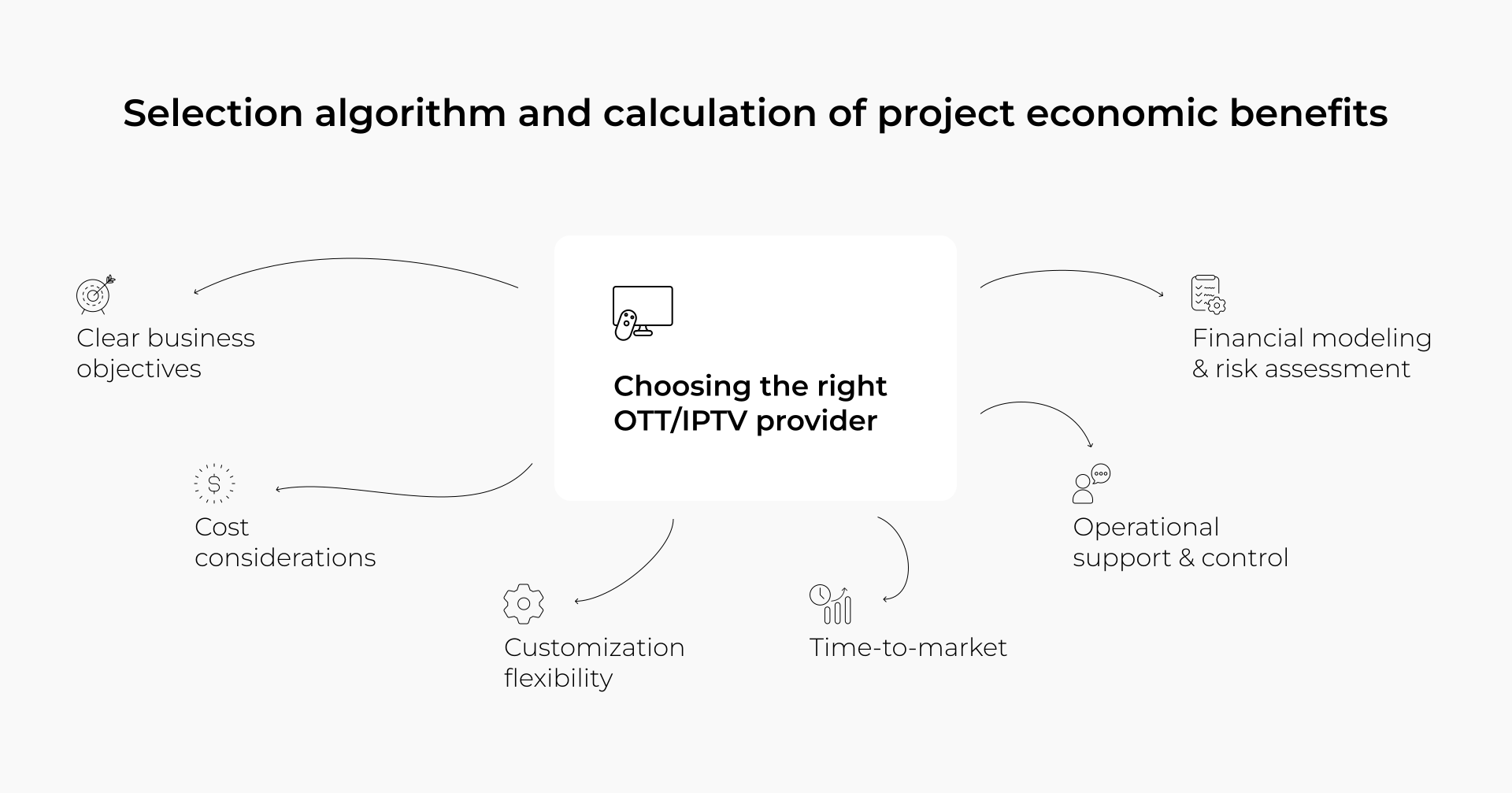
Picking a technology partner for your video platform has consequences that last years. Start by defining what success means: wider audience reach, higher revenue per user, better viewer experience, or lower operating cost. Those targets shape the rest of the evaluation. Let’s go over the main custom vs. ready-made points.

Then build a financial model covering cost, revenue, and payback across several years. Run more than one scenario so you can see the risk instead of the base case alone. That model turns a vendor preference into a defensible decision.
Choosing an OTT/IPTV provider involves weighing multiple factors including cost, customization, deployment speed, and operational support. Ready-made platforms may be suitable for quicker launches with fewer technical resources, while custom solutions offer more flexibility and long-term control.
The best choice depends on your specific business objectives and operational capabilities. A thorough evaluation based on the outlined criteria will help you select a provider that fits your needs and supports the growth and success of your streaming platform.

If you want a second opinion on a shortlist or an architecture, talk to an expert on our video team.
Look past the feature list and weigh proven UX work, monetization experience, and measured performance on your audience’s actual devices. Confirm the provider supports the platform after launch, with named response times. Read the case studies and ask how the team handles device fragmentation and certification. Reference calls with clients of three years or more settle most remaining doubt.
Prioritize seven criteria. User experience design with accessibility and personalization, performance across multiple devices and operating systems, and cross-platform development skill come first. Then check player integration covering DRM, adaptive bitrate streaming, and analytics, plus monetization work such as SSAI and ad server integration. Finish with admin tooling your operators can run alone and proven set-top box integration experience.
Balance cost, customization, and deployment speed against your long-term support needs. Ready-made solutions launch quickly and cost less upfront while limiting flexibility. Custom solutions ask for a bigger initial investment and return scalability, distinctive features, and full control. Your team’s capacity to maintain the platform counts just as much, so run the payback math over three to five years.
Build in-house if your engineers already ship and maintain releases on Roku, Tizen, webOS, or Fire TV. Hire a specialist provider when device certification, DRM, and live scaling are new territory. That learning curve gets measured in quarters and paid for in subscriber churn. Many teams do both: a partner delivers the first launch, then the internal team takes over routine feature work.
Request comparable cases, target-device demonstrations, architecture documents, project-specific test results, reference calls, and a pilot for the highest-risk workflows. Each result should identify the software, hardware, network, content, load, region, test date, and known limits. A generic demo or certification does not prove readiness for your service.

