












This website uses cookies to help improve your user experience
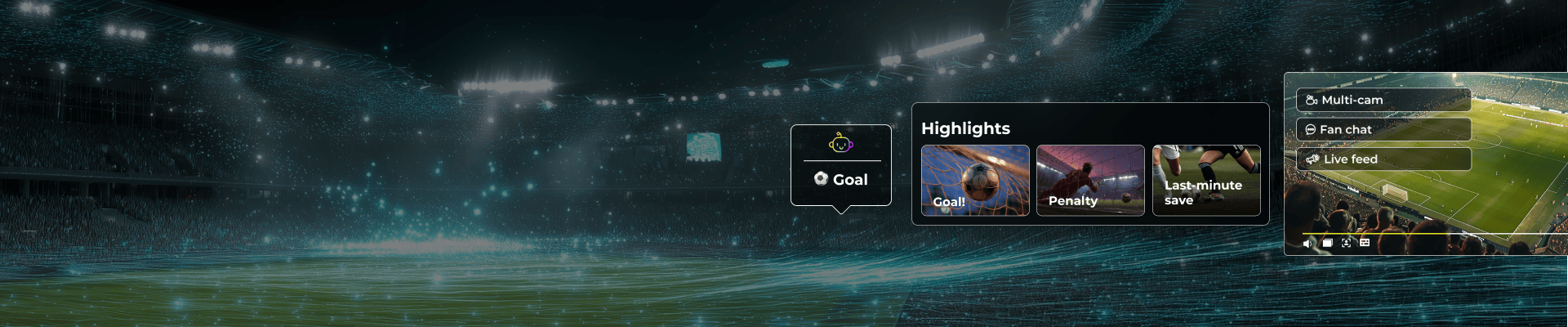


The whistle blows, the crowd rises, and millions of fans lean closer to their screens. A few seconds later, the first goal sends waves of noise across continents. That’s the magic and the madness of sports broadcasting software.
There’s no second take, no “we’ll fix it in post”. Every frame carries emotion, every pixel sells the drama. If the moment is spoiled by delay, you will lose viewers. The same goes if the excitement is ruined by waiting for something to load. Worse still, you will lose their trust.
The rise of live streaming changed the entire game plan. In fact, 2025 was the year when streaming officially overtook cable and broadcast in total viewing hours. Fans crave proximity: to the players, to each other, to that split-second of shared adrenaline.
So when you’re building or choosing live sports streaming software, the stakes are as high as a championship final. You need more than just stable code. You need a team of features working in perfect formation.
Today, we’ll break down:
Imagine your platform as a starting eleven. Every module has its position, and together they decide whether your broadcast dominates or collapses under pressure.
This is your last line of defense. DRM (Digital Rights Management), encryption, and watermarking keep your premium rights safe from piracy and illegal rebroadcasts. With piracy costing the industry billions, your goalkeeper can’t afford to blink. See how strong defenses are built with DRM systems.
They keep chaos out of your box. Smooth ingest pipelines, edge delivery, and adaptive bitrate streaming ensure your broadcast doesn’t stutter when the crowd volume spikes. Low latency (ideally under three seconds) is the difference between celebration and spoiler.
The play is run by your CMS (content management system), analytics, and AI modules. They distribute the content, predict traffic surges, and analyze user behavior. The best setups anticipate every move before it happens, reading the flow of data like a midfielder scanning the field for the perfect pass.
They score the goals. From interactive overlays to real-time polls and betting modules, they transform viewers into participants. A strong UX is what keeps fans shouting at the screen instead of searching for another stream.
For teams serious about connection, fan engagement solution development is your playbook. Polls, fantasy stats, and live chats aren’t decorative features — they’re what turn ordinary viewers into devoted superfans.

Oxagile’s team will be happy to assist with crafting custom sports streaming solutions that keep fans engaged and coming back for more.
Even the best players crumble on a bad field. The same goes for your tech stack. Infrastructure is your home stadium — the place where performance, latency, and scalability either give you an advantage or leave you playing defense all game.
A winning live sports broadcast software setup includes:
Latency is where legends are made. When your viewer’s neighbor yells “GOAL!” two seconds before they see it, trust is lost. Every millisecond you shave off is a win in itself, and the new low-latency standards make it possible to keep reactions truly live.
And yes, victory here requires multi-screen flexibility. Fans stream on phones, tablets, smart TVs, and even car dashboards. That’s why multi-platform readiness lies at the heart of a successful strategy, and this is something that multi-screen apps handle seamlessly.
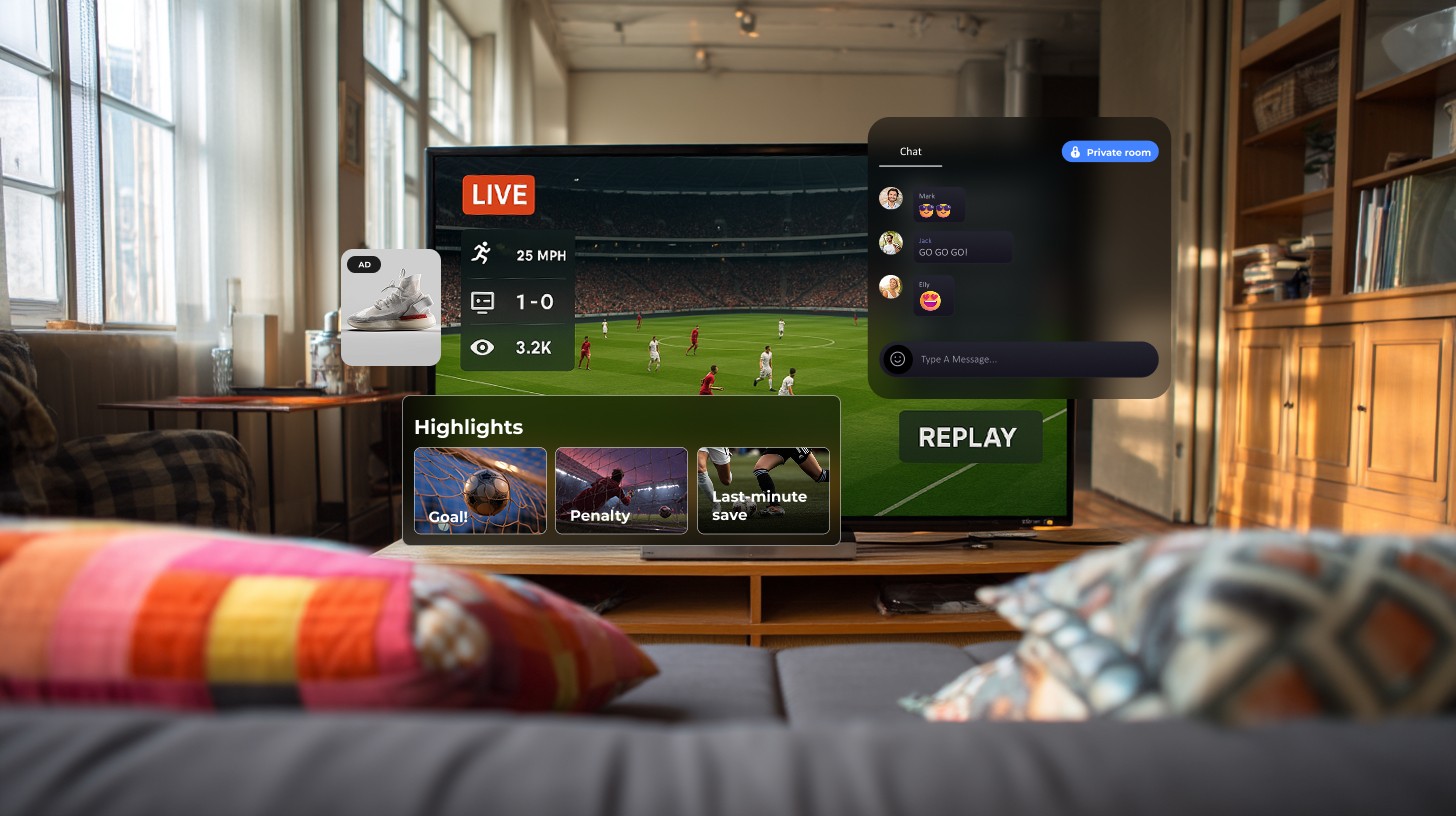
Broadcasting may be a passion, but streaming is a business. Every play, every view, every replay has potential revenue behind it. The best sports broadcasting software turns attention into income without breaking immersion.
Treat your platform like an attacking formation — every element working together to keep the scoreboard moving.
Each goal here counts toward the same scoreboard — ARPU (average revenue per user). And like any great offense, variety and timing are everything.
Every champion relies on a sharp coach, and in sports streaming, today’s most advanced approach is powered by AI. Artificial intelligence goes far beyond automation as it reads every play, gesture, and audience reaction, turning that data into real-time insights and highlight-worthy moments.
Here’s what your AI coach brings to the locker room:
AI isn’t replacing the human touch. Instead, it acts as an assistant coach that never sleeps, ensuring that every match is played to the best of each player’s ability.
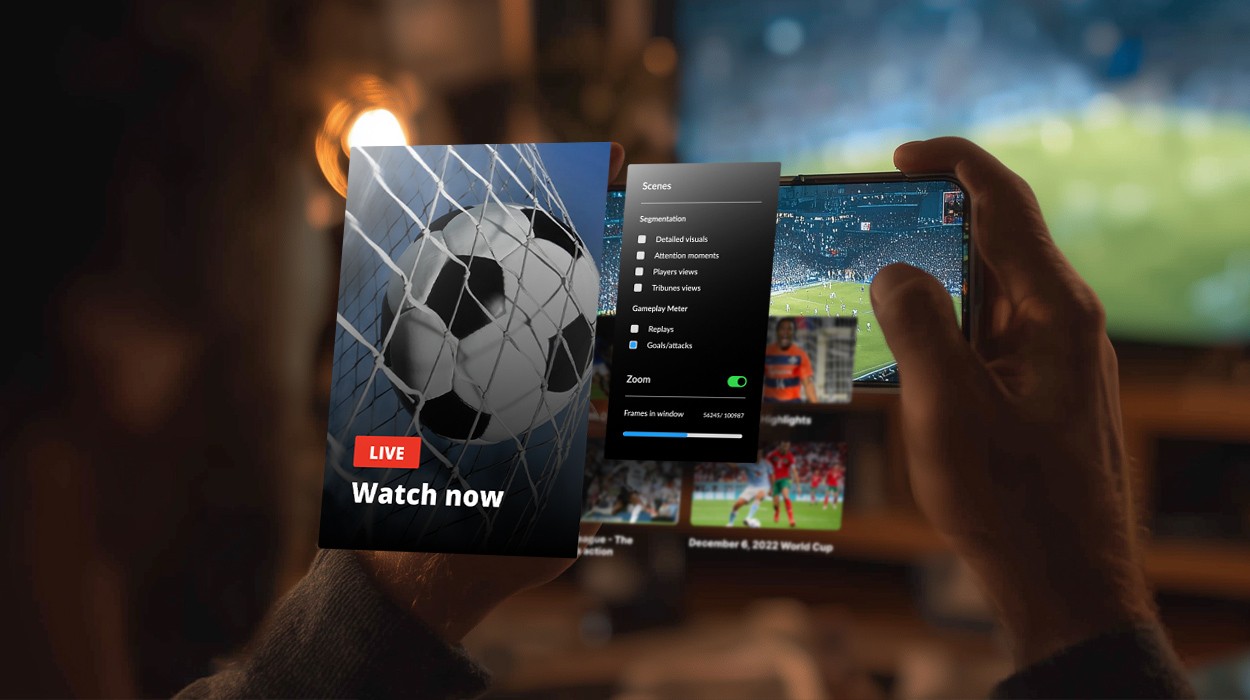
Our real-time soccer highlights compilation solution shows how intelligent automation can transform live sports coverage. The system detects key moments, cuts and packages clips within seconds, and delivers personalized reels for every fan — all without missing the pace of the game.
Every winning team studies its plays, and in sports streaming, data is that playbook. Every click, pause, and replay reveals what fans love and when they start to drift. When your platform reads the game as well as your audience does, it gives you a tactical advantage that will influence every future match.
Sports broadcasting software today acts like a real-time analyst on the sidelines:
When analytics and creativity play on the same team, your broadcast goes beyond performance as it evolves with every match. It’s invisible midfield control that keeps your platform sharp and coordinated, putting you one step ahead of the competition.

Every team faces that off-season question — buy talent or build it. In the tech arena, that means deciding between ready-made and custom sports broadcasting software. Both can bring wins, but the playbook and pacing differ.
Ready-made solutions are like signing a proven veteran. You get instant performance, predictable costs, and a short warm-up period. These platforms cover the fundamentals out of the box: streaming, analytics, user management, and monetization. Perfect for startups, pilot projects, or short tournaments where time to market is key.
But once the match grows tougher, their limits show:
Custom software, on the other hand, is your homegrown academy. It takes more training time, but the result fits your tactics perfectly. You decide the formation, you control the play.
From latency thresholds to data flow to visual design, every feature aligns with your long-term strategy.
Custom builds excel when your ambitions go beyond “broadcasting” and enter the territory of experience — multi-angle viewing, cross-device continuity, integrated betting, and fan community layers.
And then there’s the hybrid lineup — part ready-made backbone, part tailored modules. It’s the balanced roster many teams rely on: stable where it counts, flexible where it shines. For example, keeping a vendor’s CMS while layering your own UX, highlights engine, or interactivity module on top.
If you’d like a deeper breakdown of this tactical choice, take a look at our analysis on custom vs ready-made platforms.
Every match has its twists, such as those last-minute fouls and offside traps that can change the course of the game. The same is true of off-the-shelf solutions — the surprises often hide in the fine print.
Licensing models that scale by region, bitrate, or concurrent viewers can inflate costs as your fan base expands. Integration with proprietary APIs can become technical “injury time”, slowing new feature rollouts. And closed data systems make it harder to personalize experiences or optimize ad yield.
Here, custom development often proves to be the smarter long-term strategy. Although you invest more initially, you end up owning your field, including every integration, metric, and touchpoint.
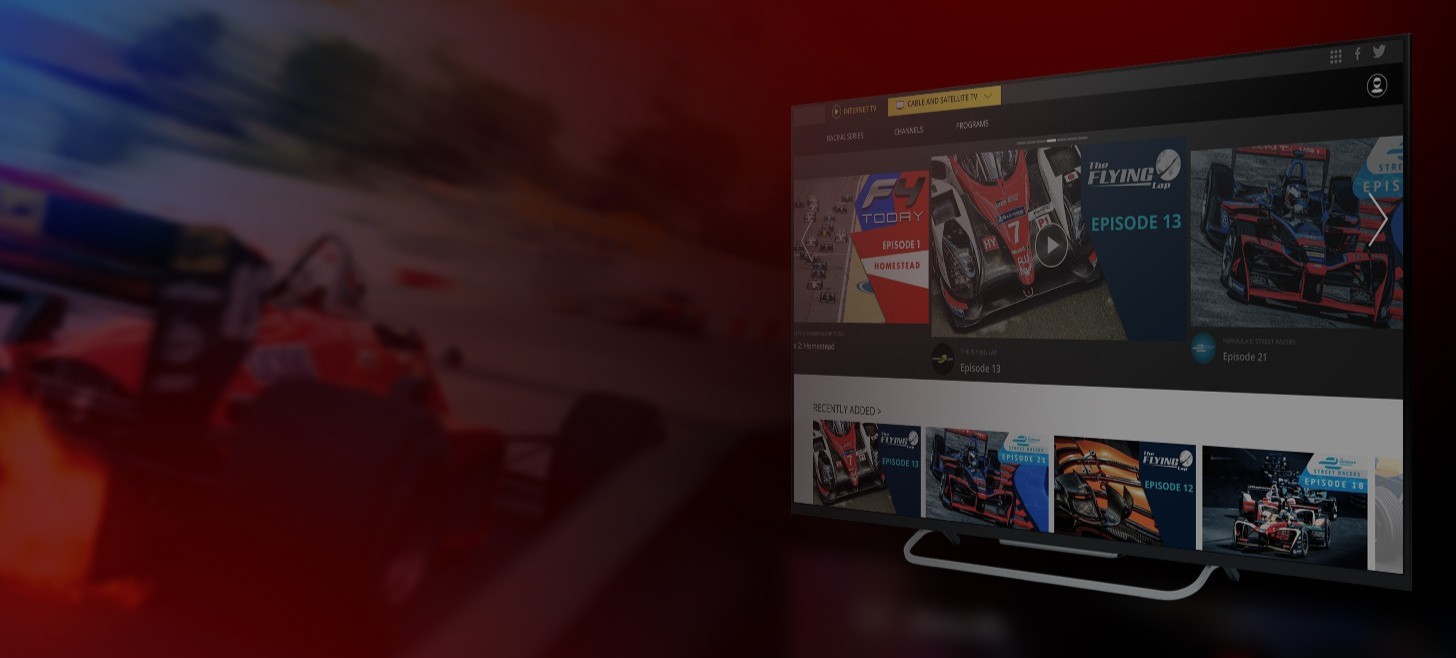
A leading motorsport media group approached us with a clear mission — to take full control of their streaming future. They needed a platform that could match the speed and precision of their sport, with complete ownership over performance, design, and delivery.
Our team engineered a custom live streaming and VoD platform that:
This wasn’t a sprint for short-term gains, but a long-term investment — a streaming ecosystem built to host years of races ahead, their own digital home stadium.
Let’s call the strategy meeting. Here’s your coach’s playboard for choosing the right build:
Choose ready-made if:
Choose custom if:
Choose hybrid if:
No strategy is universal. Some seasons require speed, others demand structure. But the one rule that never fails? Build with scalability, security, and user experience at the core, and you’ll stay in the top league for years.
Oxagile will be glad to take the coach’s seat, guiding your team toward a stronger streaming lineup with custom video streaming development services.
Even while the match is in play, the tactics keep changing. New formations, faster passes, smarter assists — sports streaming follows the same rhythm. Every few months, the playbook updates: fans want more control, more ways to engage, and more reasons to stay loyal. What once felt like a one-way broadcast is now a dynamic arena where every viewer takes part in the action.
So, here’s how live sports streaming software continues to push the pace:
The evolution of sports broadcasting software plays out like a game in constant motion — every innovation a new pass forward, every update a smarter way to connect fans with the field.
The points above can help you shape that strategy, whether you build from scratch, go ready-made, or enhance an existing platform. The real victory lies in staying adaptable. The streaming landscape keeps shifting, and your software should move with it.
The match ends, the roar fades, and a fan reaches for the remote. If the stream was smooth, the sound crisp, and the replay hit at the perfect moment, that fan will be back for the next game. Not only back, but bringing friends along, ready to relive the excitement together.
The ability to turn a one-time viewer into a loyal supporter who spreads the word is the real victory of great sports broadcasting software.
Ready-made platforms can get you into the season quickly. Custom solutions give you the long-term edge. And hybrid builds? They adapt with your growth, helping you stay flexible when the competition changes.
Because in the end, streaming sports goes far beyond technology. It’s about creating moments that fans remember and share, the feeling of belonging to something bigger, even miles away from the stadium lights.
Build a platform that keeps viewers cheering long after the final whistle. Explore how Oxagile’s video streaming development services and expertise can help you deliver flawless, high-energy sports experiences that bring fans back every time.
Sports broadcasting software is a digital system that allows live and on-demand sports events to be streamed online across any device. It manages the full cycle, capturing live feeds and recorded footage, encoding them into a streamable format, protecting content with DRM, and distributing it through CDNs to fans worldwide.
Examples include platforms that power major leagues and tournaments, enabling live coverage, instant replays, highlights, and interactive fan features. In essence, it’s what transforms a live match in the stadium into a seamless digital experience for millions of viewers.
The best sports broadcasting software combines low-latency streaming, global scalability, and an engaging viewer interface. It protects valuable rights through DRM and watermarking, supports multiple devices, and enhances the fan experience with chats, polls, and replays. Monetization options like ads, subscriptions, or pay-per-view turn engagement into revenue, making the platform both entertaining and profitable.
Live sports streaming software is engineered for real-time, high-pressure performance. Unlike standard VoD platforms, it must deliver smooth, low-latency video to thousands of concurrent users without delay. It synchronizes commentary, scores, and on-screen graphics, and uses adaptive bitrate streaming to maintain quality on fluctuating networks. The result is an uninterrupted, “as-it-happens” experience that keeps fans on the edge of their seats.
Ready-made solutions are ideal for quick launches or pilot projects, while custom sports broadcasting software gives you full control over UX, integrations, and scaling. A hybrid approach often balances speed and personalization, offering both flexibility and ownership.
Use strong DRM, watermarking, and real-time monitoring to prevent piracy, and focus on stable performance, minimal latency, and engaging fan features. When every stream feels reliable and exciting, viewers return and bring new fans with them.

