











This website uses cookies to help improve your user experience




Nobody talks about watching a recording of a game, a concert, or a political debate the way they talk about having been there. And that gap between witnessed and watched is the entire premise of live streaming, and it’s what draws audiences to it instinctively.
But perfect millisecond-to-millisecond sync is already table stakes, and nobody seems to praise a stream for not lagging. What viewers notice now is everything built on top of that baseline.
Modern live audiences don’t think of themselves as spectators in the traditional sense. They come with questions, opinions, and a reasonable expectation to even take some part in action. Which makes live streaming platform development a different beast, whose taming takes equal parts of engineering expertise, product instinct, and business logic.
So, before you see that first delighted review on your app, you’ll need to make hundreds of decisions and answer even more questions that will determine what that viewer encounters. Questions like:
And this list could easily stretch all the way to the final paragraph.
Then there’s the layer beneath the interactivity itself of how viewer behavior during a stream informs what you show them next, how engagement signals feed into ad timing, how a spike in reactions tells you something about the content that analytics alone never would.
None of that is visible to the viewer, yet all of it shapes everything they feel on screen. So once you stop thinking of streaming as a format and start treating it like an operating system for live attention, the picture starts to include a lot more moving parts that keep a single “live” moment intact, making both the development process and the real-world app development cost structure much clearer.
Our step-by-step guide shows how to build a live streaming platform for today’s sophisticated, choice-saturated, and quick to leave audience. And from our experience, there is much to demonstrate.

Oleg Stepanyuk, Oxagile’s Head of Presales Engineering, shares tips and insights drawn from years of hands-on experience helping clients navigate the complexities of building scalable, user-friendly live streaming platforms.
Key takeaways:
Let’s start with the numbers: the global video streaming market is expected to reach over 2,660 billion USD by 2032, almost triple its current value1.
After a brief cooldown following the pandemic boom, live streaming regained momentum in 2025. Global viewership climbed to 36.4 billion hours watched, up 6% year over year and nearly matching the record levels2, showing that audiences crave real-time, interactive content.
Competition across platforms also intensified. Twitch remained the largest live-streaming platform by total watch time, though its market share declined amid growing pressure from rivals. At the same time, YouTube Gaming reached a record 8.8 billion hours watched, growing 12% year over year, while Kick emerged as the fastest-growing major platform, surging 131% and reaching 4.5 billion hours watched in 20253.
Live streaming draws in so many people today because it collapses the distance between the audience and the event. It offers not a version of what happened, but lets viewers catch the event mid-breath, before the final score is known, before the encore, before the decisive moment arrives. Like walking into a room where the conversation is already going and no one paused for you to enter.
That immediacy is why moments inside live events hit harder than recorded ones. To cite an example, Esports4 had a landmark year, showing the global reach of live sports streaming. The League of Legends World Championship drew 6.7 million peak viewers, while the Saudi multi-title esports festival recorded 103 million watch hours and 2.8 million peak viewers. Co-streaming also grew, accounting for 1.3 billion watch hours, which is 45% of total esports viewership.
Moreover, live streaming shifts visibility from delayed distribution to immediate capture. Instead of publishing content and waiting for it to circulate, creators and organizations tap into attention at the exact moment it is already moving. That timing advantage matters because, with the right data infrastructure in place, it becomes actionable in real time. During a match, a live performance, or a broadcast program, you know who is watching, where they are, how long they’ve stayed, and when their attention peaks. And the best thing is that this knowledge doesn’t have to sit in a dashboard until the stream ends. It can drive decisions mid-broadcast.

Read the dedicated article and see the future unfold!
Watching a live stream is fun and effortless for viewers, but behind the scenes, it’s a serious technical challenge. Before the finer points of development, it’s important to be aware of common issues that can disrupt the user experience.

If you want to build live streaming platform solutions, the first step is to understand the challenges involved. Recognizing these obstacles early on is essential for creating a robust, reliable solution.
In the next section, we’ll break down a step-by-step development process that takes these realities into account, helping you design, build, and ship an experience that holds together when it meets real user behavior at scale.
So how do you actually get started with something like this? The good news is that building a live streaming platform doesn’t mean you have to code everything from scratch.
Expert perspective
“At its core, it’s about knowing how to connect the right pieces: existing solutions and third-party integrations into a unified ecosystem. CDN providers, encoders, cloud storage, DRM, analytics, payment systems are building blocks that are already available. So why spend time reinventing the wheel? Focus on selecting the optimal mix of solutions. Then integrate them into a streamlined workflow and tailor everything to your unique business needs.
Why? Because this approach lets you to achieve a competitive time-to-market, avoiding the lengthy process of greenfield development.”
Here’s an insider’s look at how the key components can come together to deliver a seamless, scalable experience, followed by a step-by-step explanation with tips.
Before writing a single line of code, clarify what your platform is set to achieve. Are you focusing on real-time sports, interactive events, educational webinars, or movie premieres? Define the scope of your audience, expected concurrency, and engagement metrics.
Expert perspective
“Sub-second latency is often the default ask. But once you factor in operational costs, you quickly realize that a bit more delay is totally fine, and I’ve seen this play out in many cases.
Low latency definitely matters for interactive features like chats or betting. But for entertainment or VOD rebroadcasts, a delay of several seconds could be no big deal as it doesn’t affect the viewer experience much. Sometimes, even delays of up to 40 seconds can be acceptable.
It all comes down to what you need, balancing what feels right for viewers with what makes sense cost-wise and operationally.”
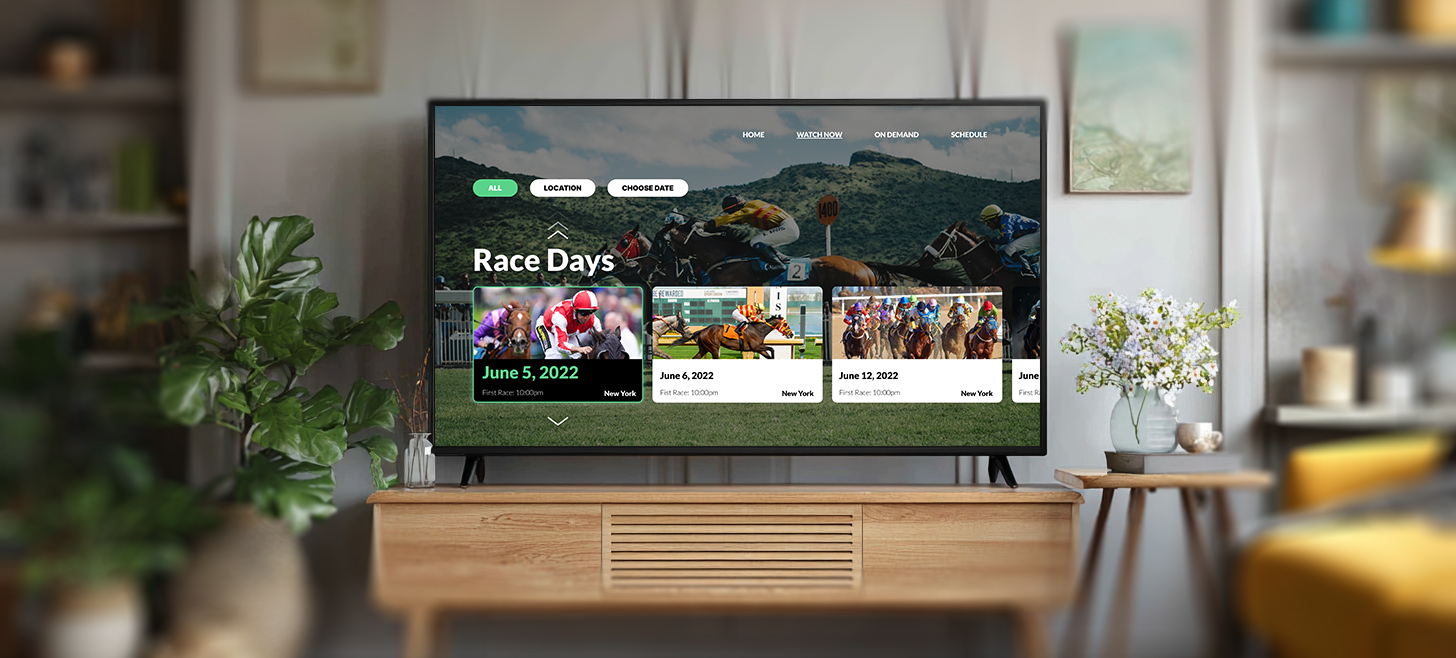
See how we helped a horse racing venue bring fans trackside with a multi-platform live streaming solution, delivering real-time races, multi-camera views, and on-demand replays — all in just 2.5 months.
Choose protocols that match your latency, scale, and device requirements. Today, the ecosystem looks like this: HLS and DASH (and their low-latency variants LL-HLS / LL-DASH) are the default for scalable playback.
WebRTC remains the go-to option for true sub-second interactivity (chat, betting, live collaboration) but is more complex and costly to scale.
Expert perspective
“Before, you had to choose between classic HLS/DASH with delays anywhere from 6 to 15 seconds (sometimes even up to 40), or WebRTC, with near-instant latency but that comes with a lot of complexity and high costs. Now, low-latency versions of HLS and DASH have pretty much closed that gap, delivering 3-4 second latency without abandoning standard CDN infrastructure.”
SRT is a playback protocol that’s rarely used for delivering content directly to end users. Instead, it’s a reliable contribution-stage video transport protocol used to send feeds from cameras or remote encoders to ingest servers or CDNs. On the viewer’s side, SRT isn’t typically used for playback, as it lacks native support in browsers and Smart TVs, and player options are quite limited. Hence, SRT is best suited for reliable transport between production nodes.
Other contribution options include:
Plan CDN integration around those choices: use edge servers and cache-control to reduce buffering, distribute origin load, and keep startup times low. Combine that with adaptive bitrate streaming so the player can switch quality dynamically based on network conditions, as this is essential for consistent playback across mobile, desktop, and connected TVs.
Architecture decisions also matter when designing a live streaming platform. Microservices are often the best fit for large-scale, high-concurrency systems, allowing you to scale individual components like ingestion, transcoding, chat, analytics, and monetization independently.
Expert perspective
“For a smaller platform, however, microservices can be overkill, creating extra overhead in orchestration, DevOps, and CI/CD. So a monolithic or modular approach may be more efficient at early stages.”
Server-side events and WebSocket support handle real-time interactivity, and load balancers and failover clusters keep streams stable under heavy traffic. This approach ties together all the platform components, creating a flexible, high-performance platform built for both viewers and creators.
Deliver content without borders across web, mobile, TV apps, streaming devices, and custom Android TV launchers for STBs.
Multi-screen client apps for web, mobile, Smart TVs, and set-top boxes let viewers enjoy content across devices with a fluid experience.
Apps should offer responsive design and smooth playback. On Smart TVs, leverage native players and APIs to benefit from hardware-accelerated decoding. On mobile, support touch-friendly interfaces and second-screen companion devices where relevant.
Expert perspective
“Not too long ago, building fully native apps for every platform was the obvious call. But cross-platform frameworks like React Native or Flutter have since changed that calculus, delivering the same great UX at a significantly lower total cost of ownership.
With native bridges and video-rendering optimizations, we’ve found a solid balance: most of the UI and business logic are cross-platform, but the streaming-critical parts, like player, DRM, and analytics, remain on native SDKs.
This hybrid approach speeds up releases, helps maintain a consistent UX across platforms, and reduces development costs and time-to-market without sacrificing playback quality.”
The sweet spot is knowing what deserves native treatment and where cross-platform makes more sense. Use native SDKs for iOS, Android, and TV platforms for performance-critical parts like media processing. Cross-platform frameworks let you move faster and keep a unified experience across devices.
The best way to befriend platform users is to prioritize UX/UI design. When given simple navigation, content discovery, and intuitive search, people interact with live features like chat, polls, reactions, Q&A, and multi-camera angles more actively.
As a viewer, you might want to bookmark your favorite streams, subscribe, or schedule notifications for upcoming broadcasts, so the platform should provide these options. AI-driven recommendation algorithms can then suggest relevant live or recorded content based on behavior and session data.
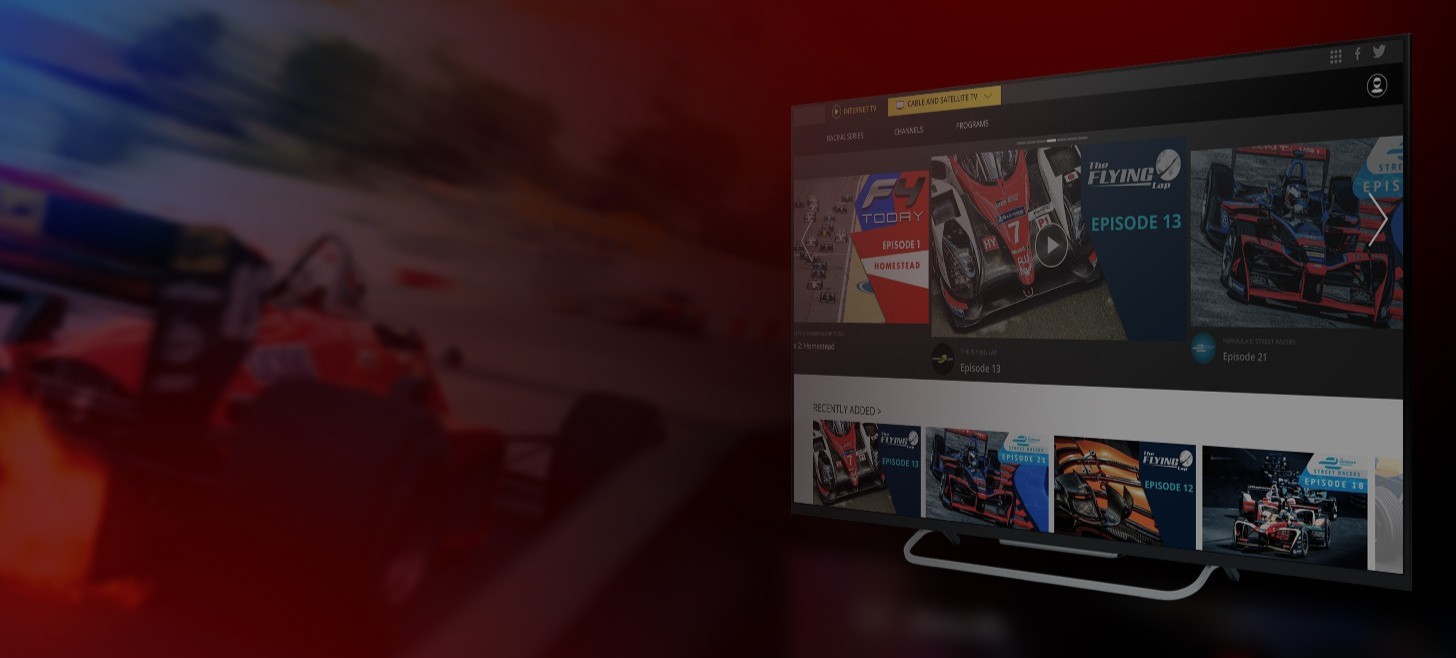
Bringing motorsports’ fans closer to the action: we built a multi-platform SVOD streaming solution with live and on-demand video, scalable performance, and cross-device support.
It’s helpful to set up a media asset management (MAM) system to manage ingest, transcoding, storage, metadata tagging, and workflow automation. Cloud-based storage and scalable pipelines can ensure smooth live-to-VOD conversion, while content moderation tools, DRM support, and automated thumbnail or highlight generation simplify large-scale event management.
Designing the backend to handle peak viewers with minimal latency is recommended. Cloud auto-scaling, microservices orchestration, and containerized deployments support traffic surges. End-to-end encryption, token-based authentication, DRM, and secure APIs help protect streams and user data, and real-time analytics dashboards allow monitoring for anomalies and dropped frames.
Collecting live data on user behavior, engagement, stream quality, and revenue may inform better decisions. AI can offer personalized recommendations, predictive caching, anomaly detection, or automated highlight generation. Dashboards for creators and admins could help track performance, optimize schedules, and identify top-performing content.
Why track all this? Because data is what replaces hunches with hard evidence. By monitoring in real time, you can spot problems before viewers do, keep engagement high, and discover what really drives retention. Creators get tools to refine their content strategy, and businesses gain clear insight into ROI and opportunities for scaling.
We helped a major media company launch a real-time soccer highlights solution, cutting video processing time by 72%. The ML-powered platform detects key moments, filters irrelevant content, and publishes highlights across YouTube, Vimeo, and other platforms, live or VoD.
For those new to livestream production, it can be challenging to define all the necessary requirements. Even for experienced teams, questions may still arise. Over the past years, we have successfully delivered numerous live streaming solutions across various formats and scales, so we can share what to pay attention to when choosing a reliable provider.
| What to avoid | What to opt for |
| Agencies with little experience in live streaming or multi-platform apps | Teams with years of focus in live streaming, OTT, and multi-screen solutions |
| Providers with limited technical expertise or only web/website experience | Developers skilled in scalable architectures, microservices, and real-time video technologies |
| High-cost packages with unnecessary services | Transparent pricing focused on features you actually need |
| Agencies rushing projects without considering long-term growth | Partners prioritizing performance, scalability, and ongoing support for your platform |
Today’s audiences expect to interact, react, and influence what’s happening on screen. Learning the technical and UX requirements is key to effectively build a live streaming platform.
Check out the following must-have features that can pull viewers in:
This changes the viewing experience from passive to participatory, which in turn supports higher engagement and loyalty.
In addition to UX features, it’s crucial to support the right types of interactive content and capabilities to build a successful live streaming platform. In our practice, this is what helps keep viewers engaged, encourage them to come back, build trust, and make the overall experience more enjoyable.
In our previous live streaming app development guide we covered the development process and benefits in more detail.

We developed synchronized Tizen and WebOS apps that let viewers control scenes from their phones, creating a truly immersive broadcast. Features like QR-based TV-phone connection and real-time scene switching increased engagement and repeat viewership.
Beyond the basics, a high-performing live streaming platform depends on reliability, scalability, and an uninterrupted user experience that can sustain long-term growth.
A robust platform handles thousands (even millions) of simultaneous viewers without buffering, latency, or service interruptions. This requires careful architecture planning, load balancing, and cloud auto-scaling to meet peak demand effortlessly.
Downtime is not an option. Redundancy, failover clusters, and distributed storage guarantee reliability. Real-time monitoring of latency, errors, and dropped frames lets teams anticipate and resolve issues before users notice.
Smooth playback across devices and networks is a must. Multi-bitrate streaming, real-time transcoding, and multi-CDN edge delivery guarantee every viewer sees high-quality video across mobile, web, and Smart TV, all without putting unnecessary strain on the server.
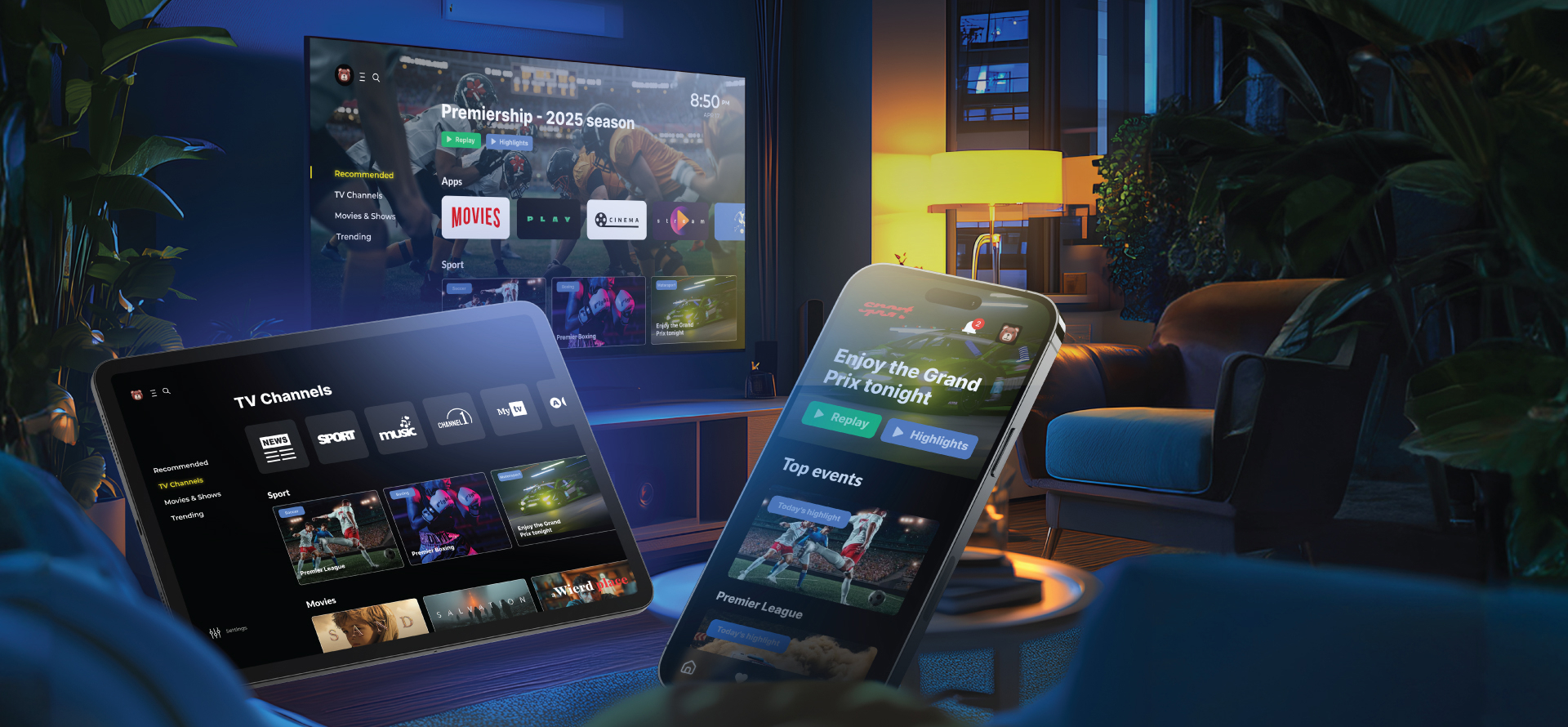
We helped a leading telco launch a white-label OTT app across 25 devices and 13 platforms, delivering seamless VoD/live streaming. Leveraging a single codebase and cross-platform architecture, we ensured fast time-to-market, consistent UX, and reliable performance across web, mobile, Smart TVs, and STBs.
Once launched, work on the platform doesn’t end. Continuous maintenance and updates are essential to fix bugs, optimize performance, and add features based on user feedback. CI/CD pipelines help streamline the deployment of updates. With user growth on the horizon, it’s also important to plan for ongoing scalability.
Be it Smart TVs, set-top boxes, or mobile devices, let your audience join a live stream with minimal equipment, making it easier than ever to connect, engage, and leave an impression.
The real challenge (and opportunity) lies in choosing the right event formats and delivering content that truly resonates. Video isn’t going anywhere, and neither is the potential to create unforgettable live experiences.
Deliver engaging shows, sports, or educational content with smooth performance and intuitive features across mobile, TV, and web.
It’s time to create an experience viewers will love.
1. Global video streaming market is set to exceed $2.6T by 2032 — Fortune Business Insights
2. 2025 Yearly Live-Streaming Trends Report — Stream Hatchet
3. Twitch vs YouTube Gaming vs Kick in 2025: Where Nordic Brand Budgets Should Actually Go — Beta Agency AS
4. Esports viewership soared: LoL Worlds peaked at 6.7M, Saudi festival hit 103M watch hours — Esports Insider
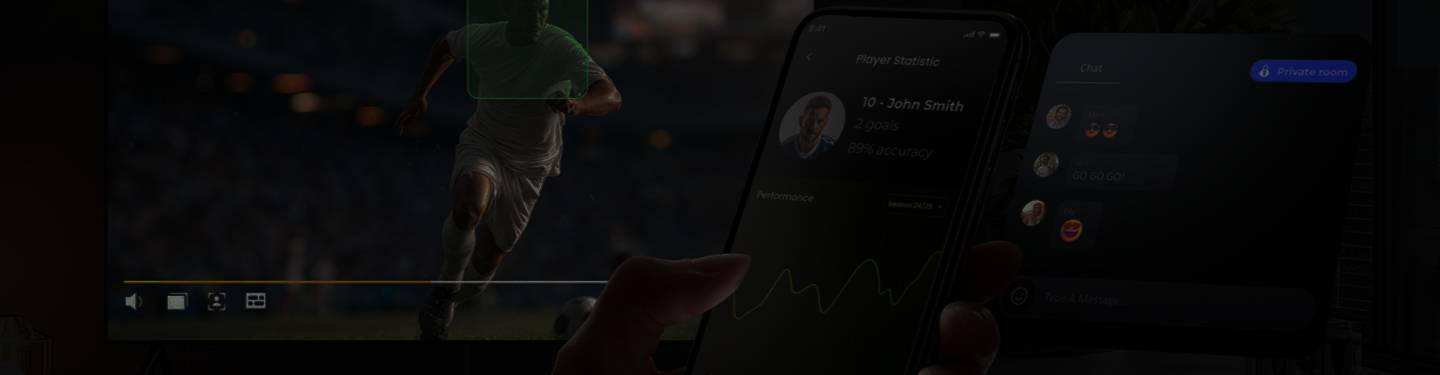
Choose a team experienced in live streaming, OTT, and multi-screen apps. Look for expertise in scalable architectures, microservices, real-time protocols, and content delivery. Transparent pricing, long-term support, and performance-oriented development matter more than cost alone. Avoid agencies with limited experience or a narrow technical focus.
It all starts with clear goals: define your audience, content types, and engagement expectations. A robust architecture ensures low-latency, high-quality streams across web, mobile, and Smart TVs. Incorporate adaptive bitrate streaming, CDN distribution, and multi-device apps to deliver a seamless, interactive experience.
Planning how to build a live streaming platform begins with outlining goals and expected concurrency. Choose the right protocols (HLS, DASH, WebRTC) and CDN strategy. Develop multi-screen apps for web, mobile, Smart TVs, and STBs, ensuring responsive design and smooth playback. Incorporate scalability, reliability, and security measures to handle peak traffic and protect streams.
AI can personalize recommendations, detect engagement trends, predict high-traffic events, and automate highlight generation. Machine learning helps optimize scheduling, detect anomalies in streaming quality, and provide dashboards for creators and admins to track performance. AI-powered insights improve user experience and operational efficiency.
Development timelines for live streaming platforms typically range from 3 to 12 months or more. It depends on the platform’s complexity, requirements, integrations, and scalability goals. An MVP with core streaming features can often be built in 3-6 months, whereas a fully featured solution with low-latency streaming, monetization, advanced security, and multi-device support may take 6-12 months or longer.
A white-label platform usually costs less upfront and gets you to market faster. A custom solution requires a larger initial investment but gives you control over the feature set, integrations, branding, and product roadmap.
If live streaming is central to your business, a custom platform can be the more cost-effective option over time. Notably, custom doesn’t mean that everything will be created from scratch.

