

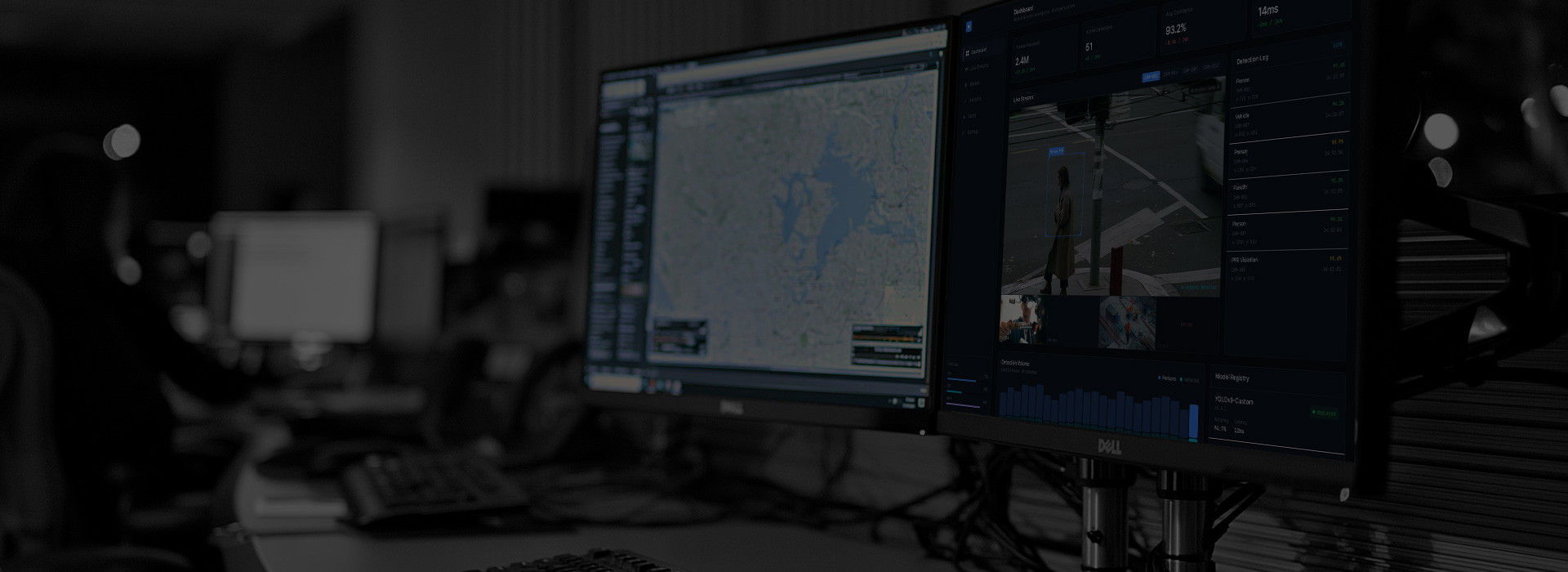
Built for complex CV deployments

Online video expertise

Since 2005, the core engineering practice has been built around online video – compression, streaming, and processing.

Innovative R&D

Internal R&D projects run continuously, not as showpieces, but as the mechanism for testing new concepts before they reach client engagements.

ISO 27001 certification

Customer data handling meets ISO 27001 standards across every engagement as an operational baseline, regardless of project scale.

All-conditions reliability

Real deployments don’t offer controlled conditions. Systems are built and validated to hold accuracy across all of them without manual intervention.

Processing speed

FHD video processing at up to 1ms per frame, detection and tracking across an unlimited camera count, and performance-vs-accuracy calibrated to your deployment.

Accuracy

Background noise stripped before matching, lossless analysis on compressed footage, identification down to 24px eye distance, so false positives filtered before they surface.

Ready to scope your video analytics build?

We’d rather start with the hard questions than oversell a solution. Bring us your detection problem, your constraints, and your timeline, and we’ll tell you what it actually takes to build it right.

AI video analytics software development services

Off-the-shelf models get you to a demo. Reaching production, with accuracy that holds across lighting changes, camera angles, and edge cases specific to your environment, requires a different approach. Here’s what we focus on.

Video analytics

The first stage of any video analytics consulting engagement is framing the problem correctly. That means mapping it against your infrastructure, your data availability, and what accuracy actually needs to look like in your specific environment. That groundwork is what separates a system that holds up in production from one that performs well only in a demo.

  • Use case scoping and feasibility assessment
  • Existing footage audit and dataset gap analysis
  • Model selection and architecture recommendations
  • Accuracy benchmarking against production conditions
  • Infrastructure and deployment constraint mapping

Video processing

Raw video feeds rarely arrive ready for analysis. The full preprocessing layer needs to be right before downstream models can work on clean, consistent input, including restoration pipelines and broadcast-specific anomaly detection.

  • Resolution upscaling, deblurring, de-hazing, and artifact removal
  • Inpainting and video restoration
  • Intelligent ad-to-scene adaptation
  • Automated annotation and CV-based metadata tagging
  • Broadcast anomaly detection (black screens, glitches, compression artifacts)

People tracking

Tracking individuals accurately across a live feed is harder than it looks. Occlusions, motion blur, shaky footage, and adverse weather all degrade standard detection pipelines. Your system needs to handle those conditions at scale.

  • Multi-person tracking with high accuracy under occlusion
  • Advanced facial recognition
  • Crowd density and flow analysis
  • Real-time social distance monitoring
  • Walking route identification and analysis
  • Complex interaction and occlusion handling

Object detection and tracking

Detection and tracking pipelines break down where it matters most: in crowded scenes, under occlusion, with fast-moving or partially visible objects. Those are the conditions your system needs to be built for, not treated as edge cases.

  • Static and moving object detection and tracking
  • Abandoned object detection with owner linkage
  • Weapons recognition
  • Audio environment analysis (gunshot and explosion detection)
  • Comprehensive object profile creation
  • Occlusion, deformation, and multi-object interaction handling

Vehicle detection and identification

Camera shake, poor lighting, rain, and glare are standard conditions in traffic and parking environments, they come with the territory. A vehicle detection system that hasn’t been trained and validated against them will tell you that on day one in production.

  • Multi-type vehicle recognition (cars, bicycles, scooters, ships, and more)
  • Real-time vehicle location tracking
  • License plate recognition with high-accuracy OCR
  • Abnormal driving behavior detection
  • Illicitly parked vehicle monitoring
  • Comprehensive traffic flow analysis

Semantic segmentation

Pixel-level scene understanding opens up use cases that bounding-box detection can’t address, like virtual background generation, autonomous driving analysis, visual effects work, precise foreground isolation. Getting it right requires per-frame accuracy at scale.

  • Foreground and background region detection and separation
  • Full-spectrum object labeling
  • Virtual background creation for video conferencing
  • Visual effects assistance for film and broadcast
  • Autonomous driving scene analysis
  • CNN-based motion and detection techniques

Pattern recognition

Recurring patterns in video data carry operational signal, but extracting it requires more than running a pretrained classifier. That means the full cycle: data collection and cleaning, pattern identification, classification, and output your team can actually act on.

  • Video data collection, cleaning, and noise removal
  • Pattern identification and categorization
  • Supervised pattern classification
  • Statistical, syntactic, and neural recognition methods
  • Automatic pattern description and grouping

AI video analytics software development solutions

Real-time video analysis

Production video feeds don’t wait. Detection, tracking, and behavior analysis need to run at frame rate, against footage that arrives with motion blur, occlusions, and inconsistent lighting. The pipeline is built to handle that without trading accuracy for speed.

Core capabilities:

  • Object detection and tracking processed at up to 1ms per frame
  • Real-time object attribute collection and profile creation
  • Behavior and action detection on live feeds
  • Robust performance across moving cameras, occlusions, and poor lighting
  • User-facing tools for results analysis and post-processing
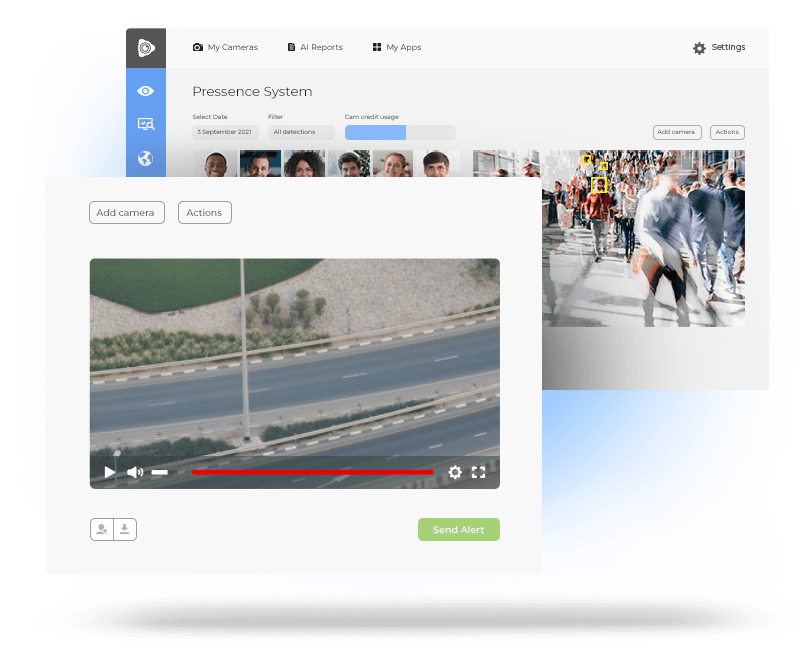
Performance-vs-accuracy optimization

The right balance between inference speed and image analysis accuracy depends on your hardware, your throughput requirements, and how much latency your use case can tolerate. Getting that balance right requires tooling built around your specific deployment.

Core capabilities:

  • Frame-accurate performance-vs-accuracy measurement and comparison
  • Custom performance testing framework scoped to your deployment
  • Optimal accuracy/throughput configuration for your target hardware
  • Advanced ELK-based logging with fully automated real-time accuracy reporting

Video analytics services use cases

Custom AI video analytics software development delivers the most value where detection and analysis problems are too domain-specific for generic models to handle. These are those domains.

Safety

Public safety

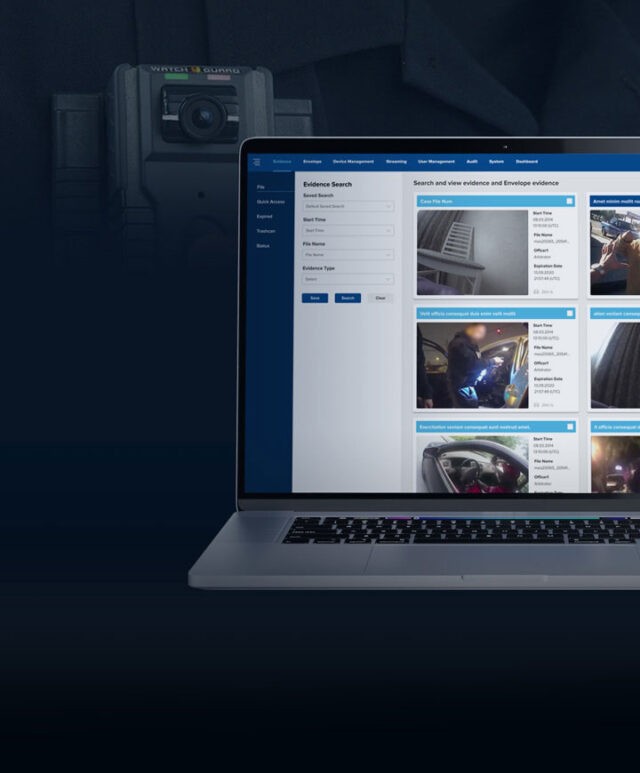
Effective safety monitoring is about what the system can reliably detect and flag in real time. Models need to be trained on the specific scenarios that matter in your environment: crowd dynamics, suspicious behavior patterns, abandoned objects, audio events that precede or accompany incidents, and signs of violence before they escalate. Generic detection pipelines don’t cover that ground.

Proctoring

Proctoring

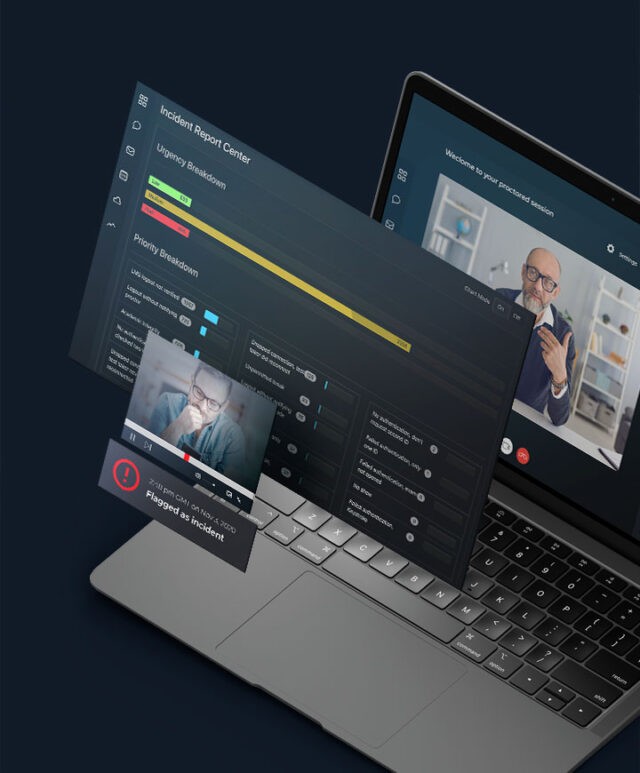
Online proctoring and engagement monitoring demand biometric-grade accuracy under real exam conditions. Systems in this space need to handle iris and face recognition, posture and gesture analysis, and the behavioral signals that distinguish genuine engagement from evasion. None of that changes when the lighting is bad and the camera is a laptop webcam.

Engagement

Viewer engagement

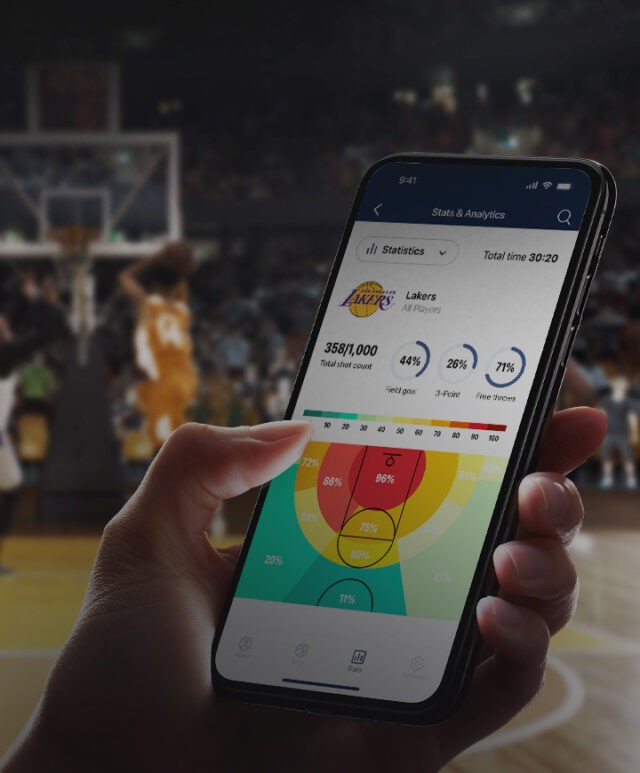
Understanding how an audience responds to content, rather than what they click, requires reading sentiment and emotion signals at the frame level. That data grounds personalization in observed reaction: ad placement timed to emotional peaks, dynamic content highlights, and audience segmentation built on what people showed, not what the algorithm guessed.

Marketing

Marketing

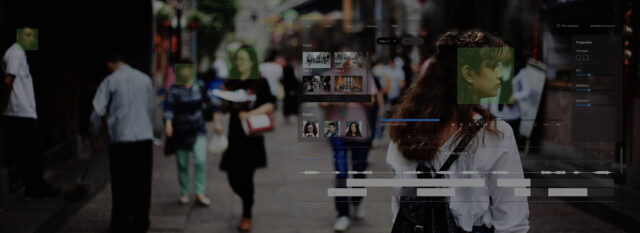
Customer recognition at the point of entry changes what personalization is operationally possible. Combined with sentiment analysis across touchpoints, it gives marketing teams behavioral signal that purchase history alone doesn’t capture. That translates to loyalty programs, messaging, and creatives built around observed preferences rather than demographic proxies.

Schedule a call with our video analytics experts

We’re here to discuss complex business initiatives. Let’s connect and discuss the benefits our video analytics services can give your company.

Computer vision beyond video analytics

Image analysis

Object detection and recognition

Custom image analysis is where video analytics capabilities extend into broader visual data problems, like document processing, biometric security, or real-time object recognition. Where off-the-shelf platforms fall short, the architecture gets built around your specific data and operational requirements.

Text analysis

Speech, text and ocr engineering

Converting speech to text, text to speech, and printed content to structured data are solved problems in theory, but getting them to perform accurately on domain-specific language, accented speech, or low-quality input requires custom training. Use cases span meeting transcription, multilingual subtitle generation, chatbot enrichment, and document digitization.

Facial recognition

Facial recognition systems

Facial recognition accuracy degrades fast in real-world conditions, with varying angles, lighting changes, partial occlusions, aging. Systems built for operational use need to hold precision across those variables, whether the application is access control, attendance monitoring, or suspect identification in security environments.

Biometrics

Tailored biometrics solutions

Security challenges in banking, law enforcement, airports, and education don’t share the same threat model, which means biometric systems built for one context rarely transfer cleanly to another. Voice biometrics, keystroke recognition, and fingerprint identification get architected around the specific security requirements and compliance constraints of your domain.

Object detection

Object detection and recognition

Detecting and tracking objects in real time unlocks use cases across security, retail, and education, like secure environment monitoring, student engagement analysis, loyalty program personalization, emotion analysis, and temperature detection. The detection architecture always gets scoped to your environment.

Tools we build with

We use innovative ML tools to ensure accuracy and precision, when building your custom solution.

DL frameworks

Tensorflow • PyTorch • Core ML • MXNet • Caffe2 • Chainer • Theano • Sonnet • Microsoft Cognitive Toolkit

Modules/Toolkits

Kurento’s computer vision module • NVIDIA DeepStream SDK • TensorRT • GStreamer

Services

Google Cloud AI • Amazon Machine Learning • Azure Machine Learning

Hardware

Server • Desktop • Edge devices • Cloud • Mobile • Tablet

FAQ

Do you deploy video analytics on the edge, in the cloud, or as a hybrid solution?
video analytics solution

Deployment architecture gets decided based on your latency requirements, data sovereignty constraints, and available infrastructure, not defaulted to one approach. Edge deployment makes sense when real-time inference needs to happen close to the camera, bandwidth is limited, or footage can’t leave the premises. Cloud deployment fits use cases where centralized processing, storage, and scalability matter more than raw latency. Most production video analytics services architecture ends up hybrid – edge inference for time-sensitive detection, cloud aggregation for analytics, reporting, and model retraining. The right split gets defined during scoping, not after the build starts.

Can your solutions automatically moderate user-generated video content?
video analytics solution

Yes. Automated content moderation is one of the more technically demanding video analytics applications, and one where generic moderation APIs tend to fall short on domain-specific content categories. Custom-trained classifiers can be built around your specific moderation policy: explicit content, violence, brand safety violations, copyright-infringing material, or platform-specific rules. The pipeline covers real-time flagging on live uploads, batch processing of existing libraries, and confidence-threshold tuning to balance automation with human review queues.

Can your video analysis models integrate with our existing Video Management System (VMS) or standard IP cameras?
video analytics solution

Integration with existing VMS platforms and standard IP camera infrastructure is a routine part of engagements. Building parallel infrastructure is rarely necessary or practical. Models get deployed as analytics modules that sit alongside your existing VMS, pulling feeds via RTSP or ONVIF-compliant streams. Where direct integration isn’t straightforward, a middleware layer handles protocol translation and feed normalization before inference. The specifics depend on your VMS vendor and camera hardware, which is why infrastructure mapping happens early in the scoping process.

How do you ensure privacy and GDPR/CCPA compliance when analyzing video feeds?
video analytics solution

Privacy architecture gets designed into the system from the start, not added as a layer afterward. That means on-device anonymization where footage can’t leave the premises, selective retention policies that avoid storing raw video beyond what the use case requires, and purpose-limitation controls that restrict what inference models can act on. As an ISO 27001-certified AI video analytics software development company, data handling practices across every engagement meet audited security standards. For deployments subject to GDPR or CCPA, data processing agreements, consent frameworks, and subject access request handling get scoped as part of the build.

What do you need from us to build a custom video analytics Proof of Concept (PoC)?
video analytics solution

The minimum viable starting point is representative footage from your actual environment. Not stock video, not controlled test recordings, but the kind of footage the production system will run on. Beyond that, a clear definition of what the PoC needs to demonstrate: which objects or behaviors need to be detected, what accuracy threshold constitutes a pass, and what the deployment hardware looks like. If existing footage isn’t available, a data collection plan becomes the first deliverable. The more precisely the success criteria are defined upfront, the faster the PoC moves, and the more honestly it reflects what the production system will actually do.

Ready to define your video analytics build?

The first conversation is about understanding your environment, your data, and where existing approaches have fallen short. No pitch, just the right questions.

GET IN TOUCH