












This website uses cookies to help improve your user experience


Streaming crossed a threshold that would have seemed far-fetched just a few years ago. In May 2025, for the first time in Nielsen’s recorded history, streaming surpassed broadcast and cable combined, accounting for 44.8% of all U.S. TV viewing time. By December 2025, that share hit a new record of 47.5%1. The global video on demand (VoD) market, valued at around 198 billion USD in 2025, is projected to reach 242 billion USD by 2031, growing at a compound annual rate of over 11%2.
That growth is real, but so is the competition. New platforms are launching constantly, and users have become ruthless about which ones they keep. They don’t just want access to content. They expect instant playback, smooth performance on any device, recommendations that feel personal, and an experience polished enough that nothing interrupts the watch.
Building a platform that delivers all of this requires making the right calls across architecture, infrastructure, and product design from the very start. Here’s what such video on demand app development actually takes.
Key takeaways:
A video on demand (VoD) app is a software platform that lets users browse, select, and watch video content whenever they want, on whichever device they have, without relying on broadcast schedules or physical media. Instead of tuning in at a set time or buying a disc, viewers access a streaming service that delivers content over the internet in real time, or lets them download it for offline viewing.
VoD apps come in several forms:
Before thinking about architecture or infrastructure, it helps to know what a competitive VoD platform actually needs at launch:

To build a VoD platform that works at scale and keeps both users and stakeholders happy, you need to get a few core things right from the very beginning.
Users might watch content over fiber, mobile data, or public Wi-Fi and expect the same smooth experience everywhere. Your platform needs adaptive bitrate streaming, intelligent buffering, and dynamic video compression that adjusts quality in real time based on connection speed and device capabilities.
Whether you’re distributing exclusive shows or premium live streams, securing content is critical. That means implementing DRM (Digital Rights Management), token-based authorization, content encryption, and watermarking strategies that discourage redistribution without hurting performance.
For VoD, fast startup time and minimal buffering rely heavily on smart content delivery infrastructure. A strong CDN strategy helps serve users from geographically distributed nodes, reducing lag and improving quality across regions, particularly in mobile-first or bandwidth-constrained markets.
Today’s viewers expect seamless experiences across phones, tablets, Smart TVs, desktops, and game consoles. That requires responsive design, platform-specific UI adjustments, and native app development for ecosystems like Android TV, Apple tvOS, Samsung Tizen, LG webOS, and others.
One-size-fits-all content presentation doesn’t cut it anymore. Features like smart recommendations, “continue watching” lists, and behavior-based carousels encourage users to spend more time on the platform and reduce drop-off. AI-driven algorithms power recommendations that match individual preferences.
Behind the scenes, a VoD app needs to work well with your broader business ecosystem. Integration with CRMs helps you track user journeys, CMSs simplify content updates and publication workflows, and analytics platforms provide real-time performance monitoring and trend discovery.
Access to meaningful data like viewer behavior and content performance lets you make smarter business decisions. By collecting metrics like watch time, drop-off points, and engagement rates, you can fine-tune your catalog, refine recommendations, test monetization strategies, and respond quickly to market shifts.
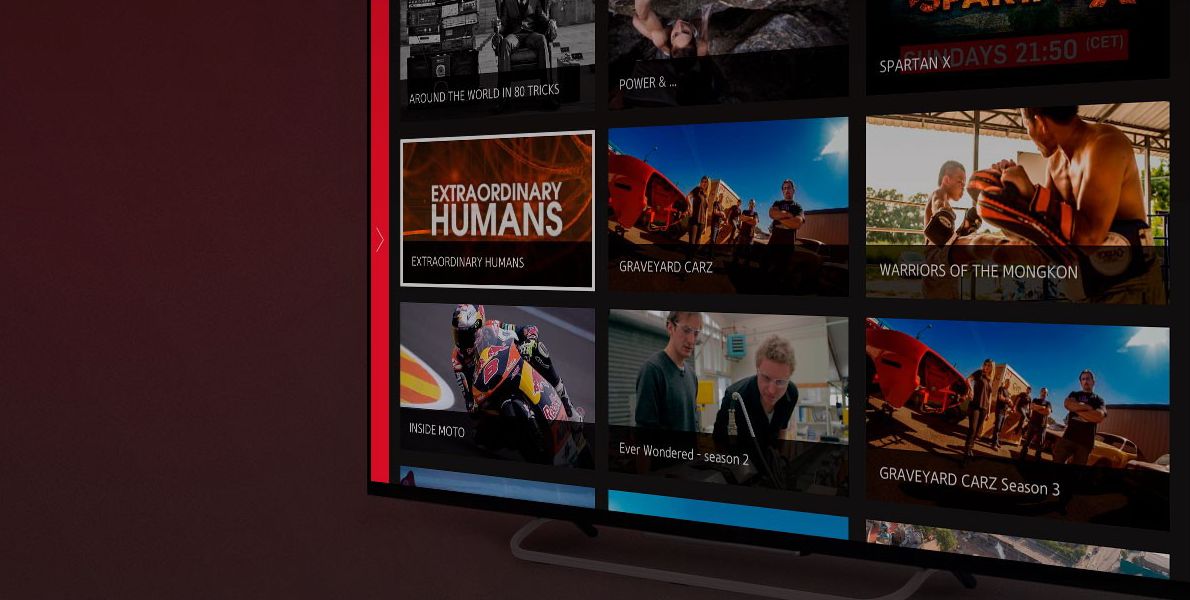
A youth-focused broadcaster wanted a Smart TV app with both live and on-demand video, tailored for Tizen-based and other connected platforms. We delivered a multi-platform solution that favored quick, flexible configurations. As a result, the client expanded market reach and improved ad revenue.
Building a VoD platform is a multi-stage process. Each step builds on the last, and skipping or rushing any of them tends to surface later as technical debt or a product that can’t scale.
Decide who you’re building for, what content you’ll offer, and how you’ll monetize. This is also when you set your roadmap: what ships in v1, what comes later, and how you’ll reach your first users.
VoD interfaces live or die by how easy they are to navigate. Build prototypes early to validate layout and flows before any code is written, as it saves significant rework later.
If you’re working with third-party content, licensing needs to be locked in before development starts. Agreements should specify which territories, platforms, and timeframes are covered.
A headless CMS built for video platforms lets you manage metadata, control publishing workflows, and connect content to the frontend through clean APIs. The right choice here shapes how easy the platform is to operate day-to-day.
This is where the architecture comes together: streaming infrastructure, user accounts, payments, DRM, CDN connections, and third-party integrations. Decisions made here determine how the platform holds up under load.
Web, mobile, and Smart TV apps each have different technical requirements and UX conventions. Depending on your targets, this means native development, cross-platform frameworks, or both.
Playback quality across network conditions, cross-device compatibility, payment flows, content security, CMS workflows need to be verified before release.
Submit to app stores and connected TV ecosystems. Review platform requirements and regional compliance in advance to avoid delays at submission.
A strong platform still needs promotion. Define your acquisition channels early and build messaging around what makes your content or experience distinct.
Post-launch is where platforms actually grow. Use analytics to understand what’s working, ship updates regularly, and treat the product as an evolving service rather than a finished build.
Even with careful planning, building a VoD app can come with unexpected hurdles.
Take one of our recent projects. A European telecom provider faced several challenges with their existing VoD service.
Their web platform was resource-heavy, causing slow load times and high bandwidth use. On top of that, the mobile user interface was basic and didn’t meet user expectations, risking loss of market share. Content management and advertising capabilities also needed a serious upgrade.
Here’s how we helped turn things around:
The result was a competitive, user-focused VoD platform that not only improved performance but also became a cornerstone of the client’s on-demand entertainment strategy.

Our custom VoD application development services cover everything from concept to launch.
Cost depends heavily on scope, team location, and whether you’re building from scratch or starting from a white-label base.
Usually means higher upfront investment, full control over product and architecture, a longer time to launch, and a solution that scales cleanly with your business.
Typically means lower initial cost, faster time to market, limited control over the underlying product, and a pay-as-you-grow pricing model.
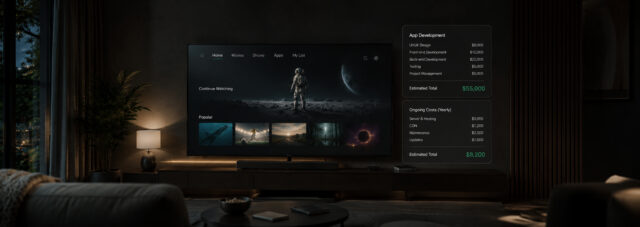
As a rough guide, custom VoD development typically falls into three tiers:
These figures cover development costs only. On top of that, budget for ongoing operational expenses: CDN fees, cloud infrastructure, encoding, maintenance, and content delivery, all of which scale with your user base.
White-label solutions typically cost significantly less upfront, since you’re licensing a platform that’s already built. Pricing usually follows a pay-as-you-grow model scaled by active users or streaming hours, which makes it a solid option for startups and early-stage products that need to reach market quickly.
The trade-off is control. With VoD platforms you’ll have limited flexibility over architecture and design, and some providers charge additionally for features or integrations that become essential as the platform grows.
Regardless of your approach, several factors shape the final number:
Selecting the optimal content monetization model is crucial for maximizing return on your content investment. A well-aligned model helps increase profitability and plays a key role in reducing churn.
Users watch content for free in exchange for ads. Works well for platforms targeting a broad audience and aiming for high viewer acquisition.
Pros:
Cons:
Unlimited access to content for a recurring fee. The dominant model globally, SVOD, recently accounted for 58.3% of the VoD market3. Suits companies with deep content libraries or original productions.
Pros:
Cons:
Users pay per title, either to rent for a limited window or buy for permanent access. Best suited for premium or one-off releases.
Pros:
Cons:
The market has moved clearly in this direction. Netflix, long seen as a pure SVOD service, launched an ad-supported tier in late 2022 and scaled it aggressively: by early 2026, it reached 250 million monthly active viewers4. Disney+ followed a similar path, with ad-tier adoption growing to 44% over the same period5. AVOD and SVOD are no longer opposites, they’re layers of the same strategy.
Common hybrid configurations:
Hybrid monetization gives you more flexibility and helps balance user acquisition with long-term revenue growth.
Launching a VoD platform starts with three decisions: the right technology stack, a clear picture of your audience, and a monetization model that fits your content. Get those right, and you have a solid foundation.
But launching is only the beginning. Long-term success depends on scalability, reliable performance, and the ability to adapt to new devices, shifting viewing habits, and a monetization environment that keeps evolving. Whether you’re building a custom platform from the ground up or configuring white-label VoD app development solutions to get to market faster, the fundamentals remain the same: solid infrastructure, smart content delivery, and a product that earns repeat visits.
Feel free to reach out to Oxagile, we’re here to support you at every step.
1. The Gauge, May 2025 report — Nielsen
2. The Gauge, December 2025 report — Nielsen
3. Video-on-Demand Market Report — Mordor Intelligence
4. Netflix Upfront Presentation — Variety
5. Ad-Tier Adoption Research — Digital i
VoD app development covers the full build of a video streaming platform: backend infrastructure (streaming engine, user accounts, payments, DRM), frontend apps for web, mobile, and Smart TV, content management, CDN integration, and analytics. The scope varies significantly depending on the number of target platforms, monetization model, and whether you’re starting from scratch or using a white-label base. Most production-ready platforms also require content licensing, regional compliance, and ongoing post-launch development.
The major cost drivers in VoD app development include feature scope, the number of supported platforms, content licensing, and compliance requirements. Infrastructure costs (CDN, cloud hosting, encoding) also grow significantly as your user base scales.
AVOD works well for rapid audience acquisition at scale. SVOD suits platforms with rich or original content libraries aiming for predictable recurring revenue. TVOD works for premium or one-off releases. Hybrid models combine approaches to serve different audience segments and diversify revenue, which is now the direction most major platforms are heading.
Smooth adaptive playback across devices and networks, strong content protection, fast global delivery via CDN, multi-device availability, personalized viewing experience, integration with business systems, and solid analytics. These aren’t optional extras, they’re the baseline for a competitive platform.
Licensing defines where, how, and for how long your content can be distributed. Whether you produce originals, license from studios, or accept user uploads shapes your entire product strategy, and getting it wrong can expose you to significant legal and operational risk.
Not always, but it’s a common growth path. Many platforms start with on-demand content and add live streaming later to support sports rights, events, or news. Live streaming adds meaningful complexity to the stack: lower-latency delivery, real-time encoding, and more demanding CDN requirements. If live content is part of your roadmap, it’s worth factoring into the architecture early rather than retrofitting it later.

