












This website uses cookies to help improve your user experience




Video-on-demand (VoD) streaming has become second nature, but the rules of engagement are changing fast. What used to be a simple subscription is now a mix of personalization, ad-supported plans, sports highlights, and AI that decides what we see next.
VoD platforms in 2025 face a new reality: Viewers jump between apps, experiment with bundles, and even spend hours on free FAST-style channels, yet they demand smooth playback and consistency across every screen.
This article takes a closer look at the defining VOD trends 2025. We’ll examine how revenue models are shifting, why social-driven discovery matters more than ever, and how AI is transforming both recommendations and monetization.
We’ll also highlight what’s fading away, what’s on the rise, and what these changes mean for the VOD future. Along the way, you’ll see real examples and practical takeaways — insights you can use, not just theory.
Open any streaming app in 2025 and you’ll see the new rules at play. Ads are no longer a compromise: Netflix’s ad-supported plan now reaches over 94 million users monthly1, outpacing TV networks among younger viewers. Flexibility is standard: with AVOD’s share climbing toward 27% by 20292, most platforms run ladders of free, ad-light, and premium tiers.
FAST channels, once seen as side projects, now act as free sampling funnels that guide audiences into on-demand libraries. Discovery often begins on TikTok or YouTube rather than inside the app itself, making social both a competitor and the most powerful top-of-funnel. And all of this is delivered in sharper quality at a lower cost, thanks to AV1, HDR10+, and smarter encoding.
The takeaway? VOD in 2025 stands on a new foundation: ads, flexibility, social, and efficiency. Each is reshaping product, growth, and operations. Let’s dive deeper into how these shifts unfold.
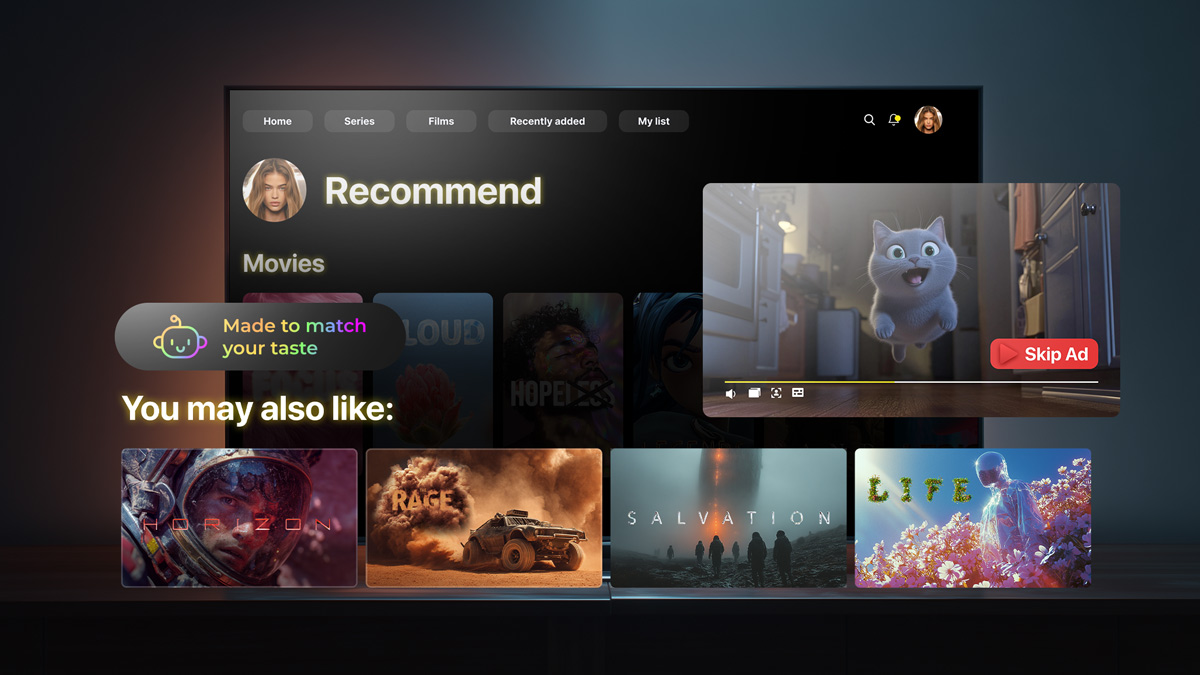
Imagine opening your streaming app on a Friday evening. Instead of scrolling through endless rows of genres, you’re greeted with a curated reel: the next episode of the series you paused midweek, a highlight pack from your favorite team’s last match, and a film suggestion that matches the mood of what you watched yesterday. Seconds are all it takes for the watching to begin — with no frustration and no search fatigue.
That’s the power of personalization in 2025: it cuts decision time, reduces churn, and keeps viewers loyal. For users, it feels natural. For platforms, it’s the difference between someone watching nightly or canceling their subscription.
Behind the scenes, three layers make this work:
Personalization also fuels monetization. When the same context graph drives both content and ads, placements feel relevant instead of intrusive. That’s why providers in 2025 treat personalization as the engine of loyalty and revenue, not an add-on.
Many businesses now look to interactivity and personalization solutions as a strategic foundation, because in practice, a well-personalized app is the one people return to every day.
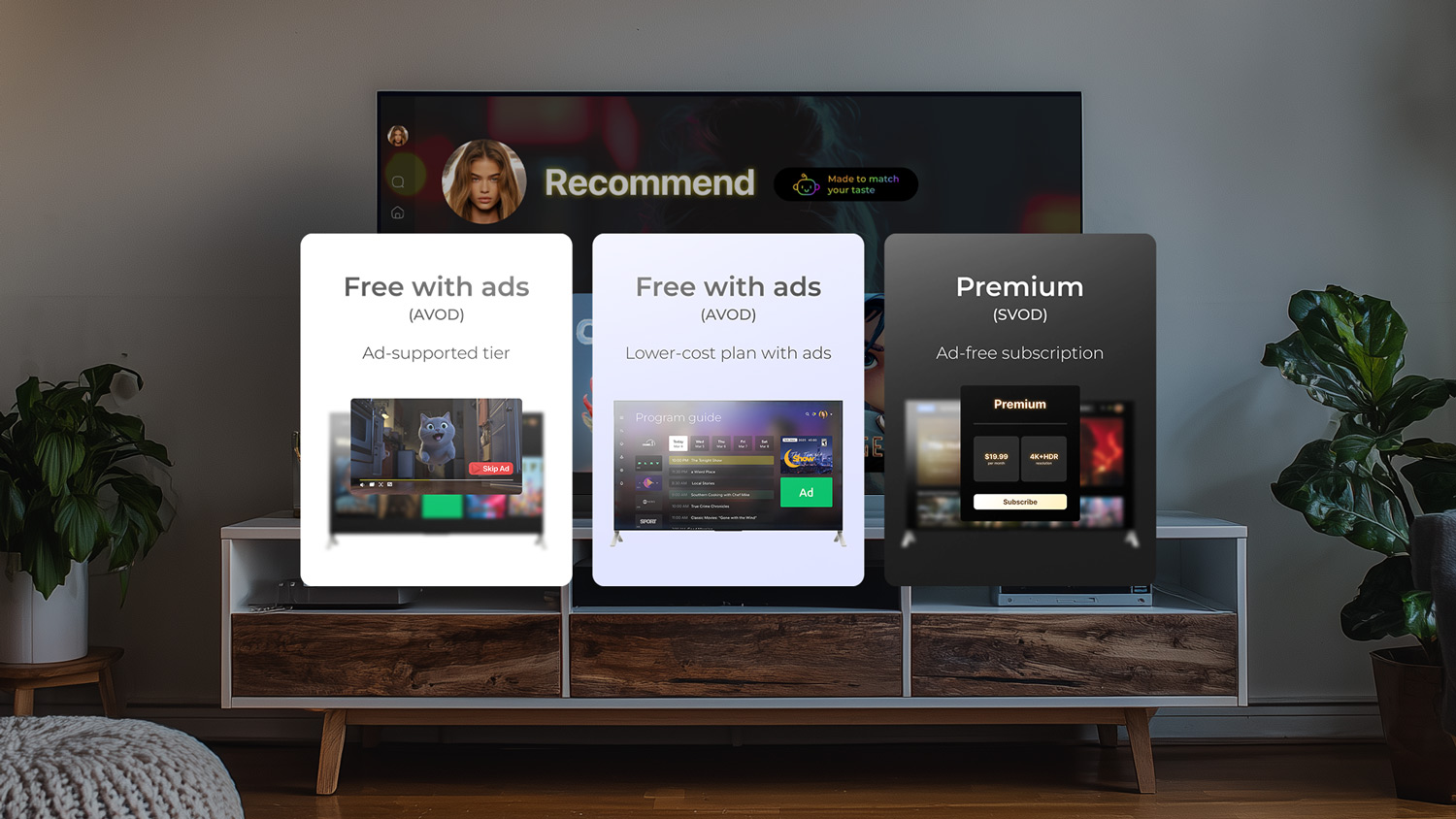
Let’s picture a new subscriber landing on a streaming app in 2025. They’re met with options: pay a premium for ad-free, save a few dollars with light ads, or start free with promos and highlights. The choice isn’t overwhelming — it’s empowering. Each viewer feels like the platform is built for their budget and habits.
That’s why pure subscription models no longer have enough oxygen. Growth today depends on hybrid monetization, blending subscriptions, ads, and promotional funnels into one flexible ladder.
When it comes to platforms, hybrid monetization is not only about combining models but also about building the right foundation. This includes identity management, entitlements, dynamic ad insertion, and brand-safe controls, all of which depend on solid VOD platform development to scale reliably. Add a promotions engine and test different cohorts, and you unlock a model that is resilient, scalable, and adaptable.
And the next wave is already here. The NAB Show 20253 and vendor roadmaps point towards AI-assisted ad insertion, smarter prefetching, and enhanced measurement4. This makes hybrid models not only flexible but also more effective at predicting success.
Just imagine: the TV is on in the background while dinner is cooking. A free channel is running a loop of crime dramas, and without even realizing it, you’ve let three episodes roll. Then curiosity strikes, you grab the remote, click “see full series,” and suddenly you’re inside the on-demand catalog. That handoff is exactly what FAST does best: it lowers the barrier to entry, then funnels viewers deeper.
By 2025, FAST has evolved from “just free channels” into a behavior shaper:
FAST is less about the channels themselves and more about the logic they teach audiences: lean back, sample for free, then step forward when you’re ready to dive deeper. Platforms that internalize this rhythm turn casual channel-surfing into committed on-demand viewership.

The 2025 VOD landscape is packed with opportunities: from ad tiers and bundles to AI-driven personalization and smarter delivery. We know how to translate these trends into real business results and help you maximize streaming revenue with the latest VoD tech.
Scroll, swipe, share — that’s how much of life unfolds in 2025. Friends catch up on TikTok edits before they text each other. Families stream YouTube clips on the living room TV. News breaks first on Instagram Stories, not evening broadcasts. Social platforms have become the default entry point for media, shaping what people talk about, how they spend, and where they go next.
For VOD, this means social isn’t a side channel, it’s the front door:
In 2025, discovery doesn’t begin in your app. It begins on a feed. Treating social as a research lab, distribution channel, and acquisition funnel ensures that the scroll becomes a stream, and the audience stays with you once they click through.
If you streamed something today, you already met AI — you simply didn’t notice. It’s the reason the captions were ready in your language, the app suggested the next episode you actually wanted to watch, and the ad break felt shorter than usual. In 2025, AI quietly runs through every layer of VOD.
What used to be pilot projects is now invisible infrastructure. Well, AI isn’t there to impress you with catchy phrases, is it? It’s there to reduce decision time, enhance playback, and make streaming feel more seamless.
And for platforms, it’s the competitive edge: lower costs, faster releases, and stronger engagement. AI isn’t limited to captions or recommendations; it’s part of a larger ecosystem where delivery, monetization, and personalization need to work together — something that calls for custom video solutions tailored to your stack.
For a sports fan, experiencing a match is about more than simply watching it — it’s about living it. Think of a Manchester United (or any other team) game: fans watch it live, rewatch key highlights in the halftime break, share a clip of the winning goal, and then binge post-match interviews or tactical breakdowns the next day. This cycle of live, replay, and recap is what makes sports one of the most powerful loyalty drivers in VOD.
To capture this behavior, platforms are shaping their VOD strategies around several interconnected trends:
What really sticks is the mix: a live match brings the spike, while highlights, player hubs, and curated collections stretch one evening’s excitement into weeks of engagement. Sports aren’t only about live rights, they’re about capturing the endless appetite for reliving the best moments.

At Oxagile, we helped a national satellite TV provider reinvent the matchday experience with a second-screen app that brought fans into the action (literally). While the game aired on the main screen, fans used their phones to vote on outcomes, chat in real time, and track live stats — all perfectly synced with what’s unfolding live. The platform handled up to 500,000 concurrent users, transforming routine broadcasts into highly engaging, interactive experiences.
This project shows how sports content can move beyond passive viewing: it becomes a two-way, interactive connection that deepens user engagement and loyalty.
2025 is the year when platforms can finally cash in on quality gains without inflating delivery bills. Improvements in codecs and distribution tech mean sharper video, fewer stalls, and lower cost-per-stream — a rare win-win in streaming.
For providers, the important thing is clear: using codecs and better delivery isn’t just about “tech hygiene”. They are strategic levers for reducing churn, improving engagement, and keeping margins healthy as demand for UHD and mobile playback keeps rising.
Open any household’s monthly bank statement in 2025 and you’ll see it: four or five separate streaming charges, each creeping up in price. Add music, gaming, fitness apps, and suddenly, subscription fatigue sets in. The reaction is predictable — people start trimming. The question isn’t “what to watch”, but “what to cancel”.
And bundling becomes the safety net. Instead of managing five bills, viewers want one. Telcos wrap streaming into broadband plans. Disney packages Disney+, Hulu, and ESPN+ together. Smaller platforms join forces around seasonal offers. The idea is to save both money and mental energy.
From a provider’s side, bundling is less about discounts and more about stability. A package that keeps a service in the background, even if it’s not used daily, reduces churn. Add flexible features like pause-and-resume or win-back flows, and many “lost” subscribers return within months.
In essence, bundling is effective because it addresses price fatigue by offering convenience.
The rules of digital targeting changed again in 2025. Not with a sudden cookie cliff, but with a steady tightening of privacy requirements. For VOD providers, the direction is clear: first-party data is the currency of the future.
For VOD teams, the takeaway is simple: bake privacy and measurement into your stack now. Those who wait will end up patching later, while those who invest early will control their own data, maintain advertiser trust, and stay aligned with regulations.
Before we wrap up, here’s the full picture of VOD trends in 2025:
Together, these trends outline how VOD is becoming more personal, more flexible, and more connected to everyday digital life, while platforms race to keep costs in check and revenues diversified.
| Trend | Revenue impact | Churn impact | User experience impact |
| Personalization | Higher ARPU via targeted ads and upsells | Lower churn through relevant content | Faster discovery, less decision fatigue |
| Hybrid monetization | Expands monetization via SVOD, AVOD, and bundles | Reduces cancellations from price fatigue | Gives viewers choice and control |
| FAST logic | Captures new ad revenue from free channels | Converts casual viewers into paying users | Seamless entry with low commitment |
| Social as top-of-funnel | Lowers acquisition cost, drives ad revenue | Builds loyalty via community and creator links | Feeds discovery where users already are |
| AI across the pipeline | Boosts ad yield and lowers ops cost | Keeps viewers engaged with smarter recs | Personalized, seamless playback |
| Sports & highlights | Monetizes through rights, ads, and commerce | Anchors loyalty with recurring engagement | Extends value beyond live moments |
| Quality-per-bit (codecs & delivery) | Lowers cost-per-stream, supports UHD monetization | Improves satisfaction, fewer cancellations due to poor QoE | Higher picture quality with smoother playback |
| Bundling | Stabilizes long-term revenue | Keeps services in households even if unused daily | Simplifies bills, reduces “subscription fatigue” |
| Privacy & measurement | Protects ad revenue with compliant targeting | Builds trust and reduces future churn risks | Transparent, less intrusive ad experience |
The story of VOD in 2025 is one of transformation. Personalization is no longer a feature but the heartbeat of loyalty. Monetization has shifted from single-path subscriptions to flexible hybrids. FAST channels and social feeds have redefined how discovery works, while AI quietly powers everything from captions to ad targeting. Sports bring unmatched stickiness, new codecs keep costs in check, bundles soften price fatigue, and privacy rules force smarter data strategies.
The common thread? Viewers expect more choice, less friction, and content that feels tailored to them. If you deliver what people expect, you’ll keep them hooked and build a solid business model, even in a busy market.
The trends are clear, but putting them into practice requires a solid tech foundation. At Oxagile, we help media companies and operators incorporate the latest VOD innovations: from hybrid monetization and AI-driven recommendations to scalable delivery and privacy-first ad measurement.
1. Netflix’s ad‑supported tier reaches 94 million monthly active users — The Verge
2. AVOD revenue share is projected to rise from 20% in 2020 to 27.1% in 2029 — PwC Global Entertainment & Media Outlook
3. AI is powering real-time media production and intelligent content workflows — AWS at NAB Show 2025
4. Industry-wide focus on streamlining media workflows through AI, emphasizing efficiency over scale — TVTechnology (NAB insights)

The smart move is to treat these shifts as permanent, not temporary experiments. Hybrid monetization, smarter discovery, and stronger delivery all need to be part of your roadmap. That means building an ad-supported tier you can sustain long term, using AI-driven scene metadata for recommendations, and adopting codecs like AV1 to keep playback sharp without higher costs. Add social-to-VOD journeys with creator snippets, and you’ll lower acquisition costs while raising engagement.
Because subscription fatigue is real. The desire of viewers for options that are not only cheaper but also flexible is a key factor. Ad tiers give them that choice while still protecting platform margins. Bundles, on the other hand, reduce friction by consolidating multiple subscriptions into one bill. Together, these two approaches expand reach, stabilize churn, and open new ad inventory without alienating price-sensitive audiences.
On-demand alone is enough, but the trick is making your catalog feel alive. Think daily rotations of sample content, AI-generated highlight packs, or multilingual captions that arrive instantly. Even without live rights, you can borrow FAST’s “always-on” feel and combine SVOD for depth with AVOD for reach. Add flexible delivery with AV1 and HDR10+, and your library won’t feel static as it will feel fresh every time users open the app.
If resources are tight, focus on moves that give you leverage fast. Launch a lightweight ad tier with server-side insertion, tag scenes to improve recommendations, and enable AV1 where devices allow. From there, double down on growth through social recaps and creator partnerships. These steps don’t require a full rebuild, yet they can increase revenue per user within a single quarter.
VOD trends in 2025 translate directly into engineering priorities. Encoding ladders now include AV1, HDR10+, and adaptive processing to balance quality with cost. Dynamic ad insertion must integrate with real-time measurement for advertiser trust. Recommendation systems should leverage AI-driven metadata, and caching strategies need to reduce startup times. These choices ensure platforms stay competitive while keeping both costs and churn under control.

