How to Develop a Live Streaming App the Right Way

Table of contents
Live streaming is booming, and if you’re thinking about building your own app, you’re tapping into something big. Audiences today love the immediacy, authenticity, and interactivity of live video. And they expect it for sports events, gaming streams, interactive webinars, and other formats. But creating a successful live streaming experience involves more than just hitting “go live”.
Let’s walk through the essentials of live streaming app development, exploring why live video is so powerful, what opportunities it offers broadcasters and VOD providers, and the crucial tech and UX considerations that can benefit or hurt your application. We’ll also answer common questions such as how to develop a live streaming app, highlight key benefits of live streaming, and discuss the specifics of developing such an app. Time to break it down.
Key takeaways:
- Live streaming keeps audiences engaged in the moment, giving media companies and content owners a powerful way to drive viewership, increase watch time, and build stronger connections with viewers.
- The viewing experience lives or dies on the underlying tech. Low latency, adaptive bitrate streaming, and infrastructure that can handle traffic spikes are essential for delivering a smooth, reliable stream.
- Protecting content and generating revenue go hand in hand. DRM, encryption, geo-blocking, subscriptions, ads, pay-per-view, and FAST channels all play a role in building a sustainable streaming business.
- The most successful platforms go beyond video. Features like live chat, polls, automated highlights, real-time captions, and personalized recommendations make passive viewers active participants, though this can increase the development cost.
Why live streaming matters for viewers
Live streaming isn’t just a passing occurrence. It’s changing the way people connect with content. Here’s why it resonates so strongly with modern audiences.
Built-in urgency and authenticity
Live streams happen in real time, which gives them a “you have to be there” vibe. Viewers show up because they don’t want to miss the moment, such as a product drop, game reveal, or behind-the-scenes Q&A. Live video is not a niche format, recent findings suggest that nearly 30% of internet users worldwide watch live-streaming content every week1, highlighting the lasting demand for real-time, interactive experiences.
Deeper engagement through participation
Live video turns viewers into participants. They can react instantly, post comments, respond to polls, and even influence what happens next. For instance, when picking a winner in a contest or while asking questions during a live webinar. This back-and-forth interaction is what keeps people watching. It’s more than viewing, it’s being part of something as it unfolds.
Trust through transparency
Because live video is raw and unedited, it feels more authentic. No fancy post-production, no script polishing, just real-time, human content. That immediacy helps creators, brands, and broadcasters build stronger connections, spark conversations, and foster trust through direct engagement.
Massive, mainstream reach
Live streaming isn’t just for gamers or influencers anymore; it’s everywhere. Live video spans many industries: e-commerce, education, entertainment, politics, and beyond. As noted in research, audiences increasingly expect interactive, real-time experiences, not passive content consumption, explaining the adoption of live streaming in a wide range of sectors. Even more so, the market is expected to grow to 345.13 billion USD by 20302.
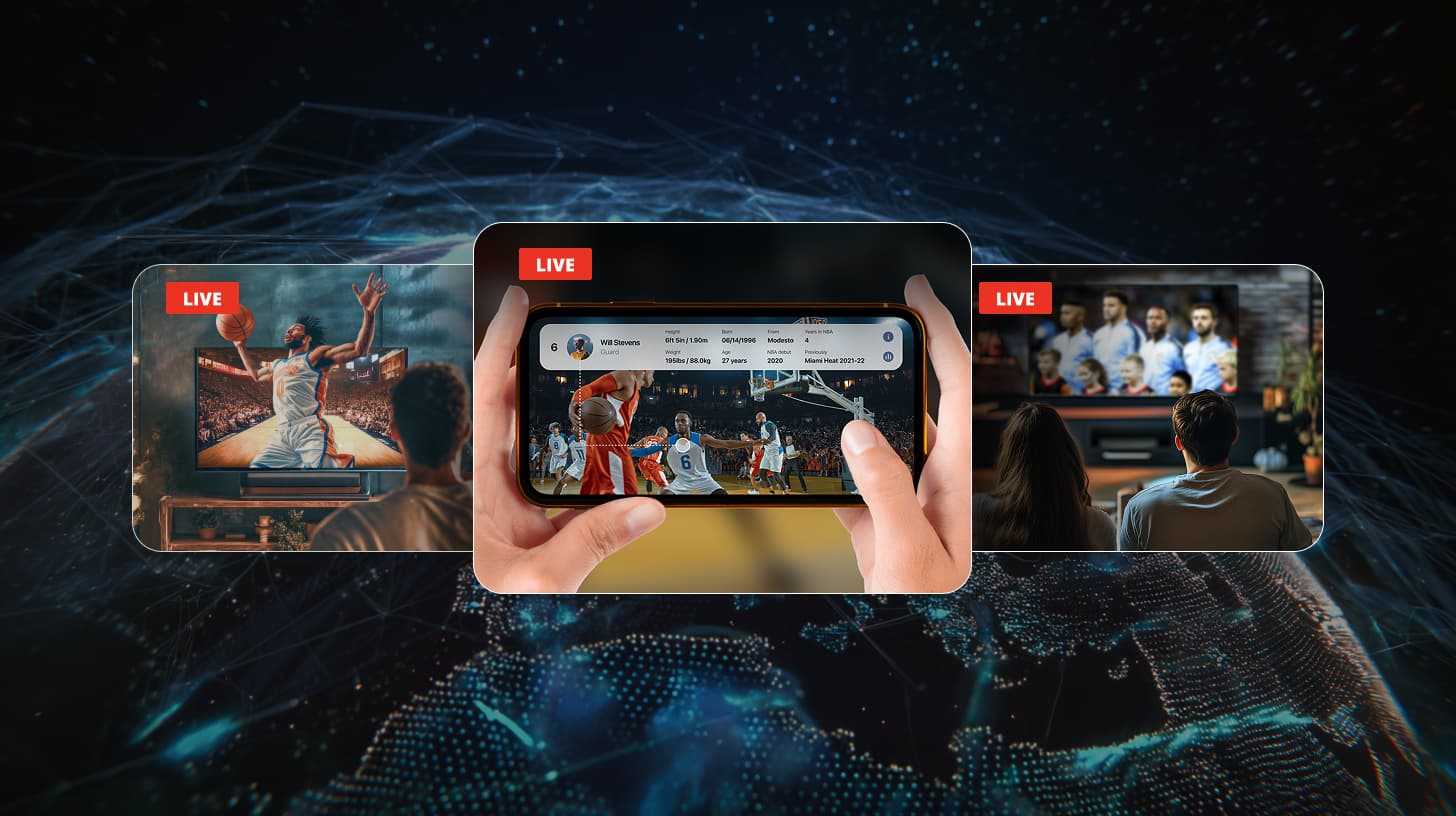

If you’re curious about how this is playing out across industries, including audience expectations and monetization trends, Oxagile explored it further here.
In short, live streaming gives viewers what they want: real-time energy, interaction, and a sense of closeness to the action. For any app hoping to capture and retain attention, delivering those elements isn’t optional anymore, users expect it.
Benefits of live streaming for broadcasters and VOD platforms
Live streaming offers broadcasters and VOD platforms powerful ways to grow and engage audiences.
For existing broadcasters
Traditional broadcasters (TV networks, news channels, sports leagues) use live streaming to engage digital-native viewers beyond cable TV. Interactive features like live chats, polls, and multi-camera angles encourage active participation, keeping audiences watching longer.
For example, Oxagile partnered with a national satellite TV provider to launch a highly scalable second-screen app with synced stats, live predictions, and interactive chat during soccer matches. The app supported up to 500,000 concurrent users and rewarded fans for accurate game predictions, significantly boosting live engagement and repeat viewership.
For VOD platforms
For platforms primarily offering video-on-demand, live streaming unlocks new monetization paths, driving subscriptions, pay-per-view revenue, and advertising around live events. Amazon Prime and Netflix have successfully used live sports and special events to attract new subscribers and increase engagement.
However, implementing live streaming requires addressing technical challenges such as robust infrastructure, low-latency streaming, and reliable moderation tools.
Done correctly, the benefits of live streaming, including greater audience engagement and new revenue streams, far outweigh these challenges. That’s why many platforms choose to develop live streaming apps with support for both VOD and real-time content.
What makes a good live streaming app: Tech and UX perks
Behind every smooth viewing experience is a well-thought-out live video streaming development strategy. Selecting the right protocols and making smart UX choices matters.
Viewers expect live streaming to feel seamless: HD quality, instant playback, smooth interaction, and zero glitches. But delivering that experience takes more than just good bandwidth. A truly successful live streaming app combines technical resilience with thoughtful UX.
Let’s look at the features that set the best apps apart.
1. High-quality viewing with adaptive streaming
Laggy or pixelated video is a deal-breaker. That’s why solid live streaming apps use adaptive bitrate streaming, a technology that automatically adjusts video quality based on a user’s internet speed and device performance.
If someone’s connection weakens mid-stream, the app lowers video resolution to avoid freezing, then switches back up as the signal improves. This ensures smooth, uninterrupted viewing.
Protocols like HLS and MPEG-DASH support this out of the box, and platforms like Wowza and AWS IVS offer built-in tools to make implementation easier.
But quality isn’t just about visuals, it’s also about latency. In live trivia apps or sports betting, even a two-second delay can throw everything off, explaining why low-Latency HLS and WebRTC are integral. These protocols help minimize delay between what’s happening and what the user sees, both critical for real-time interactivity.
Case in point: Scalable simulcasting built in 10 weeks for every screen, every fan
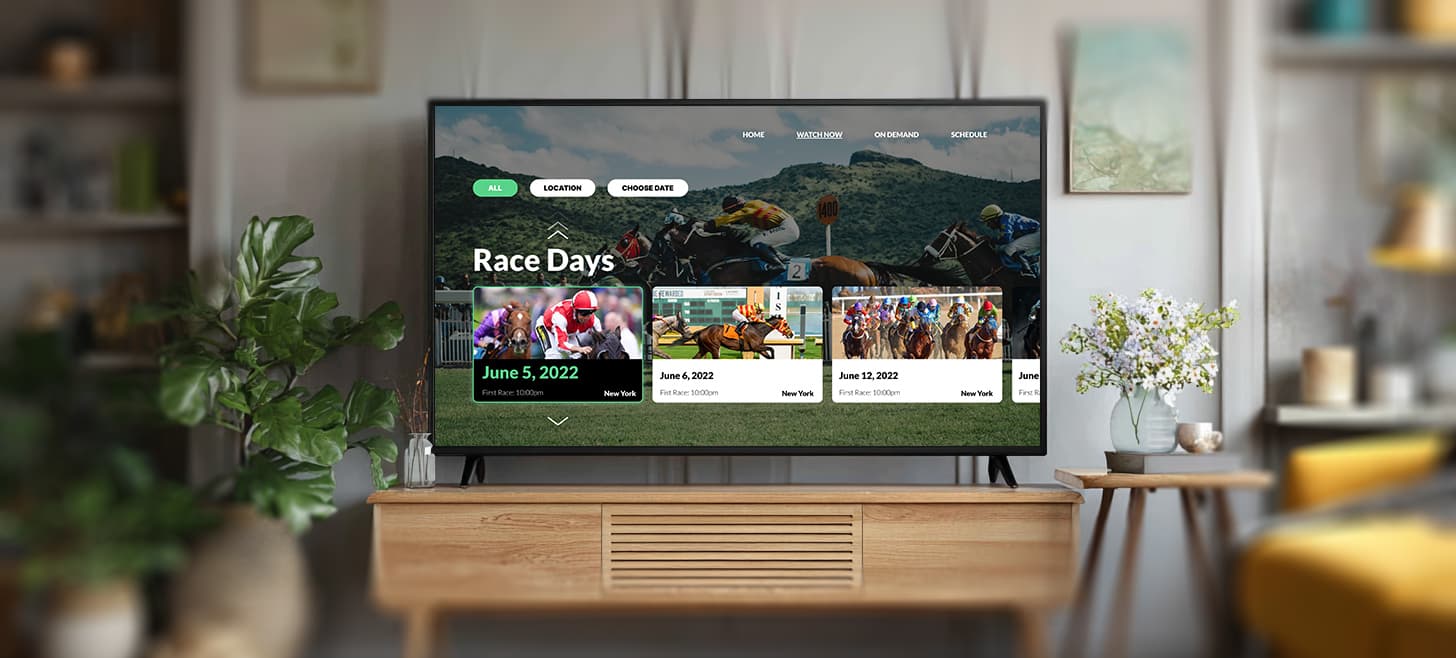
A global horse racing brand partnered with Oxagile to launch a live simulcasting solution with multi-camera support and ultra-low latency. The challenge? Delivering high-quality streams across mobile, web, and smart TVs under a tight 2.5-month deadline.
What we delivered:
- Multi-camera live races from several venues
- Instant HD replays and VoD content
- Synchronized mobile, Roku, Apple TV, and Fire TV apps
- Seamless delivery via AWS Elemental, Akamai, and Streamroot
The result was a smooth, reliable streaming experience that scaled to thousands of concurrent viewers on any device.
2. Protecting your live streams: Security and DRM
Stream protection is obligatory for premium content like live sports, concerts, conferences, or exclusive shows. Piracy, signal hijacking, and unauthorized access can quickly turn a high-value broadcast into a liability. That’s why secure delivery must be baked into your live streaming architecture from day one.
A robust app typically includes:
- HTTPS and AES encryption to protect content in transit
- Multi-DRM (Multi–Digital Rights Management) systems like Widevine, FairPlay, or PlayReady to restrict copying and enable cross-device playback
- Geo-blocking and account-level verification to enforce content licensing rules
- Tokenized URLs and session watermarks to trace and block unauthorized restreams
- Hardened APIs to protect against spoofing or injection attacks
Our hands-on know-hows
We’ve helped clients protect high-value live streams using multi-DRM systems paired with session-based watermarking. This is a particularly critical setup in sports streaming, where events are live, time-sensitive, and rights-protected.
Want a deeper dive into why DRM is essential for sports broadcasts and how to implement it right?
3. Monetizing live streams: FAST, SVOD, AVOD, TVOD, and Ads
Live streaming is more than engagement, it’s also a revenue engine. The best platforms support flexible monetization strategies, often mixing several models:
- FAST (free ad-supported streaming TV): linear-style channels with ad breaks, like Pluto TV
- SVOD (subscription video on demand): monthly access to live streams or premium events
- AVOD (advertising video on demand): free content monetized via ads, either injected by the app (CSAI) or stitched directly into the stream (SSAI)
- TVOD (transactional video on demand): one-time payments for special live events (e.g., a concert, boxing match, or product launch)
- Shoppable streams and sponsorships: viewers buy products during a stream, or see branded overlays and integrated offers
- Analytics integration: view-through rates, engagement stats, ad impressions (all tracked in real time for optimization)
Case in point: A telecom giant’s tailored, scalable, and effective ad strategy
Oxagile doesn’t just implement monetization logic, we also help clients choose the right model based on their business goals and target markets. For a major European telecom operator with a VOD service, we developed a custom ad module that supported both free and premium content. It integrated seamlessly with the client’s ecosystem and enabled flexible monetization across user segments.
If you’re looking for a strategic overview, our experts also shared four proven OTT business models, along with insights into how to combine them effectively.
We combine development expertise with industry insight to help clients find and implement monetization strategies that scale without compromising UX.
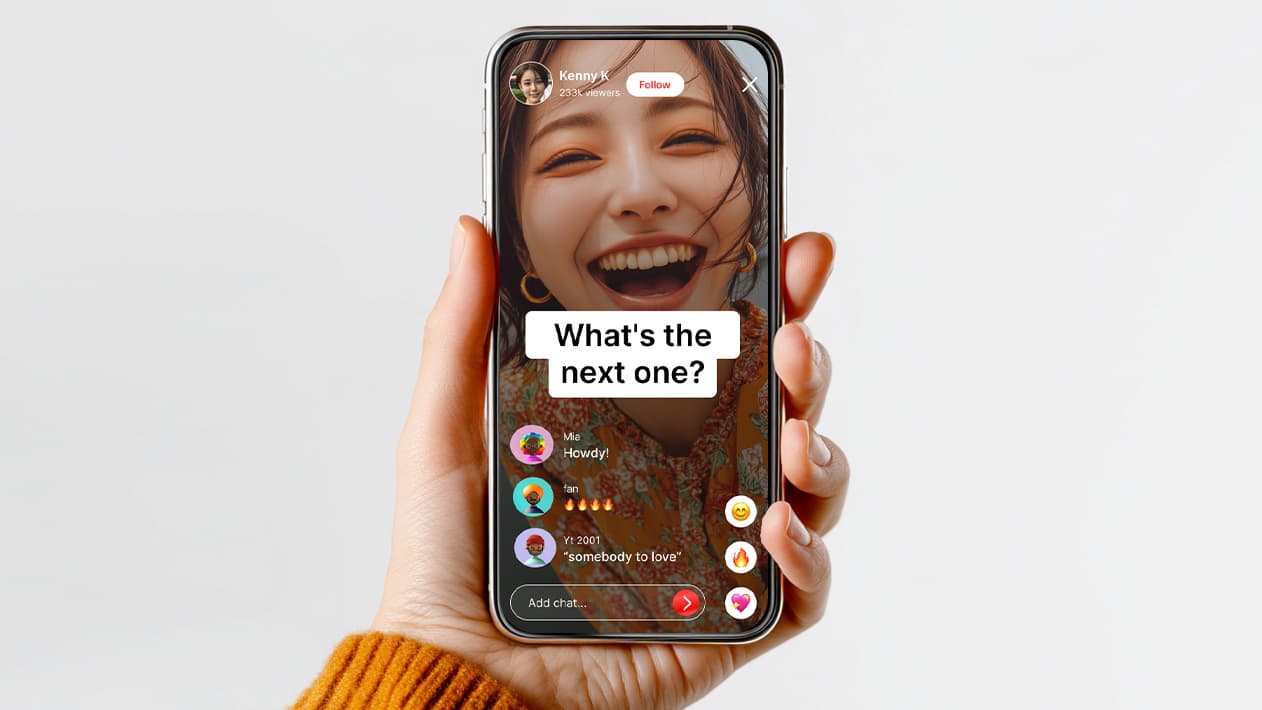
4. Driving engagement with interactive features
Viewers today expect to be part of the stream, not just watching from the sidelines. Interactivity is what makes live content feel alive.
Here are features that bring viewers in:
- Live chat and emoji reactions give the stream a communal vibe
- Polls, quizzes, and Q&As encourage direct input from the audience
- Gamification, such as live giveaways or points-based challenges, boosts retention
- Multi-camera control allows viewers to choose their own angle (great for sports, concerts, or events)
- Real-time overlays can display stats, maps, bios, or social feeds layered over the video
- Social sharing and co-watching let viewers invite friends or sync playback across screens
Case in point: Turning TV viewers into active fans
Oxagile helped a national satellite TV provider create a second-screen app that brought live sports to life.
While matches streamed on the big screen, fans used their phones to vote on outcomes, chat in real time, and track live stats, which was all synced with the broadcast.
The platform handled up to 500,000 concurrent users and turned routine matchdays into interactive fan experiences.
5. Media streaming software development with AI-powered features
AI is becoming a silent powerhouse in live streaming, working behind the scenes to improve both performance and personalization.
Key applications include:
- Highlight generation:AI detects exciting moments (goals, spikes in sound/movement) and auto-creates clips for replay or sharing
- Smart metadata and content tagging: useful for search, personalization, and post-stream navigation
- Moderation tools: flag offensive messages in real-time chat or detect copyright violations mid-stream
- Ad placement optimization: AI learns where users are most likely to drop off and inserts ads during low-impact moments
- Real-time translation or subtitles: for global audiences, especially in multi-language events
- AR/VR overlays: add interactive or immersive elements during the stream (think live player stats or commentary layers)
Case in point: Real-time highlights for fans and content teams

For a sports tech provider, Oxagile built an AI-powered solution that automatically compiles key match moments such as goals, saves, and red cards, into short highlight reels.
These clips are delivered to users within seconds, ready to watch or share, keeping fans engaged even after the final whistle.
The system does more than enhance the fan experience, also giving media teams ready-to-publish social content in real time.
6. Multi-platform broadcasting support
A great app doesn’t care where your audience watches, it just works. Today’s users might start watching on a phone, continue on a laptop, and cast to their TV, all in one session. Your live streaming platform needs to be ready.
Must-have platform support includes:
- Mobile apps (iOS/Android): optimized for variable bandwidth and mobile UI
- Web players: cross-browser, fast-loading, HTML5-based
- Smart TV and CTV apps: native or hybrid apps for Roku, Apple TV, Android TV, Fire TV, Samsung, and more
- Casting and syncing: support for Chromecast and AirPlay, with seamless stream handoff
- Consistent UX: same content, branding, and feature logic across all platforms
Case in point: Expanding a music streaming platform to Roku
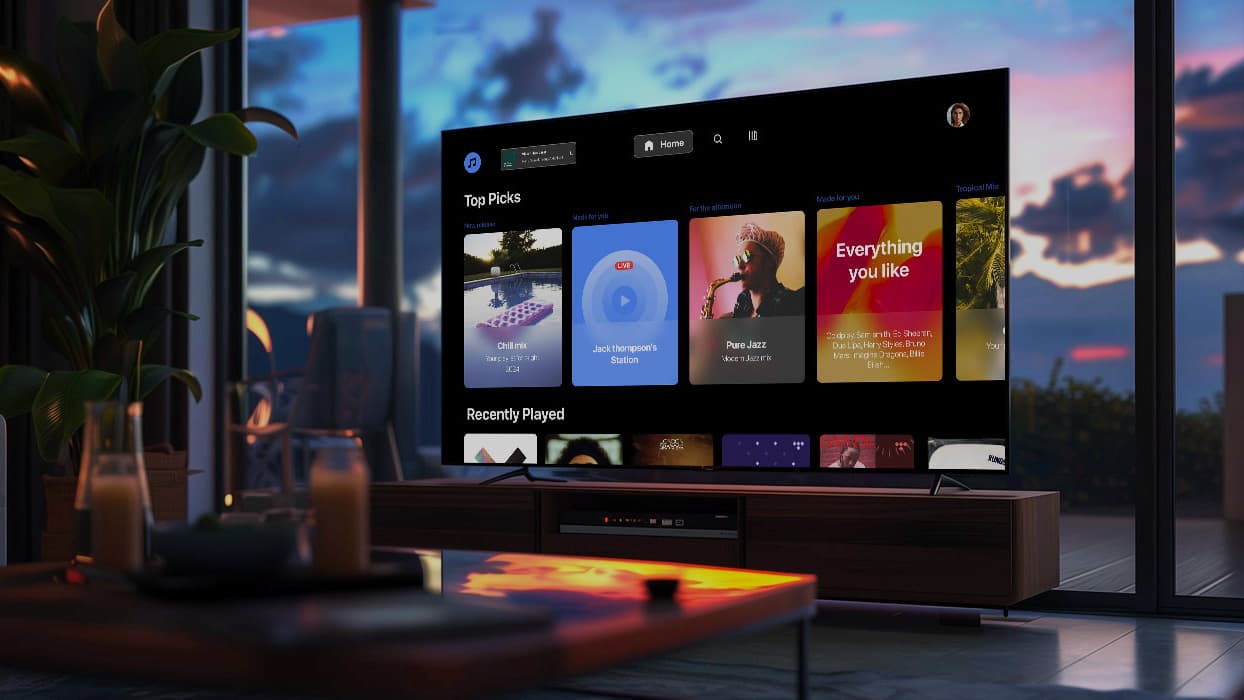
To help a leading music streaming provider grow its presence in the U.S., Oxagile developed a custom Roku app tailored to the American audience’s strong preference for the platform.
We built a slick, responsive interface optimized for remote control navigation, integrated it with the client’s existing video backend, and ensured seamless playback for both live streams and VoD content.
With Roku’s massive U.S. user base, the app gave the client an effective new channel to reach and retain viewers.
There’s a reason so many platforms, from niche fitness instructors to global broadcasters, are betting on live streaming. It’s because it works. Not just because it’s trendy, but because it taps into something people genuinely want right now: real-time connection, relevance, and interaction.
That said, building a good live streaming app isn’t just about pressing “Go Live”. It’s about knowing what your viewers expect and then quietly doing a lot of technical heavy lifting to make it all feel seamless.
From adaptive video delivery to ad stitching, from chat moderation to camera switching, the path to great live streaming app development is full of choices that affect both performance and user experience. Add in real-time analytics, AI-generated highlights, or custom monetization layers, and you’ve got more than a video stream, you’ve got a living product.
The foundation is the same regardless of your goal (developing live streaming app features for a brand-new platform or adding real-time content to an existing VOD setup): think beyond the video. Think community. Think cross-device. Think retention.
Because the real benefits of live streaming aren’t just in view counts, they’re in moments that feel personal, participatory, and worth showing up for.
Live streaming done right starts with the right tech
Live streaming success depends on the technology behind it. Properly handled protocols, security layers, and delivery networks keep streams smooth and reliable even under heavy loads. Add smart UX on top, and you get an app that not only delivers video but creates moments worth coming back to.
This combination of robust infrastructure and user-first design is what turns a single stream into lasting engagement. After all, if you choose the right technology stack today, you’ll be on the safe side knowing that your platform is ready to scale, adapt, and keep audiences connected tomorrow.
If your goal is real-time engagement, crystal-clear delivery, and revenue that scales, we can help you build the kind of app today’s viewers expect. From backend architecture to interactive UX, we’ve got the experience to make it work.
Sources:
1. Live streaming data — Statista
2. Live streaming market report — Grand View Research
FAQ
How to develop a live streaming app?
To develop a live streaming app, start with defining your use case (events, education, sports, etc.) and supported platforms (mobile, web, smart TV). Use adaptive streaming and low-latency tech like HLS or WebRTC, and add DRM, chat, and monetization. If you’re not building in-house, consider partnering with Oxagile’s live streaming development team to handle the full-stack architecture, scalability, and UX.
What are the benefits of live streaming?
The benefits of live streaming include higher audience engagement, real-time interaction, and improved content authenticity. Viewers tend to stay longer during live sessions, especially when chat, polls, and dynamic content are involved. For platforms, live content supports monetization via ads, subscriptions, and pay-per-view. It also builds community, boosts brand trust, and creates a stronger sense of presence than static or on-demand media.
What are the specifics of live streaming Android app development?
Live streaming Android app development requires optimizing playback using tools like ExoPlayer, ensuring adaptive bitrate support, and handling device and OS fragmentation. Apps must perform well under fluctuating mobile networks, support push notifications for live event alerts, and integrate with Android-native APIs. It’s also important to manage battery use and background activity for smooth streaming across different Android devices.
Which features are essential in media streaming software development?
Several features are essential to ensure both performance and user satisfaction. These include adaptive streaming for consistent video quality, strong security and DRM to protect content, and flexible monetization options such as SVOD, AVOD, TVOD, or ad-supported models.
Engagement can be boosted through interactive tools, while AI-driven personalization enhances the viewing experience. Finally, multi-platform broadcasting support makes it possible to reach audiences seamlessly across devices.
How long does it take to build a live streaming app?
It depends on the scope of the project and feature requirements. A basic live streaming app can typically be built in 3 to 6 months. However, a more advanced platform with features like real-time chat, monetization, analytics, content moderation, and support for large audiences may take 6 to 12 months or longer.