



Where does your content sit on this line?
Feature lists rarely settle it. Browse the breakdown of workflow questions that decide where MAM ends and DAM begins.
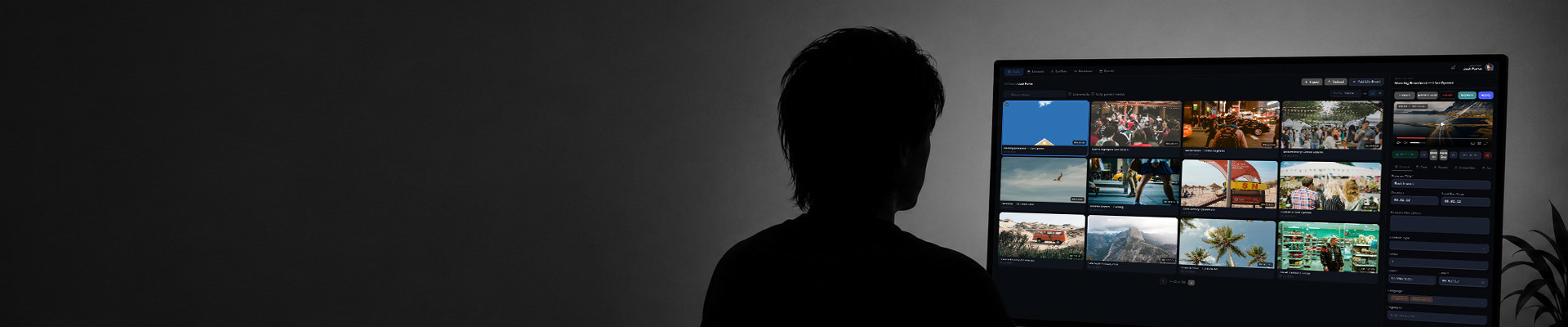

A ninety-second sports clip can exist in ten or more versions inside one organization: raw ingest, an editorial proxy, a 16:9 cut for broadcast, a 9:16 crop for social, regional versions cleared for different territories, one with graphics burned in and one without.
Most of them never get opened again. All of them have to be findable in seconds, the moment somebody needs the right one.
What features matter most?
How do you optimize performance, support low-end devices, and estimate development costs?
Some of that footage sits in a dark archive: backed up, technically intact, and impossible to search because nobody built a way to. The rest lives wherever the last person to touch it happened to save it, tracked by whoever remembers, which is fine until that person changes teams.
Folders and spreadsheets were never built to carry that kind of weight. Media asset management (MAM) is the software category that exists to handle it instead. A MAM system tracks each asset through ingest, editing, approval, packaging, and delivery, and keeps a running record of exactly where each one stands, so the answer doesn’t depend on who’s still around to give it.
Oxagile’s MAM team already knows the players, integrations, and workflow quirks this space runs on, the kind of familiarity that gets a custom build moving faster.
Media asset management is often grouped with digital asset management (DAM), so the two start to sound interchangeable. Both store files and attach metadata that lets teams search for what they need. The difference is in what happens to the content after someone finds it.
MAM territory looks different. Raw camera footage needs proxies before an editor can touch it. A finished cut needs separate audio and subtitle packages per territory.
Quality control has to clear every rendition before it reaches a distribution endpoint, and one failed output shouldn’t hold up the other nine.
That line gets harder to see in a feature list, since most DAM platforms now support video previews and most MAM platforms support documents alongside media. A transcoding button doesn’t define a production-connected media asset management system unless it can retry a failed job on one branch without touching the rest of the pipeline.
One media software provider found this out from the inside, when a platform that had worked fine for years grew into a patchwork of integrations and manual workarounds nobody could fully explain anymore. Oxagile rebuilt the underlying architecture without replacing what already worked, cutting deployment costs sixfold and boosting index scalability a thousandfold.
Feature lists rarely settle it. Browse the breakdown of workflow questions that decide where MAM ends and DAM begins.
A MAM earns its place in the stack by owning specific stages of the media lifecycle, work a shared drive was never built to do. Ingest and acquisition give assets their first pass of technical metadata as they arrive from cameras or partner feeds.
Search draws on metadata like codec, timecode, language, and rights, turning up a clip in seconds instead of a scroll through folders.
Production integration gives editors direct access to proxies and masters from inside their NLE, no download-and-reupload step required. Rights enforcement keeps a clip cleared for one market from shipping to another by accident. Orchestration connects transcoding, QC, and packaging so each step can retry on its own when something fails.
AI is already doing real work in a few corners of this list. Automated tagging and speech-to-text transcription cut down the manual logging that used to eat hours per hour of footage, and scene detection does the same for finding usable segments inside raw material.
It’s a genuine efficiency gain, though it works best layered onto a workflow that’s already well structured. Feeding AI-generated metadata into a disorganized archive just produces disorganized metadata faster.
One of Oxagile’s clients needed exactly this kind of orchestration across distributed hubs, in place of email and phone coordination. Our team built a cloud-based platform now running for 200-plus broadcasters, lifting workflow efficiency by 48.5% and cutting task handovers down to a fraction of their old turnaround.
Every core MAM capability, broken down in one place, plus a practical checklist to run your own shortlist against before you commit.
On a slide, the lifecycle looks like a clean line from left to right. In production, it loops back on itself constantly, and the stages below describe the shape of the work more than a strict sequence.
1. Raw footage gets ingested, validated, and turned into editable proxies.
2. Then, it is stored in tiered storage: hot for what is needed now, cold for what will probably not be accessed again soon, and warm for everything in between.
3. Cataloging attaches the metadata that makes later search possible.
4. During production, editors and approvers pull assets into active projects and submit new versions for review.
5. Before anything moves forward, a rights gate checks territory limits, embargo windows, and clearance issues.
6. Distribution packages and delivers the finished asset to each recipient in their preferred format with their own rights profile.
7. Anything not in active use moves into archiving, ideally without becoming unsearchable the moment it lands there.
Where MAM workflows break in practice, and the orchestration decisions that keep them working past launch day.
The stages above play out differently depending on who’s running them and what the deadline pressure looks like.
Turnaround speed is everything here. Clips get tagged with player and event metadata within minutes of capture, highlights get built automatically, and rights clear per region before the footage reaches a dozen broadcast partners running on different clocks.
The timeline runs the opposite way.
Camera originals get ingested, editors work remotely off proxies, and review happens frame by frame before localization layers on top, the whole cycle stretching across weeks or months with far more versions in play at any point.
The pace sits somewhere in between. Metadata has to normalize the same way across every platform, artwork adapts per destination, and rights windows track independently on each one.
An enterprise media asset management system that handles only one of these patterns well tends to buckle the moment the business adds a second.
A migration Oxagile ran for a MAM vendor moved 5 to 10 million assets, connecting EVS, Sony Ci, AWS S3, DIVA, Vantage, and Signiant, without pausing the live operation depending on it.
The right call between buying, building, and migrating MAM depends less on brand reputation than on a handful of specific questions worth answering before any vendor conversation starts.
Off-the-shelf media asset management platforms answer most of these well within their existing connector catalog and data model. The gap opens at legacy infrastructure, proprietary partner endpoints, and regional workflows a vendor’s roadmap never anticipated.
Custom orchestration built around those specific gaps often costs less over time than forcing every workflow into a shape the platform wasn’t designed for.
Packaged platforms stop somewhere, and custom orchestration picks up from there. Find the signals that tell you which side of that line your project falls on.
Media asset management keeps content findable and delivers the right version to the right place before the deadline that matters.
That gets harder with volume and complexity, and a handful of ordinary choices decide whether the system will be able to hold up and scale: cloud versus on-prem, packaged versus custom, AI-assisted tagging versus manual logging.
Oxagile has spent more than 20 years building and configuring media asset management pipelines for broadcasters, studios, and OTT operators, including the projects referenced throughout this page.
That range runs from single feature integrations and support retainers to full custom builds and migrations moving millions of assets, with the live system staying online the entire time.
Bring your current workflow map, and we’ll help figure out where a packaged platform ends and custom work begins.
Based on Oxagile’s experience, timelines depend heavily on integration count and data volume. But a scoped custom build typically runs from a few months for a focused orchestration layer to over a year for a full enterprise rollout spanning ingest through archive.
Often, yes. Lightweight custom modules can fill specific gaps, a proprietary hardware connector or a validation plugin, without a full platform migration. Oxagile’s experts start by mapping the actual gap before assuming a replacement is necessary.
As Oxagile’s MAM specialists advise, an in index-first approach works well: metadata, editorial structure, and storage references move first, while the media itself stays in place until something needs it. That lets the legacy and new platforms run in parallel during the transition.
Modern cloud media asset management platforms support the encryption, access controls, and compliance certifications that premium content licensing typically requires. The security question usually comes down to configuration and governance more than the cloud model itself.

