













This website uses cookies to help improve your user experience


OVP marketing is changing the way people consume video content. Given this, an online video platform (OVP for publishers and marketers) is becoming an increasingly effective tool for reaching new audiences.
If you consider using such a platform to support your marketing efforts, you may have a dilemma: should you build an OVP from the ground up or buy it ready-made?
Key takeaways:
Whether your goal is to educate buyers about an innovative product, gather a consumer audience, or create new revenue streams, an online video platform can help you get there. Think of the business benefits you want to reap — both short- and long-term.
Video is one of the most effective tools for increasing brand visibility. According to Wyzowl’s recent report, 96% of marketers say video helps increase brand awareness1.
Short-form video plays a key role here. Videos under 60 seconds consistently outperform longer formats in terms of engagement. Recent studies show that short clips can generate around 2.5× more likes, comments, and shares than long-form content2. This makes them especially effective for reaching broader audiences across platforms like TikTok, YouTube Shorts, and Instagram Reels.
If your goal is brand awareness, make sure every video reflects your brand identity. Most professional online video platforms allow you to white-label your content or apply custom branding. This gives your videos a polished, consistent look and turns each one into a branded touchpoint for your audience.
While built-in branding is standard, tracking brand awareness over time may require more advanced analytics. The ability to integrate with your existing tools and measure performance across channels is crucial for assessing the impact of your video strategy.
Video is a powerful tool for educating audiences. Explainer and tutorial videos are especially effective for engaging both consumers and business decision-makers. Aforementioned Wyzowl states that explainer videos are the most commonly created type of marketing video1, and for good reason.
These videos are ideal for introducing products or services that customers may not yet know they need. By simplifying complex ideas and showcasing value in action, explainer content helps eliminate confusion and moves viewers closer to conversion.
Hosting such videos on your own platform, while also distributing them on consumer-oriented channels, lets you build a valuable branded asset that’s also socially shareable. This hybrid approach combines control with discoverability.
If education is your primary goal, the decision to build or buy OVP solutions comes down to performance. To deliver a smooth, frustration-free experience, your OVP platform needs to support stable delivery at scale, with no buffering, lag, or drop-offs.
To achieve this, look for a reliable OVP vendor that offers integration with a high-performance content delivery network (CDN). Even better, choose an OVP that supports a multi-CDN architecture, which automatically routes traffic through the fastest available path to reduce latency and avoid congestion. This way, your educational videos will always be accessible, fast, and reliable no matter where your users are.
Video isn’t just for storytelling or engagement, it can also be a powerful driver of revenue. Depending on your audience and content type, there are several monetization models to explore: advertising, pay-per-view, subscription, and direct sales.
If you’re putting time and money into video, you probably want it to pay off. As your library grows or you try out different types of content, the platform you use shouldn’t just be a place to upload and stream. It should actually help you earn from what you’re creating.
Advertising continues to be a leading way to monetize video content. Ad-supported tiers have become a core part of many streaming platforms’ business models, and in markets like the U.S. roughly 46 % of premium subscriptions now include ads, reflecting widespread adoption of ad-based options3.
This creates new opportunities for those using an OVP for publishers, letting them manage pre-roll and mid-roll ads, experiment with programmatic campaigns, and even explore interactive formats where viewers can click directly on products featured in the video. With the right setup, even niche content libraries can turn views into ad revenue.
This model works well for exclusive, high-value content such as live events, masterclasses, or limited-access experiences. However, it typically requires a loyal audience and strong perceived value. For most corporate or educational content, it’s not the most viable approach, unless your brand has unique, time-sensitive content people are willing to pay for.
Subscription-based models are more viable for companies that maintain a growing library of premium video content. If your content offers ongoing value, like industry insights, training, or professional development, you may be able to convert viewers into paying subscribers. That said, competing with free content remains a challenge unless your offer is highly differentiated.
Another growing trend is the integration of e-commerce into video. You can make it easy for viewers to buy by linking straight to the products shown in the video or even letting them check out right there in the player. This approach tends to work best for inexpensive digital products or anything people are likely to grab on impulse. It’s most effective when paired with short-form content on social or mobile platforms.
When choosing a monetization strategy, start with your audience and content type. Then assess whether your OVP marketing solution includes the features you’ll need — from ad integration and subscription management to secure payment processing and content gating.
Whatever monetization strategy you choose, your online video platform should fully support it — not just today, but as your business grows. It’s worth thinking beyond immediate needs. As your audience, market conditions, or content strategy evolves, so should your platform.
That’s why flexibility matters. The most effective OVPs are those that can scale with you, adapt to new use cases, and support multiple monetization models when the time comes.

Build a scalable streaming ecosystem tailored to your business goals with our expertise in custom video solutions and cross-platform development.
Your content administrators have to be able to upload as many videos as they need via SFTP, a drop folder, or some other means. Pushing videos via a mobile app is a nice feature too. Look for an OVP provider that gives you the greatest possible control and offers flexible content ingestion workflows.
The optimal OVP should also integrate with high-speed file transfer software like Aspera FASP™ so that you could increase upload speed for large files.
Make sure your OVP offers adaptive bitrate live streaming. This means support for state-of-the-art protocols (such as HLS, HDS, MSS, or MPEG-DASH) to optimize video and audio for various screen sizes, CPUs, and network conditions.
4K video delivery is increasingly becoming a necessity. And if you want to go the whole hog and reach viewers with 8K screens, your platform should support the HEVC (High Efficiency Video Coding) video compression standard, also known as H.265.
Live streaming is all the rage, and many video providers capitalize on streaming live events, including popular contests and awards (like Eurovision, Grammys, or the Oscars), as well as major sports competitions (such as the UEFA Champions League, the Super Bowl, or the Olympics).
These events attract millions of viewers, which translates into additional revenue streams. You can monetize your video content by using strategies like paid subscriptions or ad insertion. If you choose the latter, mind the fact that mid-roll commercials have the highest completion rate compared to pre-roll and post-roll ads.
Another sought-after feature is live-to-VOD functionality. It can automatically generate video content from live streams and make it available to your on-demand users shortly after the show. Instead of manually republishing your live streams and waiting around for files to reprocess, you can have everything available on demand right away. That saves your team time and hassle and helps you start earning from the content sooner.
A good OVP should allow you to manage all video content in a single content management system (CMS). If you want to take it up another notch, enhance your system with a custom MAM orchestration module. A MAM orchestrator will deliver optimal workflows and let you easily manage content, metadata, communication, scheduling, distribution, and more with minimal or no operator input.
In addition, make sure your OVP vendor can tailor a MAM orchestrator to the specifics of your media business. If an OVP vendor can’t offer this type of flexibility, consider building your own platform rather than buying in.
A solid OVP should also provide smooth subtitle management. This means multi-language support to reach out to international audiences, as well as displaying open and closed captions to accommodate hearing-impaired people.
When delivering high-quality content across geographical boundaries, CDN functionality becomes key. CDN integration will help you significantly enhance the viewing experience by reducing latency, network congestion, content blockages, and other bottlenecks.
Be sure to explore the multi-CDN approach that automatically picks the optimal CDN provider based on analyzing a variety of mission-critical parameters to minimize delivery costs.
Apart from playing back your content, the media player performs other key tasks, including things like collecting viewership data and displaying ads.
Your audience wants to get an outstanding viewing experience across all browsers, devices, and operating systems. Some of the features a player should offer toward that end may include subtitles, 360° video, and social sharing.
In addition, your business case might require advanced Digital Rights Management (DRM) support. For instance, if you decide to deliver exclusive premium content, you’ll want to have a DRM-capable player to protect your video from unlawful use.
If you want to improve Quality of Experience and enhance Quality of Service, you’ll need deep insights into efficacy, ROI, reach, and all the other metrics you’d want to track in any other marketing system. Where the viewers are coming from, what content they prefer, what devices they use, what the churn rate is, and why they abandon your website — this is the data that matters.
Whether you opt to develop or buy an OVP, make sure it has built-in analytics or can integrate with third-party analytics platforms.
Depending on your business case, it may be crucial to plug your OVP into other enterprise systems, including CMS, CRM, MAP, and LMS. Such integrations will let you align video delivery with the company’s overall marketing, education, or sales strategies.
If you need custom third-party integrations with a ready-made OVP, find out whether your vendor can deliver the required functionality quickly enough to support your objectives. If your business requires an array of out-of-the-box integrations, it’s a factor in favor of developing a custom OVP platform.
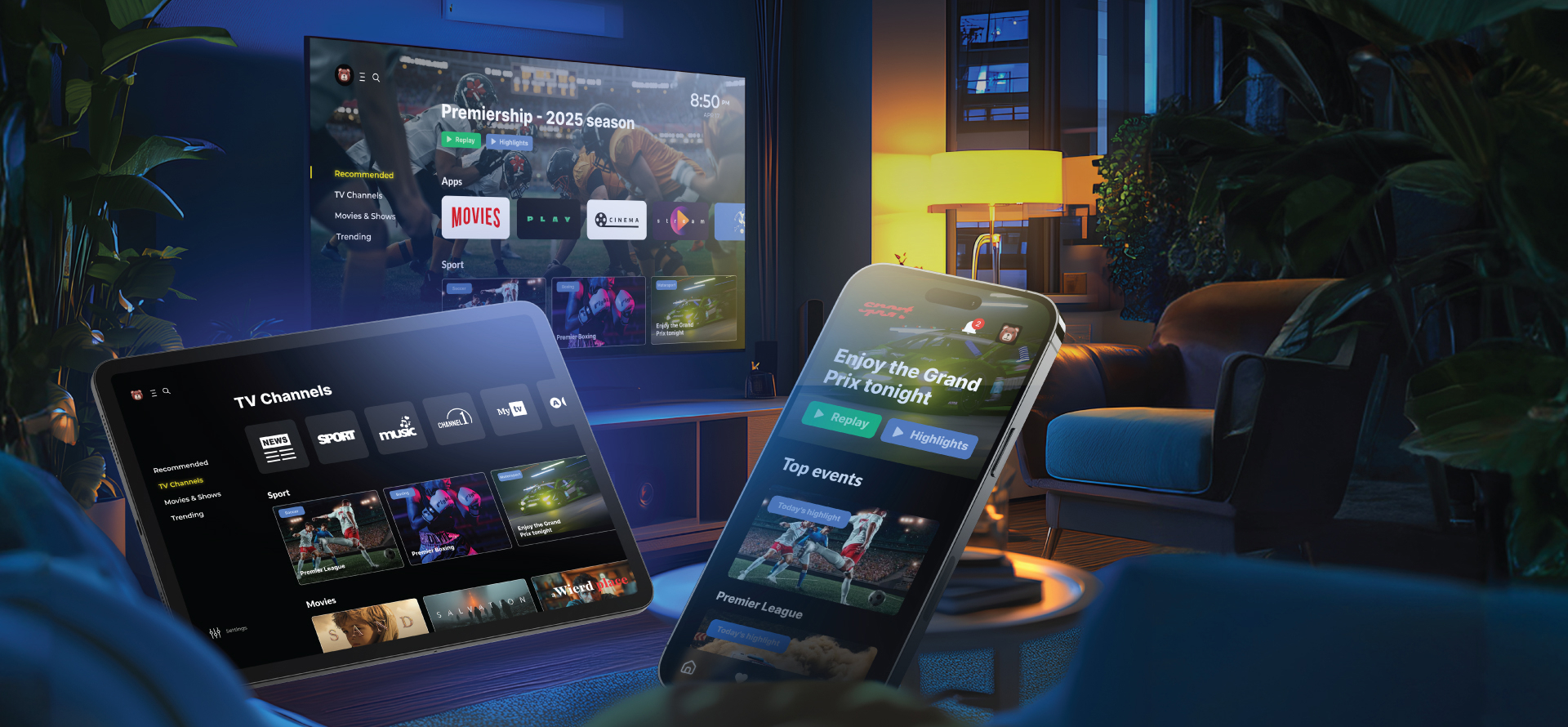
We helped an online video platform provider create a modular white-label OTT app that can be quickly configured and branded for different telecom operators. The solution supports 13 platforms and 25 devices, enabling fast market entry, maximum code reuse, and scalable expansion across multiple countries.
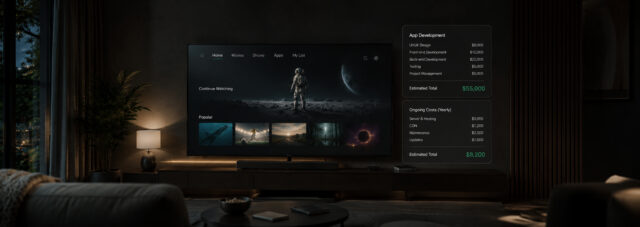
When deciding whether to build or buy OVP solutions, companies need to evaluate their goals, budget, timeline, and internal expertise. This decision usually comes down to flexibility versus speed.
Creating custom online video platforms gives full control over features, design, and integrations. With professional video platform development, companies can build a solution that fits their exact business model and long-term strategy.
It’s also worth noting that “building” doesn’t usually mean writing every line of code from scratch. Most teams rely on existing frameworks, infrastructure components, and third-party services, then customize and combine them to fit their needs.
This approach is suitable for businesses planning to launch a fully custom OTT platform with specific requirements and advanced functionality.
Purchasing an existing OTT video platform allows companies to enter the market faster and reduce technical complexity. Most vendors provide hosting, streaming, analytics, security, and monetization tools out of the box.
A white label OVP is a great option for those who want:
However, a white-label OVP is rarely a true plug-and-play solution. Companies often hit a wall when facing:
But even with a white-label platform, you’ll still need specialists or technical experts to handle configuration, integrations, branding, monetization setup, and ongoing improvements. In other words, expertise is required either way — the real question is how much control you want to keep as your platform evolves.
Going through this article has hopefully given you some food for thought regarding the build-vs-buy dilemma. If your choice is to buy a platform, it’s time to consider the optimal OVP provider.
However, if an OVP lacks features that your business case demands, and you have to graft, trim, and rebuild the system to make it do what you want, you might be better off with a custom solution. A good rule of thumb: if you need to customize 30% or more of its functionality to make it work, consider building a custom video platform from the ground up.
Whether you plan to build or buy OVP, we can help you choose the right strategy and deliver a high-performance streaming platform aligned with your growth plans.
1. Video Marketing Statistics — Wyzowl
2. Short vs Long Video Statistics 2026: Must-Know Data — TECHRT
3. Antenna Q2’25 State of Subscriptions Report: Adds And Ads — Antenna

Start by defining what you want to achieve with video, whether it is brand awareness, audience education, or direct revenue. The platform you choose should support your monetization model, integrate with your existing systems, and scale as your audience grows.
The decision depends on how much flexibility and control your business requires. Buying a ready-made solution is faster and more predictable in terms of cost, while building your own platform makes sense if you need unique features, deep integrations, or long-term strategic differentiation.
It should provide reliable content ingestion, transcoding, adaptive streaming, analytics, security, and CDN integration. Strong monetization tools and seamless integrations with CRM, CMS, or marketing systems are also important for sustainable growth.
Media companies, broadcasters, and brands with large content libraries benefit the most. Such solutions help centralize content management, enable advertising or subscription models, and provide detailed analytics to optimize engagement and revenue.
A fully customized solution is preferable when your business model requires specific workflows, advanced integrations, or full control over infrastructure and data. It offers greater flexibility and long-term adaptability compared to off-the-shelf alternatives.

