













This website uses cookies to help improve your user experience




The European Space Agency lost the Mars Polar Lander on 3 December 1999. It survived the launch and nine months of deep space travel, then went silent during seven minutes of atmospheric entry, a phase nobody budgeted for. The mission cost $327 million. The launch was flawless.
Most organizations budget for a live streaming app the same way: the construction invoice arrives, gets approved, and everyone moves on. Depending on your scale and ambitions, that number covers somewhere between 30% and 60% of what you’ll actually spend over the first three years of running the platform.
The proposal covered the launch vehicle. Not the ground stations, not the frequency licenses, not the ongoing cost of keeping the satellite pointed correctly once the audience shows up.
This article is about the rest.
Key takeaways:
Instead of saying “it depends”, which is true but unhelpful, here are four scenarios based on the types of projects that we at Oxagile have planned and completed. The ranges reflect real architectural and operational complexity, not feature checklists.
| Scenario | Estimated cost | Timeline | Typical use case |
| MVP/niche streaming | $80k — $150k | 3-6 months | Startups and pilot projects testing demand before committing to full infrastructure. Core playback, basic auth, single CDN, limited device scope |
| Mid-market OTT platform | $300k-$800k | 6-12 months | Growing platforms targeting multi-device reach, subscription monetization, and content library scale. Multi-CDN, DRM, analytics, and live + VoD support |
| Enterprise streaming | $1M+ | 12+ months | Netflix-tier infrastructure with microservices architecture, AI-driven recommendations, real-time analytics, global CDN strategy, and full AdTech integration |
| Telecom- integrated streaming | $500k-$2M+ | 9-18 months | Bundled services for telecoms combining live TV, VoD, and broadband-tier content delivery. Requires billing system integration, operator-grade SLAs, and often STB or HbbTV support. Sports rights, live events, and premium channel packages are where telecoms are winning and losing customers right now |
These ranges assume competent architecture from the beginning. Launching a platform cheaply and re-platforming 18 months later will cost 40-60% more in total than making the right structural decisions in month one. Such occurrences are more common than the industry admits.
Getting the trajectory wrong doesn’t cost anything at launch. You pay for it when the satellite drifts.
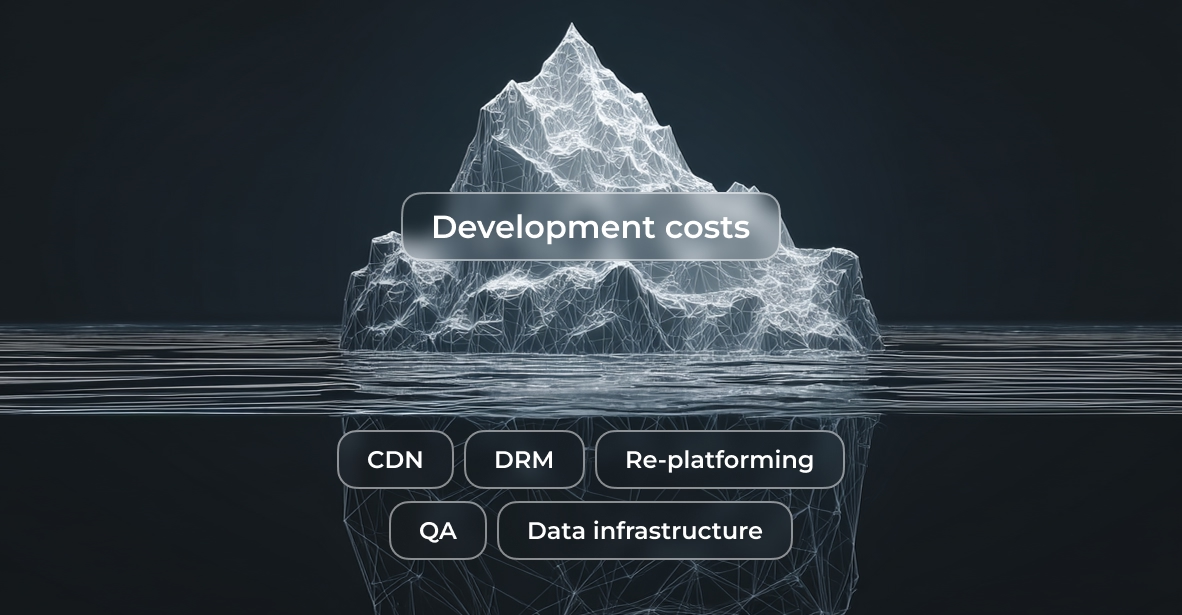
Development is one bill. Running the platform is a separate cost, which increases as the platform grows.
The development process includes obvious aspects such as application development, architecture, integration, quality assurance (QA), and security setup. It is available at a set price with a guaranteed delivery date. However, it does not include the following:
In the first year, development dominates the budget. Any platform that gains real traction by year two has usually caught up with operational costs. And by year three, these costs often exceed the original build cost by a wide margin.
Most cost estimates are built around features. The more honest frame is architecture and operational scale, because architectural decisions made early tend to define what everything else costs later.
Every platform you add is a separate engineering surface:
A mobile-only MVP and a multi-screen platform covering mobile, web, smart TV, and STB technologies are in completely different cost brackets. QA, player integration, and performance optimization must happen independently on every surface, and the amount of work doesn’t change much regardless of the team’s experience level. Typically, each additional platform adds 20 to 35% to the total build cost. That figure doesn’t decrease significantly with experience because each platform presents its own unique engineering challenges.
This decision has a larger cost impact than most clients expect. Standard live streaming at 15 to 30 seconds of delay uses mature HLS and DASH pipelines that CDNs handle well. Getting to 3-8 seconds requires tighter segment durations and a more aggressive CDN configuration. Getting ultra-low latency that’s below 1 second, which sports betting, live auctions, and interactive formats require, means a different architecture entirely: chunked CMAF delivery, WebRTC signaling, sub-second player buffers, and edge compute placed close to the viewer.
That last tier typically costs 40-70% more to run than an equivalent standard live platform. That cost is hard to justify for most platforms. For real-money wagering on live sports or two-way interactive streaming, there’s no architecture that substitutes for it. Choosing the wrong target in either direction is a budget problem.
A sports streaming provider needed to make live broadcasts feel more real-time, without rebuilding the platform around ultra-low latency delivery.
Instead of switching to a more complex architecture, the team focused on optimizing the existing streaming setup:
Result: A more “live” viewing experience was achieved through targeted optimizations rather than a full infrastructure overhaul.
One of the key success metrics is ultra-low live streaming latency of 2 seconds.
A sports platform that typically has 5,000 concurrent viewers on Wednesdays may have 500,000 during a cup final, and this increase is neither gradual nor announced.
Architectures that are not built for this will break in one of two ways: they will either collapse under peak load or be over-provisioned from the start to survive peaks that they rarely hit. This results in paying for capacity that sits idle most of the year.
The answer is elastic infrastructure: cloud-native autoscaling, multi-CDN failover, and realistic load testing before any major event goes live.
Multi-DRM coverage, meaning Widevine for Android and Chrome, FairPlay for Apple, and PlayReady for Microsoft, is required for any platform distributing licensed content across a full device range. Each system needs separate licensing and integration. Licensing fees scale with viewership, so the more successful the platform is, the larger this line item grows.
Beyond DRM: token authentication, geographic access controls, session management, and anti-ripping measures all add engineering time at build and ongoing maintenance cost afterward. It rarely gets the line-item attention it deserves in early proposals.
Testing a streaming app is different from testing a website. A mid-range development machine will never reveal the issues that arise on a three-year-old budget Android device, an older Samsung TV with outdated firmware, a low-memory set-top box, or a rural broadband connection running at 2 Mbps. Each device-condition combination constitutes a separate test case, and the list grows as more platforms are added.
Performing comprehensive QA on a typical multi-platform streaming product adds 15-25% to the development budget. Teams that skip it don’t save that money because they spend it later with users already affected.
A streaming platform continuously generates behavioral data, including what was watched, how long it was watched, which device it was watched on, at what quality it was watched, and where it was stopped. Collecting it takes infrastructure, though not particularly complex infrastructure. Doing anything useful with it, such as content recommendations, churn prediction, ad targeting, or QoE monitoring during live events, requires a data pipeline backed by real engineering.
Platforms that push data infrastructure into phase two consistently discover the same thing: retrofitting it into an architecture not designed for it is more costly than incorporating it from the beginning.
Specifically, rebuilding a data layer under a production load with live users and active content contracts can cost 40 to 60% more than the original build would have if the pipeline had been correctly scoped from the beginning. The AI-driven recommendation layer alone requires ML training pipelines, feature stores, and continuously running inference infrastructure in production.
No one includes re-platforming in the invoice, nor do they quote you for vendor price changes in the fourteenth month or for QA debt when your app crashes on a three-year-old Philips TV in front of 40,000 viewers. These costs are real, and they are predictable. They just tend to show up after the contract is signed.
Monolithic architectures built to minimize initial cost frequently hit a concurrency ceiling before the business does. When the platform starts gaining real traction, the architecture that got it there becomes the thing that caps it.
Migrating to microservices, rearchitecting the data layer, and rebuilding the CDN strategy mid-flight costs considerably more than designing for scale from the start, and it happens while the platform is live and users are depending on it.
Failure modes that never appear on a development machine are produced by low-end Android devices, older Samsung TV firmware, constrained-memory set-top boxes, and rural broadband conditions. Each one is a separate test case, and the list grows with every new platform. It’s only a matter of whether your testers or your users find the failures first.
Storage for behavioral data grows continuously, and query costs on large datasets compound quickly. A modest analytics budget at launch can become a material line item within a year of meaningful growth. The data layer is significantly cheaper to design for cost efficiency from the start than to redesign under production load.
Building deeply into a single CDN provider, cloud platform, or encoding vendor ties operational risk to pricing risk. When that vendor changes its pricing structure (and they do), the cost of switching is roughly equivalent to the original integration cost.
Multi-CDN architectures cost more to build. Over a three-year operating horizon, they are almost always cheaper.
This one is in a different category than the others. A stream that goes down during a live sports final or pay-per-view event can’t be explained by a postmortem. The consequences are subscriber churn, refund claims, advertiser credits, and reputational damage that haunts the platform for months.
The engineering cost of building sufficient redundancy to prevent such an incident is a fraction of the business cost of experiencing one. This is the line item that is most worth not cutting.

Hidden costs are predictable when you know where to look. Oxagile’s team can walk through the full cost picture with you before anything is scoped or signed.
Being a live streaming app development company, after 20+ years of building streaming platforms, Oxagile’s experts have noticed that one pattern remains consistent: successful teams treat architecture as a design decision, making it once and benefiting from it for years. Everyone else revisits the architecture when the platform is live, the audience is growing, and changing it costs more.

“Cloud-native architecture is the right answer for spike-driven businesses, but it must be designed with spikes in mind from day one. We have worked with platforms that were perfectly stable under normal conditions but were unable to handle a major event.
While the code was fine, the architecture assumed a load profile that the platform never actually had. It always costs more to rebuild that assumption out of a live system than to get it right before launch.”
– Andrey Gordeev, Solutions Architect, Oxagile
A monolith allows for faster launch. That’s a real advantage, and for an MVP, it’s often the right choice.
Problems arise later when you need to deploy a fix to the payment service at 11 p.m. without affecting the video player, or when one component is overloaded and scaling it requires scaling everything. The larger the platform becomes, the more a monolith works against you.
Microservices add operational overhead from day one. In return, they give you the ability to scale components independently, deploy without platform-wide risk, and contain failures so that an issue in one service doesn’t reach the viewer. For any platform with serious scale ambitions, that trade is worth making early.
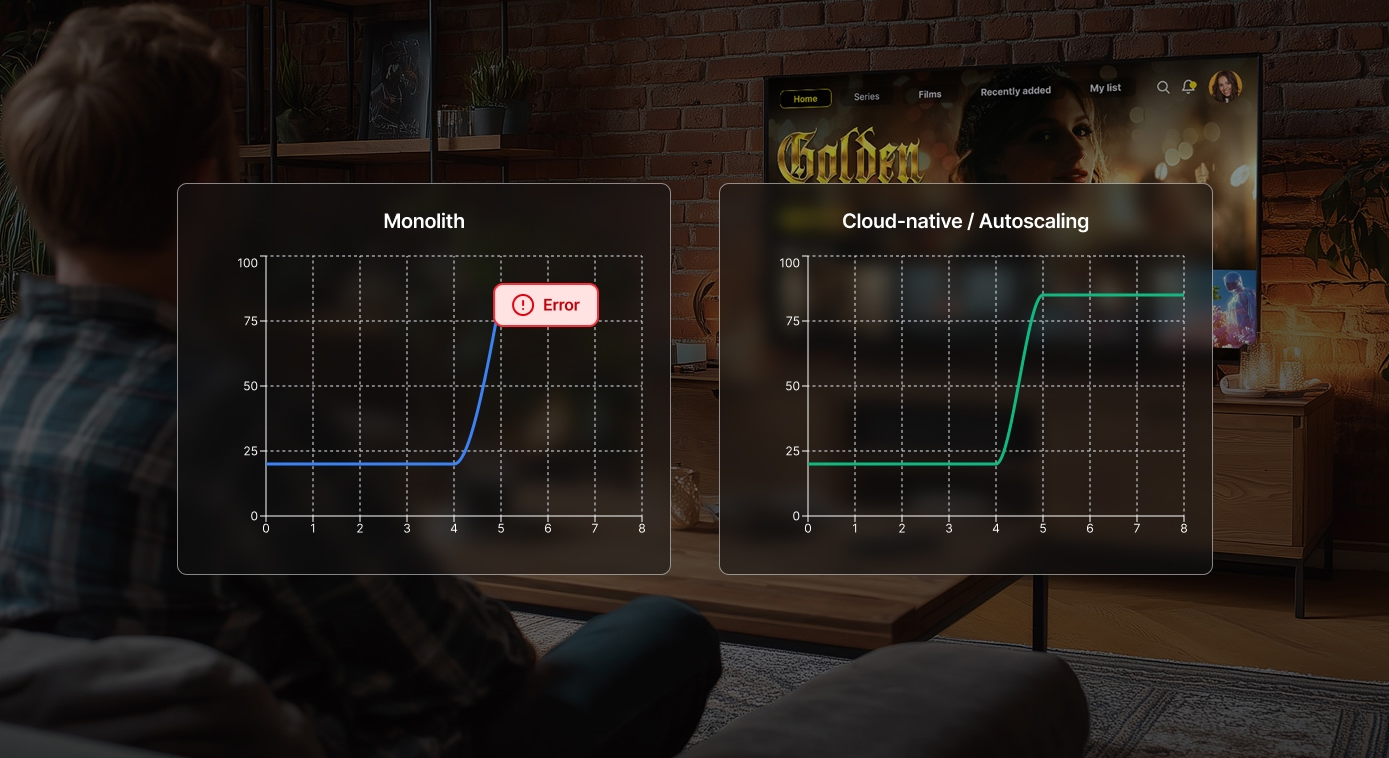
Live streaming solutions don’t have a predictable load. A platform that operates with 8,000 concurrent viewers on a Tuesday can experience a surge to 300,000 on a Saturday afternoon, with no warning and no ramp-up.
Hybrid architectures with on-premises components may appear attractive under a steady-state cost model. However, they are much less appealing when a peak event occurs and the on-premises capacity is insufficient.
Cloud-native infrastructure scales to the actual audience size. A 10x spike is absorbed by autoscaling. The server you didn’t provision in advance isn’t sitting idle for the other 355 days.
A single CDN means a single supplier and a single point of failure. If it experiences a regional outage during your biggest event of the year, there’s nothing you can do about it.
Multi-CDN routing across two or more providers based on performance, cost, and geography costs more to build. It pays that back the first time one provider has an outage, and your platform doesn’t.
Smaller platforms don’t need it to be fully active on day one, but it does need to be part of the initial architecture. Adding it later means rebuilding parts of the platform that were never designed to support it.
Two features can appear on the same line on a roadmap and fall into completely different budget categories. Login screens, content catalogs, push notifications, basic subscription billing – these are well-understood tasks with mature libraries behind them. They take time and need to be done properly, but they don’t carry surprises.
The middle tier is where complexity starts compounding: multi-device synchronization, multi-tier subscriptions, basic recommendations, and live chat. More moving parts, more edge cases, but still territory that experienced teams have covered many times.
The features that move budgets significantly are a different animal altogether. Ultra-low latency streaming, AI-driven personalization, AdTech with real-time bidding, server-side ad insertion, real-time QoE analytics, multi-DRM across a full device range: none of these are features you build and forget. Each one runs infrastructure continuously, accrues licensing costs that grow with viewership, and demands operational attention long after launch.
Knowing which tier a feature sits in before it hits the roadmap is worth more than any line-item estimate. We covered more details on this in our recent streaming app development guide.
The obvious advice, open-source tools, offshore development, deferred features, isn’t wrong. It just doesn’t move the needle on total cost of ownership the way architecture does.
The decisions that actually compress long-term costs:

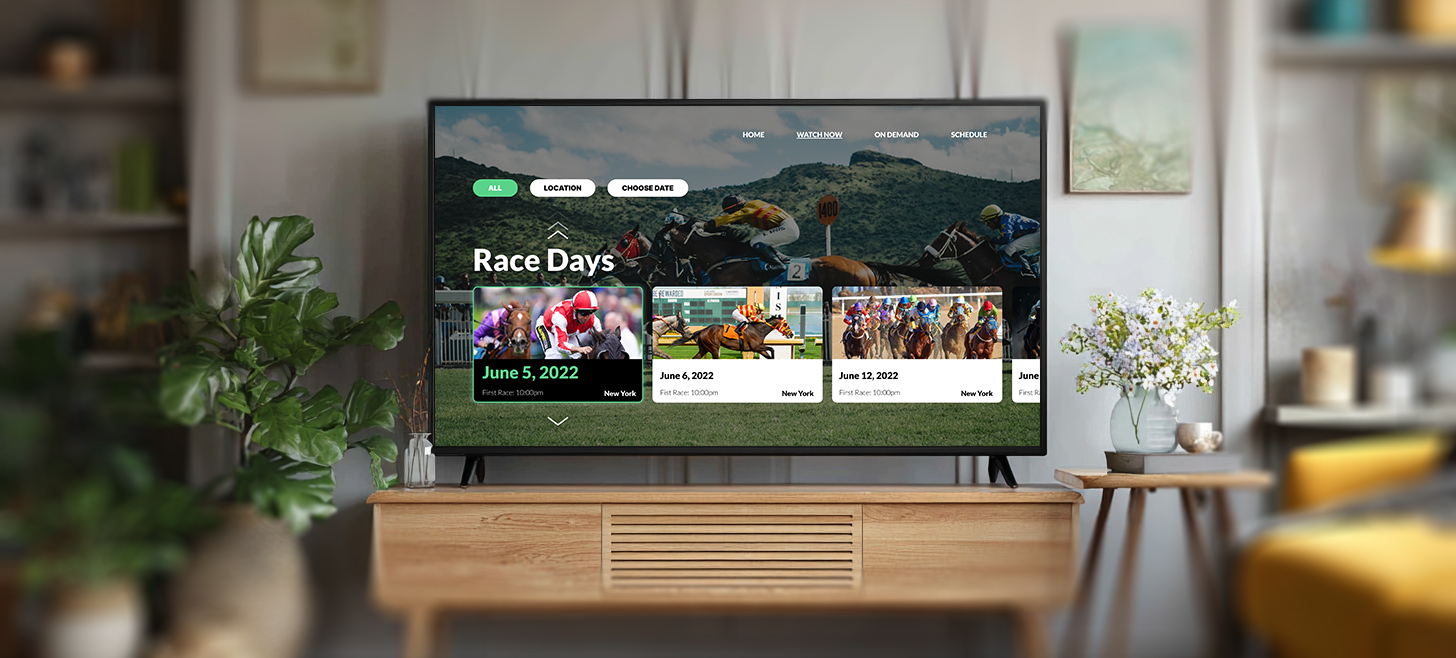
A client approached Oxagile with a horse racing event on the calendar and 2.5 months to build the platform from scratch. The race had a fixed date. That was the deadline, and everything had to be ready before it.
The platform needed to handle simultaneous live broadcasts and on-demand replays across Roku, Apple TV, and Amazon Fire TV, with Akamai CDN, AWS Elemental Live, and Streamroot running together under peak event load. The team worked in short delivery cycles, putting working software in front of the client from the first week, so there was room to adjust before the window ran out.
The platform launched on time. Race day ran without incident.
The development cost is the entry price. The return on investment depends on how and to what extent the platform is monetized, and whether the cost structure supports the monetization model. Some models are only profitable at certain levels of viewership.
| Model | Revenue characteristics | Cost implications | Verdict |
| SVOD | Predictable monthly recurring revenue per subscriber. Churn is the primary risk. | Each active subscriber adds CDN and delivery cost. Heavy users streaming in 4K with long sessions can be unprofitable at low price points. The cost structure rewards light-to-medium viewers. | Works well once the subscriber base is large enough to absorb delivery costs. Carefully model the marginal cost per subscriber before setting pricing. |
| AVOD | Revenue tracks ad impressions and CPMs, with significant variation across markets and content categories. | Higher viewership means higher CDN costs and higher ad revenue. In low-CPM markets, delivery economics can turn negative at high viewership. Ad serving infrastructure adds both build and operational costs. | Profitable with premium CPM inventory and genuine scale. Risky in low-CPM markets before that scale is reached. |
| TVOD | Per-event or per-title transactions. High margin per sale, no recurring baseline. | Delivery costs spike around events and sit near zero between them. Infrastructure needs to handle the peak without being permanently sized for it. | The natural fit for live sports, concerts, and exclusive releases. Elastic infrastructure is the prerequisite, not an option. |
| Hybrid | SVOD base, AVOD reach, TVOD event revenue. The most resilient mix of the three. | Multiple billing systems, ad-serving integrations, and DRM configurations make this the most complex to implement. | Where most mature platforms end up. The integration cost is real and worth planning for from the start. |
For a deeper look at how these models play out across different platform types, Oxagile’s OTT monetization strategy guide covers the decision framework in detail.
Not every organization needs to launch its own satellite. Sometimes you just need reliable coverage.
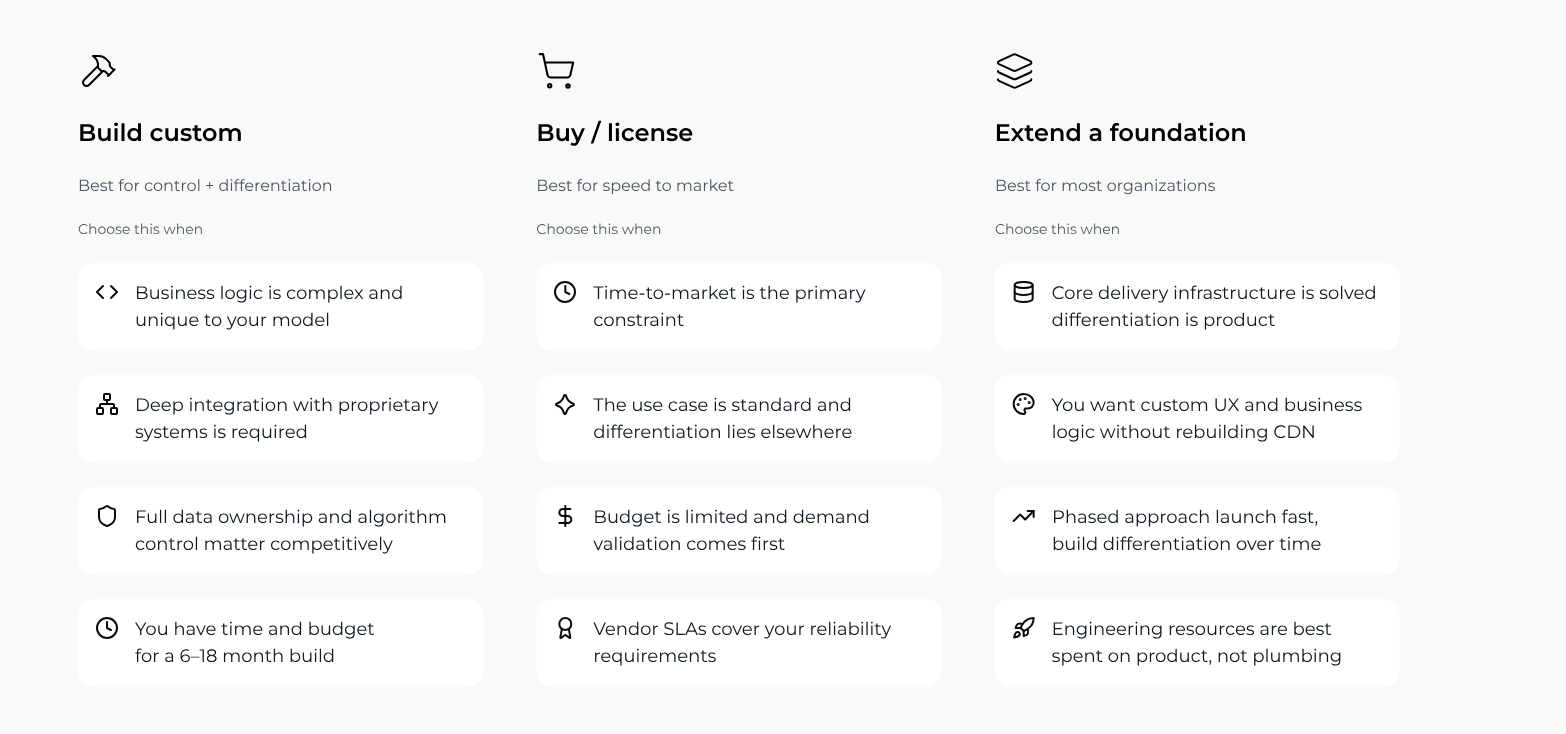
For most organizations, the “extend” path makes the most financial sense: proven infrastructure handles the hard parts, engineering budget goes toward what actually differentiates the product, and time-to-market shrinks considerably. Building fully custom from scratch is the right call when there’s a genuine requirement no existing foundation can meet.
An early assumption about unit conversion was never questioned and propagated through every subsequent decision until the ground team watched $327 million enter the Martian atmosphere at the wrong angle.
Streaming platforms go the same way. An architectural assumption made in month one quietly becomes the ceiling on everything built afterward, sometimes years before anyone realizes what’s happening.
The platforms that hold up financially over three years started with a different conversation: not “How much will this cost to build?” but “What will this cost to run, and what happens when it works?”
If you want a realistic picture of what it will actually cost to build, run, and grow, Oxagile’s team has done this across MVP projects, mid-market platforms, and enterprise builds.

Live streaming app development cost is shaped primarily by platform scope, latency requirements, scalability design, and data infrastructure. These architectural decisions have a larger impact on the final number than team location or feature count.
The cost to start a streaming service ranges from $80,000 to $150,000 for a focused MVP, $300,000 to $800,000 for a mid-market platform with multi-device support, and $1M or more for enterprise-grade builds. Where you land depends on architecture and operational scale.
Actual live video streaming app development cost does carry hidden points that most proposals don’t surface: DRM licensing, QA across the full device range, data infrastructure, vendor lock-in, and re-platforming when the original architecture hits its ceiling. A development partner worth working with will model these before signing the contract.
Live streaming app maintenance costs typically run 30 to 50% of the original development budget annually by year two, covering CDN delivery, cloud infrastructure, DRM licensing, security updates, and data infrastructure. The exact figure depends heavily on viewership scale and how well the original architecture was designed for growth.

