












This website uses cookies to help improve your user experience




Open any streaming app on a Friday evening, and the pattern is familiar: rows of content, fast suggestions, and still — hesitation. Not because there is nothing to watch. The issue is choosing.
Libraries keep growing, while attention remains limited. According to the industry research, U.S. households spend an average of 5.7 minutes deciding what to watch on streaming TV1. Those minutes directly impact engagement and increase the risk of drop-off, so discovery becomes a product problem.
OTT app personalization addresses this at a system level. It shapes what appears on screen, how the interface responds, when users are brought back, and how revenue is generated. Superficial implementations leave content buried. Deeper integration connects user intent with platform behavior in a consistent way.
The scope goes well beyond recommendation engines. It covers discovery logic, interface behavior, engagement mechanics, and monetization models. These layers influence session depth, return frequency, and overall revenue performance and are increasingly tied to how platforms are designed and scaled through OTT app development services.
This article looks at that broader system. The focus is on practical strategies that shape the full streaming experience and reflect how modern platforms are built.
Key takeaways:
Open the same streaming app on two different devices (or under two different profiles) and the experience often diverges. The catalog stays the same. The entry point changes.
Personalization goes beyond recommendations, reorganizing the product around individual behavior, context, and intent, so the same platform can deliver different experiences to different users.

This system unfolds across four dimensions.
Recommendations, ranking, and content placement determine what gets attention first. Small shifts here change viewing patterns: which titles are started, how quickly users commit, how often they abandon browsing.
The structure of the home screen, the order of rows, the presence of “Continue watching”, even visual presentation — all of it adapts. In some cases, artwork varies by region or viewing history, subtly reframing the same title.
Interaction extends beyond playback. Notifications about a new episode, reminders about unfinished content, prompts during live events — each element depends on timing, context, and prior behavior.
Revenue logic follows the same principles. Ad exposure, subscription prompts, and content packaging shift based on audience segments. One user sees an upgrade offer, another receives a targeted ad, a third stays in a bundled plan.
Across these layers, the experience changes in subtle ways. A different starting point, a different prompt, a different piece of content appearing at the right moment are all small shifts that gradually reshape how the platform is used.
When these mechanisms start working together, their impact becomes visible at the product level, as the same catalog delivers different outcomes through changes in distribution, interpretation, and monetization aligned with user behavior. Viewed as a continuous system, these mechanisms make that impact easier to recognize.
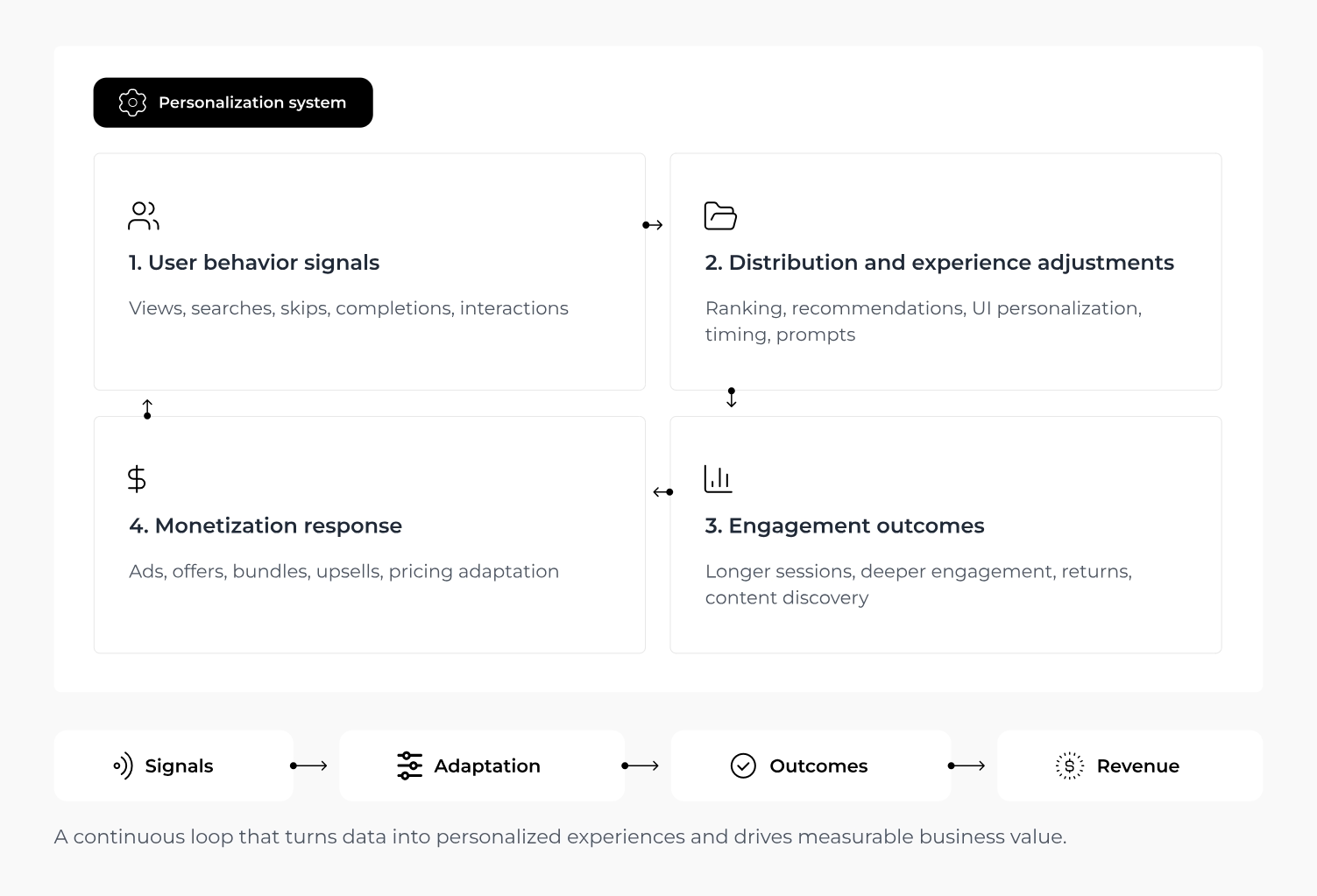
The cycle above outlines the mechanics. A closer look at each stage reveals where value emerges and how it shapes overall platform performance.
User signals feed into distribution logic: what appears first, what gets repeated, what fades out. Titles that rarely surfaced begin to gain visibility, niche content finds its audience, and engagement spreads across the catalog. A wider portion of the library contributes to overall performance.
Every interaction leaves a trace: what gets completed, skipped, rewatched, or abandoned early. Over time, these patterns form a stable signal layer. Product and content teams use it to guide decisions on acquisition, promotion, and future production, leading to more predictable outcomes.
Segmentation connects directly to monetization flows. A user shows interest in a specific genre or format, so the platform responds with a relevant offer, a well-placed ad, or a tailored bundle. Timing and context influence the result. Conversion improves as monetization reflects actual usage patterns.
Over time, these processes reinforce each other. Distribution improves visibility, interaction data sharpens strategy, and monetization adapts in parallel. The platform generates more value from existing assets and maintains a consistent experience.

Managing personalization at scale requires more than isolated features. A structured approach to OTT development keeps data, decision logic, and delivery aligned, allowing the system to respond consistently to user behavior.
Our team helps design and implement personalization systems that connect content discovery, engagement, and monetization into a coherent product flow shaped by your platform and business priorities.
What makes a streaming experience feel smooth and keeps users coming back, watching longer, and responding to offers without friction? It is a sequence of decisions: content selection, presentation logic, engagement timing, and monetization at the moment level.
The strategies below show how personalization takes shape across the product. Each one influences a different part of the experience, and together they define engagement level and revenue conversion.
A platform may launch with a strong catalog, yet only part of it consistently reaches users. Distribution determines which titles receive attention and which remain underexposed.
Recommendation systems continuously adjust that distribution. Viewing history, completion rates, skips, and search activity feed into models that rank and surface content. Hybrid approaches combine user behavior with content attributes, capturing both individual preferences and broader audience patterns.
Over time, more titles reach relevant viewers, and engagement spreads across the catalog. A wider portion of content contributes to performance, strengthening overall content efficiency.
A binge viewer opens the app and resumes a series. A casual user sees a compact set of trending titles. A sports fan enters through a live event. Entry points differ, while the catalog stays the same.
Interface logic shapes these variations. Home screens reorganize around recent activity, rows shift position, and navigation paths adjust to reflect usage patterns. Visual elements, including artwork and previews, influence perception before a title is selected.
Smoother entry into content leads to faster playback and more stable session flow. In many cases, this directly supports efforts to improve OTT app engagement rate by reducing friction during the first moments of interaction.
User behavior evolves across sessions and within them. A viewer may return to continue a series, explore new content, or follow a live event.
Signals generated during a session update prioritization as activity unfolds.

Continuous adjustment keeps the experience aligned with current behavior. As a result, OTT video personalization moves beyond static grouping and reflects what users are doing at the moment.
Re-engagement depends on timing, context, and relevance. Behavioral triggers determine when communication happens, while content selection defines whether it resonates.
Alignment across push, email, and in-app messaging creates a consistent return path. These mechanisms often work alongside broader OTT features that extend engagement beyond playback itself.
Users following different viewing patterns generate different monetization paths. One responds to a targeted offer. Another engages with ads placed in accordance with recent interests. A third continues within an existing subscription.
Monetization flows adapt to segmentation and behavior. Ad delivery, offers, and pricing reflect how content is consumed and how preferences evolve over time.
A more relevant experience increases the likelihood of conversion. In many cases, such alignment becomes part of a broader advertising strategy where relevance supports both engagement and revenue outcomes.
Audiences across regions interact with the same catalog in different ways. Language, cultural context, and local trends shape what resonates and how content is consumed.
For example, European audiences tend to respond to cleaner layouts and curated selections, while Asian platforms often prioritize denser interfaces, richer recommendations, and faster content turnover. In some regions, short-form highlights drive discovery; in others, long-form content and editorial curation play a stronger role.
Localization influences selection and presentation. Titles gain visibility where they are most relevant, and the interface reflects regional expectations without changing the underlying product.
Such adaptation supports expansion into new markets, maintaining consistency across the platform.
Live content introduces time-sensitive behavior. Attention shifts quickly as events unfold, and engagement depends on timely access and relevant updates.
Favorite teams, match schedules, and real-time signals guide prioritization. Notifications, highlights, and second-screen interactions extend engagement beyond the live broadcast itself.
Different viewing patterns emerge within the same event. The platform responds accordingly, supporting deeper engagement and additional monetization opportunities.
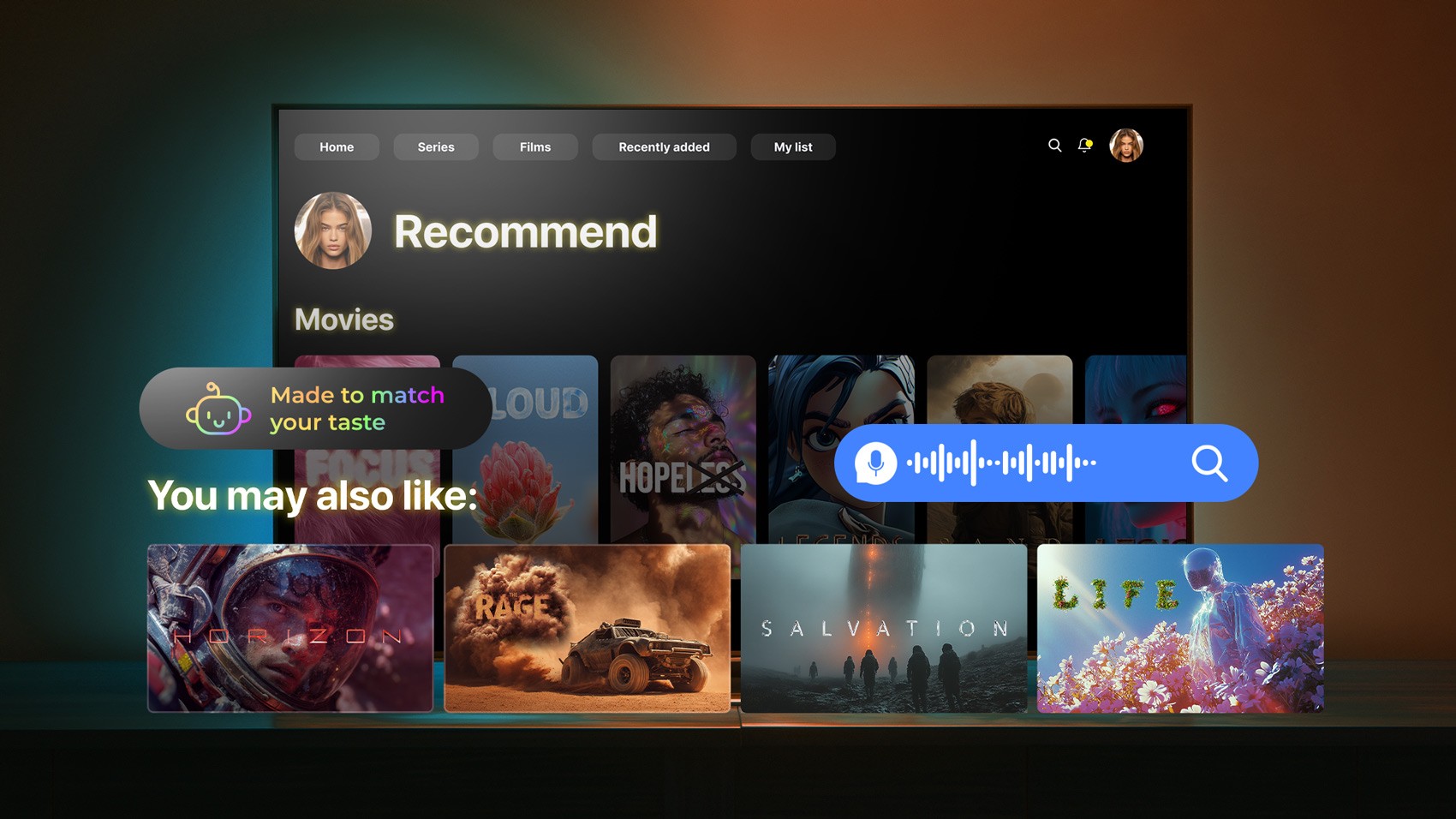
A streaming solution was designed to automatically generate and deliver match highlights based on user preferences. Instead of requiring users to search for key moments, the platform surfaced relevant clips as they became available.
A system that adjusts continuously can also drift. Small misalignments accumulate: signals lose clarity, decisions stop reinforcing each other, and the experience begins to feel uneven even when each component works on its own.
Many of these challenges emerge when OTT personalization strategies are implemented in isolation rather than as part of a coordinated system.
User behavior leaves traces across multiple touchpoints like playback, search, browsing, and interaction with prompts. When these signals remain separated, the system operates on partial context.
Recommendations begin to repeat familiar patterns without reflecting recent activity. Segmentation loses precision, and the experience feels slightly out of sync with user intent. Over time, decisions across the product stop aligning, and personalization loses its coherence.
Strong engagement signals often lead to repeated exposure to similar content. The system continues to build on patterns that already perform well.
As this loop tightens, fewer new titles reach visibility. Exploration becomes less varied, and the perceived breadth of the catalog shrinks. For platforms with OTT video personalization, maintaining balance between familiarity and discovery becomes essential to sustain long-term engagement.
User intent shifts during a session. Continuation gives way to exploration, or live content becomes relevant. Systems with slower updates continue to prioritize earlier signals.
The experience begins to lag behind user behavior. A viewer exploring new content still sees continuation-focused rows. A live event gains relevance without being surfaced immediately. These small delays interrupt the flow of the session and reduce engagement momentum.
Communication channels extend the product beyond the app. Notifications, emails, and in-app prompts create expectations about what a user will find next.
When these signals are not synchronized, friction appears. A notification highlights a title that is not immediately visible. An email promotes content that requires additional navigation to locate. The return path becomes less intuitive, and re-engagement weakens.
Revenue mechanisms follow their own logic in some systems. Ads, offers, and pricing flows are triggered based on predefined rules without sufficient connection to current behavior.
Users encounter prompts that do not match their intent. Ads interrupt at moments that feel poorly timed. Offers appear without clear relevance. The experience becomes less cohesive, and conversion opportunities are lost.
As personalization expands, more signals, models, and decision layers enter the system. Each layer introduces its own logic and timing.
Without coordination, these elements drift apart. Different parts of the product respond to different signals, and the overall experience loses consistency.
Moreover, in real projects, not well-thought-out personalization can lead to feature overload: multiple layers competing for attention, surfacing conflicting recommendations, or triggering at the wrong moment. The truth is that more does not necessarily improve the experience but can confuse users and reduce engagement.
As personalization expands, the challenge shifts from adding capabilities to maintaining alignment. Signals, decision logic, and delivery layers need to work in sync for the experience to stay coherent.
Small inconsistencies tend to surface quickly at scale. Data gaps affect recommendations, delayed responses disrupt sessions, and disconnected monetization weakens conversion.
Teams that approach personalization as a system tend to focus on integration points: where data flows, how decisions are made, and how those decisions appear in the product.
Getting these pieces to work together requires both architectural discipline and practical experience. That combination often determines how far personalization can go before it starts to break down.
At Oxagile, we design and implement OTT personalization systems that connect data, product logic, and monetization into a coherent, scalable experience tailored to each platform.
1. U.S. Households Spend An Average of 5.7 Minutes Deciding What To Watch on Streaming Television — Business Wire

Recommendation engines process multiple signal types: viewing history, completion rates, skips, search queries, and session behavior. These signals are combined with content attributes to rank and surface titles dynamically. Modern systems are based on hybrid models that adjust continuously, allowing recommendations to reflect long-term preferences and short-term intent within the same session.
Personalization affects revenue through more precise timing and relevance. Content is surfaced when interest is highest, ads align with user behavior, and subscription offers appear in context. This improves engagement and increases the likelihood of conversion without adding friction. Over time, a better match between user intent and monetization leads to higher revenue per user.
Yes, OTT video personalization extends across the entire product experience. It shapes content discovery, interface adaptation, user re-engagement, and the triggering of monetization flows. Recommendations remain one component, while the broader system coordinates multiple decision points that influence user interaction with the platform.
Personalization systems can be designed to operate with clear data boundaries and transparent logic. Aggregated behavioral signals, anonymized data processing, and user-controlled preferences help maintain compliance with privacy standards.
Well-structured systems focus on relevance without getting into sensitive data, allowing platforms to balance personalization with trust.

