




















This website uses cookies to help improve your user experience

If you’ve ever felt overwhelmed by the technical side of streaming products, you’re not alone. This comprehensive FAQ unpacks the core principles behind OTT app development and explains them in a way that’s easy to understand.
You’ll discover how OTT apps are built, which components matter most, how cross-platform support is achieved, and what separates an average streaming experience from a world-class one. By the end, you’ll have a clear vision of what it takes to bring a competitive OTT solution to market.
 We fine-tune performance across devices to deliver a smooth viewing experience every time.
With no schedules or gatekeepers, over-the-top streaming has reshaped how video reaches viewers. Get a clear picture of the OTT technology, models, and habits behind it.
Many organizations need an OTT platform apart from entertainment giants because it lets content owners bypass traditional TV infrastructure and deliver media directly over the internet. This includes medium- and small-scale content aggregators, broadcasters, and niche publishers seeking a more flexible path to their audiences.
OTT platforms solve a familiar problem: fragmented distribution that limits reach. With OTT, content appears across smart TVs, desktops, mobile devices, and set-top boxes without requiring a cable subscription.
Key advantages for smaller businesses include:
So when considering who needs OTT platform capabilities, the answer extends far beyond major streaming brands. Any organization aiming to modernize distribution and engage audiences on their own terms can benefit from adoption.
The OTT market size is growing fast, and the projections leave little room for doubt. OTT video subscription revenues are expected to climb to $64.12 billion already in 20261, showing how firmly streaming has taken root in everyday habits. More than two billion viewers will use subscription-based OTT services in the coming years, even as growth rates shift.
Broader industry forecasts support this upward trend: a Mordor Intelligence report predicts that the global OTT market will expand to $596.92 billion by 20302. In turn, The Business Research Company estimate its rise to $403.99 billion by 20293.
In the United States, the landscape is especially crowded, with 377 OTT providers and 88% of internet homes holding at least one subscription4. That level of adoption signals a mature yet still evolving market.
As people move freely between screens and locations, OTT becomes the natural destination for entertainment. New monetization paths, from FAST to hybrid revenue models, only reinforce why the OTT market continues to expand.
 Learn more about how OTT differs from traditional video delivery and what it takes to build it right.
A cross-platform OTT app solves a basic problem: fragmented viewing and fragmented operations.
For viewers, such an OTT app removes the need to juggle different apps, interfaces, or subscriptions across devices. The same content, features, and preferences follow them everywhere. This leads to clear viewer benefits:
For providers, fragmentation is expensive. Separating native apps increases development time, testing effort, and long-term maintenance. Cross-platform delivery reduces that complexity, keeping feature parity intact. Provider-side benefits include:
The result is steadier growth on both sides. Viewers face fewer barriers. Providers avoid reinventing the wheel for each platform. When done right, the whole system runs smoother, like a well-oiled machine.
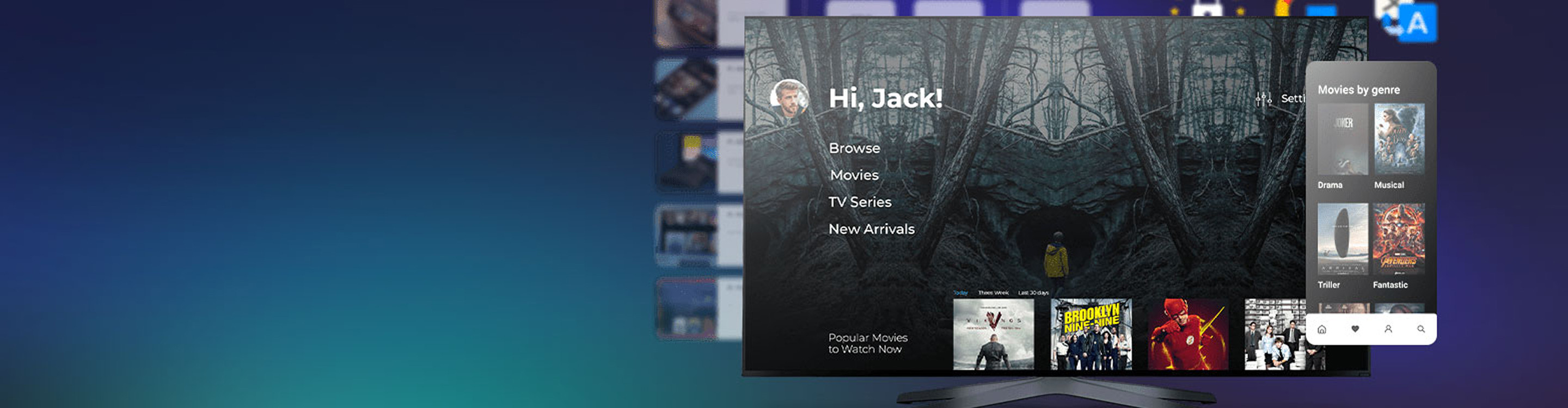 Here’s how OTT platforms are built today. And what teams usually underestimate at the start.
Creating an OTT app means balancing speed, quality, and growth. Here’s how teams approach development without cutting corners.
OTT app development addresses a core limitation of traditional video distribution: lack of control. Cable TV, IPTV, and third-party platforms dictate how content is delivered, monetized, and measured. Building your own OTT application removes those constraints by making direct video delivery over the open internet possible.
This plays out clearly in practice. One OTT platform expanded its service by rebuilding Android mobile and Amazon Fire TV apps as part of a single SVOD ecosystem. By owning the apps, it introduced offline playback, background audio, streamlined payments, and community features, accelerating releases through test automation. These changes directly supported subscriber growth and faster time-to-market across screens.
Key outcomes include:
This approach also supports faster experimentation. New features, content formats, or user flows can be launched, tested, and refined without long infrastructure cycles. When video is central to growth, the development of OTT apps becomes the backbone, not an add-on.
If you’re mapping how to build OTT app solutions, treat it like a staged rollout, not one big “build everything” sprint.
Custom OTT apps and white-label solutions differ in how much flexibility, ownership, and responsibility they offer. In a custom vs white label OTT comparison, both approaches are valid, but they serve different business scenarios.
When requirements are specific and hard to compromise, custom OTT apps are the right choice. In one case, a white-label OTT app solution needed a custom-built platform that supported fast UX customization, brand-level theming, and consistent behavior across smart TVs, web, and mobile, all on top of shared business logic. That level of flexibility required a custom frontend architecture with reusable modules and platform-aware UX patterns designed for resale.
Custom builds also make sense when long-term evolution matters. The aforementioned platform had to adapt to very different client needs, from media-heavy entertainment layouts to news-focused interfaces optimized for speed and clarity. Maintaining these variations over time is difficult with rigid templates and requires direct control over UX, workflows, and performance.
White-label solutions work better when speed is the priority. A content aggregator entering a new market can launch faster using standard features and a configurable admin system, validating demand without heavy engineering effort.
The difference comes down to goals. Custom platforms favor flexibility and scale. White-label solutions favor speed.
White-label OTT platforms enable customization by giving brands control over the viewer experience without requiring them to build the entire system from scratch. With a white label OTT app, companies inherit core streaming capabilities and focus on adapting features that matter most to their audience.
For content owners, customization often centers on:
For software vendors and pay-TV operators, customization means serving many brands from one platform.
White-label OTT platforms designed for pay-TV operators offer a practical example of how this model plays out. The platform supported branded services for hundreds of providers, each with its own EPG configuration, live channel structure, user settings, and content presentation. New features such as enhanced media cards, NPVR services, and performance analytics were added once and reused across brands. In short, the brand layer handles customization, and the core platform remains stable and scalable.
An OTT app builder is a solution used to create OTT applications that support complete streaming services rather than basic video playback. It supports content delivery across multiple devices, with a focus on usability, scalability, and monetization readiness.
Such a builder covers the core needs involved in launching an OTT service. These include building user-friendly frontends, expanding streaming to smart TVs, web platforms, and mobile devices, and preparing apps for different business models. The emphasis is on creating a structured app experience that viewers can navigate easily.
The supported capabilities typically include:
An OTT app builder lets teams refine the viewing experience and improve service quality as the platform evolves, without rebuilding everything from the ground up.
For telcos, speed matters. A modular OTT solution helps them launch multi-screen streaming fast by aligning technical structure with how services actually scale.
A shared foundation replaces separate apps for smart TVs, mobiles, and STBs. One codebase supports multiple platforms, and configuration controls define each customer’s experience.
This becomes especially valuable when:
One of Oxagile’s projects shows this model in action. A modular OTT solution was created for telco clients of an online video platform provider. The system supported 25 devices with mosaic viewing, live streaming, analytics, and GDPR-compliant data handling, configurable per telco.
Because environments were prepared in advance, new customers could go live quickly. In short, modular architecture lets telcos move fast without cutting corners, proving that many hands don’t have to make light work when the structure is right.
OTT platforms are always in motion. New devices appear, content libraries expand, and audiences grow faster than expected. All of this puts real strain on backend systems, especially when everything is tightly coupled in one place.
Microservices architecture eases that pressure by restructuring the platform behind the scenes. Smaller, independent services take on specific responsibilities like content management, playback logic, or user workflows.
This difference becomes clearer when viewed side by side:
| Platform aspect | Traditional architecture | Microservices architecture |
| Scaling | Entire system scales together | Services scale independently |
| Integrations | Harder to adapt over time | Designed for flexible integrations |
| Content workflows | Centralized and rigid | Modular and cloud-based |
| Updates | High risk of platform-wide impact | Isolated, targeted changes |
This structure supports cloud-based growth and simplifies coordination between systems through orchestration middleware. Media asset management, ingestion, and user workflows remain connected but not tightly bound.
OTT microservices also support multi-screen delivery by reducing duplication and backend complexity. With responsibilities clearly divided, platforms can expand to new devices and regions without constant architectural redesign, keeping operations steady as the platform grows.
 Some models scale cleanly, others don’t. This guide looks at why the difference matters in practice.
OTT monetization isn’t just about ads or subscriptions. Explore how platforms blend revenue models while keeping the viewing experience intact.
AVOD, SVOD, and TVOD represent different ways OTT platforms answer one question: when and how should viewers pay for content? Each path aligns specific viewing habits and business goals within OTT monetization models.
Advertising-based video on demand (AVOD) trades money for attention. Viewers watch advertisements instead of paying upfront, which makes content widely accessible. This model works well for platforms that aim for wider reach and discovery, especially in markets where users are reluctant to subscribe or pay in advance.
Subscription video on demand (SVOD) trades flexibility for commitment. Viewers pay a fixed recurring fee and expect consistent value in return. This creates predictable revenue but also raises expectations around content depth, viewing quality, and regular updates to justify the subscription.
Transactional video on demand (TVOD) trades continuity for immediacy. Viewers pay per transaction, such as renting or purchasing a specific title or live event. This fits premieres, sports, or niche content with strong demand, but it rarely builds long-term viewing habits on its own.
In practice, many platforms mix these approaches. Like having multiple gears, hybrid strategies help platforms adapt to user behavior without stalling revenue growth.
Traditional subscription streaming asks viewers to pay first and decide later. Free ad-supported streaming television (FAST) flips that logic. Content is prioritized, with ads taking the place of payment. That difference is at the heart of the FAST streaming trend.
Here’s how FAST stands apart from subscription models.
| Aspect | FAST | Subscription (SVOD) |
| Access model | Free to watch | Requires recurring payments |
| Viewing style | Emphasizes lean-back, channel-based viewing | Focuses on on-demand browsing |
| Discovery | Simplifies choice through curated channels | Often overwhelms users with large libraries |
| Monetization | Depends on advertising | Depends on retention and churn control |
The trend is accelerating because subscription fatigue is real. In fact, a recent survey found that about 74% of U.S. cord-cutters5 (people who have stopped paying for traditional cable or satellite TV services and instead watch video through internet-based options) canceled at least one streaming subscription in the past year. Most often, it happened due to rising costs or a shift toward cheaper, ad-supported options.
Thus, viewers still want content, but they increasingly prefer flexible, low-friction access. FAST services respond to this shift by offering hundreds of free, ad-supported channels on platforms like Plex, Freevee, and Pluto TV, recreating the familiar lean-back experience of traditional television without the monthly bill.
Live content is also reshaping perception. The inclusion of major events, such as the Super Bowl streamed by Tubi, proved that FAST can attract massive audiences at scale. As competition increases, platforms are investing in personalization, analytics, and dynamic ad insertion to keep ads relevant and engagement high.
Overall, FAST is trending because it aligns with how people actually watch today: casually, freely, and without long-term commitments.
Targeted advertising in OTT apps means showing ads to specific viewer segments instead of broadcasting the same message to everyone. Platforms process data to understand who is watching and align ads with audience interests, behavior, and viewing context. This makes advertising feel more relevant and less disruptive.
OTT targeted advertising is supported by several core technologies working together:
The result is a clear shift from broad exposure to accountable advertising. Brands gain transparency and control, platforms increase CPMs and fill rates, and viewers see ads that better match their interests. When done right, it’s a win-win situation, and messages connect with people who are actually paying attention.
Server-side ad insertion (SSAI), or dynamic ad insertion in OTT, is a way to deliver ads as part of the video stream rather than as a separate overlay that loads on top of playback. It is used to make ad transitions feel smoother, so viewers don’t get jolted out of the show when an ad break starts.
How it improves viewer experience:
Put simply: SSAI is the “stitching” approach in OTT advertising. The goal is to keep ads from feeling like the player is pausing, buffering, or switching modes. A small technical change, but it can make ad-supported streaming feel a lot more watchable.
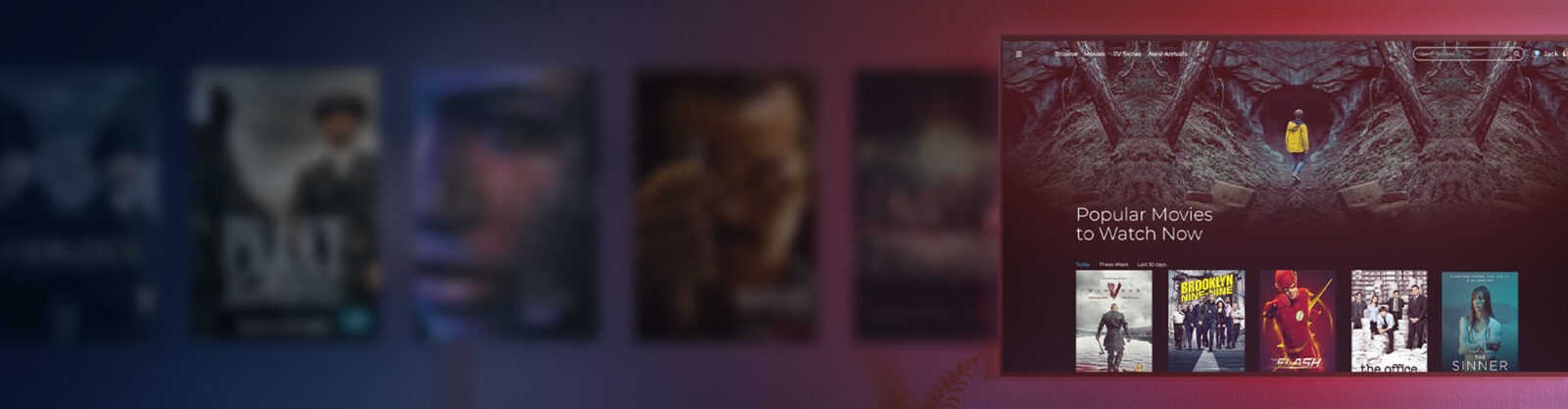 Both paths work, but for different reasons. This article helps you decide which fits your roadmap.
OTT optimization is about reducing friction — for users and operators alike. Discover the tools and processes that make it possible.
From a viewer’s seat, buffering feels like a broken promise. Behind the scenes, avoiding it requires precise coordination across delivery, playback, and platform logic. OTT platforms achieve this by separating heavy lifting from the user’s device.
There’s no single stream. Video is segmented, cached, and delivered via CDNs. Each viewer receives chunks from the nearest server, reducing congestion and startup delays. Adaptive bitrate streaming keeps playback smooth when conditions change mid-session.
OTT performance optimization also relies on consistency across devices. Platforms expose the same business logic through APIs and SDKs, tailoring playback for ыmart TVs, mobile apps, and streaming devices. This avoids uneven behavior that can overload parts of the system.
Fundamental contributors include:
Think of it like traffic control, not a brute force. Instead of widening one road endlessly, platforms reroute traffic dynamically. Viewers may never see the machinery, but they feel the difference when streams stay steady during peak demand.
Supporting older devices is less about adding features and more about careful subtraction. OTT apps are optimized by trimming excess logic and pushing complexity away from the device whenever possible.
Cloud infrastructure and CDNs do the heavy lifting. Video is encoded efficiently and delivered from nearby servers, so older devices don’t struggle with decoding or long startup times. Adaptive streaming allows playback to continue even when bandwidth or hardware performance dips.
Optimization techniques commonly include:
OTT app optimization older devices experience also depends on strict release discipline. Updates are smaller and incremental. Feature parity is balanced against stability, especially on smart TVs with slow OS update cycles.
This approach keeps apps usable without forcing upgrades. It’s a slow-burn strategy, not a quick win. Like maintaining a well-loved appliance, regular tuning keeps it running long after newer models appear.
Sustainable broadband delivery becomes difficult when OTT traffic grows faster than manual operations can manage. Automation closes that gap by turning network reactions into predefined, real-time responses instead of delayed human decisions.
OTT automation helps to continuously analyze traffic patterns and react promptly. Systems detect load imbalances, congestion risks, or inefficient routing early, then apply corrective actions without interrupting playback.
How this typically works:
The outcome is stability. Broadband resources are consumed evenly, peak loads are absorbed smoothly, and unnecessary strain is avoided. Over time, this creates a service that grows without burning excess capacity or energy. Automation keeps the network responsive, even when demand refuses to sit still.
A streaming service often launches on mobile first, then expands to smart TVs, web, and set-top boxes. With this setup, teams reuse playback logic, authentication flows, and content APIs across platforms. This way, they don’t have to re-create core features each time, which means that cross-platform development can save measurable time.
With OTT code reuse, core functionality lives in shared modules. Business logic, data handling, analytics, and monetization rules are implemented once and applied everywhere. Platform-specific work is limited to what truly differs, such as UI layouts, input methods, or device constraints.
This model speeds up development in several specific ways:
Engineering effort shifts away from rebuilding fundamentals and toward improving performance, navigation, and reliability. Fewer parallel implementations also reduce inconsistencies between platforms, making behavior easier to test and maintain.
As the product grows, this shared foundation helps teams scale without losing control over quality or delivery speed.
 But ignoring security gets expensive fast. Here’s how teams make protection invisible to users and painful to attackers.
Delivering video over the internet introduces new risks. Learn how OTT platforms secure content, access, and data at scale.
Recent U.S. data privacy law has moved6 well beyond early pioneers like California to include multiple states with comprehensive rules granting personal data rights, such as access, deletion, and universal opt-out of data sale.
This expanding patchwork means that any OTT platform with a multi-state audience must treat privacy as core to business operations, not as a side task.
For OTT data privacy compliance, platforms should undertake the following key actions:
Addressing privacy early reduces the risk of enforcement actions, protects user trust, and supports expansion into new regions with confidence.
OTT app security risks are not abstract. They hit revenue, licensing, and trust at the same time. Most incidents follow a few repeatable patterns.
| Threat area | Failure pattern | Mitigation approach |
| Piracy and restreaming | Unauthorized redistribution, rights leakage, revenue erosion | DRM, stream encryption, forensic watermarking |
| Credential abuse | Account takeover, resale markets, distorted engagement data | AI fraud detection, session monitoring |
| Payment fraud | Card testing, chargebacks, compliance penalties | PCI DSS 4.0.1 controls, transaction screening |
| Data privacy exposure | Personal data leaks, regulatory fines, trust loss | GDPR, VPPA, COPPA enforcement |
| Licensing non-compliance | Blocked studio deals, lost UHD and sports rights | MovieLabs ECP, hardened apps |
| App tampering | Modified clients, premium access bypass | Secure media paths, runtime integrity checks |
What makes OTT app security tricky is the overlap. One breach often triggers another. A leaked stream leads to license disputes. A weak login leads to fraud and data exposure.
That’s why effective OTT app security relies on layered controls. DRM alone is not enough, neither is compliance paperwork without technical enforcement.
When protection, privacy, and licensing safeguards move together, the platform stays scalable without turning security into friction.
Online piracy still generates hundreds of billions of visits each year, with illegal streaming remaining one of the most persistent threats to premium video distribution. That scale is why DRM is foundational for OTT platforms, not optional.
Digital Rights Management (DRM) refers to technologies that encrypt video and strictly control who can decrypt and play it. It is used to protect content in several layers at once.
Video files are encrypted, playback licenses are issued only to authorized users, and enforcement happens inside secure hardware zones on devices. Even if a stream is intercepted or copied, it stays unreadable without a valid license. For OTT services distributing high-value content, this protection is what keeps agreements with studios and sports leagues viable.
A single DRM system, however, is never enough. Devices enforce different standards, which makes a multi-DRM architecture essential. Without it, coverage breaks the moment a platform expands to new devices or regions.
| Threat and business impact | How DRM mitigates it |
| Large-scale piracy, illegal restreaming, lost subscription, and ad revenue | Strong encryption keeps files unusable outside licensed playback |
| Screen capture, HDMI ripping, uncontrolled redistribution | Hardware-level enforcement and HDCP block unapproved output paths |
| Account sharing and license abuse | License rules limit devices, regions, and playback duration |
| Cross-device fragmentation and failed compliance audits | Multi-DRM selects Widevine, FairPlay, or PlayReady per device |
| Studio trust erosion and blocked premium licensing | Certified DRM frameworks meet MovieLabs and rights-holder standards |
Multi-DRM doesn’t add complexity for its own sake. It keeps OTT DRM protection consistent across Android, iOS, smart TVs, and browsers, even as device policies change. Without it, protection gaps appear fast, and once content leaks, the damage is already done.
Iterative data warehousing builds analytical systems through repeated cycles of improvement instead of a single upfront design. For OTT platforms, this matches how content, user behavior, and monetization evolve over time.
Teams begin with what they understand and expand as real usage data exposes gaps. The result is analytics that stay grounded in how the platform is actually used, not how it was assumed to work. A typical iterative flow looks like this:
This approach matters because data questions rarely stay stable. A service can shift from SVOD to hybrid monetization, live content introduces concurrency tracking, and regulatory demands bring new user-level controls.
Iterative OTT data warehousing reduces these risks. It avoids overengineering and keeps analytics aligned with real decisions instead of imagined ones. Like steering a ship by constant course correction, it keeps insight accurate as conditions change.
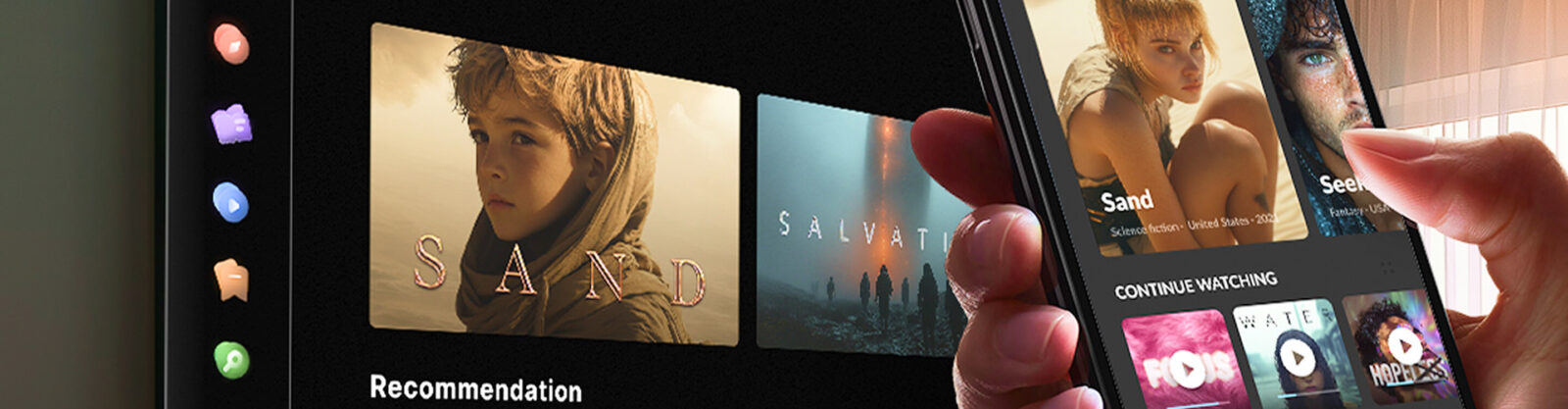 Some features drive loyalty. Others just add surface complexity. Learn which foundations are worth acing.
Great OTT platforms feel intuitive because they adapt. Features and personalization shape discovery, engagement, and loyalty.
The most successful OTT platforms on the market share a common feature set, shaped by how people actually watch content today. These must-have OTT app features fall into four practical groups.
1. Core experience
This layer removes friction. Viewers should never think about controls or compatibility.
2. Interactivity and engagement
These features turn static viewing into shared moments, especially for live content.
3. Personalization powered by AI
AI stays invisible. It predicts preferences, adapts layouts, and improves discovery.
4. Monetization flexibility
Here’s the key point: none of these work well in isolation. OTT app features succeed when they reinforce each other. Together, they create consistency, relevance, and long-term loyalty.
Picture a tiled screen where each tile plays a different video feed in real time. Mosaic viewing is the interface design that arranges multiple streams on a single display, giving viewers a snapshot of several programs at once. It replaces manual channel hopping with a more organized, multi-view experience.
Across streaming services, mosaic viewing OTT layouts are popular because they align with how users assess content today. Viewers see live motion, pacing, and context before choosing what to watch, beyond static thumbnails or menu tiles.
Key reasons it resonates with users include:
For OTT providers, mosaic viewing supports engagement and retention by offering a smoother way to preview and compare content without leaving the main screen.
Interactive features change what watching feels like. Viewers move from passive consumption to active participation. Polls during live shows, real-time chat, reactions, and second-screen interactions all shift the experience from solo viewing to shared moments.
From the viewer’s side, this is immediate. You vote in a poll during a live event. You react to a key moment. You see others doing the same. That sense of presence is what keeps sessions longer and return visits more frequent.
For platforms, OTT interactive features create multiple engagement loops at once:
These interactions also feed personalization. Engagement signals help refine recommendations, surface trending content, and adjust UI elements in real time. The platform responds as viewers interact, not days later.
Crucially, interactivity supports monetization without friction. Sponsored polls, branded reactions, and event-based engagement add to the experience. Advertising aligns with the moment and maintains immersion.
Thus, these features act like kindling: they don’t replace the content, but they help it catch, spread, and keep viewers engaged long after the initial spark. Over time, these measures create what’s called return behavior. Viewers come back not only for the content itself, but for the shared layer around it. When conversation and video move together, the experience holds.
Personalization matters because attention is limited. Viewers don’t struggle to find content online. They struggle to find the right content quickly. OTT personalization reduces that friction.
An intuitive experience doesn’t demand effort. Discovery happens inside the interface, shaped by real usage patterns instead of rigid menus.
Modern platforms already predict preferences based on habits. AI tracks what people watch, skip, and finish. That data helps surface relevant titles earlier in the session.
What strengthens engagement further:
Choice plays a big role. Some viewers want trend-driven suggestions. Others prefer familiar genres or location-based content. Letting users blend these signals keeps recommendations from feeling forced.
When discovery feels natural, viewing becomes habitual. Over time, that habit turns into loyalty, much like returning to an old friend who knows you well.
A single-screen OTT app delivers content, while a multi-screen OTT platform delivers continuity. That distinction has a direct impact on retention and long-term engagement.
When experiences are limited to one device, viewing sessions tend to fragment. Users start on mobile, move to a TV, or pick up a tablet later, only to find their progress, recommendations, or context reset. A multi-screen approach removes that friction by keeping playback state, preferences, and behavioral context aligned across devices.
This continuity is especially important because AI in OTT streaming depends on consolidated signals. Mobile discovery patterns, lean-back TV viewing, and short tablet sessions all contribute to different insights. When these signals are combined, AI can model real user intent instead of guessing based on isolated interactions. This leads to stronger personalization and more consistent engagement.
Here’s how single-screen vs multi-screen OTT differ:
| Single-screen | Multi-screen |
| Fragmented viewing flow | Continuous viewing flow |
| Partial engagement signals | Unified engagement signals |
| Generic recommendations | Context-aware recommendations |
| Session-driven usage | Habit-driven usage |
Before multi-screen delivery becomes effective, platforms need a shared intelligence layer. Data needs to move freely between environments, with AI systems viewing behavior as one continuous journey across devices and touchpoints.
How it’s implemented:
The outcome is subtle but powerful: viewers do not think in terms of devices anymore, they simply continue watching.
AI serves two intertwined roles in streaming platforms: enhancing content recommendations and enabling adaptive user interfaces.
For recommendations, machine-learning systems digest behavioral data to build predictive models7. Analyzed data includes what viewers watch, how long they watch it, when they pause or skip, and what genres or actors they prefer. These models go beyond static genre buckets and surface content based on nuanced patterns in viewing behavior.
In practical terms, recommendation engines operate through three main algorithms:
Together, these models tailor recommendations more precisely, increasing the likelihood that users engage with suggested content. Simultaneously, UI adaptation complements recommendations by modifying the visual and interactive layer to match user patterns.
Menus and rows adapt based on recent engagement signals, device type, and inferred preferences. Thumbnails, for instance, can be chosen dynamically to feature scenes or themes that resonate with a particular viewer, while menus can prioritize categories shown to have higher relevance for similar profiles.
From a technical standpoint, this adaptation involves real-time analytics and scalable microservices:
In an OTT multi screen experience where viewers move across phones, tablets, and TVs, consistency and responsiveness are key to making the platform feel personal and seamless across every screen.
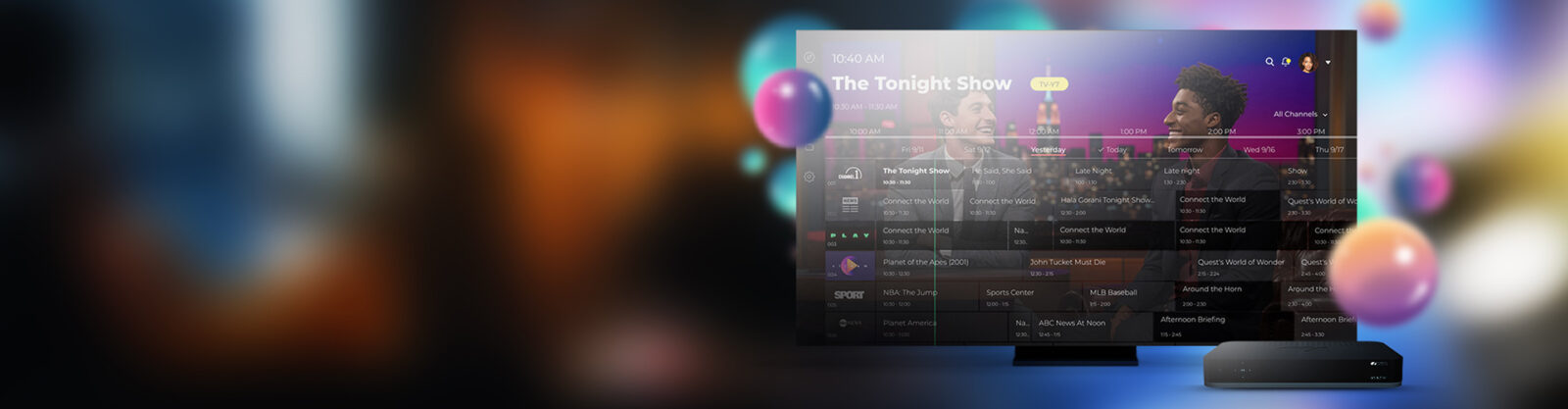 There are a few questions that quietly predict success. This guide walks through them without vendor fluff.
Not all OTT development companies solve the same problems. This section helps separate capability from marketing claims.
Building an OTT platform today is not a single engineering task. It is a stack of parallel challenges: multi-device delivery, live streaming stability, personalization, monetization, analytics, and long-term scalability. An in-house team often covers some of these well, but rarely all at once.
A professional OTT app development company brings production-ready expertise across web, mobile, Smart TVs, and set-top boxes from day one. That matters when platforms must support live streaming, FAST channels, AI-driven personalization, and sudden traffic spikes without failure.
Leading OTT vendors already operate at scale across:
Doing this in-house means assembling several specialized teams and paying for the learning curve. External partners bring that experience upfront, shortening time to market and allowing internal teams to focus on content strategy and growth, not platform firefighting.
Choosing an OTT development partner starts with operational capability, not branding. It’s like picking a co-pilot. The right one helps you navigate turbulence, not just take off. The partner should already work at scale across devices, monetization models, and delivery paths. Anything less creates friction later.
The first factor is multi-platform expertise. OTT platforms are expected to run smoothly on smart TVs, mobile devices, web, and set-top boxes. This includes handling OS fragmentation, firmware limits, codecs, and remote-driven UX patterns. A partner without deep cross-device experience will struggle to maintain consistency.
The second factor is architecture maturity. Cloud-native backends, fault tolerance, and scalable streaming pipelines are mandatory. Live traffic spikes, FAST channels, and global delivery require systems that scale without rework.
The most important technical areas to verify include:
Equally important is operational independence. A strong partner delivers admin tools for content, metadata, analytics, and A/B testing without constant developer involvement.
Additionally, consider business alignment. Strong partners provide valuable OTT consultations and can advise on monetization models, rollout strategy, and cost structure, not just implementation details.

Before timelines, budgets, or features lock in, it helps to pressure-test the plan.
A short conversation can save months of rework later.
1. OTT video subscription revenues projected to reach US $64.12 billion by 2026, with over 2 billion global subscribers — eMarketer
2. Global OTT market expected to grow to US $596.92 billion by 2030 — Mordor Intelligence
3. The OTT streaming market is estimated to rise to US $403.99 billion by 2029 — The Business Research Company
4. The U.S. OTT landscape includes 377 providers, with 88% of internet households subscribed to at least one service — eMarketer
5. About 74% of U.S. cord-cutters canceled at least one streaming subscription in 2025, citing rising costs and a shift to ad-supported options — TV Technology
6. U.S. state privacy laws expanded in 2025, granting access, deletion, and opt-out rights — ECAC USA
7. AI enhances OTT personalization through predictive recommendations and adaptive UI behavior — Socialnomics

