












This website uses cookies to help improve your user experience

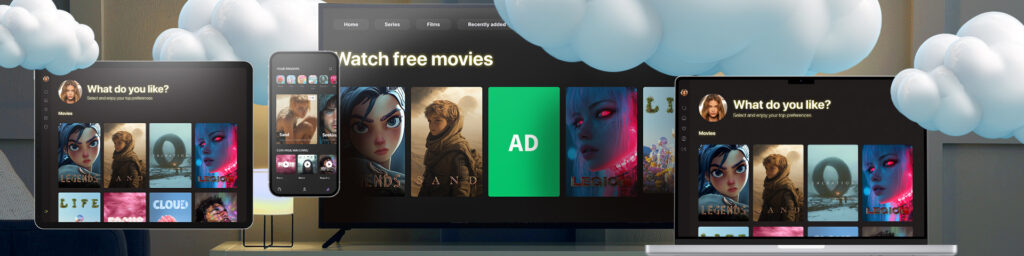

Media consumption is now streaming first. Audiences expect instant, personalized access to content across devices, along with stable performance and fast content discovery. These are baseline expectations rather than differentiators.
For media distributors and broadcasters, competition in the OTT market continues to intensify. User acquisition costs are rising, while retention and churn management have become central challenges. Product requirements now include UX, monetization, and analytics alongside content delivery. Therefore, building or evolving an OTT platform requires a scalable technical foundation and a clear product strategy.
If you’re considering delivering content over the internet instead of traditional cable or satellite infrastructure, you’re likely looking into OTT platform development and the OTT meaning itself. In this article, we explain what an OTT platform is, review its core technology components, outline monetization models, and compare custom and ready-made development approaches.
Key takeaways:
So, what does OTT stand for? It comes from “over the top” and refers to the delivery of content over the internet instead of traditional TV distribution. An OTT streaming platform allows users to access live and on demand media across Smart TVs, desktops, smartphones, tablets, and set top boxes without a cable subscription.
If you’re familiar with services like Netflix, Disney+, or Hulu, you already understand the basics of OTT video platforms. These platforms have changed how audiences discover and watch content. OTT is no longer limited to large entertainment companies, it’s also a viable option for medium and small content aggregators, broadcasters, and niche publishers.
From a business perspective, OTT platforms represent a flexible, scalable way to:
But, what is OTT platform adoption really about? Taking full ownership of your distribution strategy and engaging your audience without third-party gatekeepers.
While OTT operates over the open internet, it’s often compared to IPTV, another digital delivery method that uses private, managed networks. Understanding the difference between the two is key when choosing the right path for your content distribution strategy.
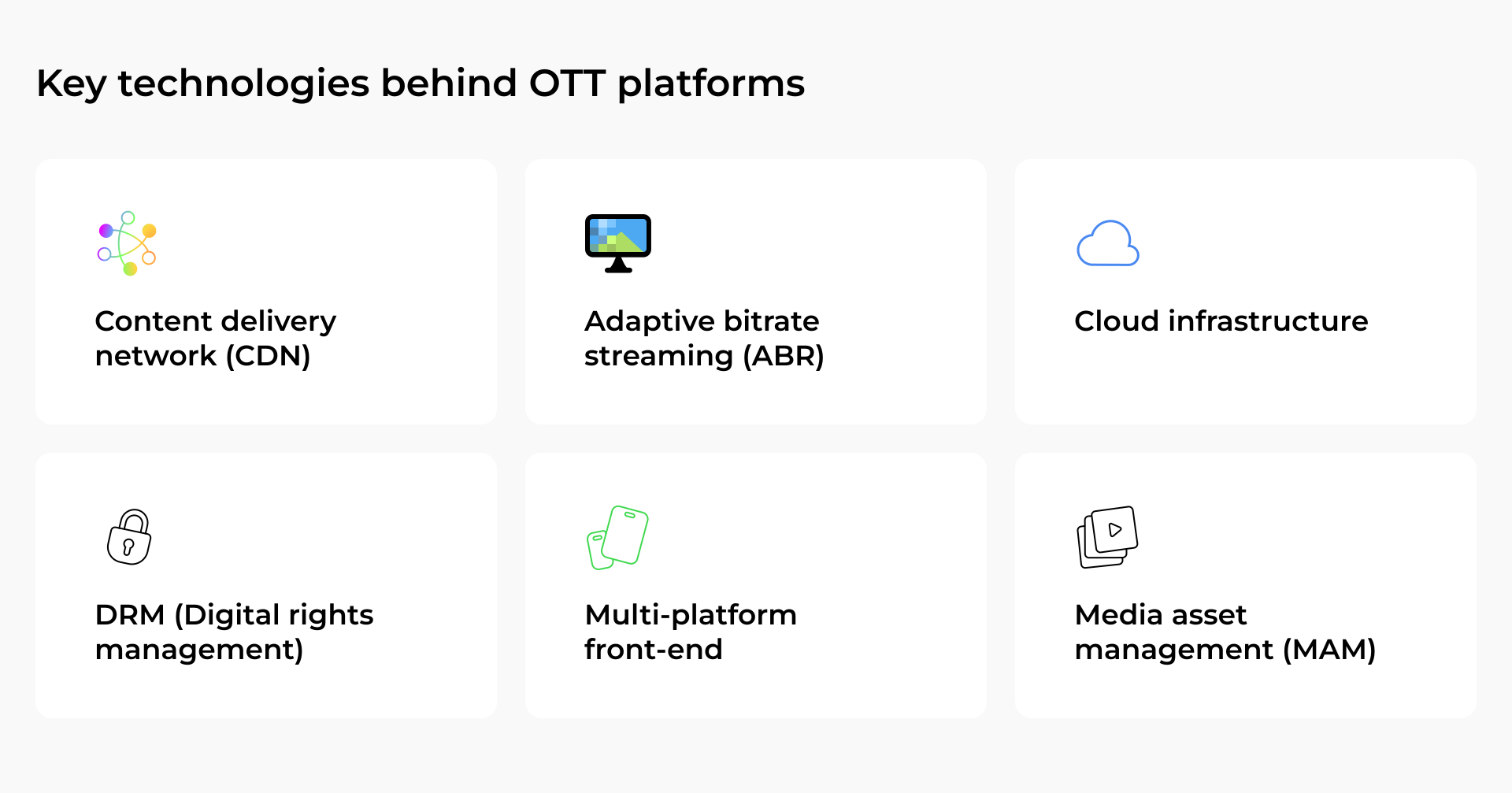
Developing a high performing OTT streaming platform isn’t just about uploading videos and hitting “play”. Behind every viewing experience is a well-structured technology stack. Let’s look at the core components used in modern OTT services.
A CDN helps distribute video content efficiently by caching it across a network of global servers. Faster loading times, reduced buffering, and more reliable delivery are especially important during traffic spikes such as live events or premieres.
Many platforms use multi-CDN strategies to improve reliability and performance by dynamically routing traffic between providers based on geography, load, and network conditions.
Viewers often have fluctuating internet speeds. ABR technology adjusts video quality in real-time based on bandwidth, allowing playback to continue smoothly without interruptions, which is essential for maintaining engagement.
Low latency streaming is becoming increasingly important, especially for sports and live events. Technologies like low latency HLS and WebRTC help reduce delay between real time action and playback, improving user experience in time-sensitive content.
From content storage to transcoding and delivery, cloud-based infrastructure allows you to scale your operations with demand. Platforms like AWS or Azure support cost-effective, elastic storage, and delivery systems critical for growing platforms.
DRM technologies like Widevine, PlayReady, or FairPlay protect your content from unauthorized access and redistribution. They help reduce piracy risks and control how media is accessed across devices. If you’re distributing sports, exclusive shows, or subscription only content, DRM integration becomes critical for protecting revenue.
Consumers expect to watch your content anywhere, on Android TV, Apple TV, Roku, Samsung Tizen, LG webOS, set top boxes, and mobile devices. Each platform comes with its own requirements for development, UI patterns, and performance constraints. Coverage across major environments expands audience reach, while gaps in platform support often lead to missed users and higher churn.
Efficiently managing thousands of video assets requires robust MAM tools. OTT features like tagging, metadata management, and automated transcoding workflows help streamline operations for content-heavy businesses.

A custom OTT platform offers full flexibility in branding, monetization, and user experience. At Oxagile, we develop scalable OTT applications tailored to your audience and content strategy.
OTT platforms run across multiple device categories, but usage patterns differ depending on screen and context.
Connected TVs have become the main screen for long form viewing. Platforms like Android TV, Apple TV, Samsung Tizen, and LG webOS require dedicated apps, TV focused navigation, and stable performance across devices. Interfaces are designed for remote control, which affects layout, content discovery, and interaction patterns.
Mobile devices and web platforms play a supporting role. They are often used for shorter sessions, content discovery, or as a second screen. At the same time, they come with higher expectations for responsiveness, personalization, and frequent updates.
Most OTT platforms typically support:
Each platform requires separate development and ongoing maintenance. In practice, teams prioritize based on audience behavior, often starting with CTV and expanding coverage over time.
Use Oxagile’s OTT calculator for a quick answer. All you need to do is choose the platforms you want to support to get an instant high-level cost estimate.
OTT delivery consists of several stages that work together as a single system.

One of the main reasons to create an OTT platform is access to new monetization strategies. Modern OTT advertising features support a wide range of revenue models tailored to different audience segments and content types.
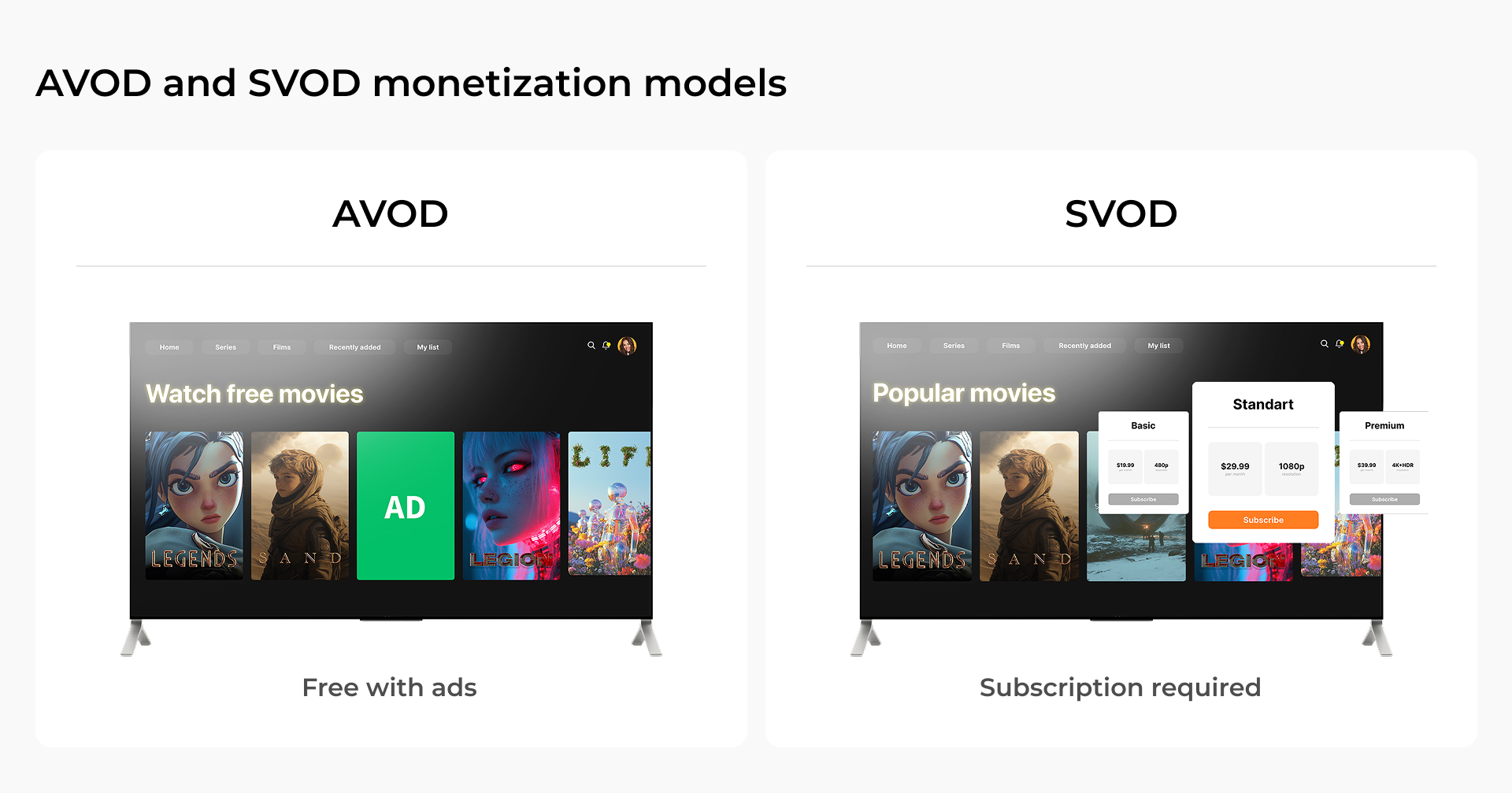
In the AVOD model, users access content for free while you earn revenue through video advertising. This is a strong model for platforms targeting a large, price-sensitive audience.
Use case: One example is a media aggregator offering regional news, music videos, or documentaries can grow its audience quickly through a free, ad-supported experience.
In this model, users pay a monthly or annual fee for unlimited access to premium content. It offers predictable revenue and supports a more curated user experience.
Use case: One possible scenario is a broadcaster with exclusive content (original series, sports rights, or niche educational programming) may benefit from the stable cash flow of subscriptions.
Many successful OTT video platforms now offer hybrid monetization by combining AVOD and SVOD. For instance, you might offer a freemium version with ads and a premium tier with ad-free content and early access to new releases.
Use case: Another example is a platform streaming both live sports and archived matches could use ads for general users, offering subscriptions for live events and bonus content at the same time.
Advanced OTT advertising platforms now enable precise targeting and programmatic ad placement. Leverage first-party data to optimize ad delivery, improve viewer relevance, and increase CPMs.
Many platforms also rely on server-side ad insertion (SSAI), which stitches ads directly into the video stream. This approach improves playback stability, makes ad targeting better on connected TVs, and reduces the impact of ad blockers.
The right mix of monetization models allows you to build a revenue system that aligns with audience preferences and business goals.
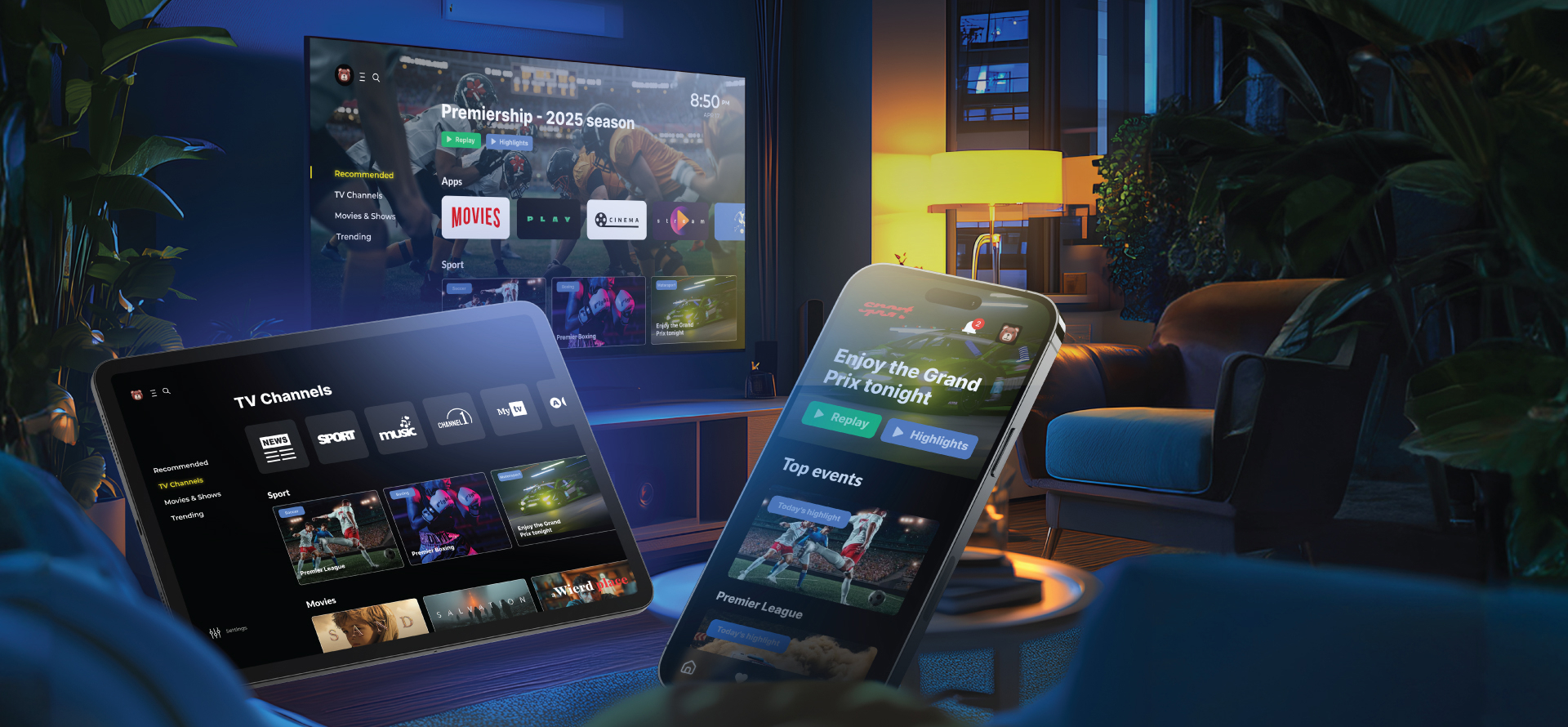
We partnered with a regional sports distributor looking to launch a digital-first strategy. The client needed a scalable platform to stream live events and monetize recorded highlights. We developed a custom OTT solution with adaptive streaming, multi-device support, and integrated AVOD + SVOD monetization.
The result? A 50% increase in viewer engagement and a significant boost in ad and subscription revenue within three months of launch.
If you’re considering whether to create OTT platform infrastructure from scratch, the answer depends on your long-term goals.
Still, a custom platform allows you to innovate without vendor restrictions, and it is a valuable advantage, as the media market is competitive.
Many companies face a fundamental question when they plan to launch or scale an OTT product: should they use a ready-made solution or build one from scratch?
Ready-made platforms offer speed and simplicity. They’re ideal for businesses seeking to launch quickly on a limited budget with basic functionality. These solutions typically offer standard templates, limited monetization models, and pre-defined analytics dashboards.
Custom OTT platforms, in contrast, provide complete flexibility. You can build the feature set you need, fine-tune the user experience, scale as your audience grows, and integrate advanced monetization, analytics, and third-party tools.
The right path depends on your strategy. If you aim to test an idea or address a narrow use case, off-the-shelf may suffice. But if you’re building a long-term media business, a custom platform gives you full control and room to evolve.
Most of the clients we partner with end up choosing a hybrid route. White-label platforms take care of the core infrastructure and content delivery, while custom development is used to create the elements that define the user experience (for example, the video player, live functionality, second-screen interactions, and DRM integration).
OTT has already become a standard way to distribute content, and the main challenge now is execution. Platforms compete on product quality, content strategy, and how effectively they convert audiences into paying users. Decisions around UX, pricing models, and platform coverage often have more impact than the launch itself.
You’ll also see questions like “what does OTT stand for in advertising” more often, especially as OTT becomes part of media buying and ad targeting. In practice, this means working with audience data, running campaigns across devices, and combining subscriptions with ad supported models.
We’ve also worked with the leading white-label ecosystems and can provide an honest assessment of which solution best matches a project’s goals, including cases where a fully custom-built platform is the smarter path.
Discover how Oxagile’s 20 years of expertise in video streaming can transform your custom video platform. We’re here to help you succeed at every stage of the video delivery lifecycle and you can count on us for multi-platform apps, AI-powered features, automated workflows, and other requests.
OTT platform technology is the tech stack that powers internet video delivery. Core components include a content delivery network (CDN), adaptive bitrate (ABR) streaming, cloud-based transcoding and storage, digital rights management (DRM), multi-platform front ends, media asset management (MAM), and analytics/monetization systems to enable smooth, secure, and scalable playback.
OTT supports AVOD, programmatic and targeted ad placements, and hybrid AVOD+SVOD models. Platforms use first-party data for precise targeting and improved CPMs, applying ads across live and on-demand content to match audience segments.
Build on cloud infrastructure with transcoding pipelines and adaptive bitrate (ABR) streaming. Deploy a global multi-CDN for low latency and implement digital rights management (DRM) with tokenized authentication. Use media asset management (MAM) for workflows and add monitoring plus analytics to optimize quality of experience and scale.
OTT refers to the method of delivering video content over the internet, including both live and on demand formats. Live streaming is a type of content delivery within OTT that broadcasts video in real time, for example, sports matches or other events. In other words, live streaming is one format, while OTT is the broader distribution model.
Examples of OTT media include content delivered through platforms like Netflix, Disney+, or Hulu. This can include movies, TV series, live sports, news, or user generated video streamed directly over the internet without traditional TV providers.

