













This website uses cookies to help improve your user experience


Video has huge business potential — and you’re probably already using it to inform, engage, or promote. But if you’re relying on platforms like YouTube, Vimeo, or basic embedded players, you’re not getting the most out of it. These third-party solutions don’t give you real control over things like user data, monetization, or playback quality — all the things that keep viewers coming back and paying for your service.
OTT changes the game. Think of it as building your own digital broadcast network — where you own the content, the experience, and the results.
In this guide, we’ll show you how to build it right — and turn video into a powerful growth driver for your business.
Let’s start with the basics to make sure we’re on the same page in the ever-evolving world of video technologies. What does OTT stand for? OTT, or over-the-top, refers to delivering video and media content directly over the internet — bypassing traditional cable, satellite, or broadcast TV infrastructure. Think Netflix streaming to your smart TV or YouTube on your phone — no set-top boxes, no traditional cable packages, just on-demand content at your fingertips.
What is OTT content? It is defined by a few characteristics:
Sure, the first examples that come to mind are Netflix, Amazon Prime Video, Disney+, and Hulu. But in fact, OTT isn’t just about entertainment giants.
Every year, more niche services (sports, education, gaming, news) launch OTT platforms to engage audiences directly and open new revenue streams.
Traditional telecoms are also shifting to OTT. Comcast, for example, began integrating cable TV with internet services back in 2011. This move allowed them to offer diverse viewing experiences from a single provider. Over the years, they’ve introduced new streaming services and features, including a mobile app and voice remote. In 2024, Comcast launched its Cloud TV platform — a complete OTT solution that eliminates the need for traditional cable infrastructure.
You’re probably wondering, “We already deliver video online — so are we OTT?” In the next section, we’ll break down the key technologies behind OTT and explain what makes it different from regular video delivery.
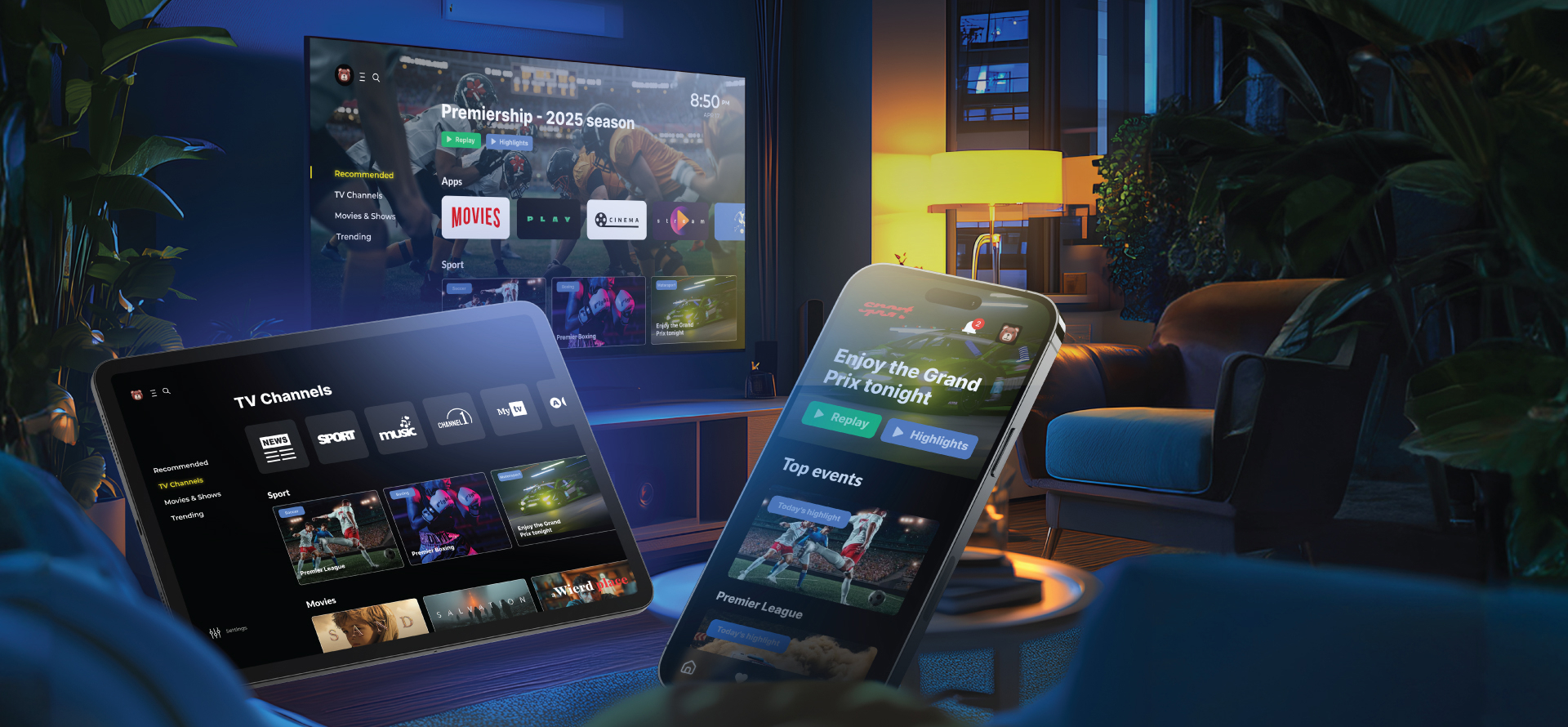
Behind every successful OTT streaming is the seamless coordination of numerous critical components. Here’s their quick overview:
As you see, OTT isn’t just uploading a video to your site. It’s a full system — with smart delivery, security, monetization, and data tracking all working behind the scenes. You’re not just showing video — you’re running your own content platform, built to perform and grow.


It’s easy to get tangled up in acronyms: OTT, CTV, IPTV… So, what’s the real difference?
Launching an OTT platform is all about new ways to grow your business, engage your audience, and diversify revenue streams.
Here are some of the biggest opportunities:
OTT platforms offer incredible flexibility in how you earn revenue:
Smart platforms often start with one model and evolve based on user behavior. For example, a sports streaming service might offer highlight reels with ads (AVOD), full match replays behind a subscription (SVOD), and pay-per-view for special events (TVOD). Over time, they can mix ads and subscriptions for different content — like ad-supported replays and premium live streams. This flexibility helps adjust revenue streams to fit what their audience wants.
OTT gives you full ownership of the user journey — from signup to content engagement — all through your own app or site. Built-in analytics let you track what people watch, when, and how they interact, with no middlemen or guesswork.
Just like Netflix or Disney+, you get rich, real-time data that helps you:
The beauty of OTT is its borderless nature — you can reach viewers anywhere.
If you want to scale your OTT platform globally, there are three main elements you’ll need to focus on:
The first is infrastructure needed to support global operations:
The second is having the right CDN partner with servers in your key regions (e.g., AWS, Akamai, or Cloudflare). This reduces latency, improves video quality, and minimizes buffering for viewers.
The third is smart content protection:
While OTT enables global expansion, managing the logistics is key. The right partner skilled in video OTT solutions will streamline content delivery, ensure scalability, and keep you compliant with regional laws.
With OTT, launching new channels or brands is faster and simpler. Thanks to cloud technology, you can add new content — such as a kids’ section or an eSports channel — in just weeks instead of months. Plus, flexible monetization and global reach let you test, scale, and adapt quickly to audience needs, all without a major upfront investment.
OTT opens massive opportunities — but building and running a successful platform isn’t quick or easy.
Here’s where most companies hit roadblocks:
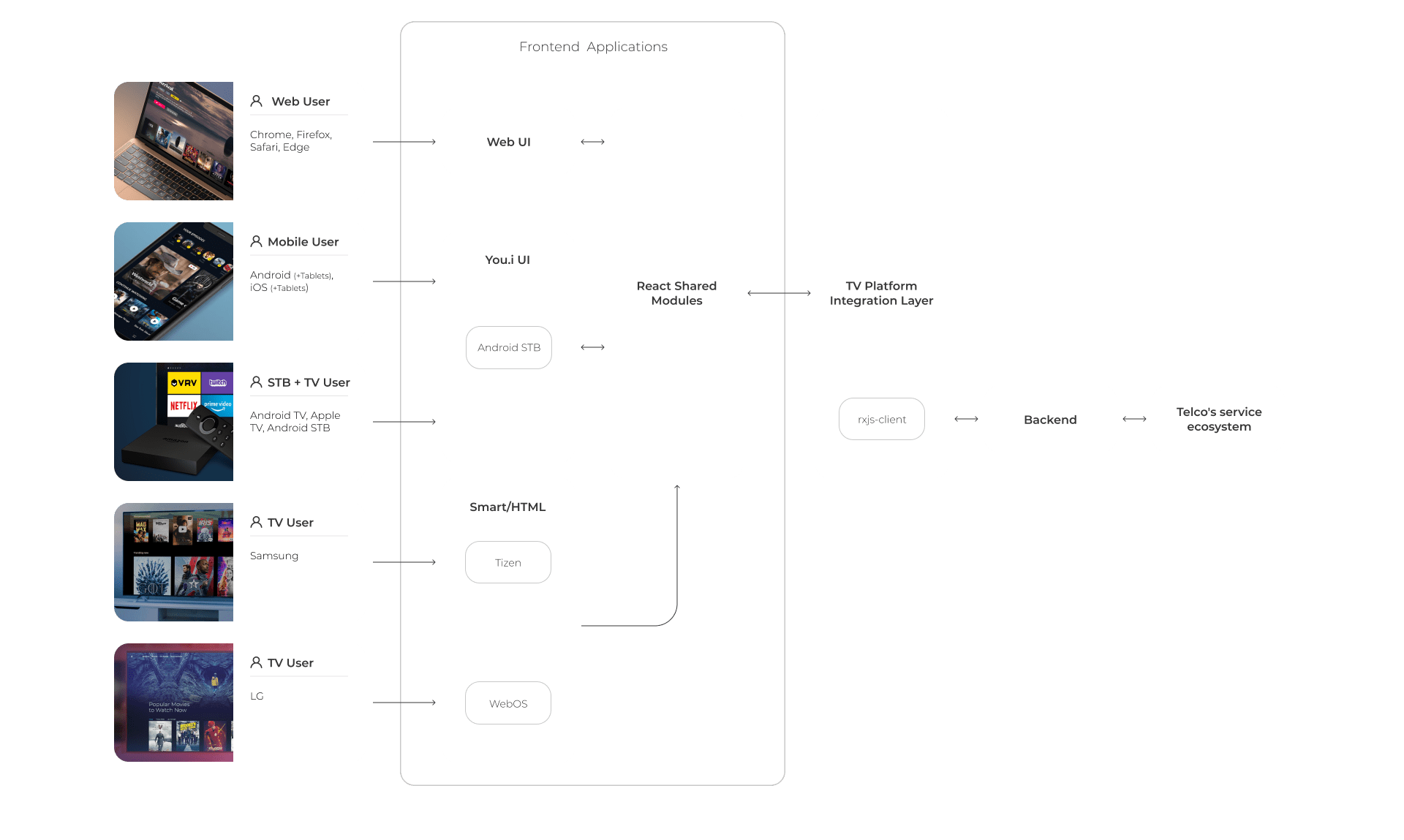
Your audience is spread across Android phones, iPhones, Smart TVs, Fire TV sticks, gaming consoles, and more. Each device — even different model years of the same Smart TV brand — behaves differently.
Managing and updating apps across all of them takes serious effort. That’s where the right tech partner helps.
Take our work for a global online video platform provider serving telco clients. They needed a white-label OTT solution that could scale fast across 13 platforms and 25 devices. Here’s what Oxagile did: we focused on maximum code reuse. We built a modular, cross-platform architecture with a single, shared business logic layer and You.i Engine for unified UI rendering. This approach allowed us to reuse the code across platforms, cut dev and maintenance costs, and launch branded apps faster.
The client got a fully branded, telco-ready streaming solution that’s already live in two European countries — and scaling fast.
In OTT, QoE is everything. Buffering, lag, and inconsistent video quality are the top reasons users churn. They expect instant startup, smooth playback, and adaptive quality, even on weak networks.
But here’s the reality: there is no one-size-fits-all solution to deliver flawless performance. Geography, content type, audience behavior — all affect what “great performance” looks like.
That’s why we don’t prescribe off-the-shelf solutions blindly. Instead, we start with OTT consulting services to develop content delivery strategies for your unique project.
What do we look at first?

Piracy is a constant threat to OTT platforms. And DRM is the first line of defense. It encrypts your video files during the packaging stage. When a user hits play, their device sends a license request to a DRM license server. If the user is authorized, the server sends back a decryption key, allowing playback.
Most platforms use multi-DRM setups — like Google Widevine, Apple FairPlay, and Microsoft PlayReady — to make sure content is protected across all devices and browsers.
Other elements of a content protection and compliance system include:
We’ve shared our expertise in DRM integration, particularly for sports streaming, which can apply across other industries as well.
Check it out for more detail.
Owning your OTT platform means full control — but you can’t control what you don’t measure. Built-in analytics give your team the real-time data you need to spot drop-offs, optimize content, and grow revenue.
From our experience building white-label OTT platforms, there are three main ways to integrate analytics, each fitting a different stage of product maturity and business need:
The truth is, even big brands often underestimate the hidden complexity of OTT — until they’re knee-deep in tech debt, missed deadlines, or spiraling operational costs.
That’s where experience matters.
At Oxagile, we’ve seen it all over the last 20+ years — scaling platforms from thousands to millions of users, launching video streaming services across dozens of device types, and optimizing monetization strategies across AVOD, SVOD, and hybrid models.
We’ve helped companies across industries — from entertainment giants to niche innovators — build and optimize OTT platforms that perform. Want to assess your OTT readiness or get expert advice?

OTT stands for “over-the-top”. The OTT meaning refers to delivering video content directly over the internet, bypassing cable or satellite providers. It gives businesses full control over subscriptions and ads, while allowing viewers to watch on smart TVs, phones, or tablets anywhere, anytime.
OTT content is video delivered over the open internet. It can be live or on-demand and is accessible on smart TVs, smartphones, tablets, or consoles. Unlike IPTV, it’s not tied to closed networks. Businesses can control subscriptions, ads, and user data, thereby reaching audiences directly.
OTT streaming works through a system of connected technologies. Content is ingested, transcoded into multiple formats, and delivered via CDNs for fast playback. Digital Rights Management (DRM) protects the media, while the video player ensures smooth performance. Analytics and monetization tools track viewing, optimize experiences, and drive revenue.

