













This website uses cookies to help improve your user experience


OTT and CTV are often used interchangeably, but they shouldn’t be. They’re closely connected, yet each plays a different role in how content distributors stream content and how advertisers reach their audience via these content delivery channels.
If you’re aiming to make smarter decisions about advertising, let’s take a closer look at what OTT and CTV actually mean, what sets them apart, and how they fit into today’s advertising.
Key takeaways:
OTT ads are targeted at viewers who watch content through over-the-top (OTT) platforms, which are accessible on any device with an internet connection. OTT ads appear as pre-roll, mid-roll, or post-roll video ads within streaming content.
Why is OTT advertising so popular right now? One reason is its simple infrastructure with no cable or satellite required. Another key advantage is its cross-device reach. Advertisers can connect with viewers whether they are using a smart TV, mobile device, or desktop.
As more people move away from traditional cable TV and encourage cord-cutting, OTT advertising has become an increasingly effective way to reach audiences. Moreover, advertisers gain access to better data on user behavior and campaign performance, which results in more precise targeting. With audiences consuming more on-demand content than ever before, OTT advertising is a forward-looking strategy that may deliver strong returns on investment.
Connected TV (CTV) ads are shown exclusively on TVs with an internet connection, either directly through smart TVs or via devices such as set-top boxes or streaming sticks. In other words, CTV is a type of OTT advertising that focuses specifically on TV screens. These ads are typically non-skippable and provide a more immersive viewing experience.
Why is CTV advertising in demand, too? It helps advertisers reach viewers on the largest screen in the home and combines the impact of traditional TV with the flexibility and precision of digital advertising. This format is also growing as more viewers shift from cable TV to smart TVs and streaming services.
The OTT vs CTV connected TV advertising difference starts with how video is delivered and consumed.
OTT is a method of streaming video content over the internet without relying on traditional broadcast, satellite, or cable systems. Netflix, Hulu, and Disney+ are examples of OTT services. You can watch them on your phone, laptop, tablet, or TV.
CTV refers specifically to internet-connected TV devices that stream video. These include Smart TVs, game consoles like PlayStation or Xbox, and dedicated streaming devices such as Roku, Apple TV, or Amazon Fire TV.
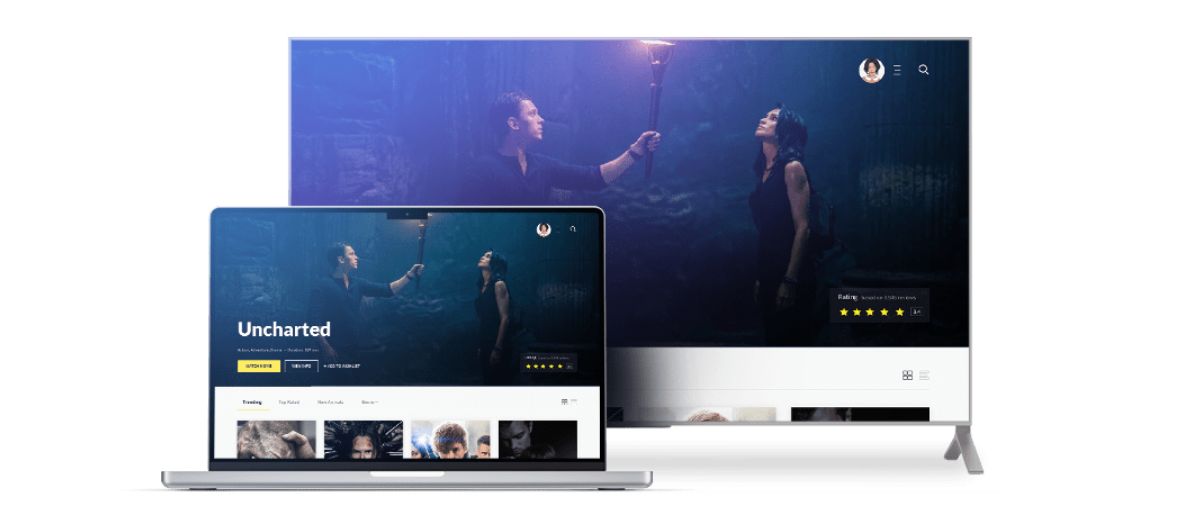
Despite being different in nature, OTT platforms and CTV intersect in significant ways. Both bypass traditional TV delivery and instead rely on the internet. They’re core to how video is consumed today-on-demand, across devices, and with more user control. This similarity applies directly to advertising on these platforms:
At the same time, there are peculiarities that set them apart. Here are a few CTV vs OTT distinctions:
| Feature | OTT | CTV |
| Flexibility in user targeting | Very flexible | Flexible, but restricted to Smart TV viewers |
| Infrastructure | Internet-based | Internet-based |
| Focus | Delivery method | Viewing device |
| Device range | Broad (smartphone, tablets, PCs, TVs) | Narrower (TVs and TV-connected devices) |
| User context | Personal, often mobile | Shared, household-focused |
| Ad formats | Varied: skippable, interactive, display ads | Primarily full-screen, non-skippable video ads |
| Advanced advertising support | Targeting and real-time analytics | Targeting and real-time analytics |
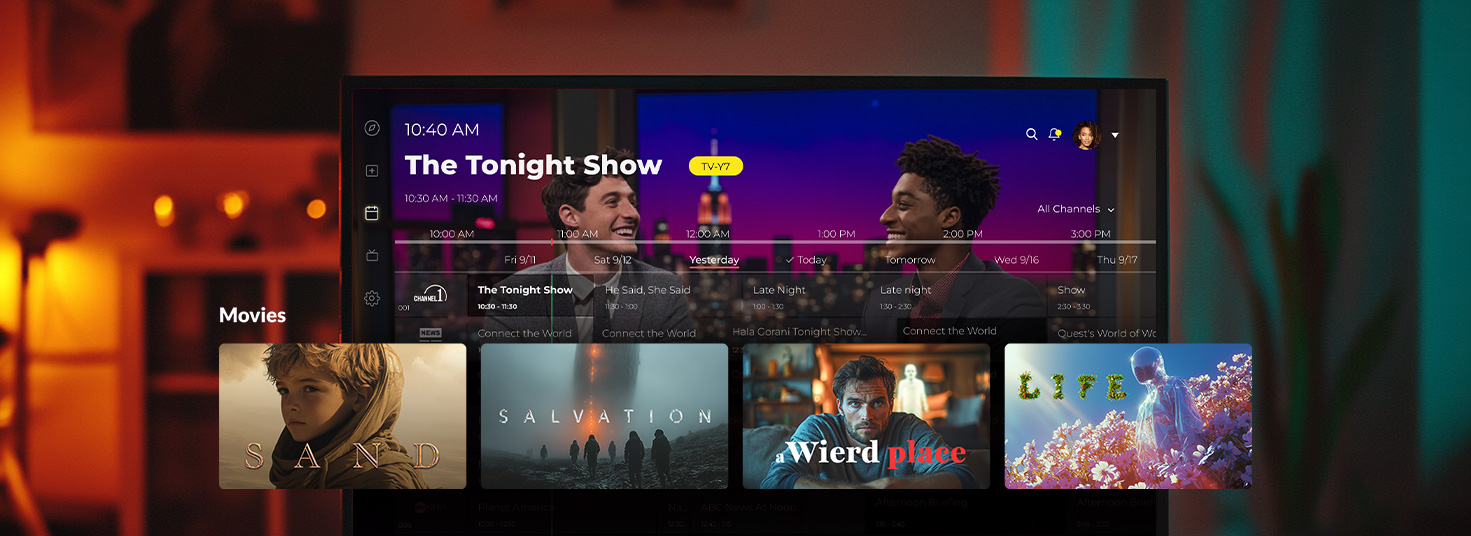
Understanding the strengths and trade-offs of OTT and CTV advertising helps in selecting the right distribution and monetization model. Let’s start with OTT.
OTT platforms offer exceptional reach. Audiences consume content across phones, tablets, laptops, and Smart TVs. It’s an agile ecosystem where you can personalize viewing experiences and implement interactive features like cast profiles, AI-driven recommendations, or content bookmarks.
But with flexibility comes complexity. Delivering consistent performance requires scalable infrastructure and efficient cloud resource management. Poor technology choices or underestimating traffic spikes can lead to buffering, downtime, or high delivery costs.
Device fragmentation can complicate advertising campaign delivery. For advertisers, this means resizing creative assets for multiple devices, accounting for varying user engagement across screens, and using sophisticated targeting and programmatic solutions for the right ad to reach the right viewer.
Security is another concern. OTT apps are vulnerable to data breaches, piracy, and privacy violations, especially on personal devices. Add to that the fragmented regulatory environment — some countries restrict OTT operations due to licensing laws or content policies.
Another factor to consider is audience segmentation. OTT services should accommodate diverse content preferences, languages, and subscription models, which adds to the complexity of backend logic and analytics.

Discover how our custom approach helps media businesses launch high-performing, cross-platform apps with interactive advertising capabilities.
In the context of OTT vs CTV advertising, CTV offers a more focused technical environment compared to OTT. Fewer device types and more standardized platforms mean easier testing and optimization. Developers don’t have to account for dozens of screen sizes and OS variations, making the user experience more predictable.
CTV also provides high-quality video and sound. Most CTV devices support HD or 4K streaming, and watching on a big screen often means more immersive, cinematic experiences.
Still, limitations exist. CTV relies heavily on stable, high-speed internet. Hardware differences across TV brands or generations can result in performance issues. And like any connected device, CTVs are also vulnerable to security threats, especially given the presence of cameras and microphones in some models.
Additionally, the user interface is more rigid compared to OTT. CTV apps must adhere to strict design guidelines set by platform owners, leaving less room for UX experiments or branding differentiation.
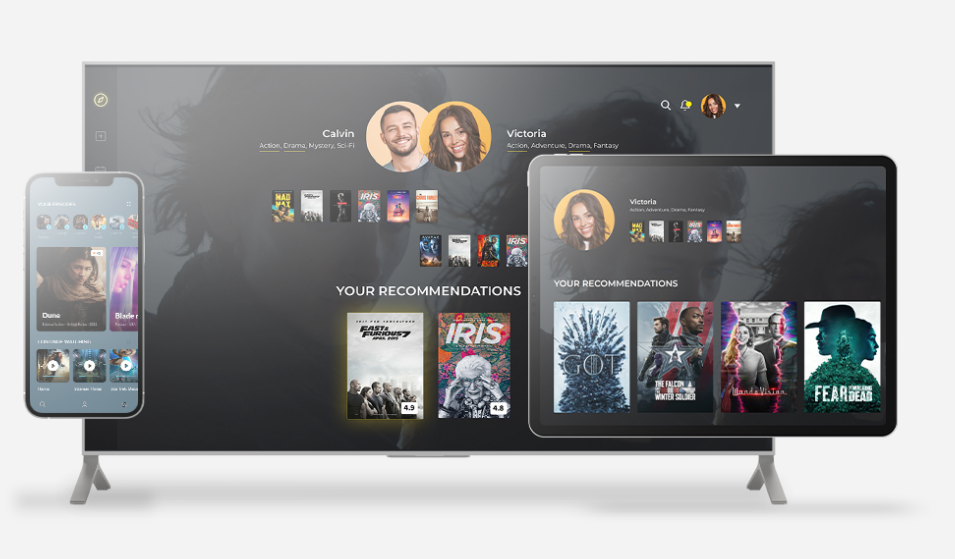
One of our clients, a European telecom operator, needed to monetize their VOD content effectively. We developed a custom advertising module enabling dynamic ad placement, targeting, scheduling, and performance analytics. This helped them build a robust monetization strategy within their OTT service without relying on third-party tools.
The OTT vs CTV discussion isn’t about choosing one over the other; it’s about how they complement each other within modern video strategy. They’re components of a single video distribution ecosystem. Knowing how they interact, what they offer, and where their strengths lie is critical for choosing the right advertising strategy.
As technology partners, we support businesses in both OTT and CTV advertising segments by building custom video and AdTech solutions. Our expertise covers:
The third point can be illustrated with one of our recent projects — a data-driven AdTech marketplace we developed for a data solutions provider aiming to connect broadcasters and advertisers within a single platform.
The solution featured dedicated seller and buyer modules, where broadcasters acted as sellers of ad inventory and advertisers as buyers. It also included a customer care module to support campaign management. The platform enabled streamlined ad sales, real-time performance tracking, and flexible pricing based on third-party ratings such as Nielsen or Comscore — a solid use case within the broader context of CTV vs OTT examples.
Our team also works on integrating SSP and DSP platforms, enabling programmatic ad transactions that meet market standards and drive ROI for both advertisers and publishers.
Whether you’re a content provider, broadcaster, or media company, the right technical foundation can make a big difference in your monetization potential, no matter which streaming model you use.
Let’s implement both strategies with the right OTT apps development partner.

The main difference between them is that OTT delivers video content over the internet as a service, while CTV is the device, such as a Smart TV, Roku, or Apple TV, that people use to watch OTT platforms. So, it’s not about choosing between CTV or OTT, they aren’t interchangeable: CTV is where content is viewed and OTT is how it’s delivered.
When looking at OTT vs connected TV advertising, OTT includes flexible formats like pre-roll, mid-roll, skippable videos, or overlays across multiple devices. CTV advertising is a subset of OTT ads that usually runs on connected TVs, is full-screen, non-skippable, and viewed in a lean-back environment that improves completion rates.
Clear OTT vs CTV examples are Netflix, Hulu, and Disney+ as OTT streaming platforms, compared with Roku, Apple TV, or Smart TVs as CTV devices. In advertising, OTT examples are ads across mobile, tablet, or desktop apps, while CTV examples are immersive big-screen ads on connected TVs.
Yes, CTV is part of OTT. OTT refers to all content and ads delivered via the internet across multiple devices, including smartphones, tablets, desktops, and TVs. CTV is a subset of OTT that specifically focuses on ads shown on internet-connected television screens, such as smart TVs or TV-connected devices.
The most effective ad formats on CTV and OTT platforms are video-based, including pre-roll, mid-roll, and post-roll ads. On CTV, non-skippable full-screen ads perform best due to high completion rates. OTT and CTV platforms also support interactive and shoppable formats to drive deeper engagement and direct user action.

