












This website uses cookies to help improve your user experience




Traditional TV didn’t fade out by the second half of the 2020s, it lost its structural advantage. Viewers moved faster than legacy models could adapt, ad economics shifted toward digital logic, and expectations around speed, quality, and access reset completely.
Most of that break happened in 2025. Streaming overtook broadcast and cable in total viewing share. Ad-supported models became mainstream. Sports exposed the limits of fragile infrastructure. Interfaces that slowed users down started losing them outright.
We took a look at what actually changed, why it stuck, and what IPTV providers need to build next if they want to stay relevant. Plus, we’ve thrown in real-world insights from our own experience in IPTV development services and what we’re seeing with our clients.
The changes that occurred weren’t driven by a single breakthrough. It came from several pressure points hitting at once, all tied to how people actually watch TV now. For example, streaming reached 44.8% of total TV viewing in the U.S. in May 20251, surpassing broadcast and cable combined.
Once that line was crossed, traditional TV stopped setting the rules. IPTV did.
Distribution moved to IP by default, ads followed digital logic, and user experience became non-negotiable.
In 2025, viewers tended to act less like passive TV audiences and started behaving like users of any other digital product. They watch closely how much they spend, how long things take, and how often platforms waste their time. If something feels off, they move on without much hesitation.
So, who did the IPTV viewer look like in 2025?
With these changing habits, how can your services stand out? Let’s see how they’re shaping the years ahead.
Once you look at how people actually used it previously, the IPTV trends almost explain themselves. Viewers reacted to higher prices, slower interfaces, and unreliable streams in predictable ways. Platforms kept adjusting to the ones users had already formed.
Each trend below exists for a simple reason: it solved a problem users were no longer willing to tolerate.
Subscription prices kept creeping up, and users pushed back the only way they could — by choosing cheaper options. Ad-supported plans weren’t exciting, but they were affordable, and affordability won.
In fact, 46% of new streaming subscriptions5 were ad-supported, and three in four users had tried an ad-supported plan, which made ads part of the everyday viewing deal rather than a compromise. FAST platforms followed the same logic. By early 2025, there were more than 1,600 active FAST channels6 worldwide, almost double the number seen two years earlier.
As a result, pricing stopped being the main lever for growth, because the cheapest tier was already there. The focus moved to ad load, targeting quality, and how well ads fit into the viewing flow. Platforms that treated ads as part of the experience — planned, measured, and controlled — gained room to grow. Those who treated them as fillers quickly hit limits.
IPTV catalogs grew faster than the tools used to navigate them. Channel lists expanded, video on demand (VOD) libraries ballooned, and traditional Electronic Program Guide (EPG) logic struggled to keep up. Browsing stopped working simply because it wasn’t designed for this scale.
Operators reacted practically. Instead of redesigning menus endlessly, they leaned on AI to do the heavy lifting behind the scenes. In IPTV environments, this shows up as intent-based search, automated metadata enrichment, behavior-aware ranking, and recommendations that adjust in real time.
Ad-supported models, AI-driven discovery, cross-device viewing — we help IPTV teams implement what users already expect, without breaking reliability or performance.
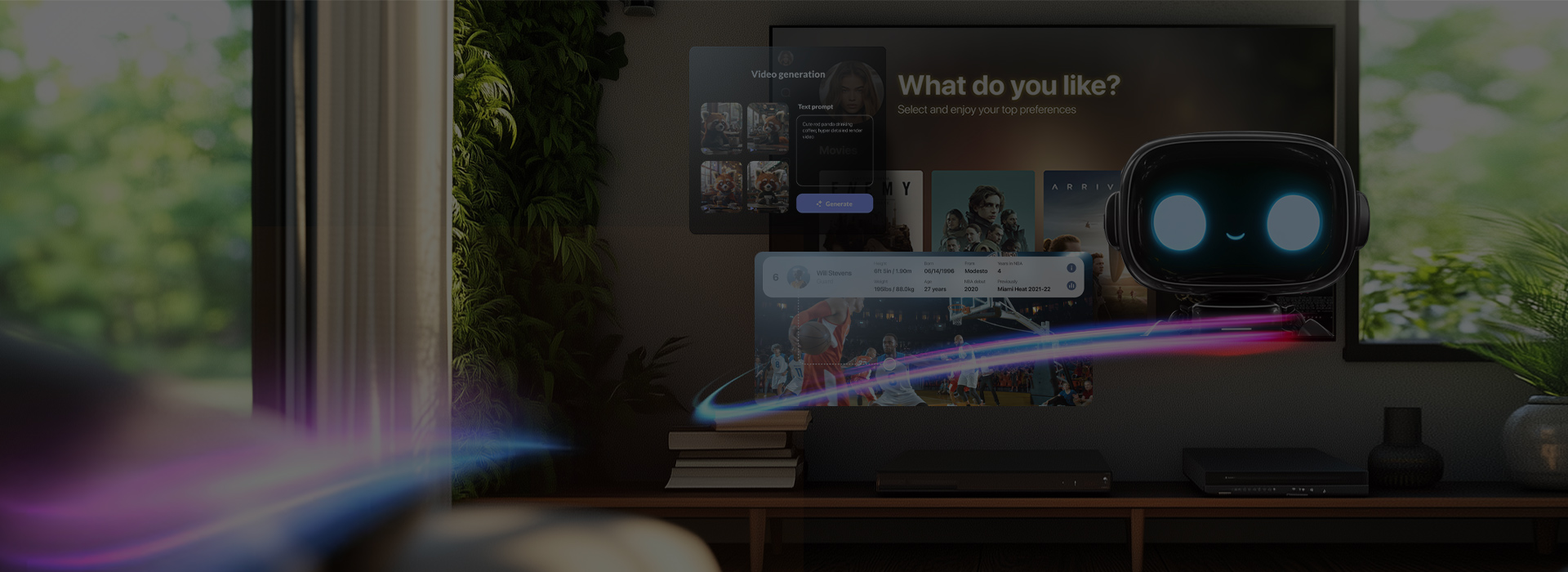
People search for content constantly, often without a clear idea of what they want. That only works if the interface keeps up.
TiVo reports over one billion content searches per day7 across TV platforms, including voice search. At that scale, even small delays add up fast. When menus lag, or search takes too long, users don’t wait, they leave.
As a result, speed stopped being a UX preference and became a retention issue: platforms that shorten time-to-content keep users engaged, while those that don’t lose viewing time, ad impressions, and content value before playback even starts.
Live events exposed weak delivery in ways nothing else could. When streams stalled or buffered during important moments, users didn’t look for technical excuses. They assumed the platform couldn’t handle the load.
Playback problems such as buffering, latency, and stream failures are now a direct reason users stop using a service. What used to be tolerated as a temporary glitch now affects whether viewers come back at all.
Many platforms still struggle to detect and resolve quality issues quickly, which means users experience the problem longer and remember it more clearly. In the IPTV 2026 environment, quality stopped being something platforms competed on. It became a baseline expectation, and failing to meet it means losing credibility with viewers.
TV stopped being something people planned around. Viewers moved between screens and places as their day changed, often continuing the same session without thinking about where they started.
In general, viewing behavior shows a steady shift toward hybrid consumption. Audiences combine live TV, streaming platforms, and mobile viewing throughout the day instead of watching in one place or at one time.
Now users expect IPTV to follow them across screens and platforms that don’t start to feel inconvenient, rather than familiar.
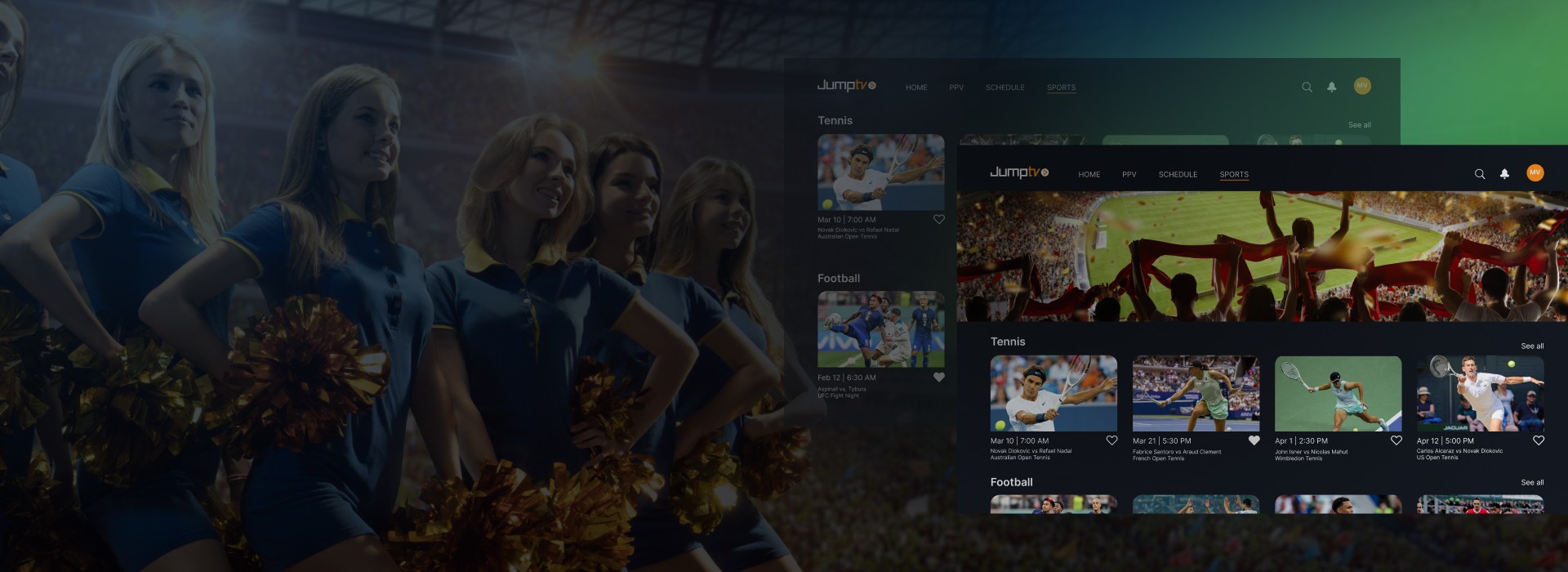
A Canadian IPTV provider needed to manage peak demand during live sports without any performance issues. Operating across dozens of markets meant handling content rights, ads, and substitutions differently in each region.
With the Oxagile’s support, the platform now supports precise, geolocation-based content substitution, fully automated and compliant with regional IP rights.
People are still spending a significant part of their day watching videos. Data shows that viewers spend around five hours per day watching TV, with streaming taking the largest share of that time8.
What changed is their tolerance for friction, which puts the focus on making everyday viewing easier. That change sets the direction for what comes next.
AI makes sense where scale becomes a problem. Large IPTV libraries are hard to browse manually, and static recommendations don’t adapt well to changing intent. Using AI for ranking, search relevance, and basic personalization helps users get to something watchable faster, without asking them to learn a new interface.
Ad-supported viewing is now common, which shifts the focus from “how many ads” to “how they behave”. Frequency control, sensible timing, and relevance matter more than novelty. When ads follow clear rules and don’t interrupt at random, viewers are less likely to disengage.
Most users switch between several services in one session. That leaves little patience for slow menus or confusing layouts. Faster load times, fewer steps to playback, and consistent navigation reduce drop-off before a stream even starts.
Endless rows don’t help users decide. Curated collections (whether editorial or behavior-based) reduce decision time and keep users moving forward. The aim isn’t to show everything, but to show enough to make the next choice obvious.
Viewers stopped tolerating buffering, slow menus, hidden fees, and irrelevant ads. IPTV platforms that treated delivery, UX, and reliability as engineering problems — not marketing ones — pulled ahead. To keep up with the 2026 trends, IPTV providers, broadcasters, and content owners:
These priorities matter most for businesses operating at scale, especially those expanding catalogs, rolling out ad-supported tiers, or serving audiences across multiple regions and devices.

Users are tired of buffering, hidden fees, and unwelcome ads during the big game or that must-see TV episode. Want to win them over? Then be ready to handle these challenges.
With 20+ years of experience in media streaming solution development, Oxagile is here to help make your IPTV service faster and more enjoyable for viewers.
1. Streaming reached 44.8% of total U.S. TV viewing in May 2025, surpassing broadcast and cable combined for the first time — Nielsen
2. 56% of consumers say they would cancel or downgrade a streaming subscription if prices rose more than 20%, highlighting strong price sensitivity — Attest
3. 46% of new streaming subscriptions in 2025 were ad-supported, and three in four users have tried an ad-supported plan — The Verge
4. Viewing hours on major FAST and AVOD platforms grew 43% year over year in 2025 — comScore via TVTechnology
5. Netflix’s ad-supported tier accounted for 45% of total household viewing time on the service in 2025 — comScore via TVTechnology
6. More than 1,600 FAST channels were active worldwide by early 2025, nearly double the number from two years earlier — Nielsen
7. Over one billion content searches occur daily across TV platforms, including voice search, increasing pressure on performance and UX — TiVo (Xperi)
8. U.S. viewers spend around five hours per day watching TV in 2025, with streaming taking the largest share of viewing time — Nielsen

The most important IPTV trends that’ll be present in 2026 and beyond include the shift toward ad-supported models, wider use of AI for content discovery, higher expectations for interface speed, stricter demands for streaming quality, and cross-device viewing becoming standard. This reflects how people actually use IPTV today and where platforms feel the most pressure to adapt next.
Ad-supported IPTV models gained traction as viewers became more price-aware while continuing to watch videos. Lower-cost plans removed friction at sign-up, which pushed platforms to focus less on subscription tiers and more on how ads behave within the viewing experience: timing, relevance, and predictability included.
AI is changing content discovery by making large IPTV catalogs usable at scale. Instead of relying on static categories or traditional EPG logic, platforms apply AI to ranking, search relevance, and metadata automation. This approach has become central to IPTV trends 2026, where faster decisions matter more than endless choice.
Interface speed matters because viewers search often and leave quickly when platforms respond slowly. Delays before playback reduce viewing time, ad exposure, and content value. In IPTV 2026, speed directly affects whether users stay engaged or move on to another service.
IPTV platforms stand out by removing everyday friction rather than adding features. Making catalogs manageable, keeping ads predictable, speeding up navigation, and narrowing choices help users reach content faster. These priorities are what separate the best IPTV 2026 experiences from platforms that feel hard to use.

