













This website uses cookies to help improve your user experience




Digital advertising has finally reached the tipping point it has been building toward for years. By the end of the decade, global ad spend is projected to reach well beyond US $1.3–1.4 trillion, and an overwhelming 80–85% share of total investment will flow into digital channels1.
Traditional television, once the undisputed heavyweight of ad budgets, is steadily losing ground to retail media. By 2030, retail media is expected to exceed $300 billion globally and account for roughly 20% of total ad spend. This turns retail media networks into one of the largest advertising channels worldwide, potentially twice the size of TV2.
Meanwhile, digital formats continue to dominate growth. Online video, connected TV, and commerce-driven advertising are expanding rapidly. Within retail alone, digital advertising is forecast to climb to $214 billion by 2030. The growth underscores the broader shift toward performance-driven, data-centric media environments3.
It’s an exciting landscape, but also a ruthless one. Consumers expect ads to be relevant, respectful, and lightning-fast. They hop between devices mid-purchase, run ad blockers without a second thought, and demand brand experiences that feel personal without being invasive. For advertisers, that means the old playbooks are useless. The complexity is simply too high for manual optimization or gut-feeling targeting.
Advanced algorithms change the game here: machine learning advertising platforms that can adapt to micro-shifts in audience behavior, models capable of spotting patterns invisible to the human eye, and more. The industry is moving toward a future where data-driven intelligence isn’t an add-on.
Key takeaways:
Cost optimization has become a major one among ML trends, largely because ML models are energy-intensive and expensive to run. At the same time, machine learning itself is designed to drive efficiency and reduce costs across industries, including AdTech.
AI is turning AdTech from a manual, rule-based system into an autonomous, data-driven ecosystem that can continuously drive insights, make real-time decisions, and deliver highly personalized ads.
In the past, advertising involved a trade-off: advertisers focused on performance; publishers prioritized monetization. This often functioned at the expense of user experience.
AI fundamentally changes this dynamic by aligning these goals more effectively with better outcomes for advertisers, publishers, and users.
AI is not just improving AdTech. It’s quietly replacing the logic the industry was built on. For years, digital advertising ran on approximation: broad targeting, delayed reporting, and human guesswork layered on fragmented data. AI collapses that inefficiency.
Advertisers are no longer choosing audiences, as algorithms are identifying intent before it’s obvious. Publishers aren’t just selling inventory, they’re running yield systems that price each impression based on its true, instant value.
In practical terms, this shift creates tangible advantages on both sides of the market. The chart below captures how advertisers and publishers benefit from AI.
This shift comes with a nuance.
Control is decreasing as performance improves. Decisions made by humans may be abstracted into pre-trained ML models. But the upside is undeniable: a system that learns continuously, prices dynamically, and allocates attention with near-perfect efficiency. The question is no longer how to optimize campaigns, but how much control we’re willing to give up to do it.
Still, AI-driven AdTech provides better matching of supply and demand, real-time decision-making instead of manual processes, and increased efficiency at scale for both sides of ad delivery.

Our AdTech and ML development experts help advertisers and publishers launch more effective advertising campaigns, faster and smarter.
Ever notice how many AdTech pitches start with “We leverage machine learning” and end there? Here’s the thing: ML today actually does something meaningful.
Imagine your platform predicting which ad should win a bid before the auction even starts, thanks to real-time optimization powered by reinforcement learning and predictive pricing. Or picture your campaign dynamically reallocating budget mid-flight to spend more on segments that convert.
Audience targeting no longer means “women 25–34”. With AdTech machine learning, you get micro-segments based on behavior and context: same-day coffee buyers, engaged outdoor content audiences, or even shoppers who paused at that red sneaker ad but left without clicking. That precision boosts ROI and relevance.
Then there’s advertising machine learning for personalization and creative optimization. Large-scale ML systems can test copy variations, tweak visuals, and auto-optimize content in real time. What does it mean? Effective A/B testing at machine speed.
If you thought fraud detection was simple, think again. Modern solutions using clustering and anomaly detection are keeping bot traffic in check far more effectively than rule-based systems ever could.
The bottom line here is that machine learning isn’t a buzzword. Instead, it is becoming the backbone of ad performance and adaptability. Without it, you’re still playing checkers while the competition is playing 5D chess.
Below you’ll find some of the most impactful use cases we’ve outlined with our ML and AdTech experts.
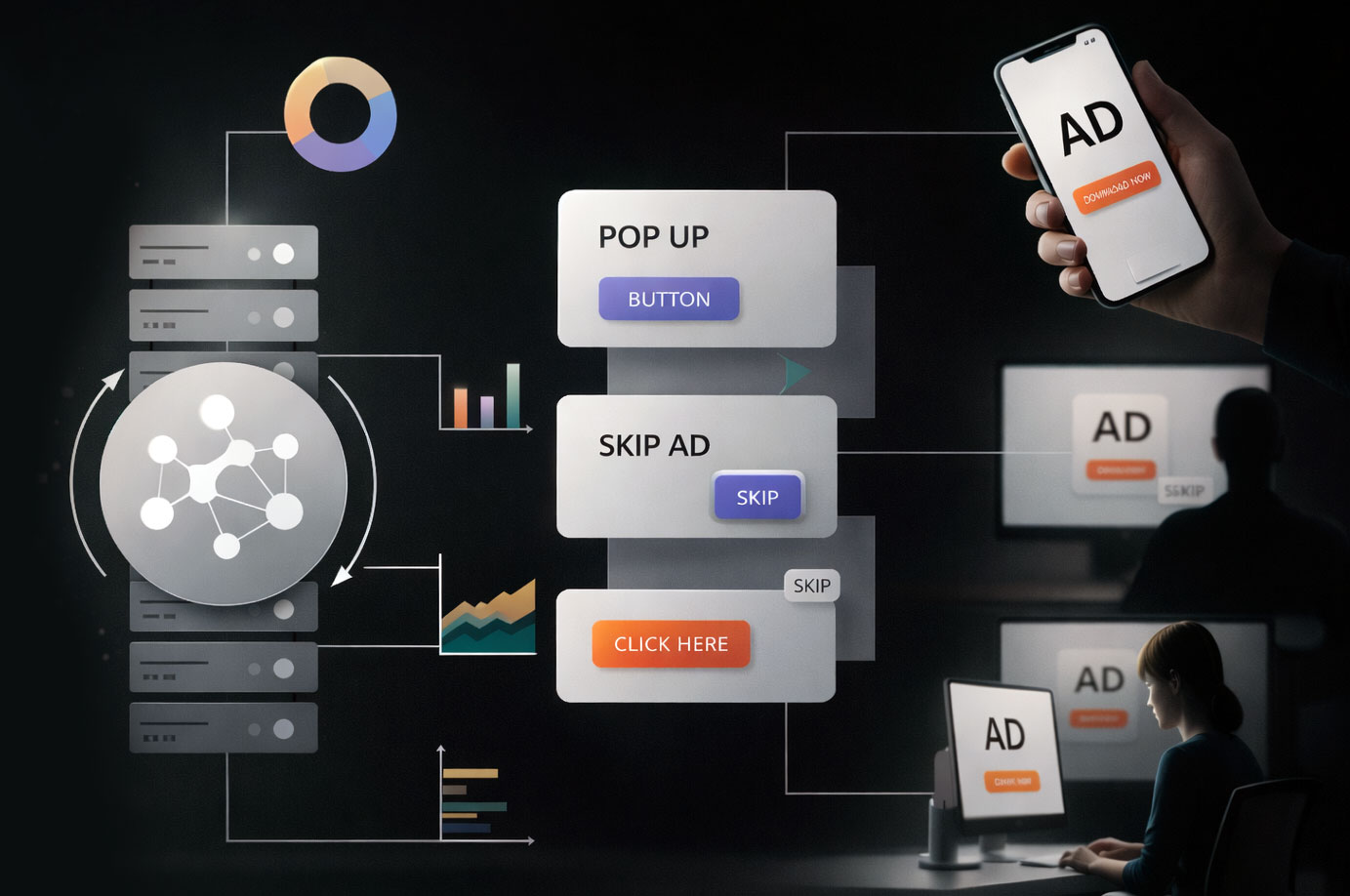
RTB modernized how advertisers and publishers interact, but participating in auctions today is not enough anymore. The pace and competition demand precision.
Here’s what’s really happening: the global real-time bidding market is projected to be approximately US $39.6 billion by 20304. That’s not just growth but an exponential acceleration, and it’s fueled by advancements in programmatic tools, connected TV (CTV), and AI-enhanced bidding strategies.
With advanced advertising technology, algorithms now process billions of signals in milliseconds, ranging from weather and device type to browsing history and contextual cues, to calculate conversion likelihood. The result? Campaigns that bid more selectively.
Modern platforms continuously adapt to user behavior shifts, competitor activity, and even macroeconomic trends. DSPs leveraging ads machine learning capabilities benefit from faster optimization cycles and more efficient budget allocations.
In practice, ad budgets get channeled away from low-conversion impressions and toward high-value opportunities automatically, almost instantaneously.
Advertisers know that for maximum impact they must address the right audience with their message. That hasn’t changed, but what has changed is how precise that targeting can be.
This is why much effort is being put into segmenting the motley crew of users into groups with very specific parameters like “ardent Messi supporters” or “dog owners with middle to high income”. Today, though, it goes even deeper: advanced data-driven systems can identify patterns across browsing behavior, app usage, purchase intent, and even contextual signals such as the time of day or location.
Machine learning algorithms can be configured to process vast amounts of user data and pinpoint the parameters that define the ideal audience for a particular ad creative. What sets them apart today is scale: they evaluate millions of micro-segments in real time, automatically refining targeting criteria. This means that any user’s reaction to an ad can be anticipated based on past behavior and even compared against dynamic look-alike groups.
The outcome for brands is clear: better ROI, less wasted spend, and more relevant experiences. And for users, ads feel less like noise and more like personalized content.
Once the ML algorithm is tuned and its output verified, it can be run any number of times on new data, and creative design people will be aware of shifting consumer preferences in real time. Today, this doesn’t just mean spotting trends. It means getting continuous feedback loops where machine learning systems automatically surface which visuals, headlines, or formats are resonating with each audience segment.
That information will be used to tweak the content or the strategy on-the-fly, providing a very high level of responsiveness. For brands, this translates into faster experimentation, while creative teams can focus less on guesswork and more on storytelling. Instead of waiting weeks for A/B test results, advanced analytics tools now generate insights in hours, which helps teams pivot campaigns before budgets are wasted.
It’s a shift from reactive marketing to proactive creativity, powered by real-time data intelligence and scaled through platforms that keep campaigns relevant, personal, and timely.

Have you ever thought about applying the synergy of ML and GenAI? One of our AdTech projects shows exactly what that can look like in practice. Here’s what it includes:
Impressive, right? Discover how it works in real life.
Content-sharing platforms form a very lucrative advertising environment. At the same time, the vast volume of newly added content is tricky to monitor, which is why ads run the risk of appearing in an unflattering or offensive context.
Advertisers know that brand safety isn’t optional. It’s essential. With billions of videos, images, and posts uploaded every day, no human team could possibly keep up. Automated content review systems are designed to detect and flag inappropriate or risky material before an ad placement goes live.
Algorithms are now trained on human-verified examples to recognize unsafe content. By analyzing video frames, audio transcripts, and even comment sentiment, these solutions aid platforms in minimizing the risk of ads appearing alongside harmful material.
The result is more trust for advertisers, more revenue for publishers, and safer experiences for users.
Machine learning takes predictive analytics to a new level. Provided the right kind of historical performance data and insights from similar advertisers, ML-based solutions can predict how well a particular ad or campaign will engage with the chosen audience.
What used to be a backward-looking practice has become forward-looking intelligence. With AdTech machine learning, platforms can simulate multiple campaign scenarios before launch, estimating actual conversions and revenue impact, not just clicks.
This is invaluable before a big launch. Advertisers and brands can make well-informed decisions and mitigate risks. Instead of relying on past averages, predictive models can forecast how different creatives, budgets, or channels will perform, giving marketers a testing ground without burning real spend.
For many teams, this predictive layer has become the difference between campaigns that struggle and campaigns that scale.

In practical terms, here’s what it means:
Modern advertising isn’t just battling for attention, it’s battling bots. Programmatic channels remain especially vulnerable, with industry estimates suggesting global ad fraud losses will exceed US $100 billion already in 20265.
Outdated rule-based systems simply can’t keep pace with evolving threats. To overcome this, modern AI-driven fraud detection applies clustering, anomaly detection, and real-time signal analysis to separate real users from bots with far greater accuracy.
The stakes are rising: the global ad fraud detection tools market be about US $8.57 billion by 20326. This proves how critical advanced automation has become for protecting ad budgets at scale.
Ultimately, machine learning programmatic advertising offers detection and prevention measures that no human team or static filter could ever sustain. With this technology ads reach real people, not fake impressions.
The range of tasks that can be improved with ML is already staggering, and the list of use cases keeps growing. Automated product placement, voice-powered assistants that turn natural speech into search queries, advanced algorithms, and other technologies are stretching into areas once thought impossible.
Modern models can now test thousands of creative variations, mix and match elements, and assemble campaigns that feel almost handcrafted.
But does this mean that the bell is about to toll for traditional ad agencies? Can machines become creative enough to advertise to humans? Maybe not at the moment, but definitely in the future. The ability of ads machine learning systems to simulate human creativity at scale suggests that agencies will evolve rather than disappear, with humans focusing on strategy, empathy, and ethics while machines handle the mechanics.
One thing is clear: the balance of power has shifted. Advertisers who embrace machine learning won’t be replaced; they’ll be amplified. Those who resist will find themselves outpaced in an industry that rewards speed, precision, and adaptability.
We build the software that makes this shift possible. From bidding engines and targeting platforms to fraud detection and creative optimization, our custom solutions turn data into a competitive advantage.
1. Global digital ad spend hits US$690 billion, poised to dominate in 2030 — Marketing Interactive
2. Global Retail Media Spend To Top $300 Billion By 2030 — Forrester
3. Retail – Digital Advertising Market Statistics — Grand View Research
4. Real-time Bidding Market (2024 – 2030) — Grand View Research
5. Programmatic Advertising Statistics 2026: Big Wins — SQ Magazine
6. Global ad fraud detection tools market forecast — Dataintelo

AdTech adapts to the disappearance of third-party cookies by shifting away from individual tracking toward more privacy-conscious, data-driven approaches. Rather than depending on cookies, ML leverages first-party data, contextual cues, and cohort-based analysis to interpret and anticipate user behavior. It can bridge data gaps, extract meaningful insights from limited inputs, and support accurate targeting without relying on personally identifiable information.
As a result, advertisers can continue delivering relevant and personalized ads. They are guided by patterns, intent, and context instead of intrusive tracking.
Here’s what Oxagile’s AdTech expert says, “Machine learning is what makes targeted advertising viable in a privacy-first world. Instead of relying on third-party cookies, it uses aggregated, consent-based, and contextual data to understand user intent. So brands can deliver relevant ads without exposing personal identities or violating regulations like GDPR or CCPA.
At the same time, ML significantly reduces wasted ad spend. By continuously analyzing performance and predicting outcomes, it shifts budgets toward high-value impressions and eliminates inefficiencies in real time. The result is advertising that is more compliant and far more precise and cost-effective.”
Yes, machine learning is significantly more effective at detecting and preventing ad fraud than traditional rule-based systems.
Unlike static rules, ML uses techniques like clustering and anomaly detection to identify unusual patterns and threats in real time. The intelligent system catches sophisticated bot traffic and fraud schemes that rule-based systems often miss.

