













This website uses cookies to help improve your user experience




The way connected TV advertising is discussed has become noticeably more specific over the past year. There are fewer assumptions and abstract forecasts, and more practical questions about what works, what doesn’t, and what will still be relevant a year from now.
This perspective comes from two places. One is our hands-on work with CTV development services, where patterns appear not in theory, but in day-to-day decisions, trade-offs, and post-launch results, and where trends quickly turn into real constraints that shape product decisions.
The other comes from industry conversations, especially at events where AdTech and video streaming intersect. Even when the agendas looked different on paper, we noticed that the same insights and themes surfaced again and again at IBC 2025, StreamTV Show 2025, and MIPCOM 2025.
These signals describe a broader change in how connected TV is understood. The medium is gradually moving away from inherited television logic toward a more interactive, performance-oriented model, where advertising is no longer judged only by presence or placement, but by how well it fits the viewing experience, how clearly it can be measured, and how directly it connects attention with outcomes.
This article brings those observations together. Not as a forecast pulled from headlines, and not as a checklist of features, but as a view of where CTV trends are heading based on real projects, real constraints, and real conversations.
Shoppable elements do not appear as standalone experiments in many recent CTV campaigns. Instead, they are introduced as a small, controlled addition to an otherwise familiar setup, often limited to a single placement, a specific moment in content, or a narrow product set.
The goal at this stage is rarely aggressive conversion. Teams look for something more basic and more valuable: a clear signal that connects exposure to intent. When that signal appears consistently, even at low volumes, the format earns a place in the next campaign.
The most repeatable implementations share a few characteristics:
These approaches do not seek to transform CTV into a checkout channel. Indeed, they aim to enable responses that don’t affect the TV-watching experience.
Artificial intelligence supports shoppable CTV at an orchestration level in preference to a creative one. It helps to determine when interactions should appear, which products should be highlighted in a given moment, and how frequently prompts can be displayed before they become meaningless.
The value here is restraint. Better timing and selection reduce noise, which makes the remaining signals more useful.
In 2026, interactive and shoppable formats are likely to become a stable part of CTV planning. Used carefully, they offer brands a way to observe consumer intent that does not disrupt the viewing experience or force an immediate response.
That role does not redefine television, but it does adjust how CTV is evaluated. When attention can be linked to action consistently, even indirectly, connected TV becomes easier to position alongside other performance-oriented channels.
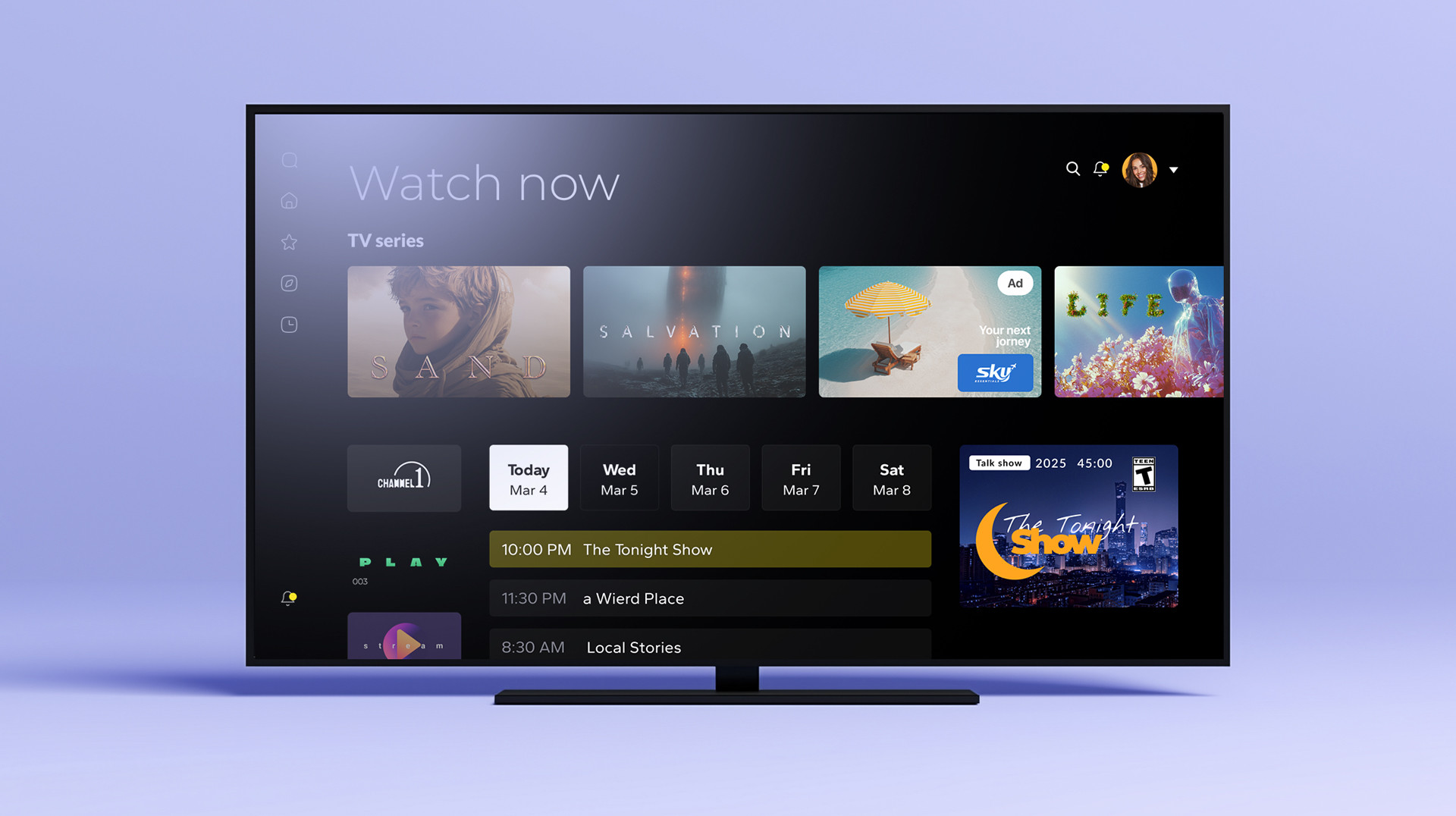
The scale of connected TV advertising keeps growing, yet the systems behind it still struggle to behave like a mature market. Premium content relies more heavily on ad revenue, budgets increase, and expectations rise, but measurement remains fragmented and difficult to align. Data comes from multiple layers, reporting standards vary by platform, and explaining the real value of inventory becomes harder with every added intermediary.
This tension was hard to miss during conversations at MIPCOM, where our team spent time talking to publishers, platform representatives, and AdTech partners. Different sessions focused on different topics, but the same concern surfaced repeatedly. A platform that wants to fund premium content through advertising cannot indefinitely afford complex systems and disorganized data.
What emerges, however, is not a move driven by a single technology or company. Actually, it is a strategy designed to address mounting pressure by suggesting consolidation over further expansion.
The overall direction suggests a more governed connected TV environment, where control gravitates toward layers that can unify signals, performance is easier to evaluate, and efficiency relies less on isolated tactics and more on coordination.
Considering this, the idea of an OS-first CTV does not seem to be a matter of debate, but a practical response to market pressure.
Budget discussions tend to surface this change more clearly than creative reviews. Connected TV shows up next to channels already judged through performance metrics, so comparison becomes part of the conversation by default. People start asking how spend was assessed, which signals carried weight, and what supported the case for repeating or expanding the investment.
This does not turn into a confrontation, but it does change the tone. CTV stops being treated as an exception. It enters the same decision framework as other channels, even though its mechanics are different.
That familiarity creates pressure. Performance logic is well understood elsewhere, and once it reaches CTV, it exposes gaps that used to be tolerated under television’s legacy rules.
Outcome-based buying enters connected TV gradually. It arrives through people who bring habits from digital media into a setting that still values premium presentation and context.
Instead of focusing on impressions alone, conversations start circling around contribution:
There is no expectation that every CTV placement should behave like a direct response. Premium exposure should be able to demonstrate its value without relying on assumptions.
As this mindset settles in, ambiguity becomes harder to defend. Inventory that cannot articulate value loses priority. Placements that demonstrate clearer impact gain leverage, even if their reach is smaller.
The adoption of performance-based thinking leads to a change in planning assumptions and an adjustment in pricing models. Publishers are increasingly differentiating inventory based not only on content quality, but also on its ability to support advertiser goals.
This creates a visible split. Some environments absorb budgets more easily because they can explain their impact. Others struggle, despite looking equally strong on screen. The difference lies less in presentation and more in accountability.
Concerns about the loss of television’s character tend to arise here. Experience shows that the emerging approach is more balanced. Performance CTV does not require continuous activity or uniform metrics. However, it does require clarity around contribution and consistency in how value is assessed.
This balance maintains what makes connected TV unique and aligns it with the way modern media decisions are made. It is also one of the clearest forces shaping CTV advertising trends, with CTV trending now despite it rarely appearing in headlines.
For a long time, CTV delivery lived in the background of campaign planning. Ads appeared on screen, budgets were spent, and a few questions were asked about how many systems or partners sat between the buyer and the viewer.
That changed once CTV budgets began to face performance scrutiny alongside web and mobile channels. Attention shifted from surface results to the paths that produced them, making intermediaries, fees, and attribution part of routine campaign discussions instead of technical footnotes.
Supply-path optimization in CTV is moving from cleanup to structural choices. The focus is no longer on marginal efficiency gains, but on reducing ambiguity across delivery.
In practice, this usually means:
These steps aim to make delivery paths easier to explain, measure, and repeat.
As budgets grow and performance expectations tighten, tolerance for opaque supply paths declines. Platform-level controls make direct paths more accessible, while performance-driven planning leaves less room for unclear attribution.
SPO now functions less as refinement and more as correction, reflecting a broader move toward delivery structures that can support accountability and scale at the same time.

Many of the shifts discussed so far depend on how well delivery logic, platform behavior, and measurement are coordinated behind the scenes. Turning them into stable, repeatable solutions takes more than choosing the right format.
If you’re exploring how to implement these ideas across real CTV environments, Oxagile’s experience in building and scaling CTV advertising solutions can help.
Tell us about your idea, and we’ll map out the most effective route to bring it to life.
Interactive and shoppable formats became more common across CTV campaigns, and many teams began encountering the same issue from different directions. Ideas that looked convincing in planning decks and early pilots behaved inconsistently once they reached real devices, real apps, and real viewing habits. Timing slipped, overlays conflicted with system UI, and interaction logic varied from platform to platform in ways that were difficult to predict or control.
These problems did not stem from poor concepts or weak creatives. They exposed a deeper mismatch between how ads were delivered and what modern CTV formats expected from that delivery.
Server-Guided Ad Insertion (SGAI) addresses this issue, not as a feature, but as a means of restoring coordination between delivery, interaction, and platform behavior. When advertising invites interaction, reliability becomes part of the experience.
Traditional approaches solved different problems, but rarely the same one. Server-side ad insertion offered scale and stability, which made it suitable for linear-style breaks, yet it struggled with interactivity and contextual adaptation. Client-side logic allowed richer behavior and faster iteration, but introduced concerns around blocking, fraud, and maintenance across a fragmented device landscape.
The closer CTV advertising moved toward performance and commerce, the harder this split became to manage. Formats required flexibility without sacrificing control, and personalization without fragmenting delivery logic across dozens of environments.
Server-guided ad insertion emerged in response to this pressure, not as a new paradigm. SGAI enables the coordination of ad behavior by combining centralized decision-making with context-aware execution, preventing every choice from being forced into a single layer.
This logic matters most in a few specific situations where connected TV keeps pushing its own limits. Consistent user experience across devices is essential for interactive and shoppable formats, but this quickly becomes difficult to scale unless there is guided coordination.
Performance-oriented campaigns can be adjusted more quickly in terms of time, format, and creative logic, with no need to redeploy entire applications. Premium and controlled environments place even greater value on predictability and UX integrity, which naturally favors orchestration over uncontrolled flexibility.
In this sense, SGAI is less about adding capability and more about restoring balance. It allows connected TV advertising to grow more ambitious without becoming fragile, which is why it keeps resurfacing in discussions about CTV advertising trends, even when it rarely takes center stage.
CTV campaign planning is undergoing a noticeable transformation. Previously, teams would ask who the viewer is. Now, they are increasingly focusing on what is happening on the screen at a specific moment. The question changes from audience composition to context, and that change simplifies more than it complicates.
Live sports, season finales, key scenes, and natural pauses in viewing already concentrate attention. These moments create a shared state of focus that does not need to be inferred from user data. Ad delivery that aligns with such moments is relevant because of its timing rather than its profiling.
Unlike traditional CTV, moment-based CTV does not rely on personal identifiers or long behavioral histories. Instead, it uses predictable points of engagement that are visible to everyone involved in the delivery chain.
In most cases, this shows up as:
These approaches trade granular personalization for situational relevance, which often proves easier to execute consistently across platforms.
The first pressure comes from privacy. Growing sensitivity around user data makes targeting approaches that do not count on personal information easier to deploy, both from a regulatory standpoint and from a viewer comfort perspective. The second pressure comes from attention, since contextual moments deliver focus that profile-based targeting often assumes but cannot reliably guarantee.
From a measurement perspective, this also simplifies interpretation. When ads are linked to specific moments, their performance can be evaluated based on clear situational cues compared to inferred audience traits.
Moment-based targeting is positioned as a core planning layer for CTV campaigns in 2026, particularly for live sports, premium series, and event-driven content. It offers relevance and measurable impact with no increased reliance on user-level data.
The broader implication is that the definition of effectiveness is changing. The focus has shifted from whether the ad reached the right person to whether it appeared at the right time. In a medium built around shared viewing moments, that distinction increasingly works in CTV’s favor.
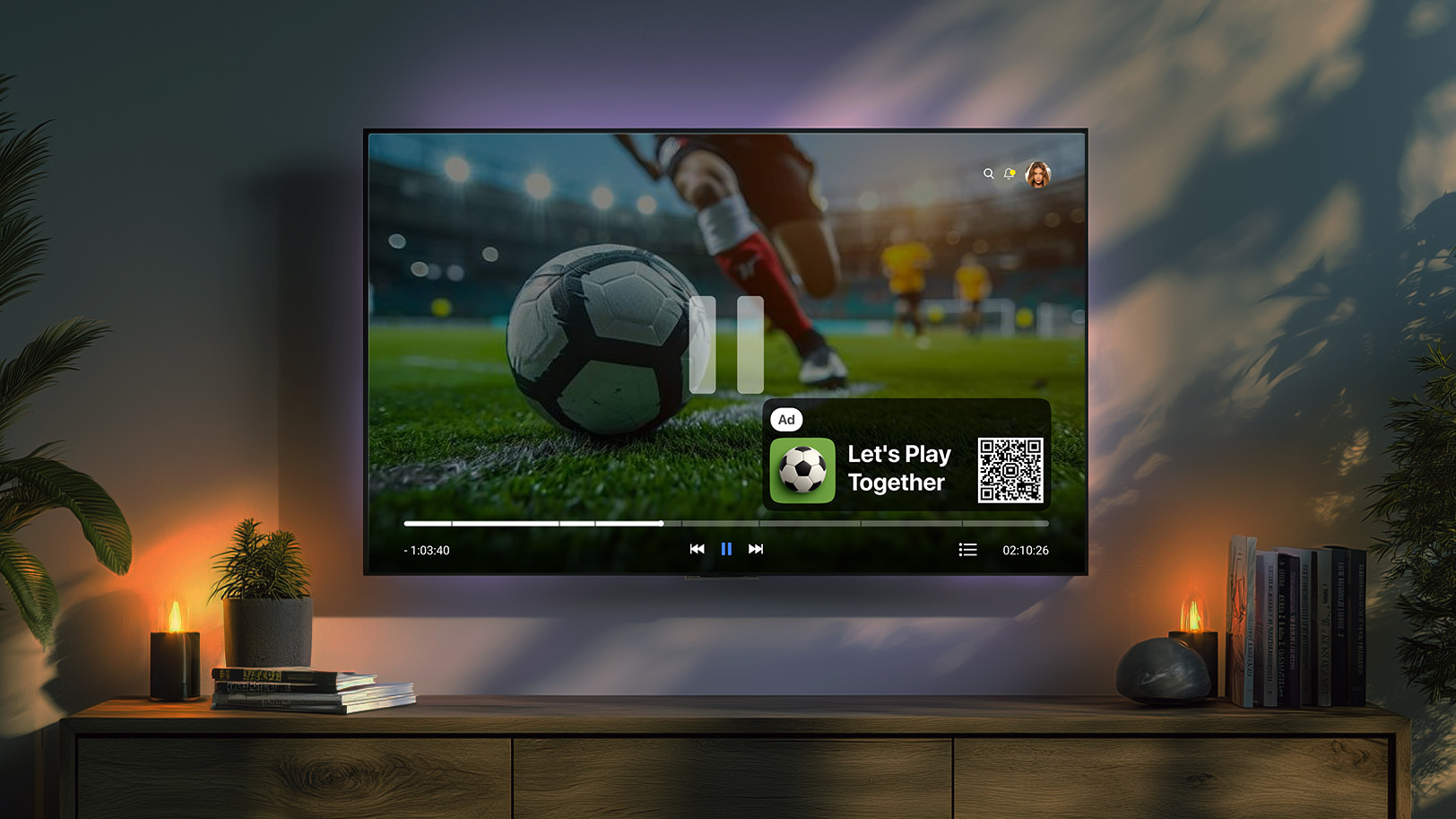
For a long time, pausing a TV show carried no expectations. Playback would stop, the screen would freeze, and attention would drift elsewhere. However, this is no longer the case, as viewers now frequently pause content, either to talk or check their phones, or simply to step away for a moment. During these pauses, the screen remains visible and surprisingly present.
This visibility transforms the role of the pause screen. Whereas before it was just empty space, it is now one of the few places where ads can appear in a way that doesn’t interrupt content or compete with motion and sound.
The pause ad formats gaining traction do not behave like traditional video ads. They remain static, avoid sound, and exploit a calm visual presence in place of urgency. Their effectiveness comes from fitting the moment, not from demanding action.
Practical implementations that already work follow a similar structure:
This restraint is what separates pause ads from intrusive overlays or mid-roll formats. They acknowledge that the viewer chose to pause, and they behave accordingly.
Pause ads offer platforms a valuable asset in the world of CTV advertising: predictable visibility without disruption. As the ad only appears when playback stops, the common trade-off between attention and experience is avoided.
OS-level control plays a particularly important role here. Pause states are governed by the platform and not by individual apps. This allows for consistent behavior, cleaner measurement, and better control over frequency and placement. For platforms such as Roku with strong system-level integration, this provides a natural ad delivery surface that does not rely on content interruption.
Pause ads work because they do not behave like traditional ads. They take advantage of a moment that viewers already accept as neutral and visible, which makes them easier to integrate into the viewing experience. That quiet reliability is what keeps the format relevant as CTV environments become more controlled and less tolerant of disruption.
Connected TV has moved into a phase where novelty no longer justifies decisions on its own. The forces shaping the industry are more practical and demanding. They focus on predictability and accountability, as well as on how advertising behaves during real viewing moments and not just in theory.
The reliability of the system behind a format is what carries increasing weight, not how bold it looks in isolation. Results need to be explainable, delivery needs to be consistent, and advertising needs to fit the screen it appears on and not force attention or disrupt the experience people came for.
Emerging solutions across CTV do not favor louder formats or broader targeting. On the contrary, they advocate restraint and coordination, as well as design choices that respect both the medium and its audience. Connected TV no longer hinges on whether it works at all. What matters now is whether it can deliver consistently, at scale, and at no cost to the viewing experience.
CTV is moving to more controlled, performance-aware, and context-driven advertising. Translating these shifts into stable, scalable solutions requires more than choosing the right format, it requires the right architecture, platform integrations, and delivery logic behind it.
Oxagile helps brands, platforms, and media companies design and build CTV advertising solutions that align with how connected TV actually works today and where it’s headed next.

The most important CTV advertising trends focus on control, measurement clarity, and context-aware formats. OS-first CTV, outcome-based buying, and guided ad delivery models shape how advertising is planned and evaluated as budgets grow and performance expectations become more explicit.
What’s trending now in CTV is a shift away from user-level profiling toward timing and context. Moment-based targeting, pause ads, and platform-level orchestration gain traction because they align better with privacy expectations and real viewing behavior on connected TVs.
CTV shopping trends show a move from isolated experiments to repeatable formats. Shoppable and interactive placements are increasingly used as a practical layer within performance-oriented CTV campaigns, helping connect attention with intent without disrupting the viewing experience.
Planning CTV advertising for 2026 and onward requires accounting for tighter performance expectations, greater platform control, and less tolerance for opaque delivery paths. Teams increasingly need predictable ad behavior across devices, clearer measurement logic, and delivery structures that work without relying on user-level data. These factors influence not only formats, but also how CTV campaigns are built and evaluated from the start.

