











This website uses cookies to help improve your user experience


The arena is humming. Not just with chants and team colors, but with millions of swipes, taps, and cast-to-TVs. That’s your real opponent: attention that jumps between screens faster than a winger on a counterattack. The play today, if you want to lead the league, is sport streaming app development that feels effortless for fans and unstoppable for your opponent’s team.
We’ll play this match in two halves. First half, UX and product moves that earn cheers. Second half, the engineering that keeps the scoreboard online when the crowd surges.

Along the touchline, an expert drops a few quotes, and we’ll pause for instant replays with live cases. Alexey Zaberezhny, Video Solutions System Analyst at Oxagile, has worked on multiple OTT and sports streaming projects, helping clients design interfaces that balance emotion and performance. He joins us for the first half to explain how good UX turns streaming into an experience that feels alive and connected to the game.
Every sport has its rhythm — bursts of motion, pauses for breath, and moments that define the match. In video streaming app development, that rhythm is everything — the ability to emotionally engage users from the kickoff to the cooldown. Forget shiny buttons or fancy animations and focus on momentum, on UX that moves like a fast counterattack and never loses stride.
Here’s how to play it right:
When the final whistle blows, fans want the story of the match, not just a full replay. The tackles, the saves, the twist nobody saw coming. That’s where smart post-viewing UX scores big.
Build systems that detect and stitch together the best moments automatically: goals, comebacks, fouls, and flashpoints. Let your audience relive the drama instantly with auto-generated highlight reels, chaptered recaps, and quick-share clips that hit social feeds before the crowd even leaves the stadium.
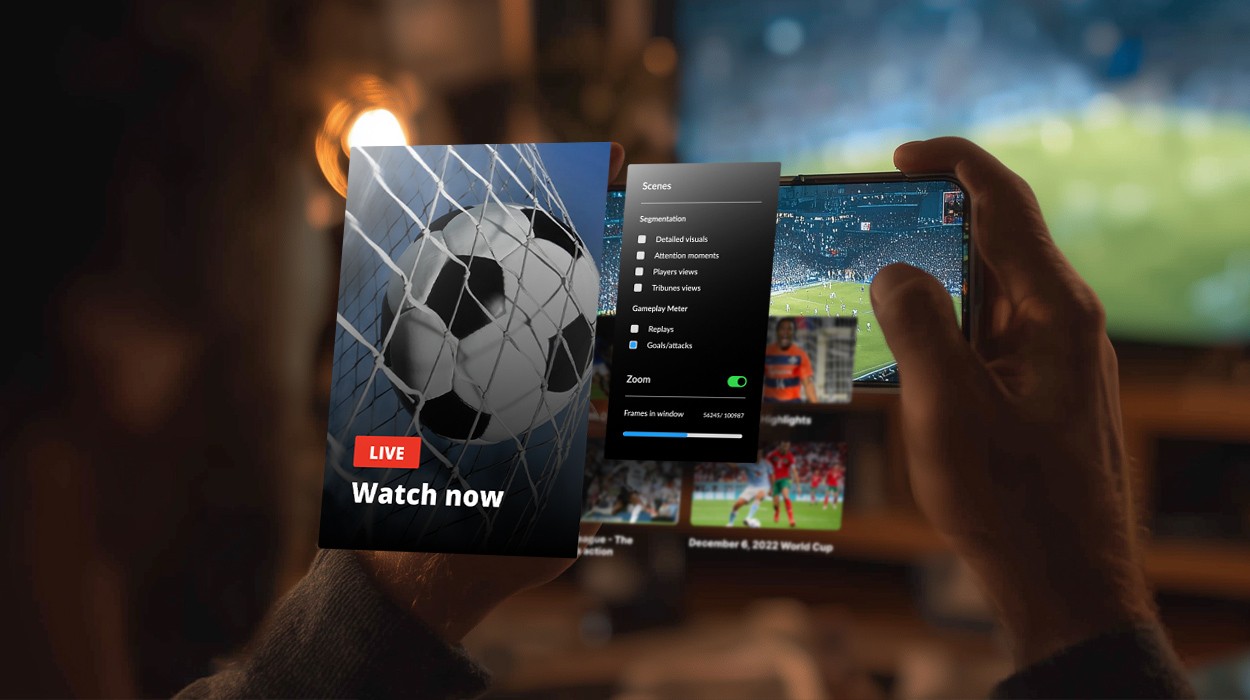
When emotions run high, timing is everything. Oxagile engineered a real-time soccer highlights solution that uses machine learning to recognize key plays as they happen: goals, saves, fouls, and momentum shifts.
The system compiles highlight reels up to 3.2× faster than manual workflows, giving editors a head start and fans instant access to the best moments right after the final whistle.
If your app feels silent, you are not going to win the crowd. Sports is about energy, rhythm, and noise. Fans want to shout, argue, predict, and brag, and all while watching. Great sports UX lets them do that without losing focus on the field.
Lightweight, non-blocking overlays such as quick reactions, polls, watch parties, and even MVP votes can help you build the app that viewers will like. Then, trigger them with timing precision: a poll right after a goal, a trivia pop-up after a highlight. That’s the digital version of the crowd wave.
And when chat gets rowdy, AI moderation steps in like a fair ref, keeping passion alive but toxicity out.
Expert perspective
“When contemplating the integration of interactivity into the user interface and user experience of an OTT platform, it becomes crucial to truly comprehend their needs, as well as the appropriate stream timing for introducing interactive features.
Careful consideration must be given to whether these features should be incorporated during or after a live stream, striking a delicate balance that enhances the viewing experience without detracting from it.”
No fan wants a one-size-fits-all feed. A well-built streaming app should read the room: your favorite club, timezone, language, even whether you hate spoilers or crave them. It should reshape itself for every user, changing layouts before kickoff, adjusting themes for night matches, and surfacing content that feels intuitive, not intrusive.
Smart personalization keeps casual viewers watching longer and shows die-hard fans that the platform truly knows them.
Sports don’t respect business hours. If it’s 7:55 p.m., your app should already be in match mode: lineups glowing, odds live, casting prompt ready. After the game, the interface should morph into post-show mode with heatmaps, possession graphs, and “What you missed” highlights.
Add geo and time-aware localization: different commentary for different regions, correct time zones, adjusted ads, and flexible rights-handling. A great UX feels local everywhere – not forced, not generic.
When blackout rules step in, the app shouldn’t freeze the story. Offer clear explanations, alternative content, or a quick route to the next live event. This approach ensures that fans remain engaged and continue to enjoy the content, rather than encountering a point where they lose interest.
A fan might start watching on a phone during lunch, continue on a tablet on the bus, and finish on TV with friends. That’s normal. That’s reality. The challenge is to make that transition invisible.
Multi-screen parity means continuity, not duplication. Ensure all devices are in sync by matching playback progress, camera angle, and chat position. This allows viewers to switch between devices without missing any of the action. The experience should feel like one continuous broadcast across every screen, providing a seamless experience.
Platforms to cover: iOS, Android, Web, Android TV, Apple TV, Fire TV, Roku, Samsung Tizen, and LG webOS — yes, all of them. Because every unoptimized device is a seat left empty in your virtual stadium.
The phone isn’t the enemy of the TV — it’s the wingman. Second-screen design turns distraction into fan engagement. Fans pull up shot charts, xG stats, instant replays, and player metrics on their phones without ever pausing the match on TV. It’s like having a live analyst whispering insights between plays.
This takes serious coordination — real-time sync, fast APIs, and low-latency data streams that update as soon as the ref blows the whistle.
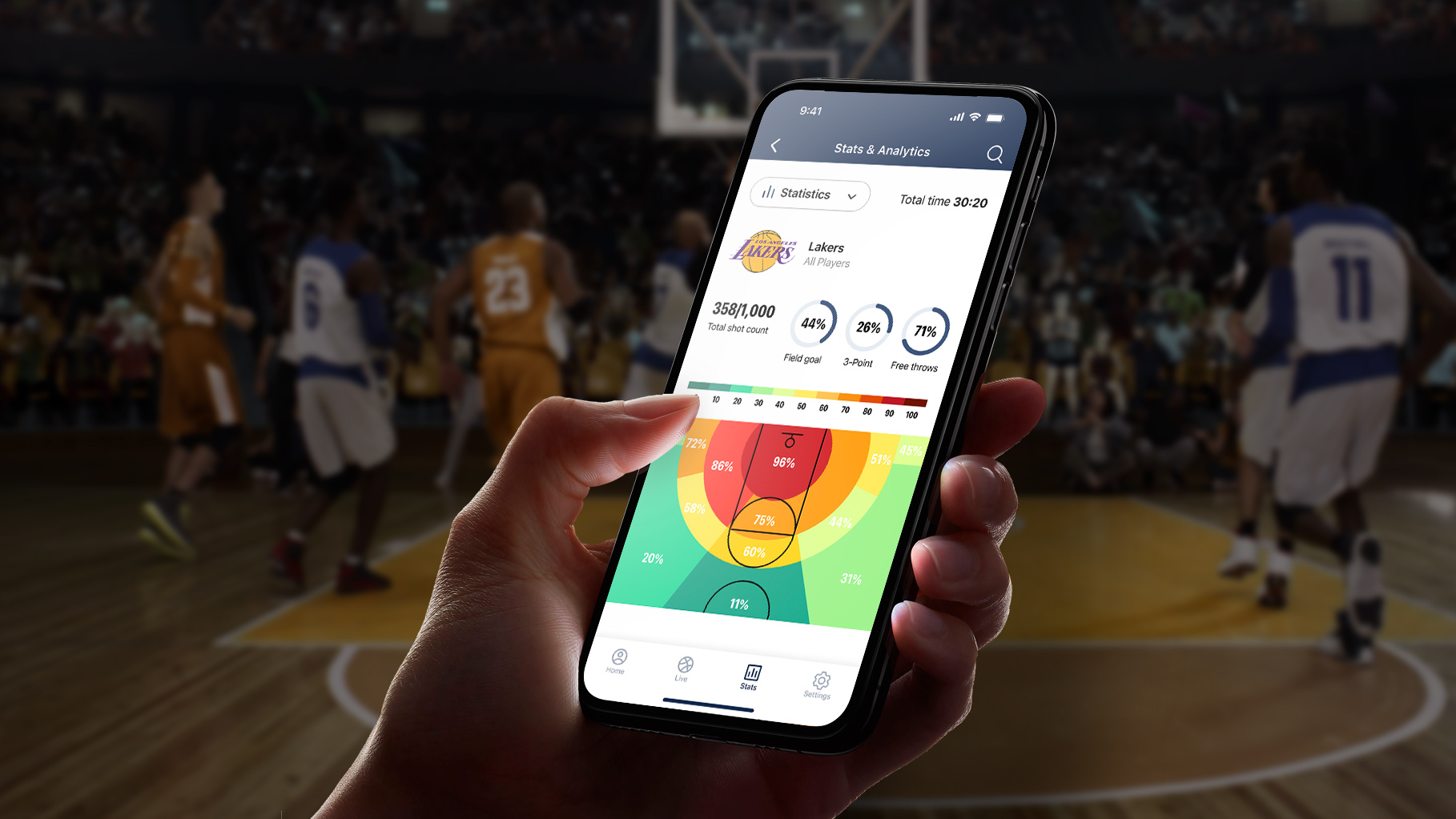
Basketball moves fast, and so should the data behind it. Oxagile built a live basketball action stats app powered by computer vision and analytics that tracks players, detects key events, and delivers real-time insights right to fans’ phones.
Viewers could explore shot accuracy, player heatmaps, and tactical breakdowns instantly, all while the main game streamed flawlessly on the big screen.
A football match lasts 90 minutes, but fandom never stops. The best sports streaming apps build micro-communities that stay alive long after the final whistle. Think clubs, badges, streaks, and AI-driven fan connections — not noise, but narrative.
AI can group moments by emotion: comebacks, rivalries, heartbreaks. Viewers get custom feeds built around their favorite storylines, not just their teams, and you notice that fandom becomes a season-long relationship instead of being a one-night watch.
Expert perspective
“Sports fans make a passionate community, and understanding what truly resonates may contribute to building strong viewer loyalty. AI technology helps sports clubs and content distributors capture and deliver those heartfelt scenes.”
Every fan should have equal access to emotion. That means high contrast themes, multi-language audio, screen reader compatibility, and accurate captions that follow the pace of the match.
It also means clear communication: if content is restricted, explain why. When something fails, offer a way to recover instead of flashing an error code from 2005. Accessibility goes far beyond compliance as it transforms a streaming app into a digital stadium where every viewer gets a front-row seat to the action.
Before you move to the engineering half, here’s a quick checklist to make sure your app’s UX and fan experience are ready for kickoff.
| Goal | What to check | Why it matters |
| Post-viewing experience | Automatic highlight generation, shareable clips, and match chapters | Ensures fans are engaged even after the final whistle |
| Fan engagement | Live chat, polls, reactions, and watch-party features with AI moderation | Builds community without disrupting the stream |
| Personalization | Preferences for teams, language, spoilers, and commentators | Creates relevance and user trust |
| Context awareness | Time-based UI shifts, geo-localization, pre-match and post-match states | Feels natural and regionally tuned |
| Multi-screen continuity | Seamless switch between phone, tablet, and TV with synced progress | Keeps viewers connected across devices |
| Second-screen features | Stats, shot charts, player data, and real-time updates | Gives fans a richer, more interactive match experience |
| Community building | AI-curated fan stories, badges, and streaks | Extends engagement beyond match time |
| Accessibility and trust | Clear error handling, captions, multi-language audio, screen-reader support | Ensures each viewer gets a front-row experience |
Once these elements are aligned, your app is ready for the next stage — the part your audience never sees but always feels: the technology that holds the line under pressure.

When design welcomes everyone, the whole experience wins. Oxagile creates video platforms where accessibility, clarity, and emotion move together on every screen.
UX wins hearts. Engineering wins the match.
The first half was about emotion — design that feels alive, personalized, and frictionless. But in sport streaming development, even the best interface can’t stand on its own. When a goal happens and millions of fans hit play, rewind, and share all at once, your infrastructure must perform like a championship defense — steady, fast, and impossible to break through.
Here’s how to build a sports streaming platform that handles peak loads and delivers smooth playback to every screen:
Average traffic means nothing in sports. One goal, one penalty, one upset, and your user count doubles in seconds. To stay ahead, architecture must be built for spikes, not comfort zones.
Design around event-driven microservices that scale independently. Keep high-traffic areas, such as authentication, stream manifests, and ad calls, lightweight and separate from background workloads. Rely on message queues (Kafka, RabbitMQ, or cloud equivalents) for resilience and asynchronous load balancing.
Use edge caching to serve the crowd where it forms. Pre-warm the CDN (Content Delivery Network) before key matches and replicate regional data to avoid cold starts. Think of your system like a squad: each component should know its position and react instantly when play speeds up.
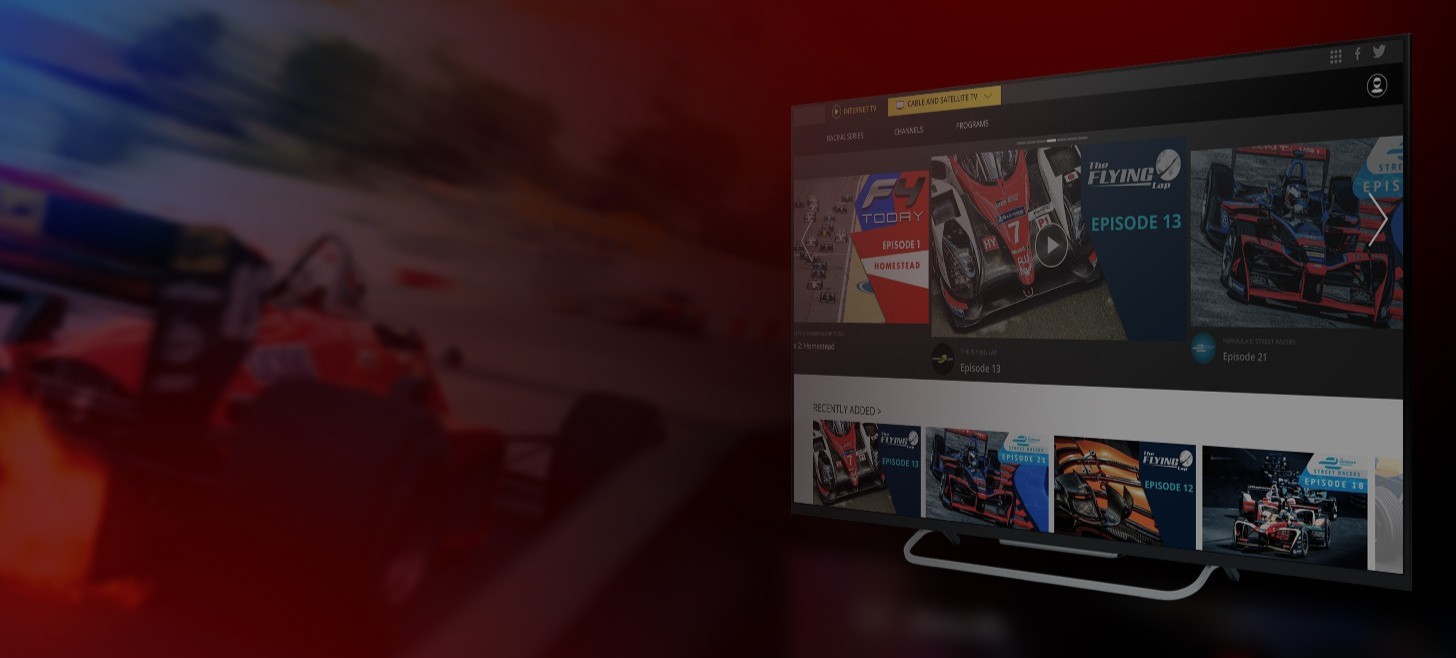
Motorsport audiences arrive in waves — thousands joining the stream within seconds of lights-out. Oxagile built a live and VOD platform designed to handle that chaos with clustered microservices, edge-first caching, and multi-platform delivery.
The result: smooth playback, instant startup, and zero buffering even at peak loads when every second of the race matters.
When the crowd outside cheers before your stream does, the magic’s gone. Lag breaks the suspense faster than any spoiler. In sport streaming, timing defines truth, and every second of delay steals a little piece of emotion (by the way, that was one of the key challenges addressed in one of our recent projects).
Aim for under 5-8 seconds with CMAF-based LL-HLS or DASH-LL, and go as low as 2-3 seconds for interactive or betting scenarios. Use chunked segment delivery so viewers start playback before the full segment arrives.
For ultra-fast features like live polls or watch parties, WebRTC lanes can complement your primary stream. The goal is to shorten delivery time and maintain consistency across regions and devices so that fans can cheer in unison rather than seconds apart.
A winning stream strikes the right balance between video, chat, graphics, and live stats. One mistimed update, and the tension that makes live sport special disappears.
Use server-timestamped events to anchor all interactions to the same reference clock. Keep your NTP (Network Time Protocol) discipline tight, and ensure player-side buffering adjusts dynamically without drifting from live time.
This synchronization also powers your second-screen experiences, ensuring that a fan viewing replays or heatmaps on mobile stays aligned with the live TV feed.
Ad breaks shouldn’t feel like fouls. The modern strategy is Dynamic Ad Insertion (DAI) — technology that tailors ad content in real time based on viewer location, device, or behavior.
There are two ways to implement it: Server-Side Ad Insertion (SSAI) and Client-Side Ad Insertion (CSAI):
The best results often come from combining both: smooth delivery on big screens and interactive engagement on second screens.
For interactivity — bonus polls, sponsored trivia, or special offers — pair SSAI on TV with CSAI on companion apps. That way, engagement happens off-screen while the main broadcast stays uninterrupted.
A quick tip from experience: cache your ad data on edge servers close to viewers. When traffic spikes at halftime, these local copies ensure that ads load quickly and that your main servers remain safe.
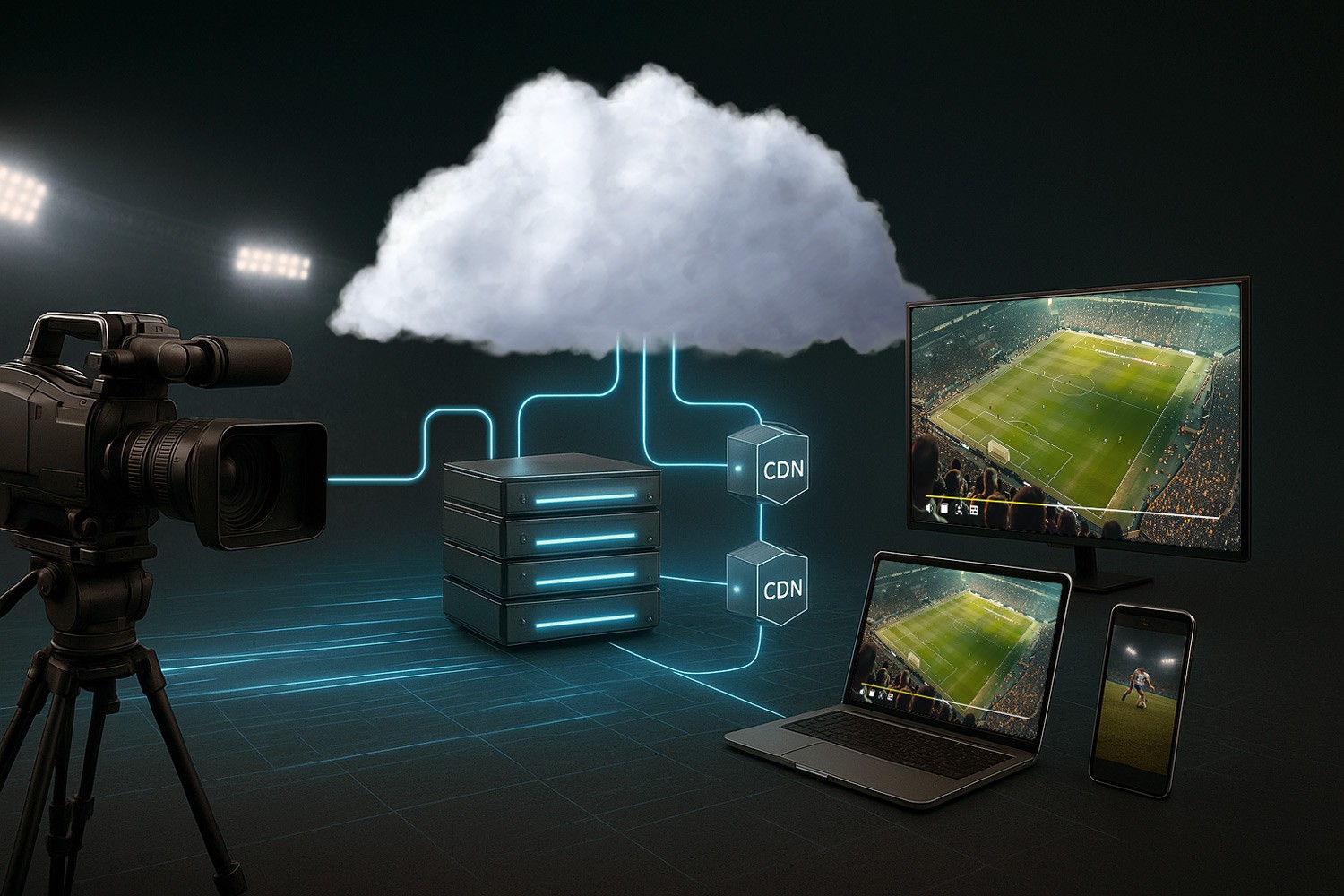
When your content involves million-dollar broadcasting rights, protection matters as much as delivery. Support all major DRM systems like Widevine, FairPlay, and PlayReady, and ensure license servers scale horizontally to match concurrent sessions.
In the course of sports software solutions development, also add forensic watermarking to trace leaks, and use geo/time-based restrictions that respect blackout rules while keeping viewers engaged with alternative feeds or localized replays. Legal compliance shouldn’t kill user experience, but it should reinforce trust.
Real champions rehearse for pressure. Your infrastructure should, too. Run chaos tests that mimic real match conditions: sudden audience spikes, temporary node drops, ad call delays, or partial CDN outages. Measure your Time to Recovery (TTR) and your system’s ability to self-heal.
Emulate real audience behavior during testing:
That’s the stress test that defines production-grade sports platforms.
Numbers mean nothing if they don’t tell you why something happened. Move beyond basic metrics and track real fan journeys: join time, rebuffer events, ad errors, subtitle delays, and drop-off points during key moments.
Correlate this with video quality metrics (VMAF, SSIM) to understand how users actually feel the stream. Add proactive alerting: if bitrate drops for 2,000 users in the same region, flag it before social media does.
Great observability works like a good commentator. It goes beyond describing the game and helps everyone understand what’s really happening.
Sports streaming apps rely on regular updates. Feed engagement, playback and retention data into your analytics warehouse and use this information to guide product development decisions:
With AI-assisted segmentation, you can create smarter experiences, like recommending post-match clips from rival games or adjusting push timing by time zone.
This way, your streaming app will evolve like a club that studies every match and comes back stronger.
Protect your system like a goalpost. Encrypt data at rest and in transit. Use mutual TLS (Transport Layer Security), rotating access keys, and strict rate limits for APIs. Store the minimum amount of user data required for personalisation, ensuring it is anonymised.
Plan staging and rollback strategies before every major event. Because when the stream stumbles during a final, the winning move is a quick rollback that puts the game back in play before viewers even notice.

Race day doesn’t wait for slow servers. When Oxagile built a live and VOD platform for a leading motorsport media group, the system had to perform flawlessly under intense, unpredictable spikes.
Half the audience joined within 60 seconds of lights-out, pushing infrastructure to its limits. The team engineered clustered microservices, a multi-CDN setup, and edge caching fine-tuned for live delivery.
The outcome: zero downtime, instant startup, and seamless playback across web, mobile, and smart TVs — a performance worthy of a podium finish.
Great UX wins fans, but strong engineering keeps them. Before your platform goes live, ensure these fundamentals are in place, as they’re the difference between smooth streaming and match-day chaos.
| Goal | What to check | Why it matters |
| Architecture under pressure | Event-driven microservices, asynchronous queues, CDN pre-warming | Handles traffic spikes during major moments |
| Low-latency delivery | CMAF-based LL-HLS or DASH-LL with chunked transfer | Ensures streams are in sync with real-time emotion |
| Precise synchronization | Server timestamps, NTP discipline, adaptive buffering | Prevents data, stats, and overlays from drifting |
| Monetization stability | SSAI/CSAI integration and local ad caching | Keeps ads seamless and servers healthy |
| DRM and content protection | Widevine, FairPlay, PlayReady, watermarking | Secures rights without breaking playback |
| Chaos and recovery tests | Load simulations, network drops, fast rollback plans | Builds confidence before real-world events |
| Observability and alerts | Real-time QoS metrics and proactive notifications | Spots playback issues before users do |
| Data-driven improvement | Analytics loops, segmentation, retention tracking | Guides smart updates after every release |
| Security hygiene | mTLS, access key rotation, anonymized user data | Protects privacy and platform integrity |
When this list checks out, your app is ready for the spotlight — fast, stable, and built for the kind of pressure only live sport can bring.
When the match ends, most people remember the goals. Engineers remember the seconds.
In sport streaming, greatness lives in those seconds — the three between a click and the first frame, the two that decide if a push notification feels instant or late, the one that separates real live from “almost live”. Those are the margins where the audience either stays in the story or drops out.
That’s why the future of sports streaming won’t be owned by whoever has the flashiest interface or the cheapest servers. It’ll belong to those who understand micro-moments like how emotion, data, and timing converge into something invisible but unforgettable.
At Oxagile, we study those seconds the way analysts study match replays: to find the small adjustments that win big loyalty. And that’s the real finish line in sport streaming — not uptime, not bitrate, but believability. The moment when fans forget the app and just feel the game.
Precision defines champions — on the field and in streaming. If your goal is to keep every frame, stat, and heartbeat perfectly in sync, start with expertise that turns technology into tempo.

Sports streaming demands speed, sync, and emotion. While a movie platform can buffer quietly, a live match can’t. Sport streaming app development focuses on ultra-low latency, synchronized overlays, and interaction tools — chat, polls, and live stats, that work flawlessly even during traffic surges.
Top engineering teams use event-driven architectures, auto-scaling clusters, and multi-CDN delivery to survive sudden audience spikes. Load balancing, cache pre-warming, and chaos testing are part of every release cycle. In short, the system is trained to play under pressure, just like the athletes on screen.
Fans stay for real-time stats, instant replays, multi-angle views, and personalized highlight reels. Seamless UX, clear commentary sync, and interactive options — from watch-parties to trivia — keep engagement high long after kickoff.
Monetization in sports streaming starts with the right ad delivery approach. Platforms rely on Dynamic Ad Insertion (DAI) to serve personalized ads in real time without interrupting playback. It can be implemented through Server-Side Ad Insertion (SSAI) for seamless streams or Client-Side Ad Insertion (CSAI) for advanced targeting and measurement.
Beyond ad delivery, success depends on your business model mix. Many sports platforms combine:
This balanced strategy keeps the stream smooth, the audience engaged, and revenue predictable.
Start with a technical discovery phase. Define your audience, rights, content sources, and latency goals before a single line of code. Then prototype one core scenario — live playback, chat, or highlight generation — to test real-world performance. A focused start keeps costs under control and helps your team move fast without missing the goal.

