








This website uses cookies to help improve your user experience




The crowd roars on TV. Your team just scored, and the living room is alive with cheers. But while the replay rolls across the big screen, your phone lights up. In a split second, you’re glancing at player stats, dropping a prediction in a fan poll, and scrolling through a flash offer on team merch. You’re not ignoring the game, you’re deepening the experience.
This is how audiences watch today. One screen entertains, the other empowers. And for broadcasters, streaming platforms, and brands, that second screen has become prime territory for connection and growth.
Second screen app development is the craft of turning that extra device into a true companion, perfectly synced with the main feed, adding layers of interactivity, and transforming passive viewing into something participatory and memorable.
Audiences rarely watch with just one screen anymore. They scroll, swipe, and react on their phones while the TV is still on. When that attention drifts to social feeds or unrelated apps, opportunities for engagement slip away.
Here’s what changes when you guide that second-screen behavior instead of leaving it to chance.
TV used to be background noise. Now viewers expect to do something while watching. A companion app gives them context, extras, and actions right when they want them.
That can be live stats during a game, behind-the-scenes clips for a show, or a “buy now” offer the moment a character wears a trending outfit. Every interaction keeps people inside your ecosystem rather than wandering elsewhere.
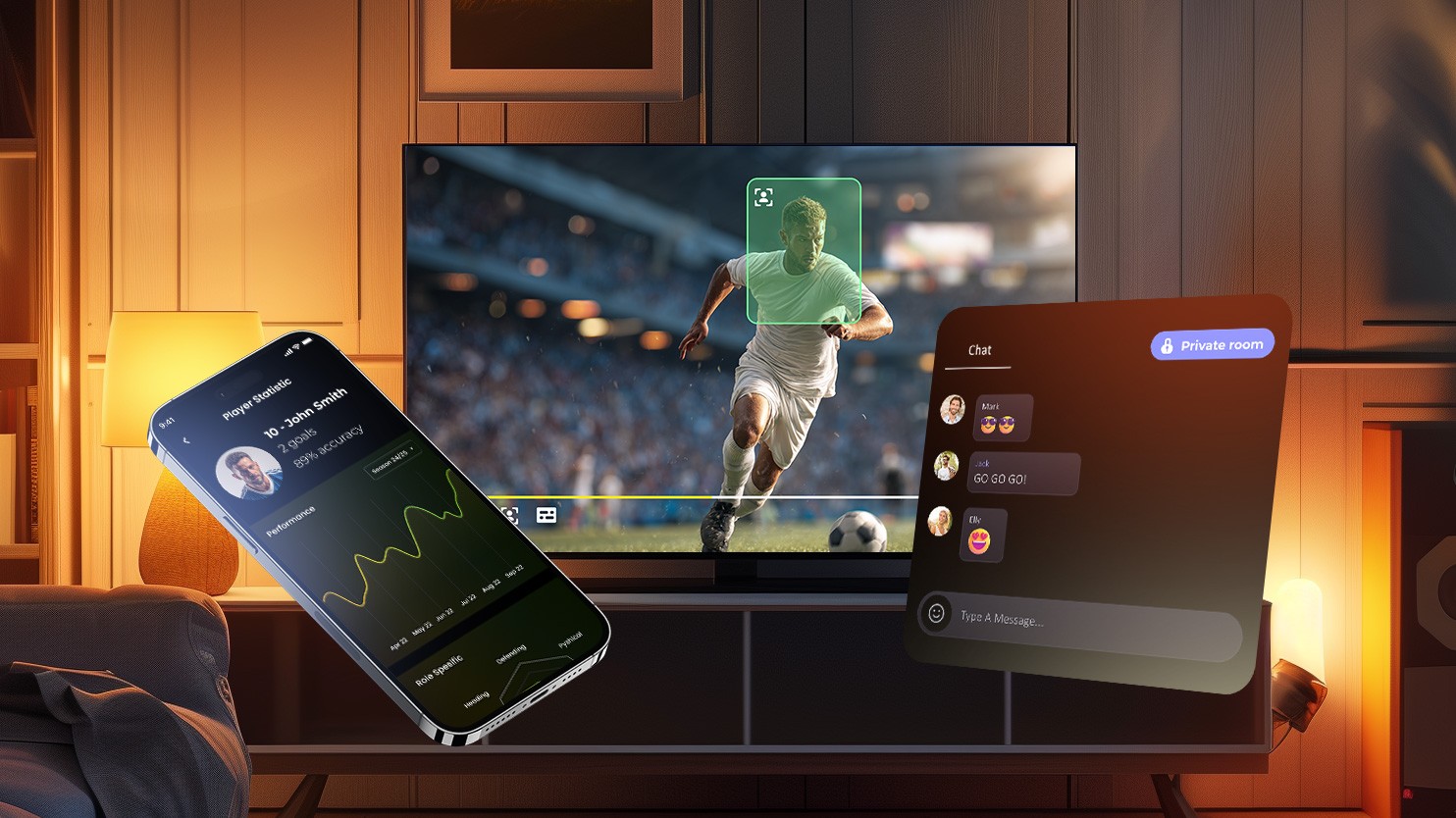
Fans are already chatting about the match or show. The question is where. Polls, predictions, watch parties, voting, or live commenting make the experience social while keeping the conversation on your turf.
If you do not provide this, your viewers will give their energy to platforms that perfectly balance watching and interactive entertainment. When you do, you capture not only fan engagement but also valuable insight into audience behavior.
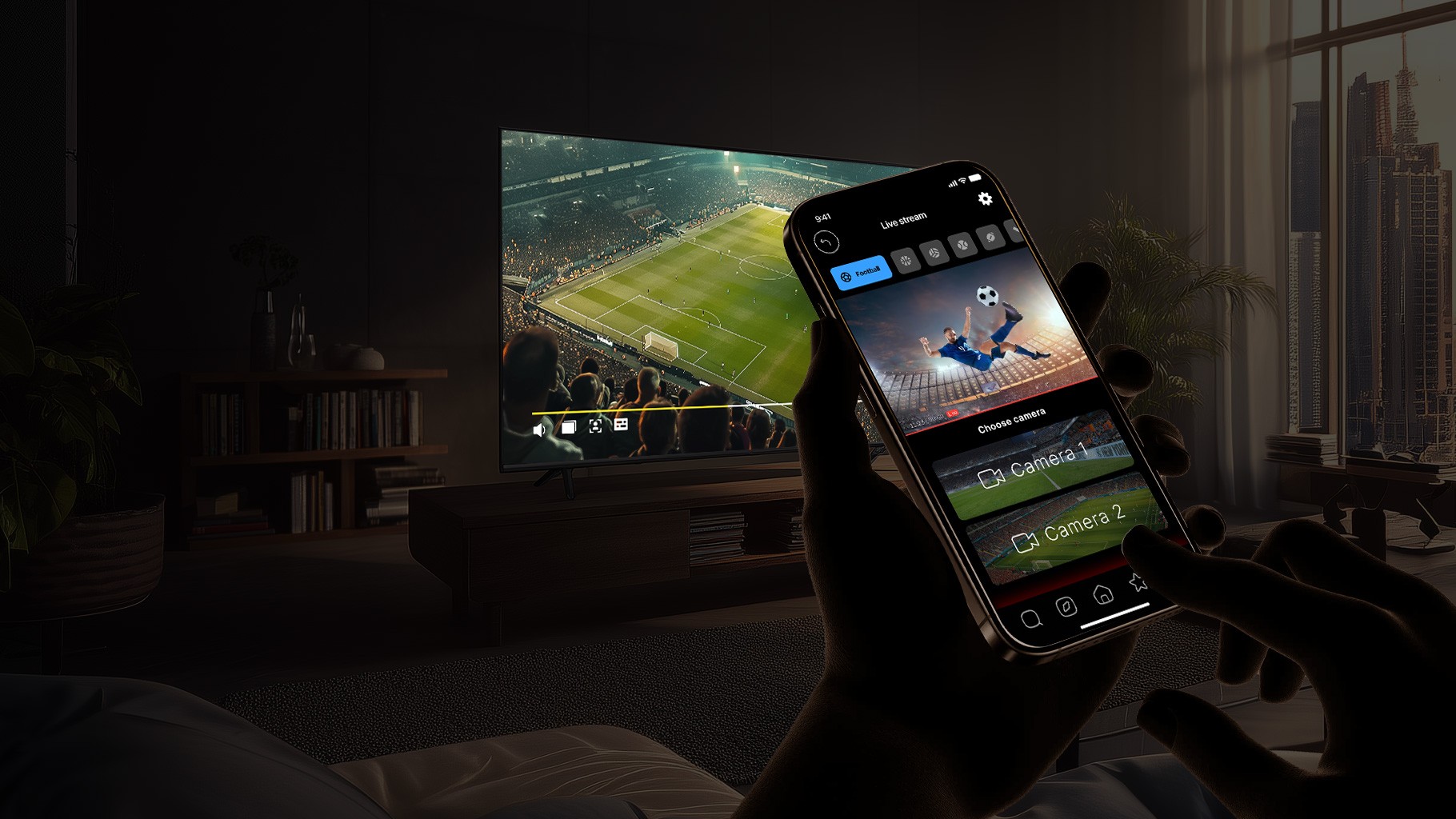
The second screen can act like a remote with superpowers. It helps people navigate highlights, choose camera angles, or discover related shows without breaking the main viewing flow.
It is also the perfect channel to collect feedback in real time. This creates a loop where your audience feels heard, while your product team gains the insights to fine-tune content and features.
| Metric | Insight | Why it matters |
| 88% of Americans use a second screen while watching TV1 | Viewers multitask with phones during viewing | If the TV experience doesn’t engage them, their attention shifts elsewhere |
| 83% of Gen Z sports fans use a second screen during games2 | Second-screening is deeply ingrained in younger audiences | Companion experiences are critical for future loyalty and relevance |
| Viewers using dual screens spend 30% more time interacting3 | Multi-device usage significantly boosts engagement | Higher interaction correlates with deeper retention and value |
| Second-screen campaigns drive up to 50% more engagement4 | Interactive features inspire participation and retention | Turning passive viewers into active ones pays off in attention and outcomes |
The truth is clear: whenever there’s a pause in the action, many viewers instinctively reach for their phones. If the companion experience isn’t there, their attention drifts toward social feeds or shopping apps. Those are valuable moments of engagement that slip away. With second-screening, you can turn these natural breaks into opportunities to keep viewers connected to your service.
Second-screening shines when it transforms ordinary viewing into participation. Sports may be the loudest arena for this, but the same principles apply across entertainment, live events, and even scripted shows. Let’s walk through scenarios where companion devices can win over viewers and keep them glued to your ecosystem.
Fans are social by nature. They cheer, argue, and celebrate in real time. A companion app simply channels that energy in ways that serve both the viewer and the business.
During a basketball game, fans can open the app to see player performance stats update in real time. Many broadcasters already utilize innovative sports streaming technology and push predictive features: guess the next scorer or outcome of a penalty with prizes or badges as rewards.
Not only does this keep attention during slow moments, but it also creates sponsorship inventory that brands are eager to own.
Imagine switching from the broadcast camera to a courtside angle directly on your phone. Or replaying a decisive serve in tennis from multiple viewpoints while the main screen continues live.
These “choose your view” moments drive engagement and give premium users something tangible for their subscription.
Polls, chats, and live betting amplify the communal aspect. A study highlighted by Oxagile shows that mobile dominates second-screen usage, with smartphones being the companion device of choice. That means every poll or play-along feature should be designed mobile-first, with glanceable interfaces and one-tap actions.
For deeper insight, Oxagile’s guide on creating a magnetic second-screen app for sports fans breaks down how predictions, stats, and fan-driven features turn passive watching into engagement loops.
Second-screening also thrives outside sports. In concerts, award shows, or talent competitions, the companion device can become an exclusive backstage pass.
Reality TV and talent shows lean heavily on live voting. A well-built companion app keeps those votes secure, traceable, and monetizable through sponsored voting campaigns.
For concerts or award shows, a phone can serve as an alternate angle, artist commentary, or quick-fire trivia that runs in sync with the stage performance. This creates a sense of closeness and personalization that the TV feed alone cannot deliver.

A global broadcaster wanted to make event streaming more than just a one-way feed. The goal was to let people at home feel closer to the action, even when watching on a Smart TV.
Our team delivered an immersive streaming solution for Tizen and webOS that paired the TV with a mobile companion app. With just a phone in hand, viewers could instantly switch between multiple camera angles and decide what played on the big screen.
The result was a truly interactive experience: audiences were no longer passive spectators but active participants who shaped their own broadcast. For the client, it meant stronger viewer engagement, longer watch times, and a clear differentiator in a competitive streaming market.
While sports and live shows are obvious fits, companion devices also add depth to fiction.
Think of a complex drama where relationships and backstories matter. The second screen can serve as a live guide, letting fans dig into character arcs without interrupting the main screen.
A period drama showcasing fashion can trigger links to shop curated looks. This type of synchronization makes product placement measurable instead of background noise.
Sports may lead the way, but the lesson is universal. Every genre has “micro-moments” where attention risks slipping. Second-screen apps catch those moments and turn them into interaction, discovery, or conversion. Done right, they transform fleeting distraction into lasting engagement.
Creating a second-screen app goes far beyond adding a chat window to a live stream. The real challenge is building an experience that stays in sync with the main screen and feels seamless, trustworthy, and genuinely engaging. To make a companion app that people return to, you need to balance three pillars: a clear strategy, solid technology, and an experience that delights users.
Here are the core aspects to focus on when building a second-screen app that truly delivers.
Every great app begins with one defining question: What job should this app do for my viewer?
Pick a primary goal first. That focus will help you decide what to prioritize at launch and what to expand later. Without this clarity, you risk overloading users with features that dilute rather than enhance.
The magic of a second-screen app is timing. If the poll appears a second too late, or the replay doesn’t line up, the illusion breaks.

You’ve seen why second-screening matters and what it takes to build it. Ready to move from ideas to execution? Oxagile has already delivered scalable second-screen solutions for sports, events, and entertainment — and can help you do the same.
A phone in hand is not a laptop. Second-screen UX must be glanceable, one-hand friendly, and distraction-aware.
Don’t launch with every feature possible. Ship with the core loop that proves value, then layer extras.
Once you have the basics working, add layers that grow both engagement and revenue.
For inspiration, check Oxagile’s article on achieving multi-screen excellence, which highlights the pitfalls and common issues of such development, helping you go from concept to market-ready product.
Expect imperfections and edge cases. These tips based on Oxagile’s experience focus on handling real-world conditions rather than ideal scenarios.
Perfect synchronization is a myth. Network conditions, device performance, and encoding delays will always create small offsets between the main screen and the companion app. Instead of chasing zero-lag, design for micro-adjustments of a few seconds. Build in tolerance, and let your UI subtly shift so users never feel the gap.
Interactive features like chat, live polls, or watch parties can energize an audience, but they also carry risk. Unfiltered streams quickly get messy and can damage brand safety. Put filters, profanity checks, and human oversight in place early. Even a lightweight moderation plan will protect both the community and your reputation.
Ambition is great, but overloading your first release with too many features is a common failure point. Users get confused, teams struggle with stability, and the value proposition gets diluted. Instead, launch with one or two hero features that work flawlessly. Once the foundation is proven, grow the app step by step.
Ad placements are not all created equal. Fans respond most when emotions peak — when a goal is scored, a dramatic reveal happens, or a season finale leaves them on the edge of their seats. These are the moments when attention is highest and users are most open to interaction.
The numbers back it up: research shows that emotionally charged fans with high engagement are far more likely to make spontaneous purchases5, while surveys reveal that 67% of sports fans will buy based on a promotion tied to their favorite team6. That means offers like a shoppable jersey after a winning goal, a branded poll during a tense tiebreak, or a discount code tied to a dramatic reveal dropped at the right second convert better than generic placements.
When emotion is high, engagement and conversion follow. Second-screening lets you align sponsored polls, shoppable offers, or branded interactions with those emotional spikes, turning excitement into measurable results.
Second-screening reflects how people actually watch today. It’s not a gimmick but a shift in habits that creates space for richer stories, social connection, and smarter business models. With proper development, companion devices stop being a distraction and become part of the experience.
The challenge is not whether to explore it, but how to design it so it feels natural, seamless, and genuinely useful. That is where thoughtful second screen application development makes the difference, turning the second screen into the place audiences choose to interact first.
Second-screen app development is only one piece of a broader interactivity and personalization strategy. If you’d like to see how companion apps, interactive overlays, and multi-device streaming fit together into a complete media solution, explore our full range of services here:
1. Arena.im — Second Screen Media Consumption: How It Is Reshaping the TV Industry
2. Medium — Why Gen Z’s Second Screen Habits Are the Top Trends to Watch in Sports 2025
3. Moldstud.com — Enhancing Engagement with Second Screen Experiences on Video Streaming Apps
4. Bridgenext — 2nd Screens: Turning Passive Viewers into Engaged Consumers
5. Frontiers in Sports and Active Living — Sport fans’ curiosity and impulsive buying: mediation of social media use intensity
6. Attentive — Sports Fans Consumer Survey Results: How Fans Engage with Teams and Promotions

Second screen app development is the process of building mobile or web apps that work alongside a primary screen, such as a TV or a live stream. These apps sync in real time and add interactive features like polls, live stats, chats, or shoppable offers.
Second screen application development helps media companies and brands capture audience attention that would otherwise drift to social media. It drives engagement, boosts viewing time, and creates new revenue opportunities through interactive advertising and commerce.
Sports broadcasting is a strong use case because fans love live stats and predictions, but second screen development also benefits concerts, award shows, reality formats, films, and scripted TV with extras, voting, and synchronized shopping.
A second screen app should include reliable synchronization, seamless device pairing, live interaction tools such as polls or predictions, and personalized extras like multi-angle replays or contextual commerce.
Second screen apps improve engagement metrics, reduce churn, and unlock revenue through sponsorships, in-app purchases, and shoppable moments. They also provide valuable user insights that support personalization strategies.

