













This website uses cookies to help improve your user experience




From the stadium to your screen, the way people watch sports has transformed.
According to the DE-CIX European Championship survey, 61% used Smart TVs, 34% smartphones, and 30% laptops1. This shows that viewers aren’t tied to just one screen, they switch between TVs, phones, and laptops. At the same time, VR technologies are joining the mix, offering an even more immersive way to experience the game.
Sports streaming services now let fans enjoy live or on-demand access to games, leagues, and channels through subscriptions or pay-per-view. Streaming has clear advantages over traditional TV: fans can pause, replay, and watch on any device.
In this article, we dive into live sports streaming development, uncovering key trends, emerging technologies, and the future of how fans experience games like never before.
From the UEFA Champions League to the NFL, nearly every major sport event is now streamed, driving record-breaking data traffic.
Live sports streaming is set to reach unprecedented levels in the years ahead. For example, Fox Sports (U.S.) announced that it will broadcast a record‑setting 69 matches live on its main FOX network during the 2026 FIFA World Cup2, which is more than double the 34 matches aired in 2022. Why is this important? This marks the largest live FIFA World Cup coverage plan ever for an American broadcaster, with over 340 hours of first‑run programming, including pre‑ and post‑match content.
Live sports demand fast, reliable infrastructure to support 4K streams, real-time reactions, and the next generation of data-heavy formats. The numbers speak for themselves: the global sports live streaming market is set to jump to nearly USD 134 billion by 20303, growing at a striking 22.7% CAGR.
With extensive experience in the industry, we’re no strangers to building live sports streaming solutions. Below, we outline the key factors driving the rapid growth of sports streaming and why they are crucial for the industry’s future.
Almost half of fans now prefer streaming over traditional broadcast, turning OTT apps into the norm. This shift opens up bigger, global audiences but also intensifies competition and raises challenges around piracy and monetization.
Fans no longer just watch, they discuss, predict, and interact across multiple platforms. From forums to behind-the-scenes coverage, sports are becoming part of a larger participatory content culture.
Viewers split attention across matches, apps, and second screens, with fantasy leagues, betting, and in-game prompts extending engagement. For fans, the game is only the beginning of a broader digital journey.
All signs point to one thing: the way fans experience sports is changing fast — and the sport streaming trends we’ll discuss next reveal where the game is headed.

The future of sports streaming isn’t just about watching — it’s about taking part. Fans today want to feel like they’re part of the game. Imagine tuning into a live basketball match and:
Therefore, sports streaming technology turns spectators into active participants. Co-viewing, polls, predictions, and interactive Q&A build community around the game. To keep fans engaged, streaming services need simple navigation, intuitive UX, and personalized streams, while only a few sports organizations develop such apps on their own.
Streaming platforms are turning games into interactive hubs. Fans don’t just watch, they can act. For instance, during a live football match:
By integrating live betting features, platforms boost fan involvement, open new revenue streams, and make sports experiences more thrilling. The closer fans feel to the action, the longer they stay, and the more likely they are to return.
AI is personalizing post-game content for every fan. Gone are generic highlight reels, now:
Hyper-personalized highlights keep audiences engaged beyond live games and deepen emotional investment. This trend will redefine how fans consume, share, and relive their favorite sports moments.
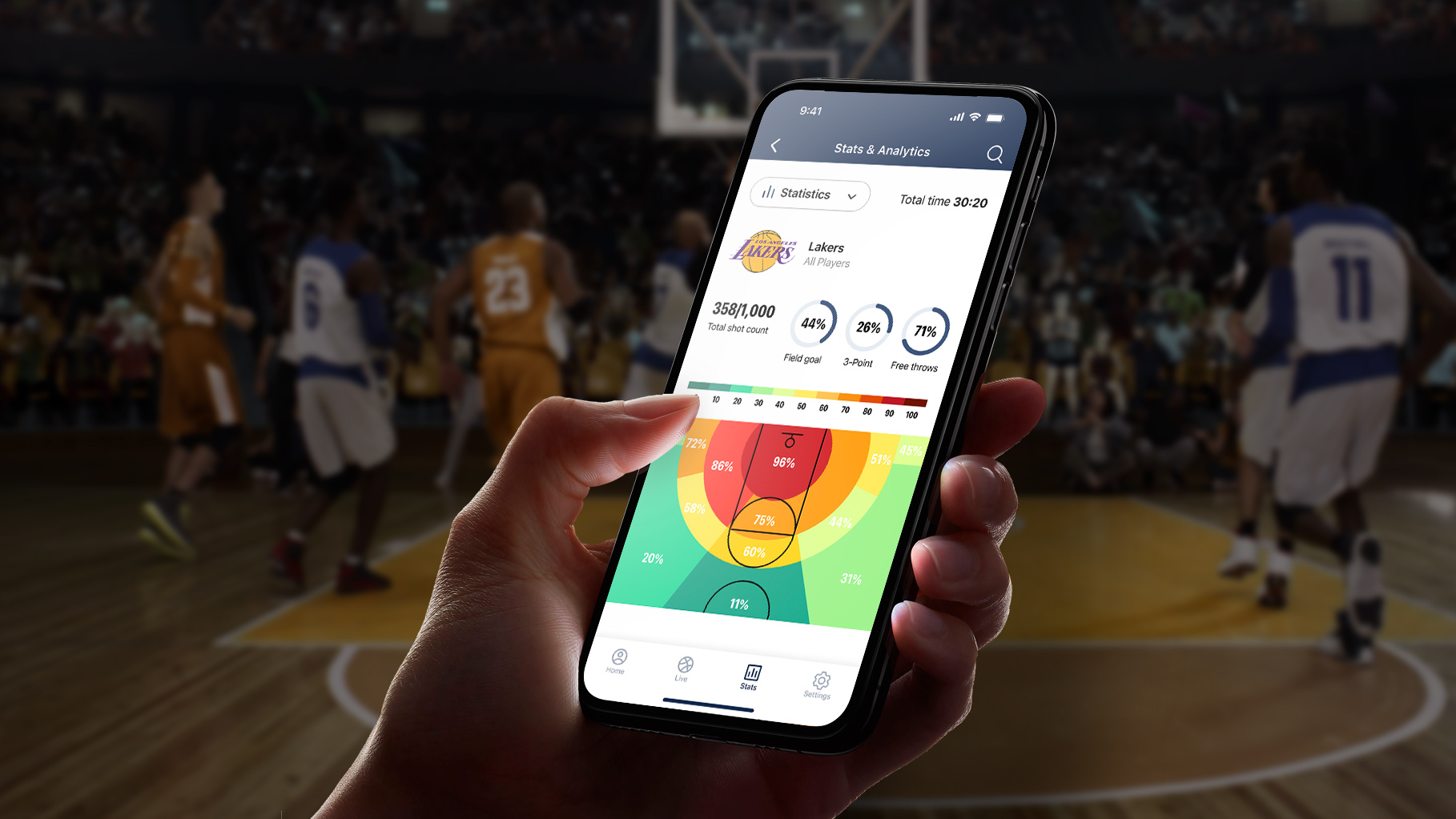
Discover how we helped a US sports tech company bring fans courtside with a mobile AI-powered basketball tracking app, delivering real-time player stats and immersive game insights — all in just 2 months.
Subscription-only is fading. Free advertising-supported streaming television (FAST) is reshaping sports broadcasting and how fans experience live events. Platforms like Plex, Freevee, and Pluto TV now offer hundreds of channels, while major events, including the Super Bowl, are reaching millions of new viewers.
Recently, Tubi streamed the Super Bowl to 13.6 million new viewers, bringing the total audience to 127.7 million — a 3.2% increase from the previous year4. Today, success in FAST isn’t just about reaching more people.
When platforms use AI-powered recommendations and smart ad placement, ads stop feeling like interruptions and start feeling useful. Fans stay engaged, enjoy the experience more, and keep coming back, showing that FAST isn’t just changing how we watch sports, it’s changing how we experience them.
FAST services are reshaping TV advertising in the same way, but challenges like ad frequency, targeting, and measurement call for smarter solutions.
Imagine a streaming platform noticing a sudden spike in interest in women’s soccer highlights. To respond quickly, platforms rely on iterative data warehousing powered by big data analysis. Step by step, platform owners build and expand a centralized data lake to track viewer behavior, analyze trends, and adjust content or marketing strategies on the fly.
These centralized data lakes provide a single source of truth, supporting:
This trend is all about staying flexible. Streaming services can uncover insights, optimize programming, boost retention, and improve cross-department collaboration — all while keeping user data safe and respecting privacy rules.
Sports fans aren’t all the same. From Gen Z scrolling between apps to seasoned fans craving a deeper connection with their favorite teams, keeping everyone engaged is a real challenge. That’s why platforms are stepping up with features that make fans feel part of the action.
Think real-time analytics: AI tracks every game moment and lets fans tap on players to see stats or personalized highlights. Co-viewing rooms let friends and strangers sync streams, chat live, and share reactions. Fans can even predict scores, place bets, and compete in challenges, while shopping via QR codes turns every highlight into an interactive experience.
This isn’t just flashy tech. It’s a trend because modern viewers expect more than passive watching. Platforms that bring fans closer to the game, each other, and the action keep them coming back, no matter the generation.
Streaming isn’t just about watching games, it’s about interacting with them, even shopping in real time. Imagine tuning into a live basketball match and instantly buying the jersey of your favorite player with a tap, without missing a single play.
Social e-commerce, or live commerce, is turning passive fans into active buyers. On Connected TV (CTV), QR codes in ads let viewers use a second screen to complete purchases seamlessly. Fans can grab team merchandise, sports gear, or even event tickets while the game is still unfolding. Some notable examples include:
This trend lets fans act on their excitement. They can shop, vote, predict, and interact live, turning every game moment into action and giving platforms fresh ways to engage and earn.

Alexey Zaberezhniy shows how to make it happen — from AI-powered highlights and interactive polls to second-screen features and real-time stats.
The greatest benefit of live sports streaming is its reach. Fans can experience every goal, save, and highlight from anywhere, share moments with friends, and post on social media, becoming ambassadors for their club. AI bridges this connection, personalizing highlights and insights to make every fan feel part of the action.
The international study, conducted by Morning Consult5, gathered insights from more than 18,000 sports fans across 10 countries. It explored how they watch and engage with sports — from live coverage to highlights and recaps, as well as their preferences for the future. Key study conclusions included the following:
The findings show a clear shift: fans want digital-first and time-saving sports experiences. Many welcome AI as a way to enhance how they consume content.
| Age group | Viewing and engagement habits | Use of GenAI |
| 18–29 | Least likely to call themselves avid fans; rely on social media summaries; often watch alone | 55% use regularly/occasionally |
| 30–44 | Likely to stream sports at home with others; listen to summaries weekly | 42% use regularly/occasionally |
| 45–54 | Most likely to watch/listen to live events weekly+; combine linear and digital | 35% use regularly/occasionally |
| 55+ | Prefer linear TV at home; more traditional viewing patterns | 25% use regularly/occasionally |
Looking ahead to the second half of the 2020s, AI is set to keep transforming sports streaming. Fans can follow multiple live games on a single screen with AI-powered multi-channel streaming, tracking different teams, leagues, or key plays without missing a moment.
At the same time, streaming platforms are elevating women’s sports, with leagues like the WNBA and NWSL reaching wider audiences and connecting fans to athletes’ stories. AI makes this possible, delivering immersive experiences and helping the future of sports become more inclusive, diverse, and engaging for everyone.
Want to turn insights into action? Take your sports broadcasting to the next level with AI-driven solutions that power live streams. Achieve better viewer engagement, stronger monetization, and improved personalization.
Watching your favorite team score a last-minute goal or witnessing a game-winning save live is thrilling – but behind the scenes, a lot is going on to keep that experience safe and seamless. Breaches can compromise viewer privacy, leak sensitive content, and even damage reputation.
So, how can streaming platforms let fans cheer freely without worrying about hackers or unauthorized access? The answer lies in a smart, layered approach in compliance with GDPR and other regulations.

Oxagile’s security experts recommend building a comprehensive security infrastructure that includes:
A solid multi-DRM system protects your stream from unauthorized downloads and screen recordings, while encryption keeps the video safe as it travels across servers and devices. Together, they ensure your content is only accessible to legitimate viewers (no matter the device or platform) and allow for regional restrictions to comply with licensing rules.
With this approach, content owners can ensure that only legitimate viewers access the stream, prevent piracy across devices, and enforce regional licensing rules.
Time-limited URLs for subscribers prevent unauthorized sharing, and geo-IP restrictions block access from regions where the stream isn’t licensed. For repeat offenders, IP blacklisting adds another layer of protection.
These methods help platforms stop unauthorized viewers from accessing content and reduce revenue loss from illegal streams.
Live sports events attract unpredictable spikes in viewers. Streaming via distributed content delivery networks prevents server overload, protects against coordinated attacks, and keeps latency minimal. Combined with multi-DRM and device optimization, it ensures fans get uninterrupted access across mobile, desktop, and TV screens.
With this approach, fans enjoy uninterrupted access to live streams, while platforms can reliably handle millions of concurrent viewers across mobile, desktop, and TV screens.

Discover how we helped a top entertainment company launch web and Xbox streaming apps with seamless, secure playback, AI-powered personalization, and smooth support for millions of concurrent viewers across all devices.
With more fans online, better technology, and smartphones in every pocket, sports streaming has become the go-to way to catch the action anytime, anywhere.
AI-powered stream processing turns mountains of data into instant highlights, personalized experiences, and safe, compliant content. Combined with advanced scheduling, versatile playout modes, and smooth content syndication, platforms can mix live, linear, and VoD content, reach fans across devices, and maximize ROI.
AI-powered highlights, personalized streams, and seamless multi-device delivery keep fans engaged and maximize ROI.
1. 61% users used Smart TVs, 34% smartphones, and 30% laptops — DE-CIX European Championship survey
2. Fox Sports announced a record 69 matches from the FIFA World Cup 2026 will air live on its broadcast network — Fox
3. The global sports live streaming market is expected to reach about USD 134 billion by 2030 — Kings Research
4. Tubi streamed the 2025 Super Bowl to 13.6 million new viewers with a total 127.7 million audience — Associated Press
5. Insights from more than 18,000 sports fans across 10 countries — Morning Consult

Sports streaming trends focus on interactive, personalized, and multi-device experiences. Fans engage with AI-generated highlights, live polls, co-viewing rooms, in-stream betting, and shoppable merchandise. Platforms that adopt these trends keep viewers engaged and increase retention.
Innovative sports streaming technology improves live games by offering low-latency streams, AI-powered highlights, real-time stats, and interactive features. Fans can watch on multiple devices, participate in polls, shop, and follow key plays instantly, making every game more engaging and immersive.
AI is enhancing sports streaming by automating highlight creation, personalizing content, and enabling interactive features. For instance, AI can generate real-time 3D replays and provide chatbot commentary during live matches, offering fans a more immersive viewing experience.
AI enhances fan engagement by enabling real-time interactions, personalized content, and dynamic features like live polls and instant highlights. This fosters a more interactive and engaging environment for viewers.

