













This website uses cookies to help improve your user experience




We’ve been attending every major conference dedicated to the evolution and expansion of online video for many years now, and we can confidently say that these are the very places where ideas move from “one day” to “soon”. They’re the stages where quiet revolutions happen under the radar, and where you can catch the biggest industry shifts through a new lens.
Netflix, Paramount Global, YouTube Advanced Television+, TikTok, NBCUniversal, Warner Bros. Discovery… we’re sure these names ring a bell. And when hundreds of speakers and participants from these and many other remarkable companies gather, you get events that offer a wealth of forward-thinking strategies for broadcasters, content owners, and distributors, along with clear trends in online video in the coming year.
The conferences we’re talking about, the ones we actively attended, listened, learned, and networked at, include:
So here’s a selection of the key online video trends 2026 will see. We’ve highlighted them to help you understand future potential and guide the steps toward becoming truly “quantum ready”.
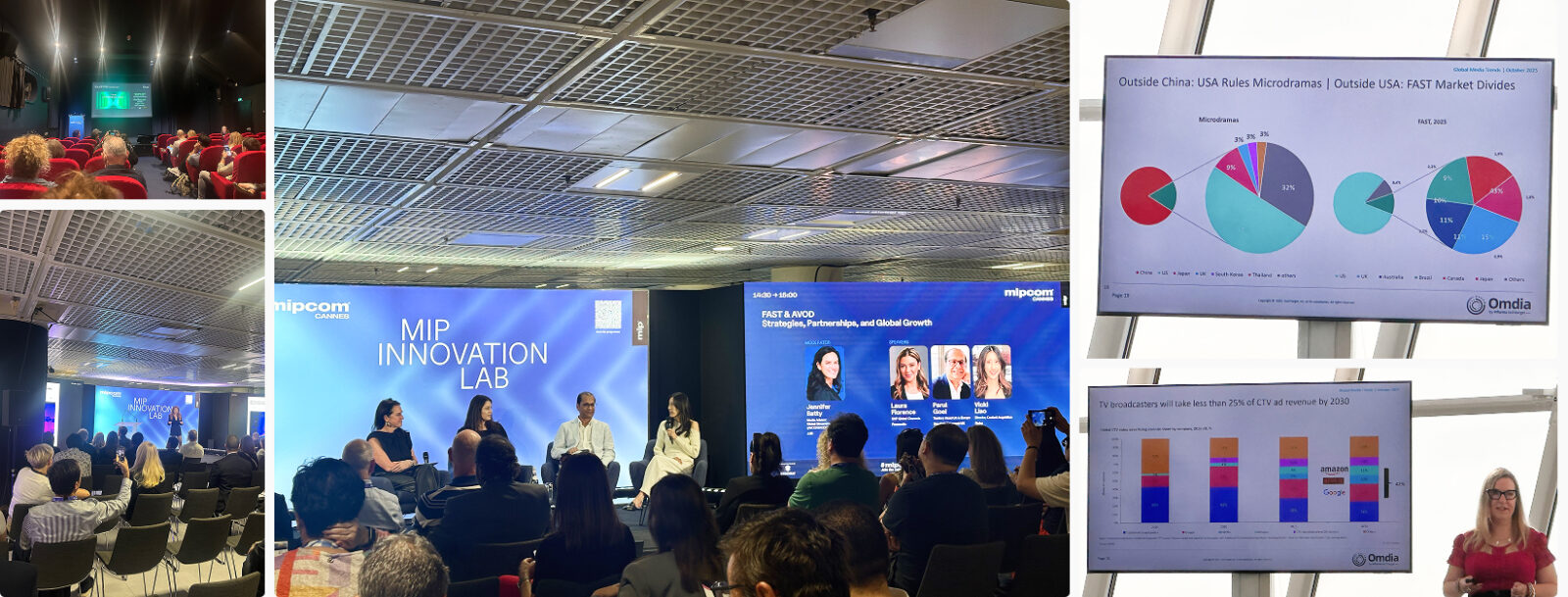
If the streaming world were handing out a crown, Free Ad-Supported Streaming TV (FAST) would be wearing it. Omdia’s latest numbers make that hard to dispute: FAST revenues are projected to reach $12B globally by 2027 after expanding nearly twentyfold between 2019 and 20221. And the momentum isn’t slowing. In Q1 2025 alone, Nielsen’s Gracenote recorded a 14% increase in active FAST channels, which is a 76% jump since 2023, bringing the global count close to 1,8502.
FAST lets content owners revive and monetize the deep corners of their libraries without the financial gravity of full-scale OTT builds. At its core, FAST turns “sleeping” content into revenue. Long-tail catalogs, dusty archives, and niche IP (the kind of titles that rarely make the SVOD spotlight) suddenly become profitable again when repackaged into curated FAST channels. It’s a low-lift, high-return model that lets rights owners extract ongoing value from assets they already own.
A big part of FAST popularity also lies in Server-Side Ad Insertion (SSAI), which is the most used ad architecture within FAST channels. SSAI works by blending ads directly into the content stream in a way that’s much harder for ad blockers to catch. That technical finesse not only protects ad revenue but helps maintain smooth viewer experience, which is a win-win for video platforms.
Then comes the analytics layer of SSAI where FAST gets truly tactical. Real-time SSAI diagnostics, ad engagement metrics, and drop-off tracking down to the quarter-second give platforms the ability to optimize on the fly. Underperforming creatives can be paused instantly, while high-engagement formats can be doubled down.
Many mid-size video organizations see it as a lightweight, cost-efficient alternative to building out full OTT infrastructures or relying solely on subscriptions. You can launch a FAST channel with a leaner team, a leaner budget, and a much faster time-to-market, which is precisely why adoption continues to climb.
As FAST channels multiply, the industry is rapidly moving away from traditional linear playout. Manifest-based playout is becoming the standard for FAST and personalized feeds. Assembling fully linearized streams for every variant is expensive, rigid, and nearly impossible to scale when you have hundreds of channels in rotation. Manifest-level assembly, on the other hand, allows platforms to dynamically combine content segments, ad pods, and language tracks with far less infrastructure.
This shift unlocks personalization, regional customization, rapid A/B testing, and ultra-light operational overhead — all crucial for FAST ecosystems that thrive on agility.
The modern TV universe is no longer a simple broadcaster-versus-broadcaster showdown. Today, traditional broadcasters, SVOD, AVOD, FAST operators, and global streaming platforms all compete side-by-side. Smart TV OS providers now decide visibility, ranking, and promotion based on global, not local, performance metrics, which is among the noticeable online video marketing trends.
With over 117 million U.S. households owning at least one internet-connected TV device3, the viewer journey increasingly begins in digital environments curated by device manufacturers. This has triggered a quiet turf war among Smart TV makers who are rushing to control the first touchpoint of the viewing experience.
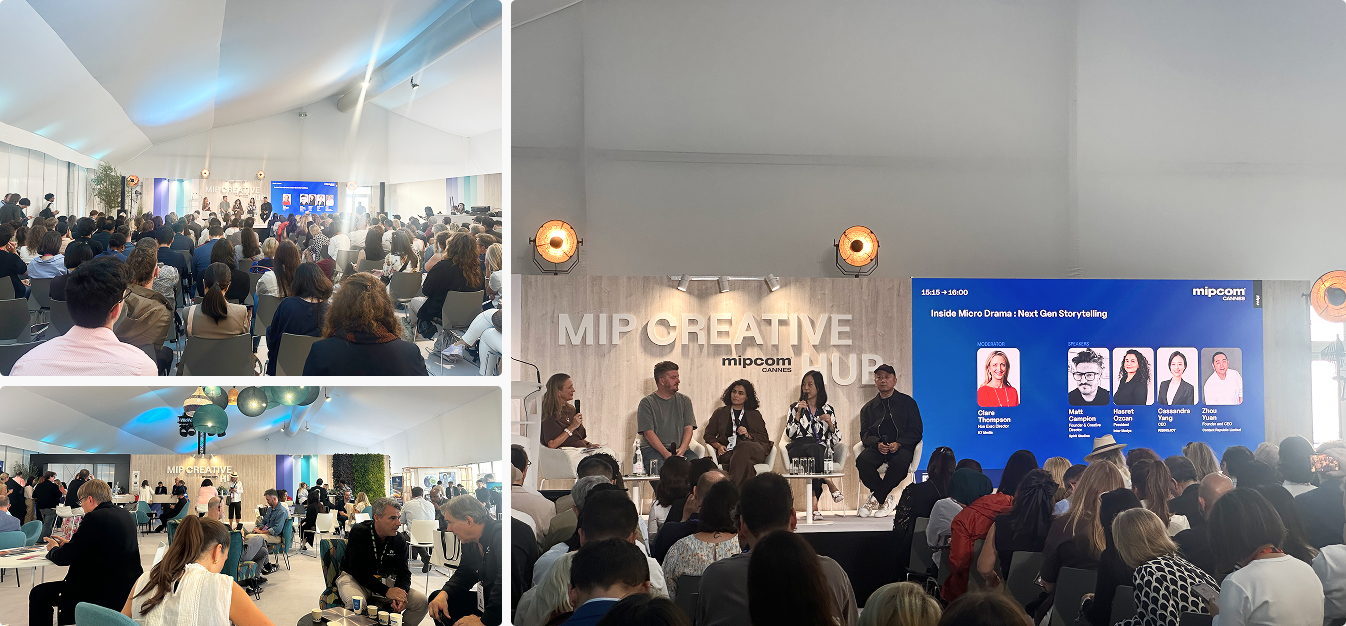
Microdramas have quietly morphed into the most profitable new fiction format on the planet. By the end of 2025, Omdia expects this mobile-native storytelling universe to generate $11 billion in revenue, already eclipsing the entire FAST market ($5.7 billion) despite FAST’s decade-long head start. Even more astonishing is the economics behind it: in some markets, platforms charge $20 per week, meaning certain users are effectively paying $80 a month just to keep scrolling through 90-second cliffhangers4. To compare, Netflix costs only a fraction of that.
What’s behind such financial gravity? A deceptively simple funnel. Viewers get their first 10–30 episodes for free, typically inside TikTok-like apps or dedicated vertical-story players, and by the time the revenge arcs and forbidden romances hit their stride, audiences are emotionally locked in. The moment the “to be continued” flashes for the 31st time, people pay not out of obligation, but out of urgency. It’s the soap-opera model reimagined for the swipe era: binge, pay, repeat.
Besides, many studios are developing versions that feel less like “Reels with a plot” and more like hyper-addictive pocket operettas built for micro-attention spans and macro-revenues.
This meteoric expansion has also sparked the first warnings of a “microdrama bubble”. The economy surrounding it is now three times larger than FAST distribution, and OVPs are scrambling to retrofit their CMS systems for vertical video workflows. Meanwhile, the surge in consumption is feeding into wider debates around scrolling addiction and the need for stronger parental controls on mobile devices.
For broadcasters and content owners, the message is hard to ignore: while the industry was busy arguing over whether Gen Z still cares about traditional 42-minute episodes, an entirely new scripted economy was taking shape: one built on 90-second plot bombs, instant monetization, and fans who are willing to pay for an entire season in a single, sleepless night.
Across StreamTV and IBC 2025 sessions, the message was unanimous: today’s users, especially Gen Z and Alpha, no longer tolerate passive viewing. They demand content that morphs to their mood, lets them pick camera angles, overlays real-time stats, or even steers the storyline through second-screen votes.
Sports streaming is the sharpest edge of this blade: fans now expect sub-5-second latency so they can react on social before the neighbor’s TV catches up, synchronized “watch-together” feeds so friends stay frame-perfect, and multi-angle or personalized commentary tracks that turn a single match into dozens of bespoke experiences.
Metadata has transformed from static labels into living, AI-infused behavioral signals — capturing tone, energy, and social buzz in real time. Layer in edge-driven manifest tweaks, in-player ad integration, and interactive second-screen commerce, and the feed begins to feel more like the Sorting Hat from Hogwarts, quietly knowing where each viewer belongs.

We’ve been putting them to work across our projects long before they became conference headliners, and we’re ready to show you how they can work for you too.
At recent global sports events, AI-driven systems now track athletes, calculate trajectories, and generate augmented graphics in real time, often sub-second, without human intervention. Algorithms originally developed for autonomous vehicles are applied to live feeds, detecting lanes, predicting motion, and overlaying broadcast-ready visuals instantly. What once required dozens of operators and hours of calibration now runs on a single server rack at the venue.
Edge computing and on-device AI have made real-time player tracking, speed and distance calculation, and contextual overlays standard. Even in unpredictable outdoor sports, computer vision pipelines detect participants, estimate 3D poses, and render AR elements automatically.
In short, predictive analytics, real-time AI graphics, and edge-powered infrastructure are the table stakes for modern live broadcasting. Teams that integrated these systems early are defining new standards. Those that lag behind face mounting pressure to catch up.
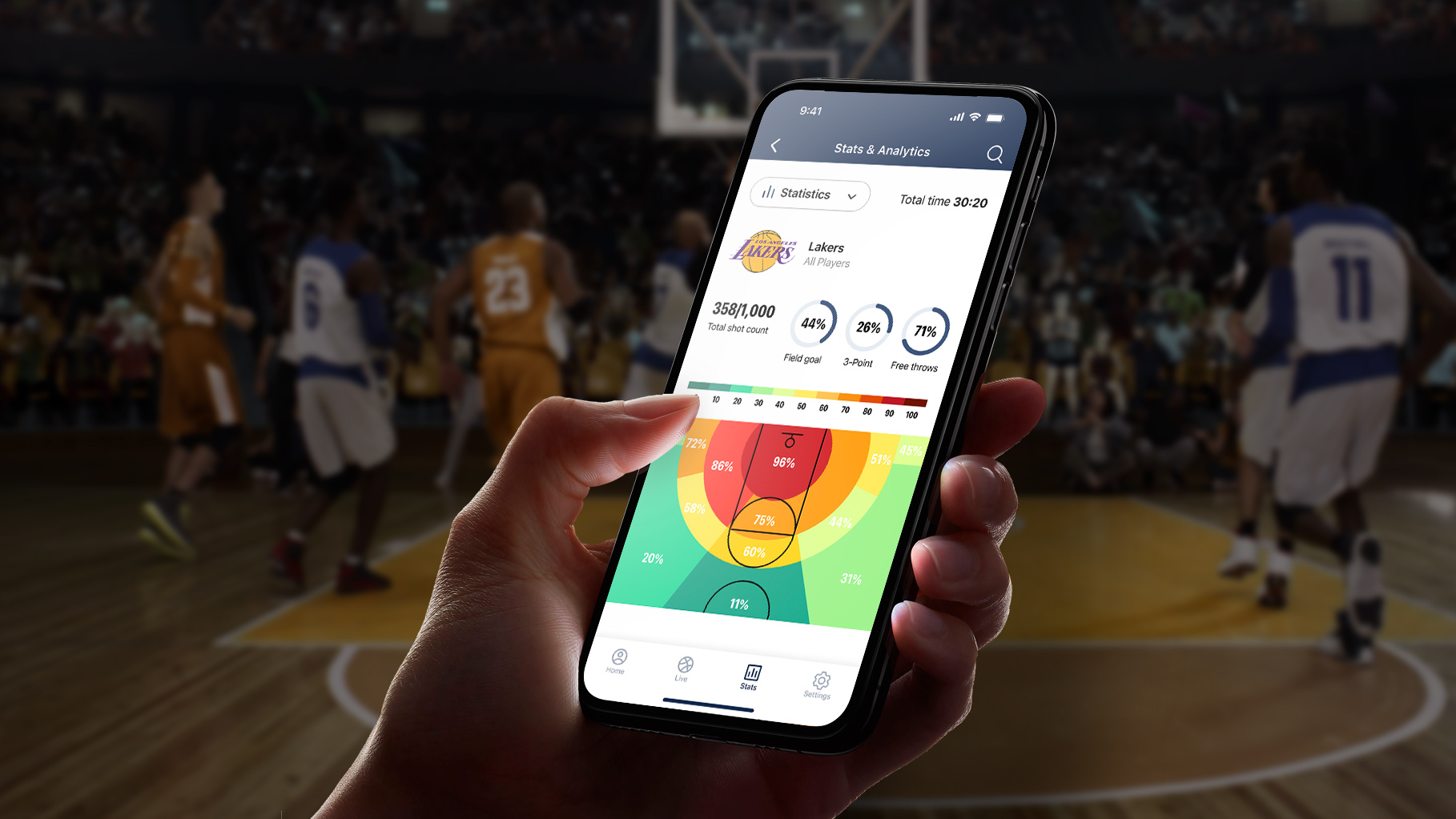
The client’s question:
Oxagile’s answer:
Why it matters:
Instant, automated court intelligence gives fans a new layer of immersion and lets coaches make decisions based on real data, not delayed manual notes.
The industry’s march toward all-cloud infrastructures has tripped over reality’s curb. The message from the conferences was blunt: the “pure cloud” vision has collided with the hard limits of skyrocketing GPU costs and punishing egress fees. Even major media giants have felt the sting.
A new architectural equilibrium is taking hold, one built around hybrid deployments: public cloud for elasticity, spikes, and rapid experimentation, while high-performance on-prem or co-location hardware handles the predictable heavy lifting of linear playout, transcoding, and archival workflows.
Broadcasters and post-production teams are doubling down on ultra-fast local storage to support 8K and 12K finishing without latency bottlenecks. Meanwhile, cloud remains indispensable for live events, real-time collaboration, and increasingly AI-driven tasks.
The next gold rush in streaming isn’t bandwidth or storage — it’s context. Not the old-school metadata that’s been gathering dust in CMS fields since 2008, like genre, cast, year, but living, vibe-level intelligence that Gen Z and Gen Alpha actually respond to.
Discovery today hinges on mood, energy, aesthetic, and cultural momentum — the difference between “Drama” and “moody chaotic pastel heartbreak with a morally dubious lead” can determine whether a title sinks or goes viral.
At IBC and StreamTV, a few companies showcased AI engines tagging content frame-by-frame, cross-referencing visual cues with external signals like TikTok trends, soundtrack popularity, or fan-generated chatter. This same enriched metadata is already powering hyper-contextual shoppable moments, second-screen commerce, and ad overlays that actually feel relevant rather than intrusive.
By 2025, AI assistants have moved from experimental add-ons to core operational brains in media asset management (MAM) systems, transforming static archives into dynamic, queryable content engines. Recent developments show how rapidly this momentum is building.
AI-driven metadata enrichment now turns hours of manual tagging into seconds of frame-level analysis, capturing mood, objects, and context. This enables faster content localization, smarter monetization, and significantly shorter discovery times. Natural-language search capabilities, for example, queries like “1990s Paris street cafés music clips with romantic feel”, can reduce post-production and newsroom search time by up to 80%.
Legacy archives are also evolving. AI integration allows existing storage systems, from tape to NAS, to connect directly to cloud-based AI engines without migration. The result: real-time transcription, face recognition, and intelligent tagging become standard in daily archiving workflows across major media operations.
The trends in online video we’ve highlighted here are the current peaks and signals that dominate discussions and shape the contours of streaming, content creation, and audience engagement. FAST channels surge like rivers carving new valleys, microdramas condense entire narrative universes into pocket-sized gravity wells, and AI orchestrates real-time intelligence that once required armies of operators. Metadata now reads the language of mood and momentum, while predictive analytics and edge computing spin invisible webs behind every live broadcast.
These are the most prominent currents that move the industry forward.
But beneath these marquee online video trends, countless subtler currents are already shaping workflows, storytelling, and viewer experiences in ways that rarely make the headlines.
Explore further trends and insights with our experts and unlock the strategic but often hidden angles that can turn trends that lie just beyond the obvious.
1. New Omdia data reveals global FAST channel revenues will reach $12bn in 2027 — Omdia
2. FAST momentum continues with global channel count growing nearly 14% year-to-date — Gracenote
3. Number of connected TV households in the United States from 2019 to 2027 — Statista
4. Microdramas to generate $11 billion in global revenues in 2025 — Omdia

FAST channel expansion, the explosive rise of microdramas, mood-driven metadata, hybrid cloud architectures, and AI-powered real-time enhancements in sports broadcasting are shaping the year ahead.
FAST combines low operational overhead with strong monetization. It revives long-tail libraries, leverages SSAI for stable ad revenue, and scales efficiently through manifest-based playout. This model makes older or niche content profitable again without building full OTT infrastructure.
Gen Z and Gen Alpha expect responsive, personalized experiences: multi-angle viewing, mood-based content recommendations, synchronized watch-together features, and sub-5-second latency for sports. Passive consumption is no longer acceptable for these demographics.
Shoppable videos, creator collaborations, adaptive ad formats, and data-driven personalization are becoming standard tools for boosting reach and conversion in digital campaigns.
Investments will shift toward AI-powered tools, interactive content production, and analytics platforms. While these require upfront spending, they open new revenue pathways and improve campaign efficiency.
Adopting scalable FAST workflows, preparing for vertical video pipelines, integrating AI metadata systems, optimizing for Smart TV OS ecosystems, and adopting hybrid infrastructure models position organizations to benefit from upcoming shifts rather than play catch-up.

