













This website uses cookies to help improve your user experience


One of the first things clients tell us when they come to Oxagile with an OTT project is that they already have a number in mind. Sometimes it comes from a competitor’s quote, sometimes from an internal estimate, sometimes from an article like this one. And almost every time, that number was built around a feature list rather than the decisions that actually determine cost: how many platforms, what kind of streaming, how the backend is structured, what content protection the platform requires.
Two products with identical feature lists can sit in completely different budget tiers depending on whether one needs to run on six platforms and deliver ultra-low-latency live, or the other just needs VoD on web and mobile. The feature list doesn’t capture that difference. The structural decisions do.
A rough sense of scale:
What this article covers is what actually moves a project from one of those tiers to another, and why.
Key takeaways
To a typical viewer, an OTT app is a screen with a play button. Behind that screen is a different story — depending on what the platform needs to do, it can span several distinct engineering layers:

How much of this stack a project needs, and how many platforms it runs on simultaneously, is the actual scope question, and it has to be answered before a feature list means anything.
Your audience already watches across multiple surfaces: the phone, the laptop, the TV. Each one your product needs to support adds meaningful engineering cost at launch and again with every subsequent release.
Smart TV is the area most frequently underestimated. Samsung Tizen, LG webOS, Android TV, Apple TV (tvOS), Roku’s BrightScript/SceneGraph model, and Amazon Fire TV are not interchangeable. They have different SDKs, different memory constraints, different interaction models (remote-first, not touch-first), and different certification processes.
An app that works on Android TV does not automatically work on Tizen. The video player architecture that performs well on webOS may need to be rebuilt for Roku. Each environment requires its own testing matrix and submission pipeline.
| Platform | What makes it distinct |
| Web (responsive) | Baseline — usually the development starting point |
| iOS + Android | Separate mobile SDKs, independent review processes |
| Android TV | Remote-first UI, different from mobile Android |
| Samsung Tizen | Proprietary SDK, strict certification, tight memory limits |
| LG webOS | Similar depth to Tizen, different runtime |
| Apple TV (tvOS) | Focus engine, FairPlay required, Siri Remote model |
| Roku | BrightScript/SceneGraph, most distinct development model |
| Fire TV | Android TV base, separate certification layer |
Platform count affects more than just the initial custom OTT app development cost, it accumulates most visibly in maintenance. Every environment you ship on requires ongoing engineering attention as SDKs evolve, OS versions deprecate APIs, and certification requirements shift. Every platform you add stays on the list permanently, meaning each release, each SDK update, each certification cycle touches all of them.
Most projects start on web, iOS, and Android, as the audience is concentrated there. Smart TV follows once the core product is validated, usually Android TV first, then the proprietary environments. Keeping that expansion affordable comes down to a shared codebase: core logic written once, adapted per environment.
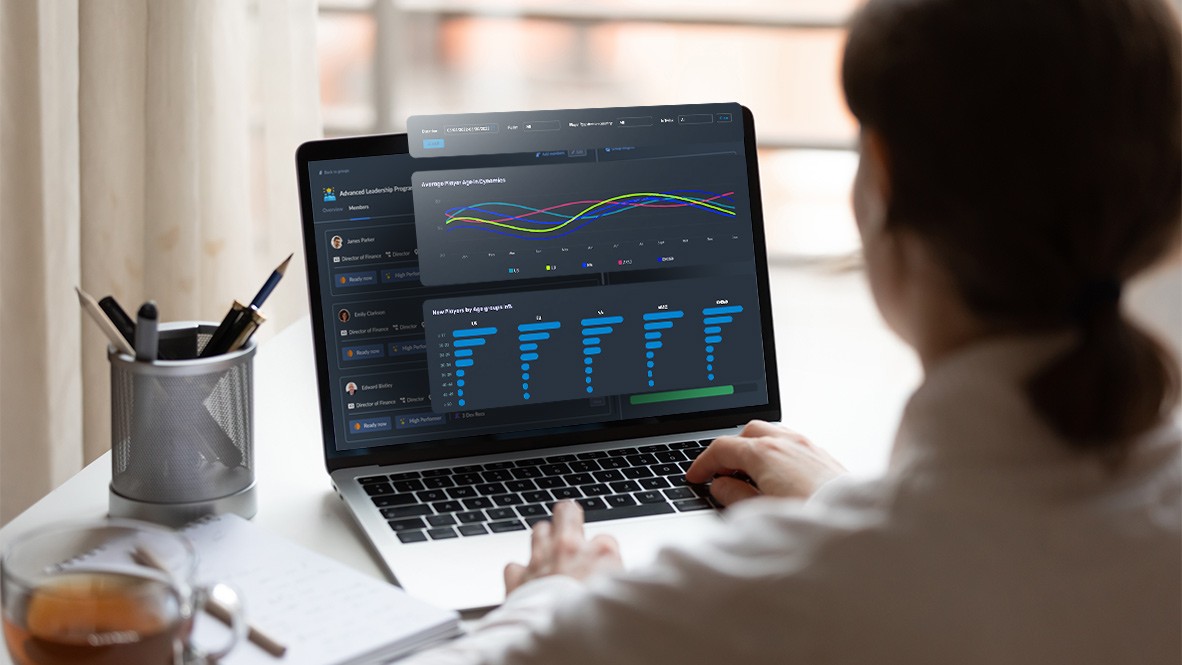
A media company came to us needing full OTT coverage: web, iOS, Android, and Smart TV, without the cost and timeline that typically comes with building four separate products. The challenge wasn’t just the number of platforms, but the expectation that all of them would launch together, not in sequence.
The solution was a shared-codebase architecture where core logic (authentication, content delivery, playback, monetization) was written once and adapted per environment. Smart TV-specific UI, remote navigation patterns, and platform certification requirements were handled at the surface layer, without rebuilding the foundation each time.
The result was an enterprise-grade product shipped across all four platforms on a single timeline, with a development footprint closer to two platforms than four.
Streaming type is probably the decision with the most direct line to cost, and the one most underestimated before a project starts.
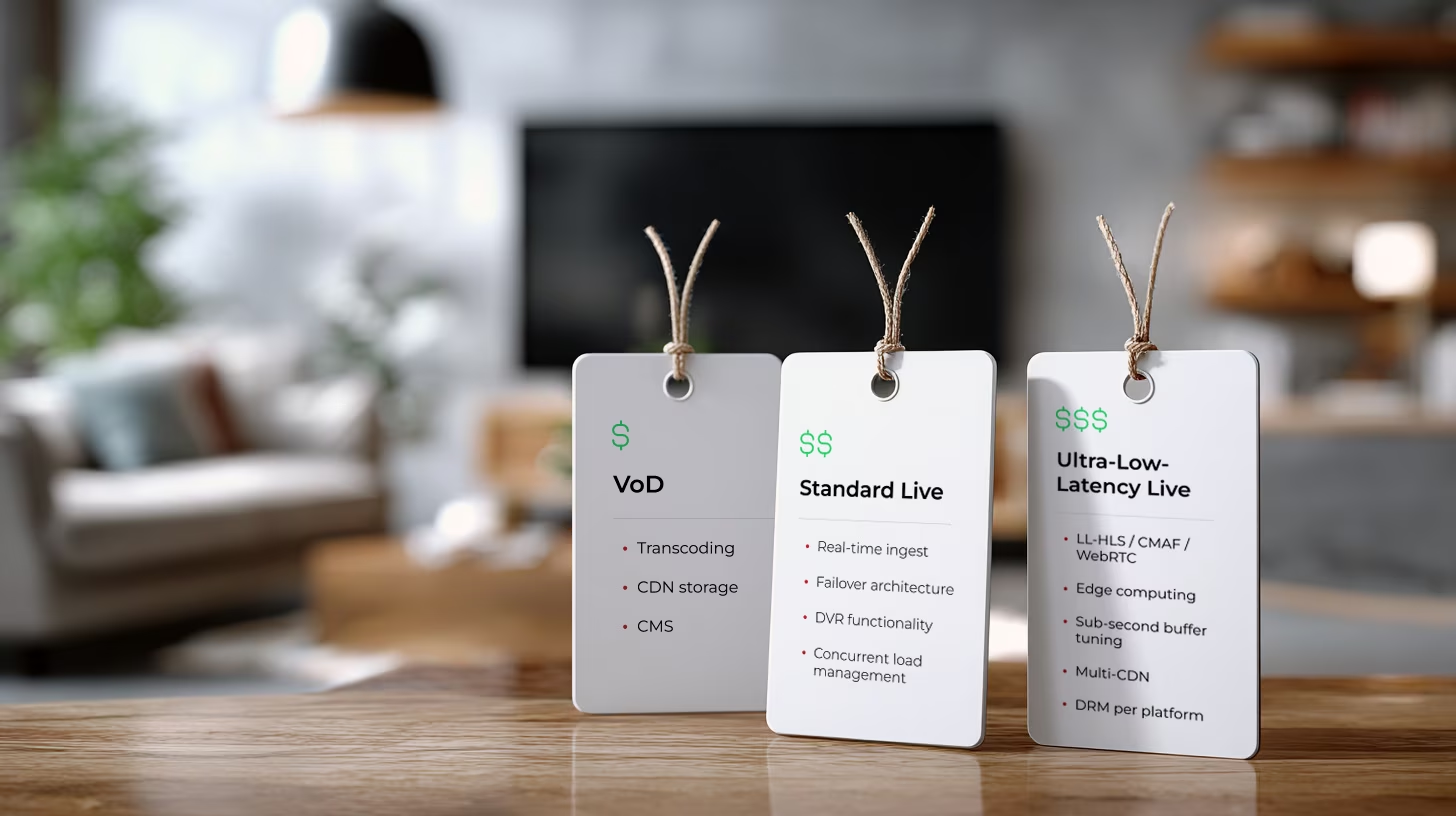
Content exists before delivery begins. It gets transcoded in advance, stored, cached across CDN edge nodes, and served on request. The infrastructure is predictable. Load grows gradually with the catalog and the audience, and there’s room to plan for it.
Nothing is pre-cached. Content is ingested, encoded, packaged, and delivered in real time — all at once, continuously. DVR functionality, failover architecture, and concurrent viewer load management go from optional to mandatory.
When something goes wrong, it goes wrong in front of everyone watching at that moment, with no retry available. Infrastructure also has to scale up fast around broadcast events and drop back down afterward, which means it has to be designed for that from the start, not patched in later, directly influencing the live streaming app development cost.
This is a different engineering challenge entirely, not a faster version of standard live. Standard live already runs 20–45 seconds behind real-time, just enough buffer to absorb network hiccups and CDN propagation without viewers noticing.
Getting under two seconds means specialized packaging formats (LL-HLS, CMAF chunked transfer, WebRTC for interactive use cases), edge computing decisions, and player buffer tuning that creates hard constraints across the entire delivery stack. For sports, live auctions, or anything where viewers are simultaneously watching on regular TV, that latency gap costs you audience. We’ve covered the full engineering picture here.
Both infrastructure patterns run concurrently, with unified user context, search, and content discovery across content types. One of the more demanding builds we’ve delivered in this space was a simulcasting solution handling live and archived streams in parallel under significant time pressure.
The budget distance between a VoD MVP and a hybrid platform with ultra-low-latency live is roughly the distance between the first and last rows of the scenarios table later in this article.
The OTT monetization model you choose impacts OTT ROI and has a direct implementation cost attached to it, and the gap between the simplest and most complex is larger than most people expect going in.
Subscription is the most common model and the most straightforward to build. Payment gateway, subscription management, entitlement logic, trial periods. It gets more complex with multiple tiers, regional pricing, and promotional mechanics, but as a baseline, it’s manageable at almost any budget level.
Ad-supported requires an ad server integration, ad decision logic, and VAST/VPAID compliance. Most production implementations also use server-side ad insertion (SSAI) — ads stitched into the video manifest at the server as opposed to client-side ad insertion (CSAI).
More expensive to build than client-side insertion, but it sidesteps ad blockers, delivers a cleaner viewer experience, and gives advertisers reliable measurement. For platforms relying on ad revenue, SSAI is usually the right call.
Transactional (pay-per-view, rentals, individual purchases) sits on top of whatever else you’re running. Each title needs its own purchase flow, expiry logic, and receipt handling. It layers well with SVOD for premium content windows, but it’s a separate surface with its own UI and backend requirements.
Most platforms are moving toward a combination of subscription, ad-supported, and transactional access — different rules for different users, different content. Of the four models, hybrid carries the highest implementation cost.
The entitlement logic alone, which determines what a given user can access based on their subscription tier, ad-consent state, and any individual purchases, runs through nearly every service in the backend, and it’s the kind of thing that becomes very expensive to untangle if the architecture isn’t right from the start.
Architecting for the monetization model before development starts is what actually keeps the cost in check.

If you’re looking to create your own OTT platform and want to get the structural decisions right before a line of code is written, our OTT app development team is happy to think through it with you.
How the backend is structured shapes what the product can do at launch and how much it costs to change anything six months later.
A monolithic backend with authentication, catalog, recommendations, billing, and analytics sharing one codebase is faster and cheaper at MVP scale. Microservices cost more upfront. Each function is a separately deployable unit, which means you can scale individual components, update one part without touching the rest, and contain failures before they spread.
For a platform expecting real growth, that flexibility is worth paying for early. For a genuine MVP testing a concept, a well-structured monolith with a clear migration path is often the more practical starting point.
Building on managed services from AWS, GCP, or Azure for transcoding, storage, delivery, and compute is particularly well-suited to OTT’s traffic patterns. Viewership spikes around live events and drops off just as fast, and cloud-native infrastructure scales with that rhythm without requiring you to overprovision for peak load or scramble when a broadcast unexpectedly draws twice the expected audience.
Relevant only when the platform hosts content for multiple brands or operators under one codebase. It adds data isolation requirements, per-tenant access control, and customization logic, so it’s the right call for certain business models, but unnecessary overhead for most others.
Consistently underscoped in early conversations. A lightweight CMS works fine for two hundred titles. At ten thousand (with geo-restriction rules, scheduled availability windows, complex metadata schemas, and multi-language support), it stops working, and rebuilding it mid-operation is disruptive. The distance between good enough to launch and good enough to actually run the platform is usually larger than it looks from the outside.
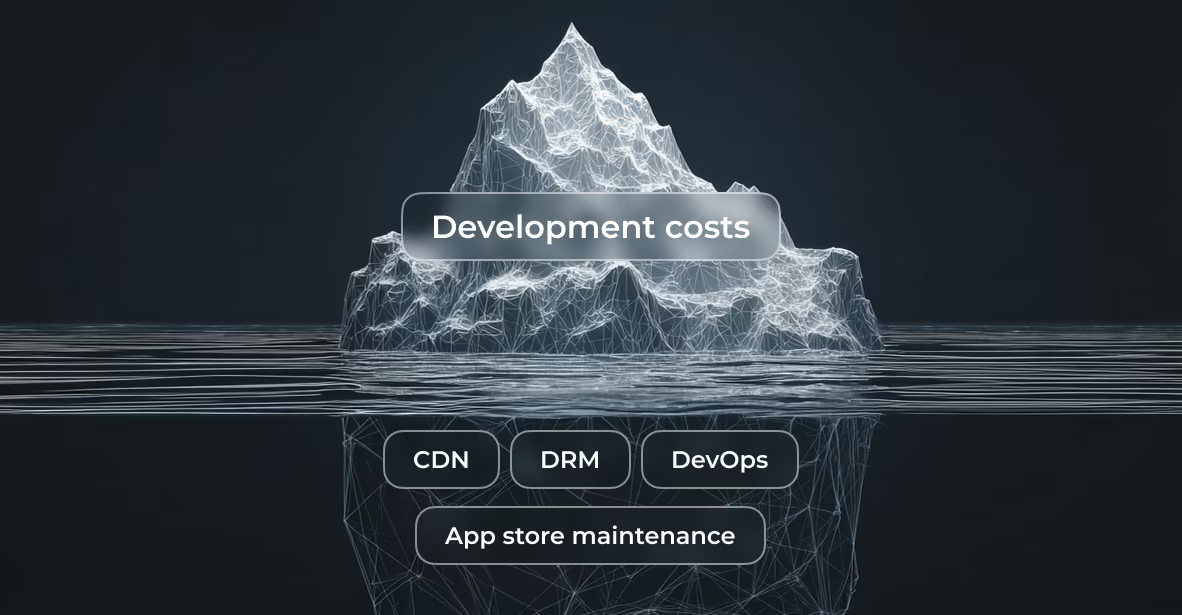
Think of it like moving into a new apartment. The rent is the number you planned for. What you didn’t fully account for: utilities, internet, parking, the annual boiler service. None of it was hidden, it just didn’t feel urgent when you were signing the lease.
OTT platforms work the same way. The build cost is the rent. Here’s what tends to arrive afterward.
At low traffic they barely register. At 50,000 concurrent HD viewers, they’re a real monthly line item, and at serious scale, they can rival the original engineering investment. A multi-CDN strategy for redundancy and geographic performance needs to be part of the architecture conversation early, not something you revisit after the first traffic spike.
Widevine, FairPlay, PlayReady — which combination depends on your platform coverage. All are required for licensed content. All carry recurring costs billed per stream or per device. Licensing terms vary significantly between vendors, and it’s worth understanding them before you’ve committed to an architecture that constrains your options.
CI/CD pipelines, alerting, automated testing, and incident response tooling. Teams that skip these at launch don’t avoid the cost, they pay it in engineer hours, production incidents, and late-night fire drills instead. We’ve seen both versions. The planned version is cheaper.
Every platform you ship on needs engineering attention as SDKs update, OS versions shift, and certification requirements change. For two platforms, it’s manageable. For six, it’s a recurring commitment that belongs in any honest budget conversation.
Across a typical OTT product, these costs run 20–35% of the initial build annually. Budget for them upfront or discover them the hard way, but either way, they’re coming.
| Scenario | What it covers | Approximate budget |
| MVP | 1-2 platforms, VoD, basic CMS, SVOD billing, standard DRM | $60,000–$120,000 |
| Growth-ready | 3-4 platforms, including Smart TV, live or hybrid streaming, AVOD or hybrid monetization, scalable cloud-native backend | $120,000–$300,000 |
| Enterprise-grade | 6+ platforms, ultra-low-latency live, microservices architecture, full DRM stack, multi-tenant support, advanced analytics | $300,000–$800,000+ |
These ranges follow from the decisions covered above. Platform count and streaming type alone can move a project from the first row to the last.
Resist the instinct to launch on every platform at once. It feels like the safer bet (broader reach, more coverage), but what you’re actually doing is multiplying your maintenance commitment before you know where your audience lives. Start with two or three surfaces, validate, then expand. The platforms you add in month eight will be better built than the ones you rushed for launch day.
Cut the feature list earlier than feels comfortable. Every OTT product we’ve worked on had features in the original scope that nobody missed after they were cut. The ones that drive retention are usually obvious in retrospect, and much fewer than what accumulates during planning sessions.
Make the infrastructure calls early: CDN strategy, backend architecture, monetization model. These feel abstract in week one, which is exactly why they get deferred. We’ve had clients come to us mid-build needing to rearchitect a live streaming layer because nobody had properly scoped it at the start. That conversation takes two hours. The fix took months.
Over twenty years of OTT projects leaves you with a clear sense of where things go right and where they don’t. The products that come out well, on budget, and performing as expected without a painful rebuild eighteen months later, almost always had one thing in common: the structural decisions were made before anyone started coding. Someone sat down early enough to ask which platforms actually matter for this audience, what kind of streaming the business model really requires, and what the product needs to look like in two years rather than just at launch.
Those conversations tend to be short. But they shape everything that follows, including the architecture, scope, and budget. We’ve seen the difference between projects where that happened and projects where it didn’t, and it’s significant enough that we now treat it as the actual starting point of any engagement.
Tell us where you are in the process. Even a rough brief is enough to start scoping the architecture decisions that will shape the budget.

Custom OTT app development cost ranges from approximately $60,000 for a two-platform VoD MVP to $800,000 or more for an enterprise-grade multi-platform product with live streaming and full content protection. The range is wide because platform count, streaming type, and backend architecture vary that much between projects.
Platform count and streaming type. Each additional platform adds ongoing engineering work that doesn’t go away after launch. Live streaming, particularly ultra-low-latency live, carries significantly higher infrastructure costs than VoD. Backend architecture and monetization complexity are the next major variables.
CDN delivery fees, DRM licensing, app store maintenance, DevOps infrastructure, and feature development typically account for 20-35% of the initial build cost annually.
At launch, yes. White-label solutions are faster to get live and cost less upfront, but they limit UX flexibility, feature ownership, and scalability over time. Custom OTT app development gives full architectural control and the ability to build something genuinely differentiated. Which makes more sense depends on how central the streaming product is to the business.
A focused MVP typically takes four to six months. A full multi-platform build with live streaming and custom content operations usually runs nine to fifteen months.
Hybrid models combining subscription tiers with an ad-supported option are the dominant pattern and tend to produce the strongest revenue across different audience segments. The right model depends on content type, audience behavior, and competitive context, and it should be resolved before architecture begins because it has direct implementation cost implications.

