











This website uses cookies to help improve your user experience
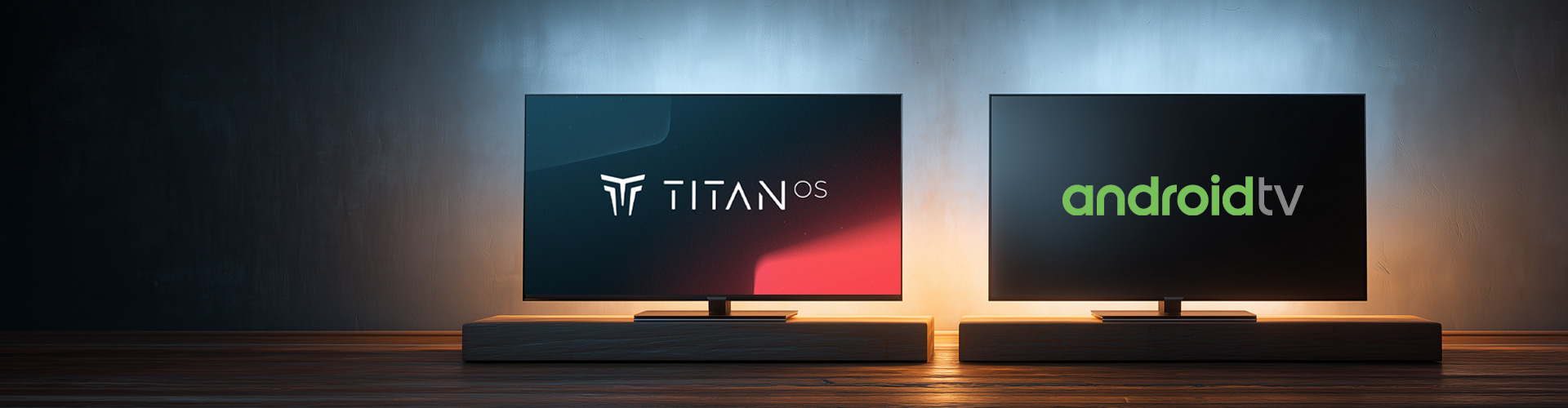

Titan OS is still a newcomer in the TV operating system market, but it has gained momentum so quickly that “Titan vs Android” has become a question raised more and more often. The two platforms approach the living-room experience from different angles: Titan pushes simplicity, FAST integration, and web-based performance, while Android TV leans on massive scale, app diversity, and deep ties to Google services. For companies planning their next move in Smart TV app development, understanding these differences is crucial.
In this guide, we’ll explore where each platform gives you an edge, where it lags, and how to pick the direction that fits your goals.
Key takeaways:
A new player with big ambitions. Don’t let the “newcomer” label mislead you — Titan OS has already proven itself a serious contender. Backed by TP Vision (Philips and AOC TVs) and now expanding through partners like Sony, it entered the Smart TV market with confidence and speed. By 2025, Titan was powering millions of active users across Europe, with Philips alone shipping the OS on the majority of its TVs and additional partnerships extending its reach even further.
It is important to note that Titan is a relatively new OS launched in 2024, but it has already made a strong entry and is successfully competing with long-established Smart TV platforms. In just over a year, it scaled rapidly, proving that it’s not a “pilot project” but a platform shaping the European CTV landscape.
Together, these numbers show Titan’s trajectory: a newcomer that’s scaling at a pace many older platforms can’t match.

When Titan OS arrived, it didn’t try to copy Android or Roku. Instead, it asked a simple question: what do viewers actually want when they turn on their TV? The answer shaped everything.
Viewers wanted something easy — no endless menu-hopping, no clutter, no storage errors. They wanted content first — shows and channels ready to play without downloading yet another app. And they wanted local relevance — programming that speaks to their region alongside the big global hits.
That’s the DNA of Titan OS:
In other words, Titan wasn’t designed to look like an app store on your TV. It was built to feel like television reimagined for streaming.
Titan’s rise is no coincidence, as the platform was designed to solve the pain points that older TV operating systems still struggle with. Its strengths are both technical and strategic, and together they explain why it’s becoming one of the fastest-growing Smart TV platforms in Europe.
Unlike many TV OSs that rely on heavy local app installs, Titan OS runs on a web-based model. Apps don’t need to sit on the TV’s limited memory, which keeps devices performing smoothly and prevents the dreaded “storage full” warning.
This makes an especially noticeable difference on midrange and budget TVs, where every bit of memory counts.
Because Titan isn’t a spin-off from mobile or desktop systems, it doesn’t carry technical debt. It was designed exclusively for connected TVs, which makes it more agile when new formats, content models, or ad technologies emerge.
Older platforms often need workarounds or long update cycles, and Titan OS development helps adapt faster by design.
Titan places Free Ad-Supported Streaming TV at the heart of the experience. FAST channels are featured prominently on the home screen, unified search blends them with broadcast and SVOD results, and remote controls even include dedicated FAST buttons.
This makes free, ad-supported viewing a seamless part of the platform — a direct response to growing consumer demand for no-cost entertainment.

When building an immersive streaming solution for Tizen and webOS, our team focused on smooth navigation, consistent UI/UX, and scalable architecture that could later be extended to other platforms.
With Titan OS and other Smart TV environments already on the client’s roadmap, this forward-looking design ensures faster porting across ecosystems without costly reengineering.
With Titan Ads, monetization isn’t left to apps alone. The OS itself offers premium ad placements like homepage takeovers and immersive in-stream video. Backed by first-party data and strict privacy compliance via OneTrust, Titan Ads has quickly become a go-to for European brands looking for CTV visibility.
Partnerships with sales houses like RTL AdAlliance and Goldbach expand advertiser reach even further.
Titan OS balances scale with regional focus. It’s already standard on Philips TVs (Europe’s third-largest brand), and integration with Sony Android TVs extended its reach even further. At the same time, Titan strikes local deals, such as adding 230+ French channels through Free, ensuring its catalog feels relevant in each market.
It’s this balance that lets Titan OS appeal to both global brands looking for scale and local players seeking tailored engagement.
Beyond viewers, Titan invests in its partner ecosystem. The Partner Portal makes app onboarding and targeting straightforward, and its revenue-sharing model helps TV manufacturers and content providers maximize post-sale earnings.
In other words, Titan OS manages to satisfy audiences while giving OEMs (Original Equipment Manufacturers) and advertisers strong reasons to back the platform.
From its FAST-first home screen to a web-based engine with no legacy baggage, Titan OS is shaking up how Smart TVs work. Dive into the partnerships, tech choices, and monetization models that are turning this “newcomer” into a serious challenger.
The heavyweight of the market. Launched in 2014 and now evolving into Google TV, Android TV powers hundreds of millions of devices worldwide. By 2024, it had already crossed 270 million active devices, making it one of the most widely adopted Smart TV operating systems.
Its strength lies in scale and ecosystem: backed by Google, supported by major manufacturers like Sony, TCL, and Hisense, and enriched with services such as Assistant, Play Store, and Chromecast. For many developers and content providers, Android TV is the natural starting point when planning a streaming strategy.
It helps to see scale, because Android TV / Google TV has been around long enough to accumulate serious reach and infrastructure. These numbers show why it remains a benchmark for many streaming apps, especially when considering Titan vs Android TV.
These figures underline how Android TV delivers reach and opportunity, especially for companies that want global coverage, varied hardware targets, and a mature ecosystem.
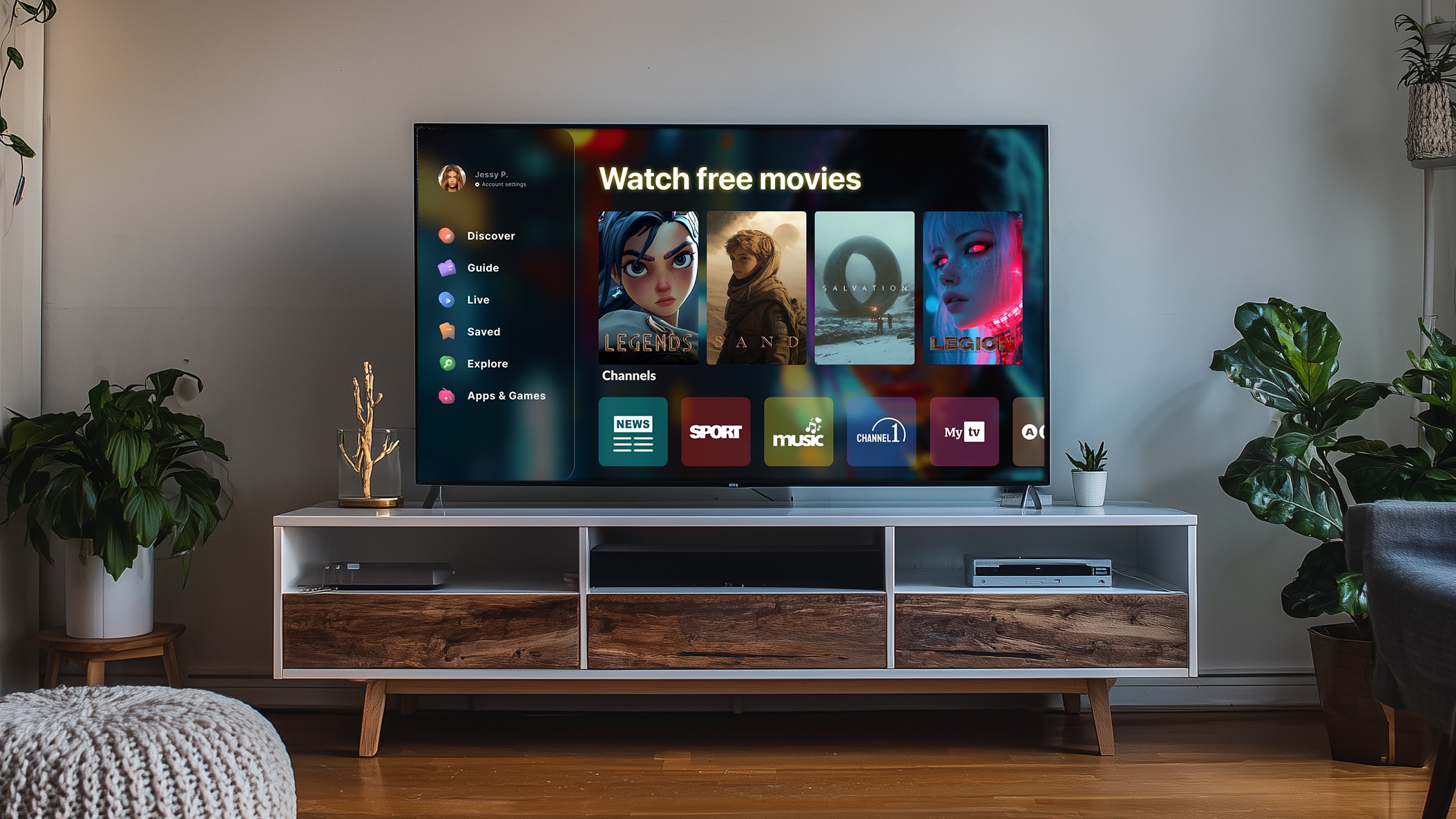
Android TV grew out of Google’s mobile ecosystem and brought that DNA to the big screen. That background shaped its identity: a platform with enormous reach, endless apps, and tight integration with Google’s services.
Over time, Android TV evolved into Google TV on many devices, shifting from a simple launcher into a content-first experience. The design now emphasizes recommendations, personalized rails, and cross-app discovery — a vision similar to what Titan is chasing, but powered by Google’s data and algorithms.
What makes Android TV stand out is the breadth of its ecosystem. From premium Sony OLEDs to budget TCL models and Chromecast dongles, it runs on nearly every type of hardware. And because it shares tooling with Android mobile, developers can build faster, reuse existing skills, and tap into Google Play for distribution.
These figures underline how Android TV app development services deliver reach and opportunity, especially for companies that want global coverage, varied hardware targets, and a mature ecosystem.
For teams looking to get started, this Android TV app development guide by Oxagile’s team offers practical insights that cover real-world challenges and best practices for launching and scaling Smart TV apps.
These are Android TV’s real strengths that make it hard to ignore when comparing Titan vs Android TV:
Deciding whether to build for Titan OS vs Android TV is only part of the picture. If your goal is to reach every living room, you’ll want your app to run seamlessly on Roku, webOS, Tizen, Apple TV, Fire TV, and beyond.
Oxagile’s experts can help with all of that, including designing apps that perform equally well across ecosystems, not just one or two.
When people ask about Titan OS vs Android TV, they usually want more than specs — they want to know how each platform affects their business outcomes. Does it help you reach more users? Does it improve monetization? Will it save development time or increase it?
To make the differences clear, here’s a side-by-side comparison of Titan and Android across the features that matter most, with a focus on what each means in terms of business value.
| Feature | Titan OS | Android TV | Business value |
| Reach and scale | Currently 5M+ active users, concentrated in Europe; rapid growth curve | 270M+ devices globally in 2024, ~300M projected soon | Titan delivers fast traction in Europe, and Android offers global scale from day one |
| Content discovery | Unified search across FAST, broadcast, and SVOD; FAST-first home UI | Google Assistant, Watch Next, personalized rails, app-centric | Titan maximizes FAST/AVOD visibility, Android boosts personalization and cross-app stickiness |
| FAST integration | Native: home screen placement, remote buttons, integrated EPG | Supported through apps and OEM bundles, not OS-level | Titan OS shortens time-to-FAST revenue, and Android requires a custom UX to surface FAST effectively |
| App ecosystem | Growing catalog; web-based delivery keeps TVs light but still young | Thousands of TV-optimized apps via Google Play; mature and diverse | Titan lowers device strain, Android guarantees app breadth and varied use cases |
| Architecture and performance | Web-based, no heavy installs, smoother on midrange/budget TVs | Native APKs with deep APIs; heavier on device storage | Titan OS suits cost-sensitive hardware, Android unlocks advanced features and customization |
| Monetization and ads | Titan Ads with homepage + instream formats; OneTrust CMP for compliance | App-level monetization (Play Billing, GAM, SSAI); Google TV Ads network | Titan provides plug-and-play CTV ads in Europe, and Android gives flexible models, but with more integration work |
| Global vs local | Mix of global catalogs + strong local content (e.g., 230+ French channels) | Global coverage; local relevance handled by apps, not OS | Titan wins where regional depth matters, Android dominates where global reach is key |
| Developer experience | Partner Portal for onboarding + targeting, CTV-first stack | Mature Android dev ecosystem, huge talent pool, shared mobile code | Titan OS simplifies FAST/CTV onboarding, and Android reduces dev costs via existing skills |
Titan OS vs Android TV Smart TV comparison table
Looking at the criteria side by side, the winners become clear:
So, Android TV wins on scale, apps, and personalization, while Titan OS stands out in FAST, simplicity, and local depth. Together, they cover very different strategic needs, which is why many teams choose to build for both.
The real takeaway from the Android TV vs Titan OS debate is that the living room has no single gatekeeper anymore. One platform gives you scale, another unlocks ad revenue, a third dominates a specific region, and none of them alone can deliver the whole picture.
What matters more is not which OS comes out on top, but how both highlight the reality of a fragmented Smart TV landscape that demands flexibility.
That means:
If that sounds like a lot, it is, but it’s also where the payoff lies. Audiences are fragmented, and one of the ways to stay relevant is to meet them on whatever screen they already have.
Our Smart TV app development expertise goes beyond single Titan OS delivery. We know how to make multi-platform applications that look and feel great on big screens — from smooth navigation to color accuracy and layout design that feels natural with a remote in hand.
1. Stoneroos adds NPO Start to Titan OS — Broadband TV News
2. Titan OS Launches on Philips TVs — Streaming Media Blog
3. Titan OS FAST channels Sony Android TV — Advanced Television
4. Titan OS closes agreement with Free, the first telecom operator in France to launch its TV app on Philips Smart TVs — WKRG / EIN Presswire
5. Android TV surpasses 270 million global devices — The Desk
6. Global Smart Android TV Market Report — Dataintelo
7. Smart TV operating systems in 2025: Titan OS, Sky OS, PatchWall, Tizen, Android TV, and more — Sofia Digital
Neither platform is universally “better”. Titan OS is stronger for FAST-first strategies and ad-supported monetization, especially in Europe. Android TV dominates in scale, app ecosystem, and Google integrations. Your choice depends on whether you prioritize monetization speed (Titan) or global reach (Android).
Because both now compete for the same living room “real estate”. Titan offers a lightweight, FAST-centered design and local partnerships, while Android TV offers scale and app diversity. For publishers and advertisers, understanding the trade-offs helps in planning a cross-platform roadmap.
If we talk about how Titan OS differs from Android technically, the key Titan OS vs Android TV difference is architecture. Titan is web-based, so apps aren’t installed locally, which reduces storage issues and keeps performance smooth. Android TV uses native APKs with deep APIs, which allow more advanced features but require more resources.
Titan OS has Titan Ads built in — homepage takeovers, in-stream video formats, and integrated consent management for EU compliance. Android TV relies on app-level solutions like Google Ad Manager, Play Billing, or server-side ad insertion. Titan is faster to monetize out of the box, and Android gives more flexibility long term.
Most streaming services eventually support both Titan and Android TV. Android gives immediate global scale, while Titan adds regional depth and FAST monetization. A common approach is to launch first on Android TV for reach, then expand to Titan for ad yield and local markets.
If you’re choosing between Android TV and Titan OS, it comes down to your growth strategy.
Go with Android TV if your priority is scale and speed. Its massive app ecosystem and large developer base mean faster development, easier hiring, and immediate access to a global audience. It’s the safer choice if you want broad distribution and quick market entry.
Consider Titan OS if local relevance is your goal. The platform’s focus on regional partnerships helps your service feel more tailored to specific markets, which can improve engagement and retention in targeted regions.
In practice, many streaming services start with Android TV to secure reach, then expand to platforms like Titan OS to strengthen their position in key local markets.
Titan OS delivers a smoother experience on budget and mid-range TVs thanks to its lightweight, web-based architecture, which doesn’t rely on local app installs. In contrast, Android TV’s native APKs can strain performance on lower-end devices due to higher resource demands and storage usage. Titan’s design brings faster load times and smoother navigation on more affordable hardware.

