













This website uses cookies to help improve your user experience


The connected TV (CTV) space is highly competitive, with Android TV, Roku, and webOS maintaining strong global positions. But just when you think the ecosystem couldn’t get more dynamic, something new enters the chat.
Say hello to Titan OS, which has established its own foothold, particularly across European smart TV deployments. Today, it has been more than two years since its commercial rollout, and Titan OS reports 18 million active users across Europe1. It now runs on millions of TVs through Philips and JVC partnerships.
Why should you care? Because Titan OS plays a measurable role in how content is delivered, discovered, and monetized across smart TVs in Europe. Titan OS app development has become increasingly relevant for expansion strategies targeting the region.
Let’s talk numbers:
This growth also has implications for smart TV app creation, as Titan OS becomes a meaningful distribution channel within the European connected TV ecosystem.

In the sections ahead, we’ll take a deeper dive into the Titan OS overview, examining how this OS is carving out its niche. Joining us with expert insights and broader industry trends is Olga Sidorenko, Research Specialist at Oxagile.
Key takeaways:
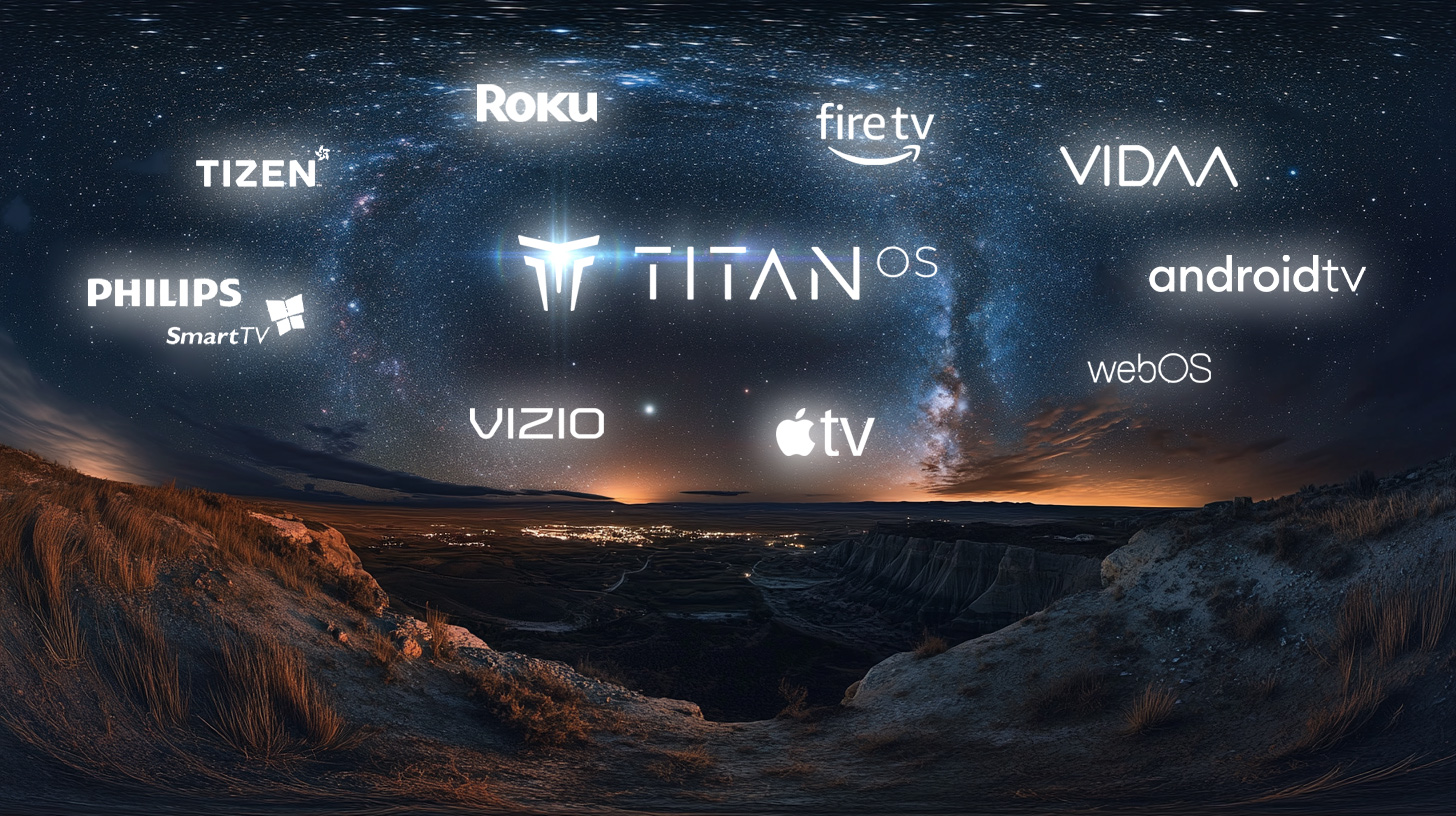
In the galaxy of connected TV platforms, Titan OS holds a distinct position — not to eclipse the others, but to chart its own orbit for streaming, content discovery, monetization, and smart TV development services. But alright, let’s leave the star talk to astronomers and get back to Earth for what really matters and what that means in practical terms.
It isn’t built on outdated frameworks or legacy designs, it’s engineered for modern content delivery and user behaviors, modern connected TV and Titan OS smart TV usage.
Titan OS integrates FAST channels, AVOD services, subscription platforms, and transactional content into one platform. This makes it more versatile for a wider variety of content providers and advertisers.
Titan OS offers unified search across broadcast and streaming sources. Users can browse across multiple content types – from live TV to on-demand services – with minimal friction.
Titan OS works across diverse TV brands (Philips, JVC, and AOC in Europe) and partnerships and doesn’t restrict functionality to their proprietary ecosystems.
An expert point to consider
Its partnership with Currys in the UK and Nordics represents a groundbreaking retail media collaboration, making Titan OS the core platform for JVC TVs. In fact, Philips describes Titan OS as the default environment across its current European TV lineup, outlining navigation, app access, and FAST integration3.
Unlike platforms with traditional or limited ad options, Titan OS offers advanced advertising formats like Homepage Ads and Instream Video Ads. Titan Ads operates as the platform’s advertising marketplace, integrated directly into the OS.
An expert point to consider
This is underscored by Titan OS’s launch of Titan Ads, a marketplace that extends campaigns to over 30 million streaming households across Europe. The offering includes retail partnerships with Currys in the UK and Nordics and Boulanger in France, which allows for retailer-linked audience targeting.
The Titan OS TV operating system is innovative and built specifically for connected TVs with:
Titan OS places FAST channels prominently on its homepage and equips remotes with dedicated buttons for immediate access.
Titan OS has introduced a unified search feature that aggregates FAST (Free Ad-Supported Streaming TV) and broadcast channels into one interface. This innovation improves content discovery for viewers, streamlines the search process, and boosts engagement.
An expert point to consider
The terminology around FAST channels vs. FAST/AVOD platforms can be confusing, so here’s a clear distinction.
FAST channels operate like linear TV with 24/7 programming, scheduled commercial breaks, and genre- or brand-specific content.
FAST/AVOD platforms combine live channels with a large library of ad-supported video-on-demand (AVOD) content. For example, Samsung TV Plus and Google TV focus more on a live TV experience, while Tubi services offer an expansive on-demand library.
Although the formats differ, both fall under the broader FAST ecosystem because they provide free, ad-supported viewing. Titan OS integrates these formats within a unified search interface, giving users access to both live and on-demand content in one environment.
Titan OS aligns with TV manufacturers through a shared revenue strategy. It leverages recurring income streams from app transactions, targeted ads, and data-driven personalization.
The platform includes both global channels and region-specific feeds, which lets content distributors reach diverse audiences with tailored offerings.
Partnerships with providers such as A+E Networks, Deezer, and Sony Pictures Entertainment expand the variety of available content.
An expert point to consider
Titan OS’s content portfolio continues to expand through partnerships across Europe. A 2024 agreement with Free in France brought more than 230 localized channels to the platform.
In 2025, additional collaborations with FUNKE Digital and Nexo Studios introduced dozens of new FAST channels across multiple European markets.
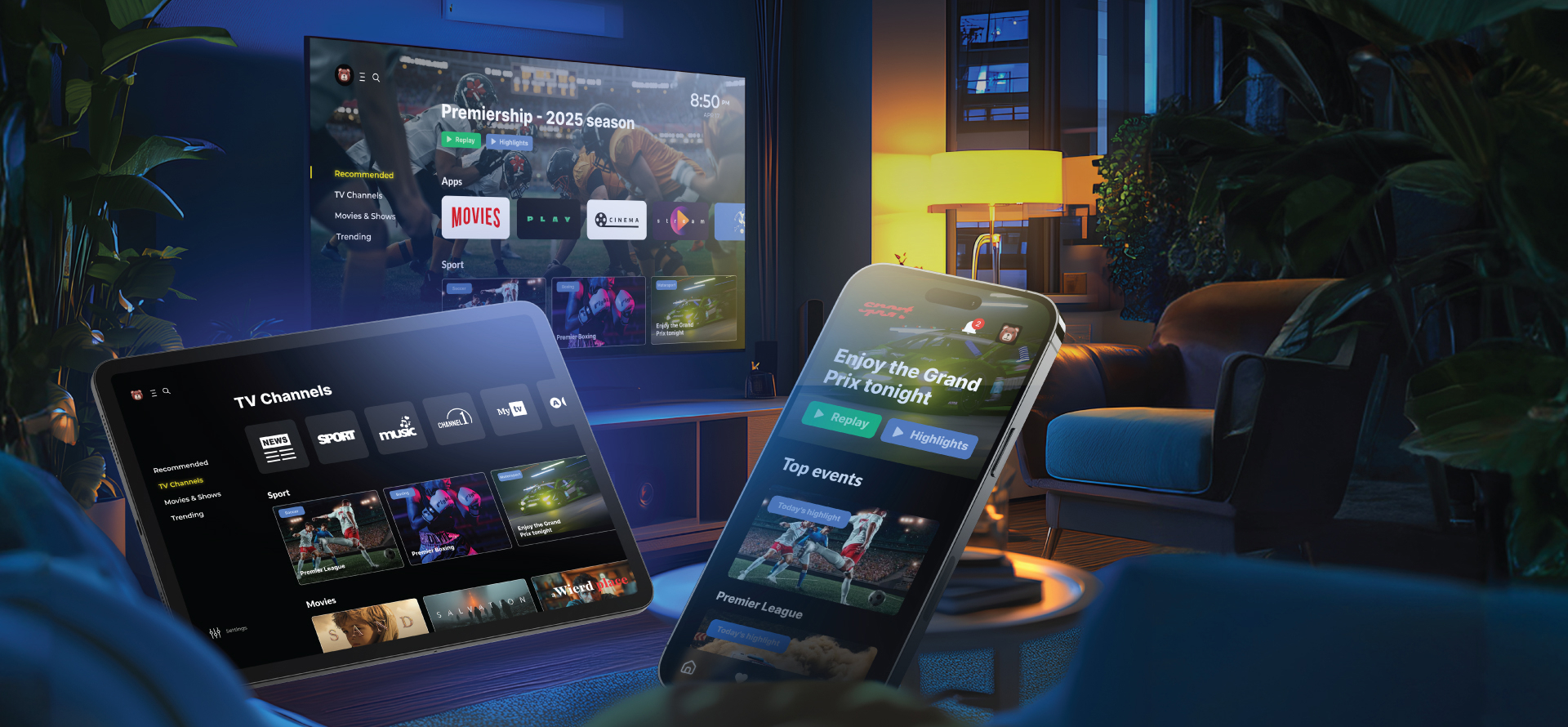
Expanding across operating systems such as Titan OS requires an architecture that supports FAST, AVOD, and subscription models without rebuilding the product for each ecosystem.
In one recent project, Oxagile delivered a modular OTT solution designed for multi-platform smart TV deployment. Consistent UX, shared monetization logic, and faster adaptation to new TV operating systems where all there.
The approach reduced platform-specific overhead, maintaining certification and performance requirements across connected TVs.
Titan OS star didn’t need a big bang to make its entrance, just a strategic partnership.
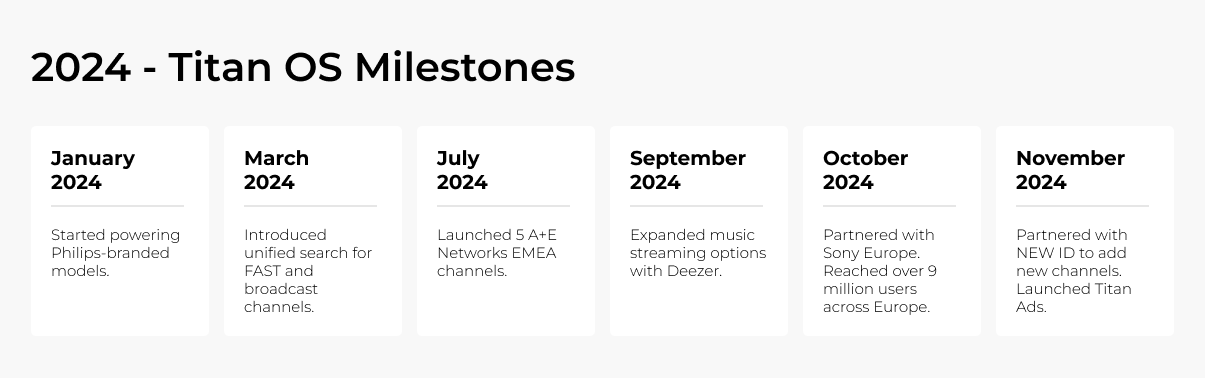
It began its rise through a collaboration with TP Vision, becoming the Philips smart TV operating system for the 2024 PML9009 and PUS8909 models. This marked the beginning of Titan OS’s journey, which expanded further with a partnership with Currys, making it the operating system for JVC smart TVs in the UK and Nordics. Titan OS also worked with FAST media networks to integrate their channels directly into the OS, allowing users to access them with a single click on the remote control.
The growth of Titan OS continued through 2024 with several key developments. In July, Titan OS launched five A+E Networks EMEA channels, including Inside Crime and Mystery TV, to further diversify its content offering. Titan OS also signed an agreement with Free.
By September 2024, Titan OS expanded its music streaming offerings with Deezer, and in October, it partnered with Sony Europe to bring free and premium FAST channels to selected Sony Android TVs across several European countries. By the end of 2024, Titan OS had reached over 9 million users across Europe.
Titan OS’s rapid expansion also included a partnership with NEW ID, a global leader in FAST services, adding channels like BABY SHARK TV and World Billiards TV to its growing library. The platform also launched Titan Ads, a CTV marketplace that enables advertisers to target users more effectively using exclusive first-party data.
What happened next? Expansion continued throughout 2025 with a stronger focus on content and advertising scale.

In 2026, Titan OS is expected to continue expanding FAST distribution, deepen advertising integrations through Titan Ads, and pursue additional content and OEM partnerships.

We offer the development, integration, and deployment of Titan OS apps and can make them scalable across major operating systems. You focus on content – we handle the screens.
The global smart TV operating system share continues to be led by Samsung Tizen, LG webOS, and Roku. Industry shipment tracking from Omdia also indicates that Google TV/Android TV remain among the dominant ones4.
Why isn’t Titan one of them? Titan OS functions primarily as the Philips operating system across most new TVs in Europe. Its footprint remains regionally concentrated rather than global.
An expert point to consider
Titan’s revenue-sharing model is tailored to maximize post-sale earnings for partners, while collaborations with Free, A+E Networks, and Sony amplify its content offerings, making it a key player.
The OS’s emphasis on FAST channels reflects growing consumer demand for free, ad-supported content. It remains compatible with subscription and transactional models.
An expert point to consider
Titan OS’s Partner Portal offers documentation and tools for quick app onboarding and audience targeting.
What’s for Titan Ads, it operates as the advertising marketplace within the Titan OS ecosystem, using device-level data from millions of active users. The platform offers powerful ad formats, like Homepage Ads for maximum visibility and Instream Video for immersive, non-skippable messaging alongside premium content.
It also incorporates consent management tools, including OneTrust, to comply with European privacy regulations and support audience-based targeting within regulatory guidelines.
An expert point to consider
Titan Ads has established commercial relationships with European ad sales houses such as RTL AdAlliance and Goldbach. These partnerships extend Titan OS advertising inventory into established broadcaster sales networks and connected TV campaigns across Europe.
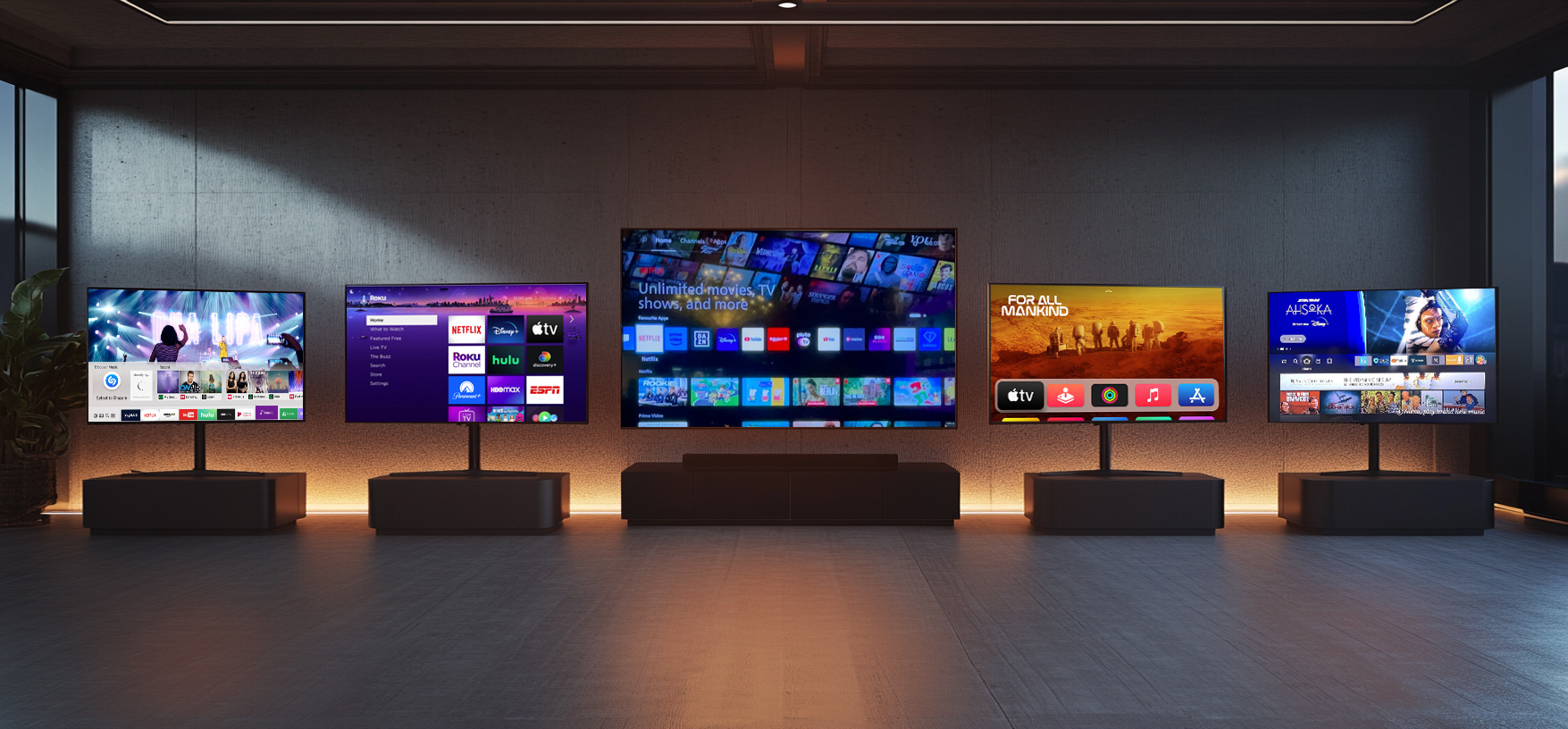
Titan OS might be the new star in the smart TV universe, but it’s not the only one lighting up the sky. For businesses looking to expand their presence beyond Titan, these established platforms continue to operate at scale:
Platform differences make a platform-agnostic architecture essential. A shared core codebase, SDK abstraction layers, and modular UI components help isolate OS-specific logic. This reduces duplication and simplifies deployment across Titan OS, Tizen, webOS, Fire TV, and others without parallel rebuilds.
Titan OS has shifted from being a newcomer to becoming part of the European smart TV fabric. Backed by OEM distribution, FAST expansion, and a growing advertising layer, it now influences how content surfaces and how revenue flows across a meaningful share of connected TVs in the region.
It doesn’t dominate global shipments, but that isn’t the point.
Its strength lies in focused European penetration and OS-level control of discovery and monetization. For content owners, advertisers, and app developers working in this market, Titan OS has become part of the practical platform mix – and planning without it would overlook a visible slice of the ecosystem.
TVs disagree on many things – your app shouldn’t be one of them.
We create and maintain TV apps across major smart TV platforms, aligning performance, UX, and monetization across different hardware tiers and regions.
1. Titan OS raises $58 million from Highland Europe for its smart TV OS — TechCrunch
2. Titan OS raises €50M Series A for continued development of European TV OS — BroadbandTVNews
3. What is Titan OS — Philips Official Explainer
4. Large-area display shipments grew 2.9 percent year over year — Omdia Press Release

Titan OS is a connected TV platform embedded in select Philips and JVC televisions. It powers content discovery, FAST channel integration, and advertising at the operating system level.
In the case of Titan OS Philips deployments, the platform manages home screen layout, unified search across broadcast and streaming, FAST channel placement, and integrated advertising via Titan Ads. Because it sits at the OS layer, it influences how apps are surfaced and monetized.
The main difference is scale and geographic focus. Global platforms like Android TV, Tizen, and webOS dominate worldwide shipments. Mostly, Titan OS is concentrated in Europe.
Unlike larger ecosystems, the Titan OS TV operating system is tightly linked to specific OEM partnerships and retail-driven distribution. Thus, advertising and content placement are built into the TV interface itself.
Titan Ads is the advertising marketplace integrated into the Titan OS platform. It enables homepage placements and instream video advertising across connected TVs running the system.
Key features include OS-level ad inventory, FAST channel monetization, consent management integration (e.g., OneTrust), and partnerships with European ad sales houses. Since it operates at the device layer, the Titan OS smart TV environment allows campaigns to be delivered directly within the TV interface.
Titan OS affects how apps are distributed, discovered, and monetized on connected TVs. Developers must account for FAST integration, home screen placement rules, and platform certification requirements.
From a technical standpoint, building for the Philips smart TV operating system requires hardware performance optimization, UX consistency across models, and alignment with OS-level monetization logic. Multi-platform architecture becomes important when deploying across Titan OS and other ecosystems.
Titan OS is relevant now because it has already reached 18 million active users across Europe and secured €50 million in Series A funding. This confirms ongoing platform expansion. A practical Titan OS overview shows:
As a result, Titan OS represents a meaningful European distribution channel within the broader connected TV market.

