












This website uses cookies to help improve your user experience




Even market benchmarks in the OTT streaming arena occasionally fail to account for all performance-related risks, especially when it comes to outlier content.
Examples abound. When Netflix released a new season of Stranger Things, the surge in concurrent viewers exceeded projected peak loads. The resulting disruption didn’t go unnoticed by leading news outlets.
One headline read, “Netflix crashes within minutes of releasing Stranger Things series five”. Behind the clickbait was a familiar story: viewers were unable to watch episodes of a highly anticipated season when the streaming service froze for a short period of time.
While it’s clear that Netflix’s extensive experience and thorough infrastructure preparation were in place ahead of the release, the incident is proof that Smart TV app performance and stability are stress-tested not in labs, but in real-world usage scenarios.
Even established platforms like Netflix and Sky can miscalculate peak demand (the latter even published a series of whitepapers on handling high loads), which highlights the operational risk for businesses with far smaller engineering teams and fewer infrastructure buffers.

As Alexander Skamarokha, Performance Engineer at Oxagile, notes:
“Many OTT businesses still formulate requirements as ‘we want it to work like Netflix’. In practice, this often means focusing on a similar UI, rich content libraries, and feature diversity, while underestimating the operational complexity behind reliable video streaming app performance on Smart TV devices. Early involvement of performance specialists is essential to reduce the risk of load-related issues caused by outlier content.”
Professional Smart TV app development is therefore not limited to visual polish. Building an application that remains predictable under pressure is just as important, if not more so.
In the sections below, we’ll explain why it’s not enough to define performance requirements without validating stability (or resilience), why there is no second chance to make a first impression on viewers, and what performance-focused practices help OTT platforms handle these challenges.
One of the most common mistakes in OTT projects is treating app performance vs stability (or resilience) as two separate concerns.
On Smart TV platforms like Tizen or webOS, that distinction often collapses in practice.
Alexander explains:
“When I work with Smart TV platforms, I don’t draw a strict line between performance and resilience. That boundary is very blurry, even for engineers. Consider a video player, for instance. A memory leak can cause memory usage to grow, which gradually slows the app down and eventually leads to a crash. From a technical standpoint, this looks like a performance issue.
In another scenario, a poorly configured stream on the CDN side causes the player to fail. That’s a different root cause, but from the user’s point of view, both scenarios look identical: the Smart TV app crashes.
This is why memory leaks, garbage collection freezes, playback buffer misconfiguration, backend latency, CDN instability — all end up being perceived as Smart TV app performance issues, even if they originate far outside the UI layer. In practice, diagnosing and resolving these problems requires both app performance and stabilization expertise.”
What directly affects businesses is the fact that users don’t care whether the root cause is a memory leak in the player, a backend timeout, or a throttled CDN. All of it feels the same and is called a poor viewer experience. In an OTT market such experiences quietly but consistently translate into churn.
Whereas most load models assume “normal” daily usage patterns, the OTT history shows that the most serious incidents are caused by outliers. This is extremely popular, time-bound content.
Examples include scheduled live events, season premieres (like Stranger Things already mentioned), exclusive sports streams when millions of fans are glued to the screens in anticipation, and major VOD releases at a fixed hour. These spikes are short, intense, and highly synchronized.

Alexander notes:
“Let me give you a project example. Once, a scheduled release triggered a massive wave of requests within minutes. A third-party service responsible for issuing playback URLs enforced strict rate limits. Requests were throttled, retries cascaded, and backend services collapsed.
The spike load is the most dangerous type of load. That’s why OTT app performance issues cannot be evaluated solely by average daily load. Outlier scenarios are rare, but when ignored, they are catastrophic.”
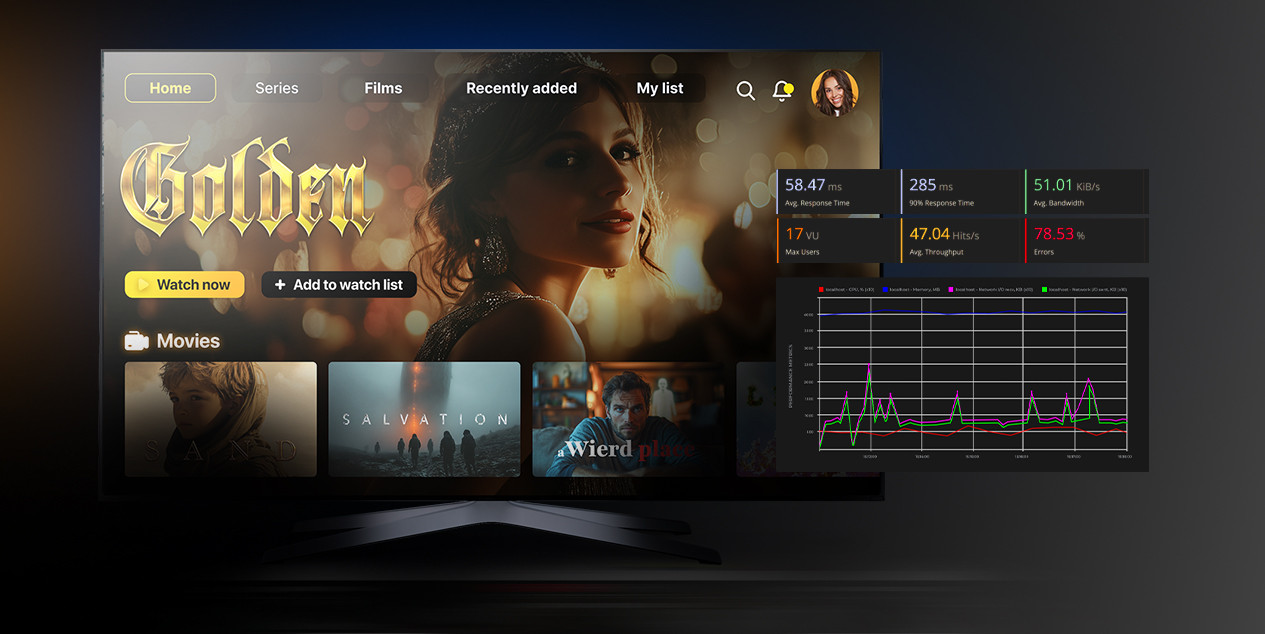
To help the client improve video platform quality and boost viewer satisfaction, Oxagile’s performance team was engaged to conduct a system‑wide audit of the VoD solution.
The team carried out a comprehensive review of architecture, code, and configurations, along with live and VOD playback, identified and resolved backend bottlenecks, optimized database performance, and planned AWS capacity for stable operation under peak loads.
The result was a more resilient, high-performing platform that delivered a better viewing experience in the end.
Before launching high-profile marketing campaigns prior to the app release, OTT platforms should remember one simple thing: users have dozens of alternatives just one click away. That makes the first launch experience critical.
Alexander explains:
“Releasing apps with no real beta testing, limited capacity planning, and no performance engineers involved early enough is a risky move. A Smart TV app doesn’t fail gradually in the user’s eyes; it fails immediately, and very few users give it a second chance.
So, I’d recommend considering soft launches and limited audience rollouts instead of relying on loud promo campaigns. Performance and resilience must be validated before the app faces its first real audience. And below are my performance and stability observations based on hands-on project work.”
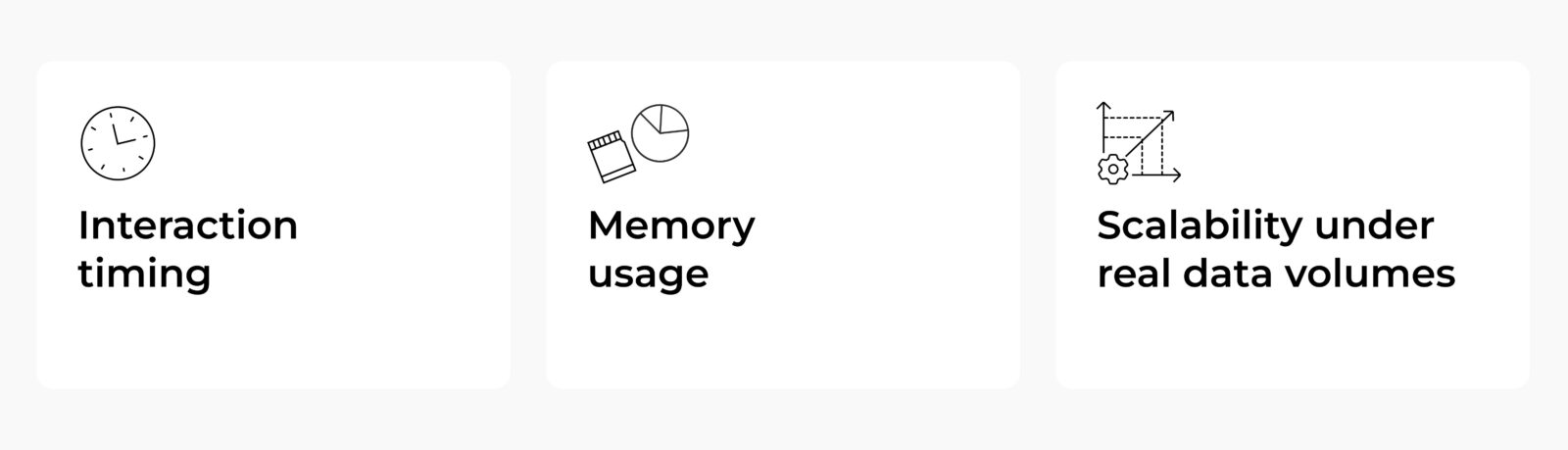
These Smart TV app user experience issues directly affect viewers’ perception of quality, even if playback itself is fine.
Memory leakage is one of the most common causes of Smart TV app crashes, especially in long-running scenarios typical for OTT usage.
Many apps look great with demo data but fall apart when exposed to real catalogs.
As mentioned above, stability is not an isolated concern. It’s performance under adverse conditions. An app may seem lightning-fast in ideal environments and still fail in production.
These issues alone may seem insignificant, but when together, they accumulate silently until users start abandoning the streaming service. This clearly shows why Smart TV app resilience must be built into the system and tested proactively, not bolted on later.
 Treat performance and resilience as a single systemTest beyond happy pathsValidate long-running scenariosPay special attention to peak loadsInvolve performance engineers before launch
In OTT, the winner is not the solution that looks fastest in a demo but the one that doesn’t fall apart in real life, especially when millions of viewers are glued to the screen. That’s exactly what Smart TV app development services by Oxagile are designed to guarantee.

To keep your Smart TV app stable and responsive even under peak loads, it’s essential to embed performance and resilience throughout development.
Our Smart TV app development services help OTT platforms combine visual appeal with robust, high-performing functionality.

Smart TV app crashes often result from a combination of technical and operational issues. Common causes include memory leaks that accumulate over long viewing sessions, misconfigured video players, incorrect exceptions handling, and excessive analytics framework overhead.
Even small issues can cascade into a crash when the app is used for hours. Understanding these root causes is essential for maintaining Smart TV app resilience and delivering a smooth Smart TV app user experience.
Unlike mobile devices, Smart TVs usually have limited memory, slower CPUs, and are designed for long continuous usage rather than short interactions. This makes video streaming app performance more sensitive to memory leaks, inefficient caching, or excessive metadata loading. What may seem like a minor delay on mobile can quickly escalate to freezes or crashes on a TV.
Smart TV app stability determines whether an application can handle real-world challenges like network fluctuations, backend service degradation, and sudden peaks in traffic, such as season premieres or live sports events.
An OTT platform may look flawless in controlled tests, but without built-in stability, unexpected conditions can trigger crashes or slowdowns. Strong resilience safeguards a reliable Smart TV app user experience even under stress, helping prevent churn and negative reviews.
Users quickly associate app freezes, buffering, or crashes with low quality. Video streaming app performance directly impacts the perception of reliability. When user experience issues occur, like lag during playback or slow navigation, viewers often switch to competing services. OTT businesses that invest in monitoring and improving Smart TV app resilience can significantly reduce churn and improve long-term engagement.
Beyond crashes, users notice slow home screen loading, long playback start times, lag when browsing content rails, and stuttering when scrolling through grids. These Smart TV app user experience issues often stem from memory mismanagement, poorly optimized UI components, misconfigured live and VOD streams, or long-running/slow backend API requests or heavy metadata requests.
Addressing them requires careful attention to streaming app performance and proactive testing of Smart TV app resilience under real-world conditions.

