











This website uses cookies to help improve your user experience




For many tennis fans, the match doesn’t stop at the biggest screen in the room. Between points, they are naturally reaching for their phones to check live stats, explore player data, see what others are saying, or simply stay on top of everything happening around the match.
A well-designed second-screen app ties all of that together. But it takes a lot of development work behind-the-scenes to turn every match into a richer, more interactive experience without taking attention away from the action.
Key takeaways:
A significant share of sports viewers engage with a secondary device while watching live games. In fact, more than two-thirds of younger fans use mobile devices to browse, use social media, or access related content while watching sports on TV1. Is this why companion digital experiences are becoming such a big deal during live broadcasts?
Over 60 % US sports fans are estimated to interact with a second screen during live games, deepening engagement through real-time stats, chats, and social sharing2. This means second-screen usage is a core part of how sports content is consumed. Viewers rarely focus on a single screen anymore. Instead, they combine live broadcasts with mobile devices to follow statistics, interact with content, and personalize their viewing journey in real time.
Tennis stands out. Its fast pace, data-driven nature, and match structure make it especially well-suited for a thoughtfully designed second-screen experience that complements the main broadcast rather than competes with it. A tennis app can evolve from a simple content hub into a smart, context-aware companion that keeps fans engaged throughout the entire match.
From our hands-on work with second screen app development, we share a practical view on how modern tennis platforms design and evolve second-screen solutions today. We’ll look at the features that keep fans engaged during live matches, how companion apps offer personalized, real-time interaction, and why second-screen functionality is now seen as a must-have, not just a nice extra. Plus, we’ll explore how smart product design and tech choices let tennis apps turn that engagement into lasting value and solid revenue.
Tennis is a sport evoking a wealth of different emotions. However, when a match lacks wow shots or suspense, users may turn to another device. To become the go-to second screen, your app should have the features listed below.
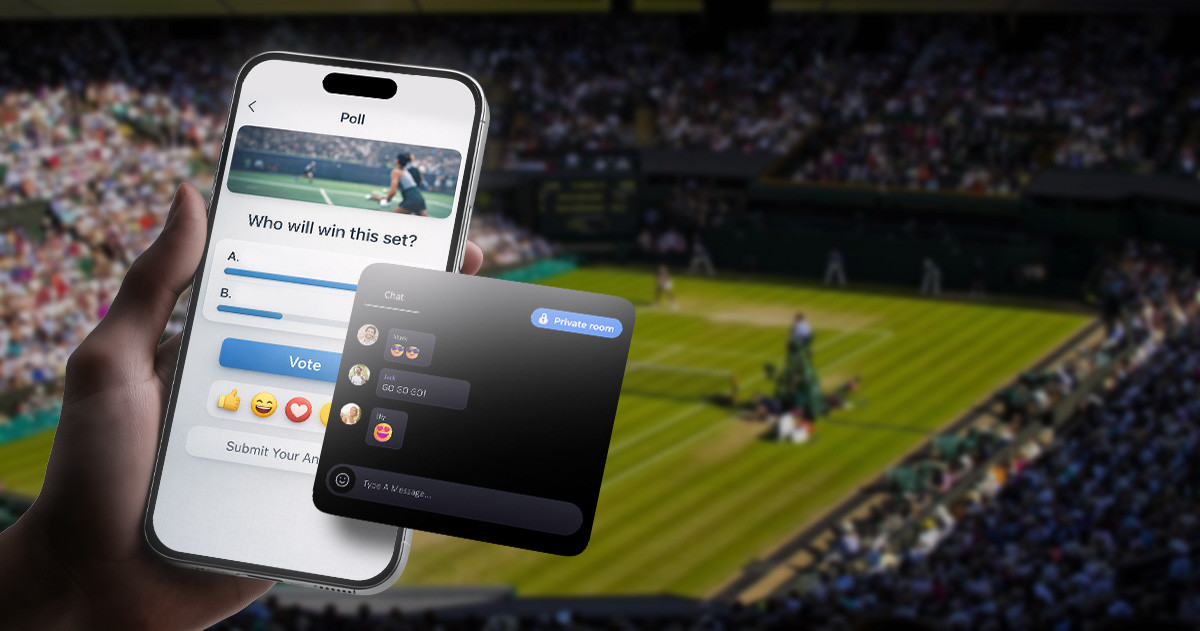
Instead of scrolling through external social networks, fans can react to the match exactly where the action happens. Live chats let viewers comment on dramatic rallies, questionable calls, or momentum shifts as they unfold, creating a shared viewing space that feels immediate and relevant to the game on screen.
Short breaks between points and games become opportunities for interaction. Fans make quick predictions, vote on key moments, or compare their guesses with others, adding a light sense of play that keeps attention locked on the match with fewer distractions during pauses.
Where regulations allow, betting and fantasy mechanics couldbe integrated into a tennis second-screen app as optional layers. When designed thoughtfully, they heighten anticipation around key moments and give fans another way to test their intuition, without dominating the viewing experience or forcing participation.
Second-screen insights bring the story behind the score to the surface. Trends like serve effectiveness, rally patterns, or head-to-head dynamics appear at just the right second, assisting fans in reading the match more deeply without drifting away from the live broadcast.
Not every reaction needs a comment. Quick emojis, instant ratings, or one-tap responses let fans express emotion in the heat of the moment, be it a tense breakpoint, a spectacular winner, or an unexpected mistake, which reinforces the feeling that thousands of viewers are reacting together in real time.
Personalized offerings are a recipe for enhancing user experience. Spectators will be delighted if you address their needs by providing the following app features.

By marking favorite players or tournaments, fans receive updates that actually matter to them. This way, users don’t have to scan the entire schedule and quickly jump into matches they care about, follow preferred athletes across tournaments, and stay connected to ongoing storylines throughout the season. These personalized updates are among the most valuable second-screen features, so fans concentrate on what matters to them without information overload.
A personalized calendar transforms a busy tennis schedule into a clear, manageable view. Upcoming matches, reminders, and start-time alerts are adjusted to user preferences and time zones, so fans can plan their viewing without constantly checking external sources. Within a well-designed tennis second-screen app, this functionality becomes a natural extension of the live viewing experience, not a separate planning tool.
Personalization also shapes how content is surfaced during live matches. Statistics, insights, and highlights can adapt to user behavior, creating a more intuitive and less cluttered viewing flow. Whether someone prefers tactical breakdowns, player comparisons, or quick summaries, it may all be catered to.
Over time, the app learns how each fan interacts with content. Frequently used sections become easier to access, less relevant elements fade into the background, and the interface evolves into a familiar, efficient companion without a one-size-fits-all layout. This adaptive approach is what makes a feature set a true second-screen companion app.

We design and build solutions for live sports that prioritize real-time synchronization, interaction logic, and top performance under peak match load. What our second-screen app development services deliver isn’t just a demo, it’s a solid and reliable product that works flawlessly during live tennis broadcasts.
Grand Slam tournaments always gather thousands of spectators. Turn them into avid fans of your app by offering valuable info.
Second screens create space for learning that feels effortless. Rules clarifications, terminology explanations, or brief historical notes appear only when relevant, for example, during a disputed call or an unusual situation. With this approach, even newer fans follow the game without feeling overwhelmed or excluded.
Head-to-head data adds context to every rally. Modern second-screen apps show more than raw numbers, highlighting what actually matters at a specific time. That could be past encounters between players, performance on specific surfaces, or trends that explain why a match is unfolding the way it is. Statistics stop being background noise and become a story. In a well-designed sports second-screen app and such context, fans follow the narrative of the match without needing expert-level knowledge.
Advanced analytics help fans read the game beyond the scoreline. Visual cues, short explanations, and contextual prompts break down tactics, momentum shifts, or changes in player behavior, making even complex aspects of tennis accessible without interrupting the live broadcast. By presenting insights when they’re most needed, these features strengthen second-screen engagement without pulling attention away from live play.
Short-form content, including expert comments, tactical breakdowns, or quick video recaps, fits naturally into second-screen consumption. Fans dive deeper between sets or revisit key points without leaving the match environment, keeping attention focused on the event and steering clear of external platforms.
Second-screen functionality opens up monetization opportunities that go beyond traditional advertising. When designed as a natural extension of the viewing experience, such features allow platforms to generate revenue without cutting into live matches or overwhelming fans with commercial messaging.
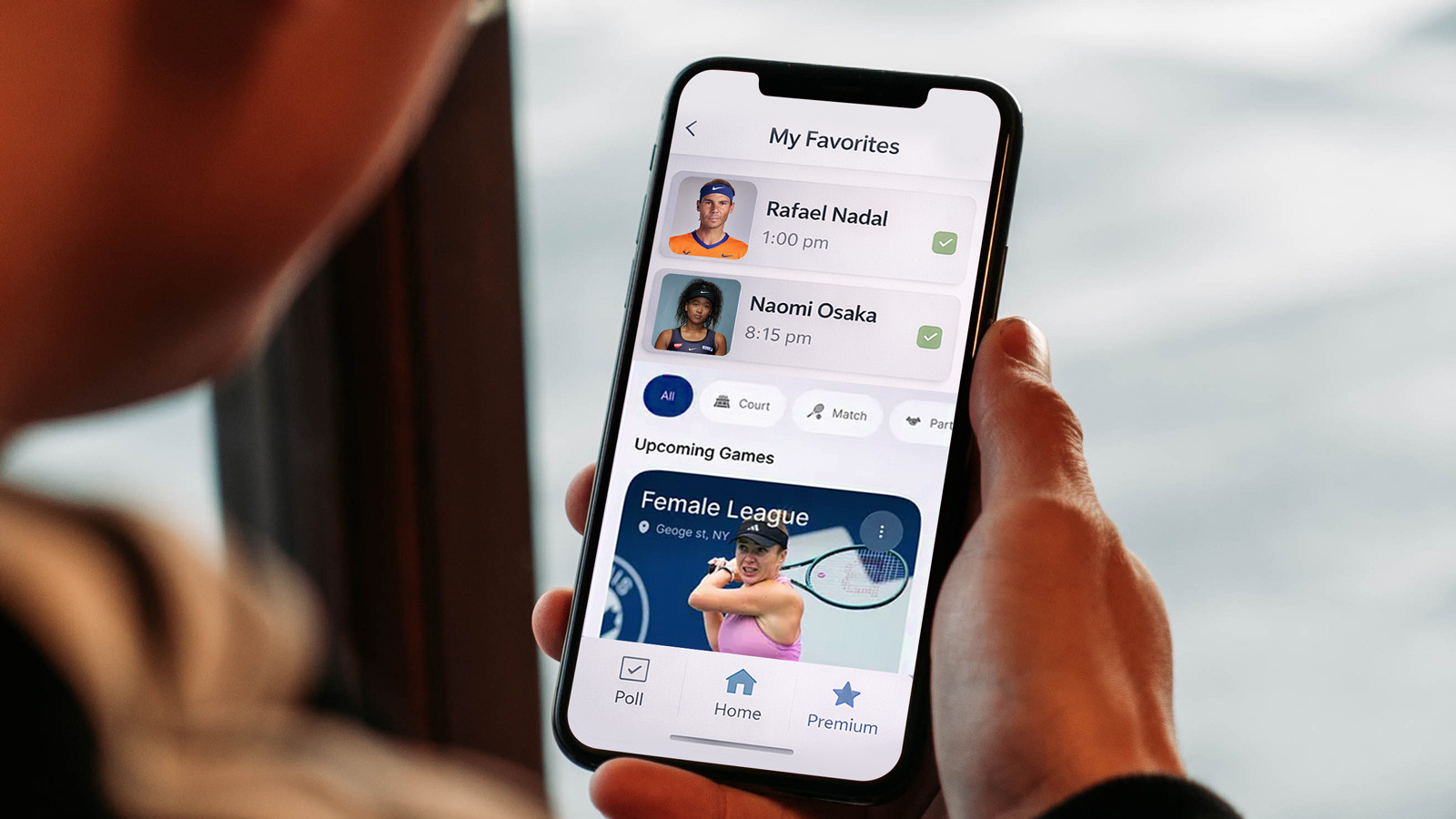
For dedicated fans, deeper insights often carry real value. Things like advanced statistics, extended analytics, historical comparisons, or expert commentary could be offered as premium options within a sports second-screen app. This gives users the option to unlock richer context and keep the core experience open and accessible.
Interactive features such as polls, predictions, or match insights may be naturally aligned with sponsors. When branding is embedded into the moments fans already interact with, it boosts monetization and preserves authentic second-screen engagement during live matches, something that standalone ads often can’t do.
Major tournaments spark natural peaks of interest. Second-screen platforms can offer event-based access, match-specific upgrades, or limited-time content bundles for fans to enhance their experience during high-profile moments without committing to long-term subscriptions. For a second-screen app for sports, this approach makes it possible to monetize peak demand without sacrificing the flexibility and user-friendliness of the main experience.
Second-screen interactions generate valuable behavioral insights. Understanding which features fans use, when engagement spikes, and what content drives repeat usage is the basis for refining the product strategy, improving personalization, and increasing long-term value beyond immediate revenue.
If you strip second-screen down to its essence, it is not a collection of interactive add-ons. It is a second product layer that runs alongside live tennis and answers three questions every fan has in real time: What’s happening right now? Why does it matter? What can I do with it? When these answers arrive quickly, in the right format, and at the right time, the experience feels effortless, and that is exactly why it works.
The most successful second-screen products for tennis don’t try to “do everything”. They prioritize a small set of capabilities that reinforce each other:
Interactions should appear naturally during pauses, key points, or momentum shifts, and never compete with play, always complementing it.
Favorites, calendars, and adaptive discovery are not “nice-to-haves”, they are how the app becomes relevant on day three of a tournament, not only during a final.
Contextual stats, explanations, and short-form content convert casual viewers into confident fans, and confident fans come back.
From a business standpoint, the second screen becomes most powerful when it is treated as a measurable system, not a creative experiment. Clear product KPIs like retention, session depth, repeat usage around tournaments, and commercial mechanics, including premium depth, sponsorship in interactive touchpoints, event-based packages, should be designed into the experience from the very beginning, but always in a way that keeps the match itself at the center.
But proper execution matters. Second-screen success is rarely blocked by ideas, it is blocked by details: synchronization, latency tolerance, content timing, peak-load stability, and UX decisions that must work for both new viewers and seasoned fans. Building this layer properly requires the kind of engineering and product discipline that treats live sports as a high-stakes environment, where reliability, performance, and clarity are part of the user experience.
If you’re planning to evolve a tennis app into a true second-screen companion, the most practical starting point is simple: choose a small number of high-impact features, tie them tightly to live match context, and build the product foundation so it scales during the moments that matter most and the matches people actually show up for.
Our team at Oxagile can help with everything from picking the right features to making it all work technically. Feel free to reach out and chat about your product goals!
1. Engaging younger sports fans — PwC (PricewaterhouseCoopers)
2. Nielsen: The Rise of Multiscreen Viewing — AdrenalinMag

Not every second-screen idea delivers real value. In tennis apps, functionality works best when it aligns with match rhythm: pauses between points, games, and sets. Features that interrupt live play or require constant attention are often ignored. The most effective implementations focus on timing, relevance, and minimal user effort, not just feature volume.
Live sports introduce unavoidable delays across devices and regions. A second-screen app for sports must be built with latency tolerance in mind, synchronizing content to match events, not timestamps. This usually involves server-side orchestration, event-driven updates, and UX patterns that remain useful even when streams are slightly out of sync.
A strong second screen experience respects attention span. During long matches, fans don’t want constant interaction, they want support when it helps. That means surfacing insights only at meaningful moments, allowing users to dip in and out, and making sure the app enhances understanding rather than competing with the broadcast.
A second-screen companion app is designed to work alongside live viewing, not replace it. Its architecture, content timing, and UX decisions are all centered around live context. Unlike a standard content app, it prioritizes immediacy, low friction, and relevance over deep navigation or static browsing.
Clicks alone don’t tell the full story. Meaningful second-screen engagement is reflected in session depth during live matches, repeat usage across tournaments, and how often users return during key moments. These signals show whether the second screen truly complements viewing or is simply opened and forgotten.

