












This website uses cookies to help improve your user experience




Live streaming feels like a stadium, VoD feels like a library. One is electric, the other is deep. If you run a video product, you don’t need a love letter to either — you need a clear way to pick the right delivery method for your content today and a plan for growing revenue tomorrow.
This guide explains video on demand vs live streaming in plain language, shows where each pays off, and offers a simple framework for choosing fast without second-guessing.
You’ve seen it a thousand times — Netflix, YouTube, training platforms, or your favorite fitness app. You open it, hit play, stop halfway, come back later, and the video patiently waits for you. This is video on demand, and it has quietly changed the way we consume almost everything, from movies to university lectures to cooking tutorials.
If you’re considering your own VoD application development, it’s worth understanding how this format works under the hood and why it remains the backbone of most streaming ecosystems.
So, before we compare video on demand with live streaming, let’s take a closer look at what makes VoD tick, why users love it, and why broadcasters keep building around it.
Video on demand streaming lets users watch pre-recorded videos whenever they want, with no schedules and no waiting for “air time”. It’s flexible, user-controlled, and ideal for audiences who expect everything instantly.
When a video is uploaded, the system transcodes it into several quality versions, packages them for adaptive delivery (HLS, DASH, etc.), and sends them through a content delivery network (CDN). The player then picks the optimal stream for each viewer’s device and connection to ensure smooth playback everywhere.
It’s freedom: pause, rewind, skip, or watch entire seasons at any pace. Subtitles, playlists, and recommendations adjust to individual habits. With no waiting and no pressure, control is the name of the game.
VoD is a long-term engine for engagement. Every new video adds value to your catalog, strengthens SEO, and keeps generating views long after release. Monetization stays flexible through SVOD, TVOD, AVOD, or mixed models.
You can go the fast route with on demand video streaming platforms that come pre-packed with CMS, encoding, DRM, and analytics. The second option is the custom route using video on demand streaming software if your business needs tighter integration, advanced data, or unique user flows.

For a more detailed technical overview of VoD, including encoding ladders, DRM and infrastructure, take a look at our guide here.
Now, with the foundation laid, let’s get into the real showdown: how VoD and live streaming differ, and which one truly fits your strategy.
There’s a quiet logic to how people consume content. Sometimes they want to lean back, take their time, choose what to watch, and maybe replay the best part. Other times, they want to lean in, feel the pulse of something happening right now, together with thousands of others. This illustrates the difference between video on demand and live streaming.
They use the same technology stack at the surface: cameras, encoders, players, and CDNs. But what happens after that couldn’t be more different.

VoD is meant to be permanent. Everything is pre-produced, polished, and published once it’s ready to live online for months or years. It’s the format of libraries, archives, and learning platforms — content that keeps working long after the first viewer clicks “Play.”
From a technical angle, VoD is pretty simple: upload > transcode > store > deliver. Once the file is encoded into multiple renditions, a CDN handles the rest. Viewers get stable playback, adaptive quality, and the comfort of control — pause, rewind, return anytime.
This model suits teams who prefer consistency over chaos. It’s cost-efficient in the long run, easy to scale, and great for building search visibility and steady engagement.
Live streaming lives in the moment. It’s real-time, unfiltered, and unpredictable — exactly what makes it magnetic. When people tune in, they participate as well as watch. As the chat scrolls, polls appear and reactions flood in, collective attention reaches its peak.
But that energy comes with pressure. There’s no time to fix errors, and the margin for failure is thinner than anywhere else in streaming.
A stable encoder, a solid internet connection, and redundant systems are all non-negotiable. With everything in place, live content totally nails that sense of presence that even the most beautifully edited VoD can’t replicate.
For brands and broadcasters, streaming is about impact: a spike of emotion, a burst of engagement, a chance to turn attention into conversion.
Actually, the boundary between the two keeps fading. A live concert becomes a replay the next morning. A product launch becomes an evergreen explainer. A conference recording turns into a searchable VoD asset.
Live streaming draws people in, while VoD keeps their interest alive. Together, they create a cycle of discovery and sustained attention that keeps both viewership and revenue growing.
Whether you’re scaling an existing platform or starting from scratch, we can help you design a solution that unites live and on-demand streaming in one seamless experience — from infrastructure to monetization and analytics.
VoD and live streaming share the same DNA but deliver very different experiences.
| Aspect | Video on demand | Live streaming |
| Time of access | Viewers decide when to watch, content is always available | Viewers must show up while it’s happening — it’s real-time |
| Content format | Pre-recorded and edited | Raw, happening live, often unedited |
| Viewer control | Full control — pause, skip, replay, or return later | Limited control — miss a moment, and it’s gone (unless there’s a replay) |
| Interaction level | Mostly indirect — comments, likes, and recommendations after release | Real-time chat, polls, donations, shout-outs, and immediate feedback |
| Technical complexity | Moderate. Once encoded and uploaded, playback is stable and scalable | Higher. Requires real-time encoding, redundancy, and strong connectivity |
| Relevance and lifespan | Evergreen — content stays valuable for months or years | Moment-driven — peak value during or shortly after the stream |
| Reliability | Predictable quality and fewer surprises | Dependent on live conditions and latency control |
To put it shortly, VoD is designed to last, while live streaming is made to capture attention instantly. One builds a relationship over time, and the other creates unforgettable moments.
The gap between VoD and live streaming becomes less about how they work and more about what they achieve once you look past the basics. Both can bring in revenue, drive engagement, and strengthen loyalty, but they do so through different mechanisms.
| Aspect | Video on demand | Live streaming |
| Monetization models | Subscriptions (SVOD), one-time purchases (TVOD), or ad-supported content (AVOD). Reliable recurring income, predictable analytics | Pay-per-view, sponsorships, live ads, donations, and tipping. Spikes in revenue around events |
| Quality control | Fully editable — errors can be fixed before publishing | Real-time only — any issue is visible to the audience |
| Engagement style | Slow and steady. Recommendations, playlists, and SEO keep bringing people back | Immediate and emotional. Engagement peaks in real time and fades quickly |
| Production and delivery cost | Lower operational costs once published; scales efficiently with a growing catalog | Higher cost per event — crews, bandwidth, infrastructure, and backup systems |
| Audience reach | Builds organically through discoverability, search, and long-tail traffic | Gains quick bursts of reach through alerts, hype, and social sharing |
| Performance metrics | Focused on watch time, completion rate, and retention curves | Focused on peak concurrency, viewer drop-off, and chat activity |
| Longevity | Evergreen. Each video becomes a durable asset | Ephemeral. Replay value depends on capturing and republishing |
Although the viewing experience differs, both live and VoD streaming have the same key components at their core, and the way these are configured makes all the difference.
Knowing how these layers interact helps teams avoid false trade-offs, as most infrastructures today can support both workflows under one architecture.
The selection of one approach over another depends on the desired outcome for your content. Let’s look at the contexts where each format proves its worth and how to align them with real business goals.
So which one wins? Which option should you prefer if you run a streaming platform and care about what ultimately drives revenue?
The honest answer: neither really wins. Comparing live streaming and VoD in absolute terms misses the point. They’re not rivals as they solve different business challenges and speak to different audience needs.
Live streaming brings value when time itself is the product. Sports matches, concerts, product launches, and game streams rely on the thrill of immediacy. The desire of viewers is not for content, but to be part of the moment.
VoD, on the other hand, turns those moments into assets. It works best for learning, entertainment libraries, corporate training, or any content meant to be replayed, searched, or referenced later. It builds stability, extends audience reach, and keeps generating engagement long after the initial release.
If you’re thinking in terms of ROI, the best strategy is to connect both approaches. Live draws attention and urgency, and VoD turns that attention into long-term engagement and recurring value.
So rather than asking which format is better, it makes more sense to look at how they work together. The strongest streaming models use both: live to spark attention, and VoD to keep that attention alive long after the broadcast ends.
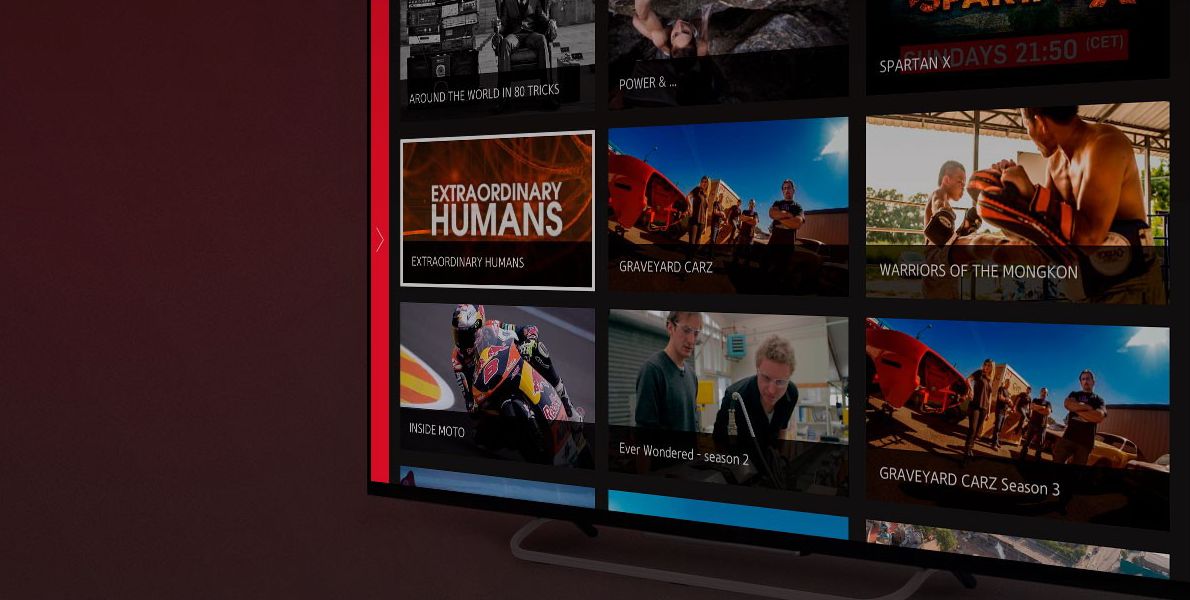
A clear example can be seen in a live streaming and VoD app for smart TVs.
The platform delivers both live broadcasts and instant replays in one experience. Each event automatically transforms into an on-demand asset with chapters and personalized recommendations.
This approach keeps audiences engaged long after events ended, turning every live moment into a lasting part of the viewing ecosystem.
The evolution of streaming is only gaining pace. Live and VoD are no longer parallel tracks but parts of one adaptive system that responds to how audiences consume content. Here is what is shaping that future:
AI is already transforming how content moves between live and on-demand. Streams are automatically turned into replays, highlight reels, and personalized VoD feeds within minutes after a broadcast ends.
Free ad-supported TV and hybrid monetization formats are redefining how platforms earn. By blending immediacy with long-term value, providers can balance short-term reach with steady retention.
Live chats, polls, and reactions are no longer temporary. They are saved and replayed as part of the VoD experience, keeping the sense of community alive after the event.
The next generation of platforms will not choose between live and VoD since they will merge both into a single adaptive workflow where the focus shifts from creating content types to building audience journeys that move naturally between real-time and on-demand.
VoD and live streaming were never meant to compete. They’re two sides of the same experience — one preserving, the other amplifying. Together, they turn moments into ecosystems where audiences can discover, revisit, and stay connected on their own terms.
In our work, we’ve seen this balance play out again and again. Many of the most successful products aren’t “VoD-first” or “live-first” — they’re hybrid by design. A live event becomes a replay, a replay drives anticipation for the next stream, and the cycle continues.

At Oxagile, we help businesses create streaming solutions that unite VoD and live technologies in one seamless experience.
From custom VoD platforms to real-time live streaming systems, our team designs products that are stable, scalable, and ready for what comes next.

On-demand video streaming means viewers can watch pre-recorded content whenever they choose, instead of tuning in at a scheduled time. The platform stores and delivers videos through adaptive streaming, so playback adjusts automatically to each viewer’s internet connection and device. It’s the model behind services like Netflix, e-learning portals, and corporate training platforms.
In a video on demand streaming setup, uploaded videos are transcoded into multiple resolutions, secured with DRM (if needed), and distributed via a CDN. The player selects the best version for the viewer’s connection. This ensures stable playback while keeping the entire library accessible at any moment.
On demand video streaming platforms and software form the foundation of VoD services. Ready-made platforms handle encoding, DRM, storage, CDN delivery, and monetization in one place, making them ideal for businesses that want to launch quickly.
For more complex needs, custom-built VoD software provides flexibility: from multi-language support and advanced analytics to integrations with existing media workflows and internal systems.
The major difference between live streaming and video on demand comes down to timing. Live delivers content in real time — once it’s gone, it’s gone (unless recorded). VoD is pre-produced and can be watched, paused, or replayed anytime. Many platforms combine both, streaming events live and then publishing them as VoD for continued engagement.
Neither format is objectively better — it depends on your goals. Live streaming is ideal for real-time interaction and high-intensity moments such as sports, launches, or concerts. Video on demand works best for long-term content like courses, entertainment libraries, or internal knowledge bases. Most streaming ecosystems now use both.
Yes, and it’s becoming standard. Live and on-demand streaming work best together: stream events live, then turn recordings into VoD assets for replay. This hybrid approach maximizes reach and revenue by keeping audiences engaged both during and after the live moment.
Custom video on demand streaming software can’t be labelled as “better”, yet it does provide greater flexibility than off-the-shelf solutions. If you need unique UX/UI or tailored features like multi-language support, advanced analytics, and integration with internal systems, there are typically no barriers. So if you have very specific business needs like unique content delivery methods or complex monetization strategies, a custom-built solution can be a smarter start.

