














This website uses cookies to help improve your user experience


As the live streaming market is expanding rapidly, with global internet users continuing to spend more time on video content year over year1, for teams working in live streaming app development, the growth numbers alone are not actionable.
What matters is how it translates into real system pressure: concurrency spikes, stricter latency expectations, fragmented device ecosystems, and higher quality demands. In this article, we aim to go beyond just providing rough data; we will connect each metric to the technical and business implications behind it.

Andrey Gordeev, Solution Architect at Oxagile, provides some comments on how these metrics translate into scalable, production-ready systems.
Key takeaways:
Live streaming growth is often described through audience size or total watch time. However, for systems architects, the more relevant metric is concurrency, or the number of users watching simultaneously.
Recent live streaming trends show that global consumption continues to rise, with livestreaming alone reaching over 30 billion hours watched in a single quarter2. These broader streaming trends reflect a steady increase in real-time content consumption across platforms.
At the same time, large-scale broadcasts demonstrate how extreme concurrency can become. Major global sports events regularly attract tens of millions of concurrent viewers, with some events exceeding 100 million simultaneous streams3.
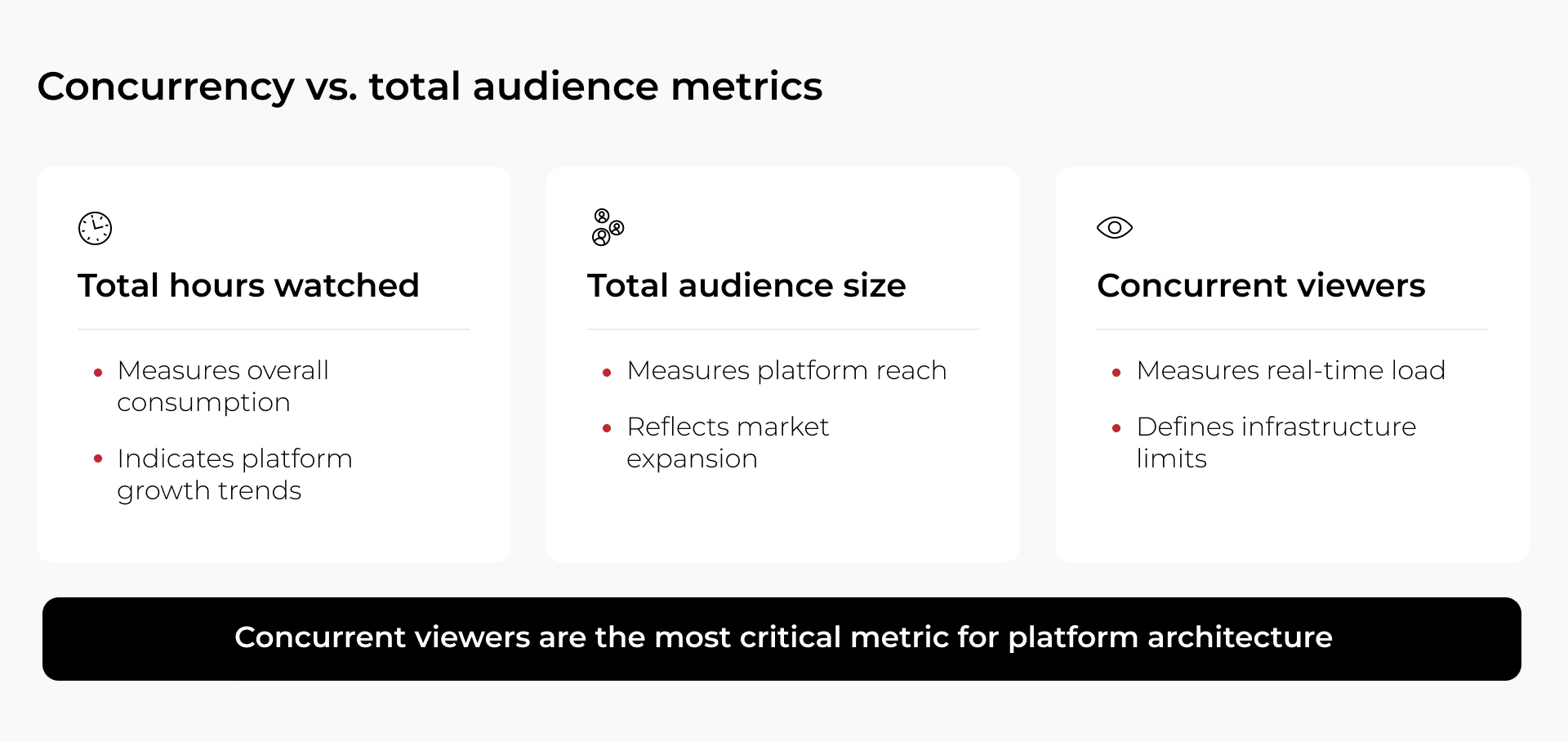
At a high level, the live streaming market is growing steadily. But infrastructure does not scale linearly with that growth.
Instead, demand concentrates into short time windows:
A critical pattern is that growth is not evenly distributed. It compresses into short, high-intensity traffic peaks. This is a fundamental difference between live streaming and VoD. In live environments, traffic arrives at the same time, peaks are unpredictable and short-lived, and failures have an immediate, visible impact.
Concurrency also defines the peak bandwidth requirements, CDN load distribution, origin infrastructure stress, and failure risk during high-demand events. Even solutions with moderate daily traffic can fail if they are not designed for peak concurrency scenarios.
To handle these patterns, modern systems rely on:
Expert comment:
“Cloud infrastructure allows you to scale from a few instances to dozens during peak events and scale back down afterward. This flexibility is essential for handling spikes without overprovisioning.”

Building a live streaming system that withstands peak traffic, delivers low latency, and supports multi-device delivery requires deliberate architectural design.
Oxagile helps teams design and scale systems that handle concurrency spikes, optimize QoE, and support real-time engagement.
Among all trends and live streaming statistics, the shift toward lower latency is among the most structurally significant.
Users do not accept long delays between a live event and what they see on screen anymore. Traditional streaming setups introduce noticeable delays, while modern platforms are increasingly expected to deliver near-real-time experiences with significantly reduced latency (just in case: find practical insights on the topic in one of our recent projects).
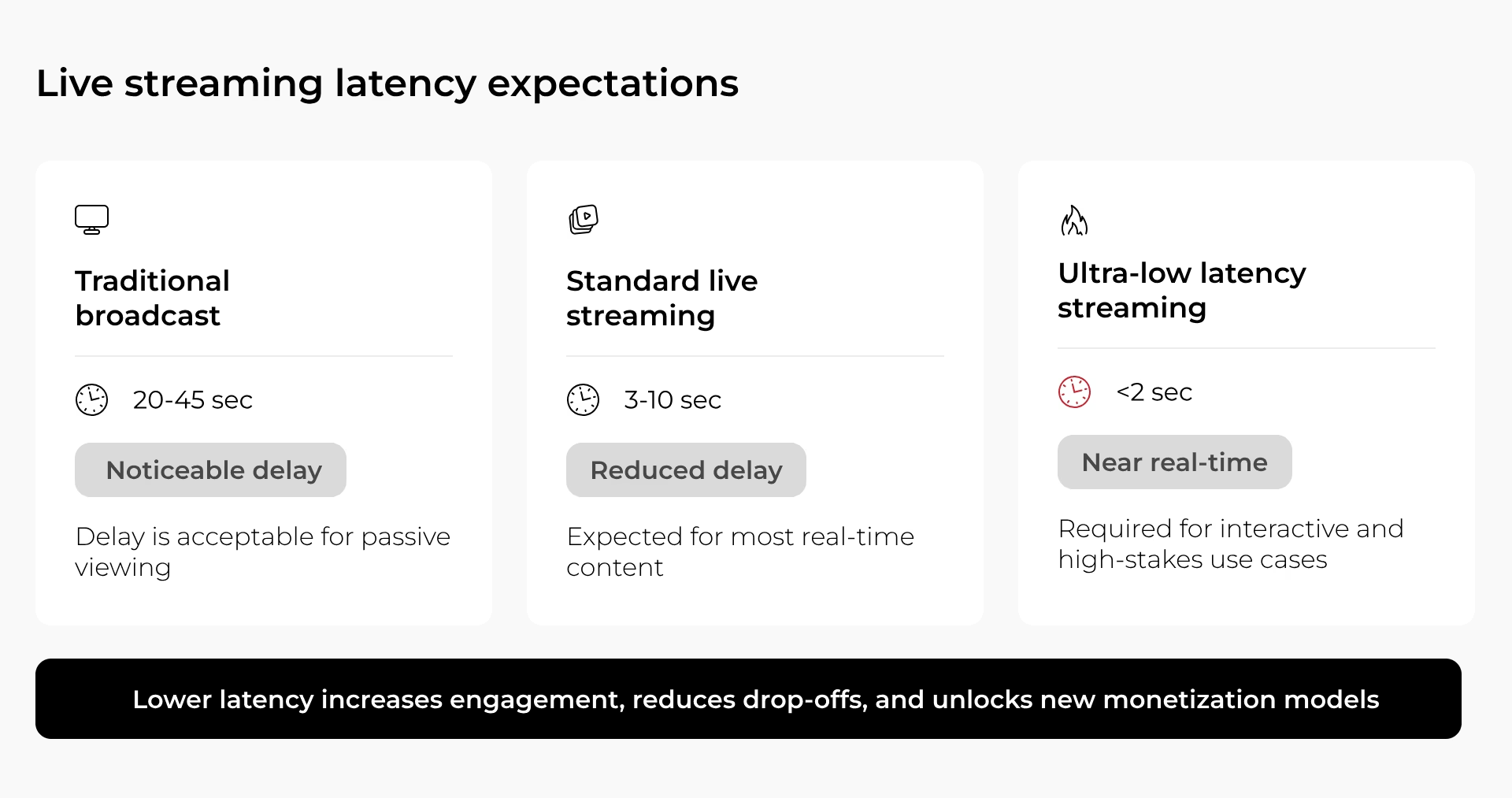
Latency has shifted from a technical parameter to a core user experience metric. In live environments, delays affect the perceived “liveness” of content, user trust (especially in sports and real-time events), as well as engagement and session duration.
Even small delays can result in spoilers from social media, users abandoning streams, and reduced interaction with live features. For these reasons, streaming systems are expected to behave more like real-time systems than buffered delivery pipelines, meaning that ultra-low latency is required for some cases.
Reducing latency is not a single change. It affects the entire delivery pipeline:
To meet modern expectations, streaming solutions typically adopt:
Andrey explains:
“Latency is influenced not only by infrastructure, but also by how content is encoded, delivered, and played back. You are always balancing between delay, stability, and system load.”
This balance becomes especially important as the live streaming market shifts toward more interactive and real-time use cases. And for teams building such systems, the above-mentioned capabilities are a core part of modern development practices for live streaming software.
One of the most visible streaming trends is the shift in how audiences access live content. Viewers have shifted away from a single device type. Instead, consumption is split across mobile, desktop, and connected TV (CTV), with mobile and TV screens dominating.
Mobile devices now account for over 50% of global web traffic1, underscoring their central role in content consumption. At the same time, connected TV usage continues to grow as more households shift toward streaming-first viewing experiences.
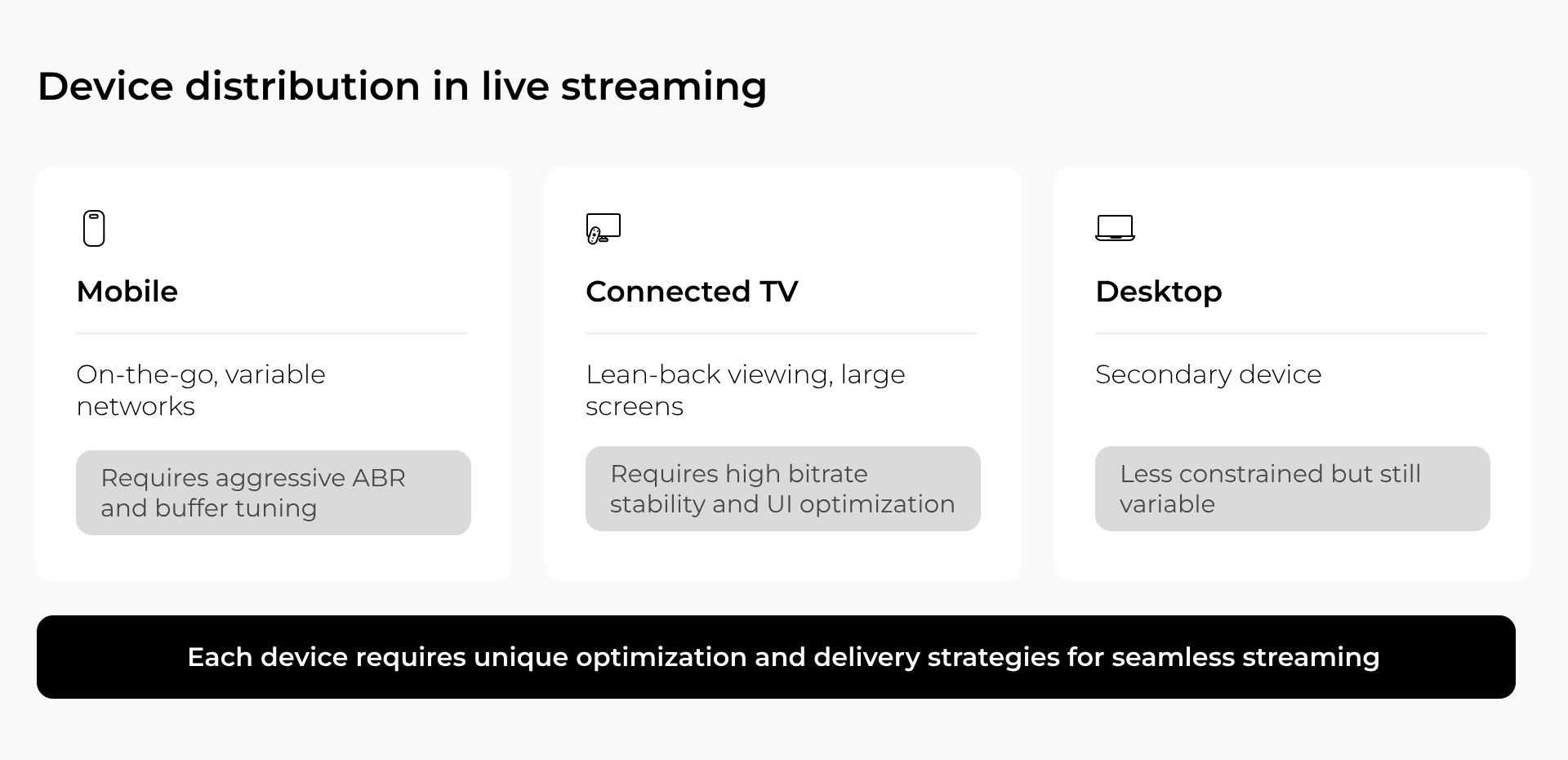
The fragmentation of devices introduces variability at multiple levels:
This means that streaming solutions now deliver more than a single stream. In reality, they are delivering multiple versions of the same content simultaneously, optimized for different conditions.
Device diversity strongly impacts bitrate ladder design, encoding profiles, player behavior, and buffering strategies. For example, mobile users require faster adaptation to unstable networks, while CTV users expect high-resolution playback with minimal interruptions. That’s why a one-size-fits-all approach leads to either wasted bandwidth or poor user experience.
To handle this complexity, streaming systems adopt:
Andrey notes:
“Different devices require different delivery strategies. What works for a stable home network on a TV may not work for a mobile user on a fluctuating connection.”
Such considerations are central to modern live streaming software development, where delivery pipelines are built to adapt in real time.
One of the most important live streaming trends is the shift from passive viewing to interactive experiences. As live video continues to dominate global traffic, accounting for a significant share of overall internet usage4, audience behavior is shifting toward formats that enable interaction during the stream, especially in sports and event-based content.
The role of engagement features in live streaming solutions has changed. What used to be a differentiator is now a baseline expectation.
Users expect live chat during streams, real-time reactions and feedback, and interactive elements layered over the video. Without these features, even high-quality streams struggle to retain attention.
Interactive features introduce a new layer of system complexity. Unlike video delivery, which is largely one-directional, engagement features require real-time bidirectional communication, low-latency event processing, as well as synchronization between video and interaction layers.
This, in turn, affects:
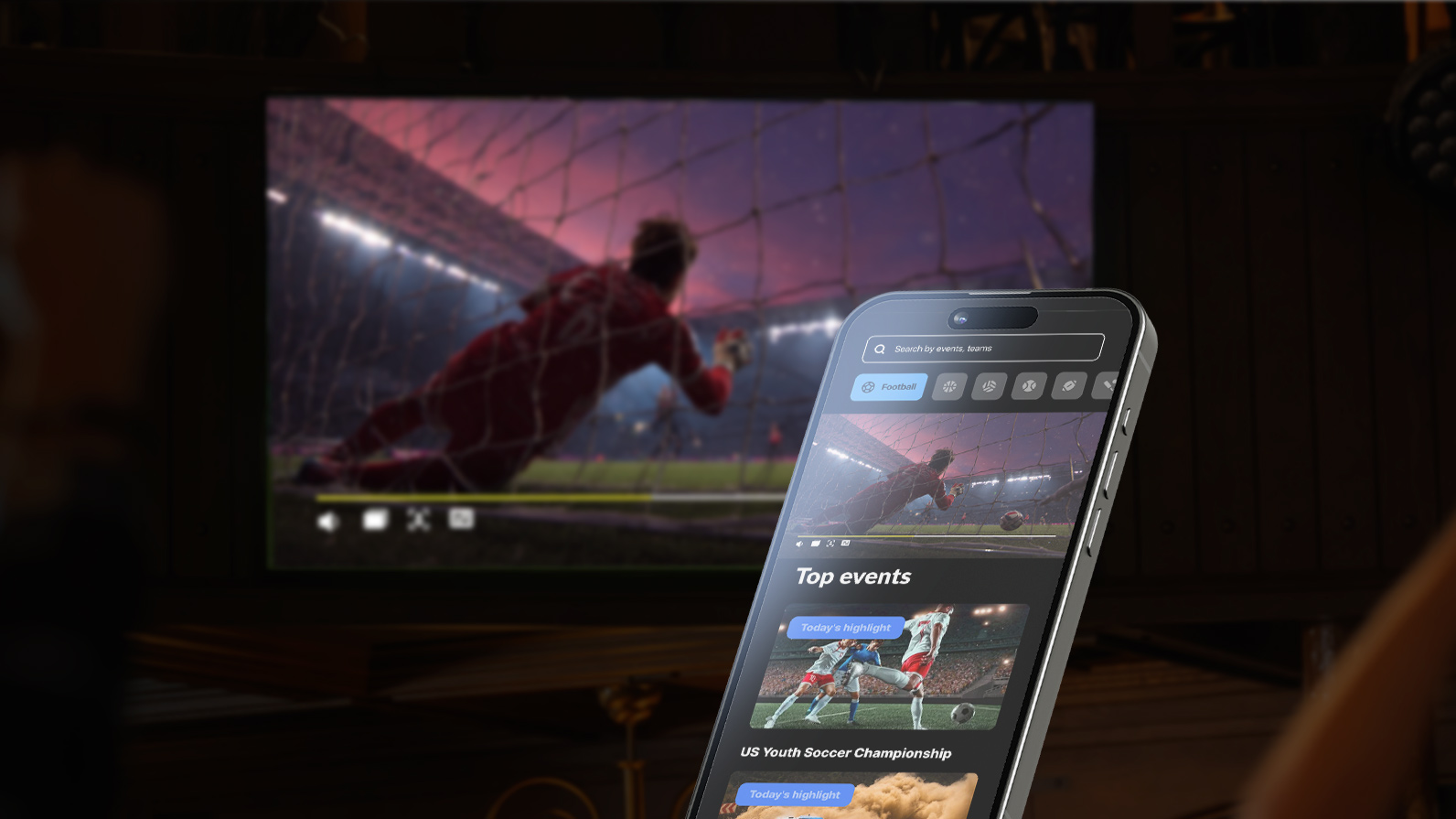
To support interactive viewing, one Oxagile project focused on delivering a synchronized second-screen experience alongside live sports broadcasts.
The goal was to allow real-time user interaction without compromising stream stability or latency.
The solution included:
This approach let the solution increase user engagement and to maintain performance during high-traffic events.
To support engagement-driven experiences, streaming solutions typically implement:
As Andrey puts it:
“Once you introduce interaction, your system shifts from pure video delivery to something more. It becomes a real-time platform where every user action needs to be processed instantly and at scale.”
While metrics like audience size and watch time describe growth, QoE determines whether users stay. Even small performance issues can have a measurable impact. Users are highly sensitive to playback quality, as delays, buffering, and quality shifts often lead to stream abandonment.
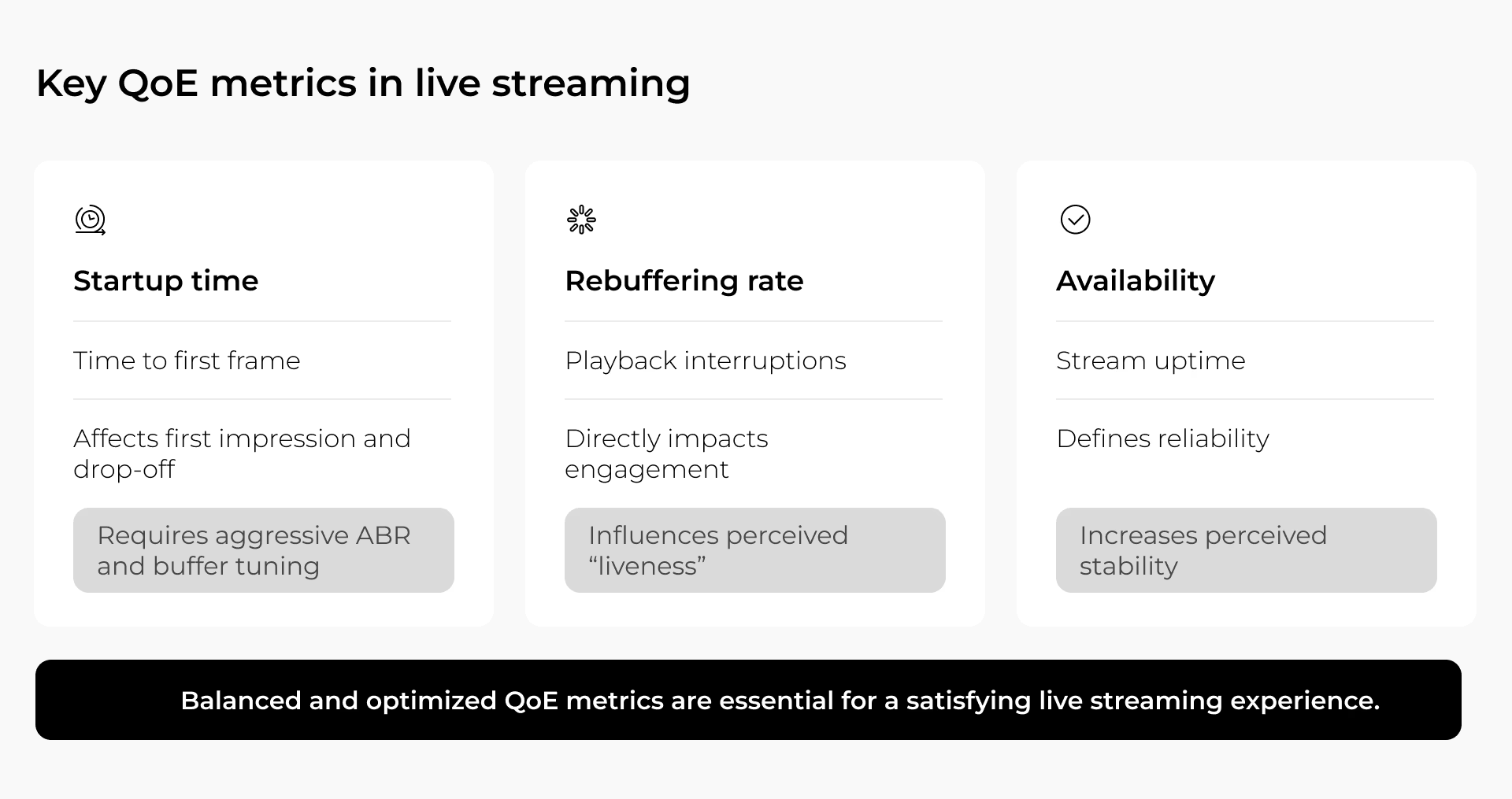
QoE is not a single metric — it is a combination of factors that define how stable and responsive the stream feels.
From a user perspective, the expectations are simple:
When any of these conditions are not met, users disengage. So, improving QoE should be seen as a direct lever for retention and monetization.
QoE is influenced by multiple layers of the system:
Expert comment:
“QoE is a combined metric. It includes latency, buffering tolerance, availability, and overall system stability. If one component fails, the entire experience degrades. It means that QoE cannot be optimized in isolation and must be designed across the entire architecture.”
For consistent QoE, streaming solutions implement:
The real differentiation of live streaming space happens at the architectural level: in how systems handle pressure, variability, and user expectations in real time.
Several patterns become clear.
When you look at it all together, it’s clear that streaming platforms are being built differently now. Systems need to stay stable, responsive, and scalable as conditions change, as that determines success. With streaming trends pushing things forward, architecture has a direct impact on performance and business results.
Building a live streaming solution that stays stable during peak demand, maintains low latency, and delivers consistent quality requires deliberate architectural design. Oxagile helps teams build and scale streaming systems that perform reliably under real-world conditions.
1. Online Video Consumption Statistics — StreamRecorder
2. Live Streaming Statistics — DemandSage
3. Q4 2025 Global Livestreaming Landscape — Streams Charts
4. Video Marketing Statistics — Popupsmart

The live streaming market continues to grow rapidly, driven by increased consumption of real-time content across industries such as sports, entertainment, and events. As audience size and viewing time increase, platforms are also facing higher expectations for performance, scalability, and interactivity.
Most live streaming statistics show that users expect fast startup times, minimal buffering, and low latency. Even small disruptions in playback can negatively affect engagement and lead to user drop-off.
Key live streaming trends include the shift toward low-latency delivery, the rise of interactive features, and the growing dominance of mobile and connected TV devices in content consumption.
Live streaming data underscores the need for scalable infrastructure, adaptive bitrate delivery, and real-time processing. These factors have a direct impact on how streaming solutions are designed to handle peak traffic and maintain consistent quality.
Live streaming stats provide insight into how users interact with content and where platforms may face performance challenges. This information helps businesses prioritize investments in scalability, user experience, and system reliability.

