












This website uses cookies to help improve your user experience




Fire TV often becomes the next stop for a monetization approach that has already proven itself elsewhere, validated on mobile where paywalls convert reliably, reinforced on the web through familiar checkout flows, or normalized through IPTV bundles that start generating revenue almost immediately.
That prior success creates confidence, sometimes too much of it. The same logic is carried over to TV with minimal reconsideration, the build ships, and performance is tracked closely. Soon, a familiar set of signals begins to appear: subscription conversion underwhelms, churn shows up after the first session, ads shorten sessions instead of extending them, in-app purchases remain marginal, and the conclusion forms, “Fire TV doesn’t monetize for us.”
That verdict is often wrong. Not because the team picked the wrong model, but because the model got implemented with the wrong instincts, which is a common pattern when teams try to monetize Fire TV apps using logic borrowed from other platforms.
Fire TV is a different kind of room. The screen belongs to a household, not a person, and the remote turns intent into effort. Discovery here has a different rhythm: fewer taps, more staring, more “give me something decent fast”. Monetization on Fire TV breaks at a very specific point when it relies on users tolerating friction that felt acceptable on mobile, and the viewer reaches the moment where the next step simply feels annoying enough to stop watching.
When it comes to Fire TV, the most effective monetization strategy is to view it as a product design decision and not a billing feature. In this case, user experience, pacing, and context determine where money enters the experience. If the roadmap includes multiple TV platforms, consider this approach alongside the build strategy from the beginning. This helps avoid forcing monetization or UX compromises as the platform expands.
Teams looking to establish a solid Fire TV baseline first should start with Fire TV app development and revisit the monetization model afterwards, ensuring that decisions are grounded in real viewing behavior and not inherited assumptions. Before we get into the models, a quick, practical comparison helps set expectations:
Fire TV sits in its own lane: the opportunity is real, and the penalties for lazy porting are also real.
This matrix illustrates the patterns that we observe across TV platforms, with Fire TV being used as a reference point and not as an isolated case. Use this as a starting point, not a rulebook. Your best choice can be “none, for now”, especially if you’re still proving retention or content-market fit.
| App/content scenario | Subscription (SVOD) | Ads (AVOD/ FAST/hybrid) | IAP/PPV | Why this tends to work, or fail |
| Deep VoD library with frequent updates | Strong | Optional | Optional | People pay when the catalog keeps paying them back with something new to watch |
| Niche premium (sports, finance, pro education) | Strong | Risky | Strong | High intent supports paid access, PPV (pay-per-view) can fit “event value” |
| FAST-style lean-back channels | Weak | Strong | Weak | The promise is “turn it on and keep it on”, ads fund that habit |
| Free VoD with broad, casual content | Medium | Strong | Weak | Ads can work, subscriptions need a sharp premium angle, and clean onboarding |
| Live events, seasonal broadcasts, one-off premieres | Weak | Medium | Strong | PPV, passes, and bundles align with spikes in demand |
| Utility non-streaming (fitness timer, cooking companion, home dashboard) | Medium | Weak | Medium | People pay for outcomes, but only if the value is obvious within minutes |
| Companion app for an existing paid web service | Medium | Weak | Weak | TV is often a consumption surface; monetize through the main account, keep TV friction low |
| Kids content | Strong | Medium | Weak | Subscriptions can be stable, and ads require careful UX and compliance decisions |
| Early MVP, unclear retention | Risky | Risky | Risky | Monetization too early can poison the metric you actually need, “Do they come back?” |
The point: Fire TV monetization strategies start with behavior, because long-term Amazon Fire TV revenue depends far more on viewing patterns than on the monetization model chosen on paper.
Ask these questions in order – they encourage honesty and prevent the response of “We used SVOD on mobile, so we should use SVOD on TV”.
1. What do you sell: access, outcomes, or time?
Access is suitable for content libraries. Outcomes are better suited to utilities and education. Time is best suited to events and passes.
2. Does the viewer understand the value in the first 60 seconds?
If not, subscriptions will struggle unless the onboarding process clearly demonstrates the “why” without making it too much of a challenge.
3. How long is a typical session on TV, in reality?
Short sessions make heavy ad loads and multi-step paywalls difficult to tolerate. Longer sessions can support either ads or subscriptions, depending on the tone of the content.
4. Is your content replaceable in two remote clicks?
Replaceable content requires either “free” positioning with ads or a premium hook that feels worth paying for.
5. Can a household member safely spend money from the couch?
If Fire TV in app purchases require the input of passwords and email addresses using a D-pad, your conversion model should anticipate drop-off and be designed accordingly.
6. What does churn look like if the user’s first session is imperfect?
TV viewers switch off quietly – they rarely “give it another try tomorrow” if the first night was frustrating.
7. What will you optimize for in months 1-3: revenue, retention, or learning?
If the answer is retention, then monetize lightly or postpone monetization. This could be the most profitable decision you make.
Now let’s consider these in terms of actual options: subscriptions, adverts and in-app purchases, taking into account the specific nature of Fire TV.
Subscriptions sit at the center of most streaming business models, but for Fire TV subscription apps, they behave less like a conversion mechanic and more like a commitment test. The difference matters because SVOD does not reward early optimism or aggressive paywalls, and it hardly ever forgives unclear value in the first session. When subscriptions work on Fire TV, they do so because the product earns patience, not because the pricing page is persuasive.
SVOD only makes sense on Fire TV in cases where the product offers enough continuity to justify repeated visits from the same household. This category applies particularly well to broadcasters with large, well-organized libraries, especially as content discovery improves over time instead of being exhausted on the first evening. Services with frequent updates, weekly releases, rolling catalogs, or live-to-VOD pipelines benefit from the same dynamic because the subscription promises something that extends beyond the current session.
Educational platforms can support subscriptions on Fire TV when the learning experience fits lean-back consumption. Long-form courses, guided programs, or content designed for shared viewing translate better than short, interactive lessons that depend on active input. In these cases, the subscription pays for structure and progression, not for individual pieces of content.
Where SVOD usually struggles is with thin catalogs, static libraries, or products where the value proposition can be consumed quickly and abandoned just as easily. On Fire TV, people rarely subscribe for the chance to watch something – they subscribe to see something.
The onboarding process on Fire TV does not explain features. Its purpose is to answer one key question before the subject of payment is raised: what exactly am I paying for, and why should I care right now?
Subscriptions underperform when the path to value is unclear, delayed, or buried behind navigation that assumes patience. Mobile products often rely on users gradually discovering them by exploring menus and reading descriptions, and tolerating minor inconveniences in exchange for greater convenience later on. TV viewers behave differently. If the first session fails to establish relevance, the subscription prompt feels premature, regardless of price.
Strong onboarding on Fire TV is not about adding steps, but about removing ambiguity. The viewer should understand the scope of the catalog, the type of content they can expect, and the reason this service deserves a permanent place on the home screen, all before being asked to commit. If that context is missing, even well-priced subscriptions feel unjustified.
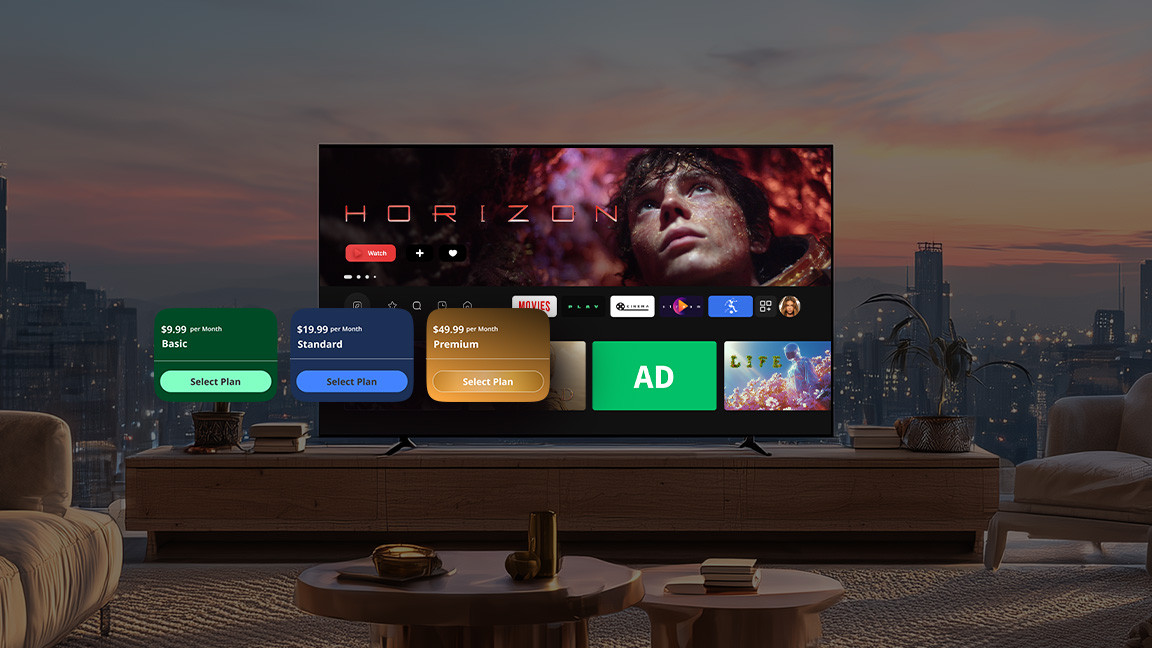
The mechanics of subscribing may look similar across platforms, but the psychology does not translate cleanly. Mobile subscriptions are often personal, spontaneous, and reinforced by frequent touchpoints. Fire TV subscriptions are collective, slower, and subject to household scrutiny, even if only one person initiates the purchase.
Input friction also changes the economics. Typing credentials, confirming payments, or navigating plan options with a remote introduces hesitation that does not exist on touch devices. This makes every additional decision expensive in terms of conversion. As a result, subscription flows that succeed on mobile can quietly fail on TV, not because pricing is wrong, but because the effort-to-value ratio shifts.
Another difference lies in expectations. Mobile users are accustomed to experimenting with apps and canceling later. Fire TV users treat installation and subscription as a stronger signal of intent, which raises the bar for trust and clarity before committing.
Subscriptions on Fire TV should be treated as a long-term revenue strategy rather than a short-term monetization win. The model compounds value over time, but it rarely produces immediate returns, especially during the early stages of a product’s lifecycle.
This has practical implications for business planning. Expecting rapid revenue growth from SVOD on Fire TV often leads to overly aggressive paywalls, rushed onboarding, or premature optimization, all of which increase churn before the product has earned loyalty. Sustainable subscription revenue emerges only after retention stabilizes, content cadence proves consistent, and the service becomes part of a household’s routine.
In that sense, SVOD on Fire TV behaves less like a conversion funnel and more like a relationship. It rewards products that can afford to think beyond the first billing cycle and punishes those that try to force results too early.

Fire TV monetization almost never exists on its own. The real test begins once the same app needs to perform consistently across multiple TV platforms, operating systems, and viewing habits, without forcing compromises in UX or performance.
Build a custom TV app with monetization designed for real viewing behavior, platform differences, and long-term scale. From Fire TV to other Smart TV environments, a cross-platform approach keeps revenue logic consistent and the experience coherent as you grow.
Advertising on Fire TV is most effective if it aligns with the structural realities of television viewing and is not treated as a universal alternative to subscriptions. Unlike SVOD, advertising does not rely on commitment, but on tolerance, which on TV is shaped by session length, intent, and continuity, not by price sensitivity alone.
The decision to use advertising should therefore start with an assessment of how the app is actually used, not with assumptions borrowed from mobile or web distribution.
Advertising works best for Fire TV apps designed around free access and exploratory consumption, where viewers arrive without a fixed goal and are comfortable browsing or letting content play on its own. Free VoD services typically fit this pattern, especially when the catalog is broad and discovery-driven, instead of centered on a limited set of high-value titles.
For niche content services, advertising tends to work when free access aligns with audience expectations and session length allows interruptions to blend into the viewing flow. In this setup, ads help sustain availability by funding access to specialized content and usually register as part of the experience, not a disruption.
Early in distribution, advertising often serves a different purpose. It lowers the barrier to entry, supports discovery, and makes it possible to observe real viewing behavior on Fire TV before committing to tighter monetization constraints or recurring payment models.
Across all these scenarios, advertising succeeds not because content is free, but because the product creates enough viewing continuity for interruptions to feel acceptable.
Although AVOD and FAST both rely on advertising, they operate under different assumptions about how viewers engage with content on Fire TV.
AVOD is built around intentional viewing. The viewer selects specific content and accepts advertising as a condition of control. This places strong constraints on ad timing and frequency, since interruptions are evaluated against the perceived value of the chosen title. AVOD performs best if sessions are long, and ad placement respects the viewer’s initial decision to watch something specific.
FAST, by contrast, is built around passive consumption. Viewers enter a channel-like experience and allow content to play continuously, with advertising appearing at expected intervals. On Fire TV, this approach aligns well with lean-back usage patterns because it reduces the need for active choice and replaces it with flow.
Problems arise in situations where these two approaches are blended without regard for their underlying assumptions. AVOD experiences overloaded with channel-style advertising tend to frustrate viewers, while FAST channels burdened with on-demand logic undermine the very passivity that makes advertising viable.
From an implementation perspective, advertising on Fire TV introduces technical and UX constraints that directly affect the perceived quality of the app. Most advertising setups rely on third-party SDKs, which increase complexity within the playback pipeline and place additional pressure on performance, memory usage, and startup time.
On a television screen, even minor issues become highly visible. Delays before playback, buffering during ad transitions, inconsistent audio levels, or UI responsiveness problems are immediately attributed to the app itself. Viewers do not separate advertising failures from product failures, which means advertising inherits full responsibility for experience quality.
UX constraints are equally important. Fire TV advertising requires careful control over frequency, placement, and predictability, since switching between apps is effortless and tolerance for disruption is limited. Ads that appear too early or too aggressively tend to shorten sessions instead of monetizing them.
For this reason, advertising should only be introduced once the core playback experience is stable and capable of absorbing additional load without visible degradation.
There are cases where advertising should be ruled out entirely for Fire TV apps.
Premium content loses perceived value whenever interrupted by ads, particularly if the product positions itself around quality, focus, or exclusivity. Apps built around short sessions or outcome-driven usage also struggle with advertising, because interruptions feel disproportionate to the value delivered.
Educational, wellness, and children’s content frequently fall into the same category, where continuity and trust are central to the experience. In these scenarios, advertising does not support monetization goals and instead accelerates disengagement.
In such cases, advertising does not fail gradually or underperform quietly. It directly conflicts with the product’s value proposition and increases churn in ways that are difficult to reverse.
In-app purchases (IAP) on Fire TV convert only in situations where intent is already formed. Unlike subscriptions or advertising, IAP does not survive hesitation, browsing, or gradual discovery. It succeeds at the point where the viewer has a clear expectation and wants a specific outcome without additional explanation.
This is why the most effective Fire TV IAP use cases are intentionally narrow. Content unlocking performs best for clearly defined units, such as a full season, a themed bundle, or a premium tier that is visibly distinct from the free experience. One-time purchases work best if they permanently remove a limitation, for example, ads or restricted functionality, and never reappear as another decision. Event access and pay-per-view fit naturally into this model because the value is time-bound and immediately understandable.
Patterns borrowed from mobile tend to break down on TV. Navigating multiple purchase options with a remote, comparing tiers, or stepping through layered confirmation flows introduces friction that quickly outweighs perceived value. The shared nature of the TV screen further raises the threshold for spontaneous purchases, which limits volume even at reasonable price points.
For these reasons, Fire TV in app purchases don’t usually function as a standalone monetization model. Their real value appears in targeted moments that subscriptions and advertising are not designed to capture.
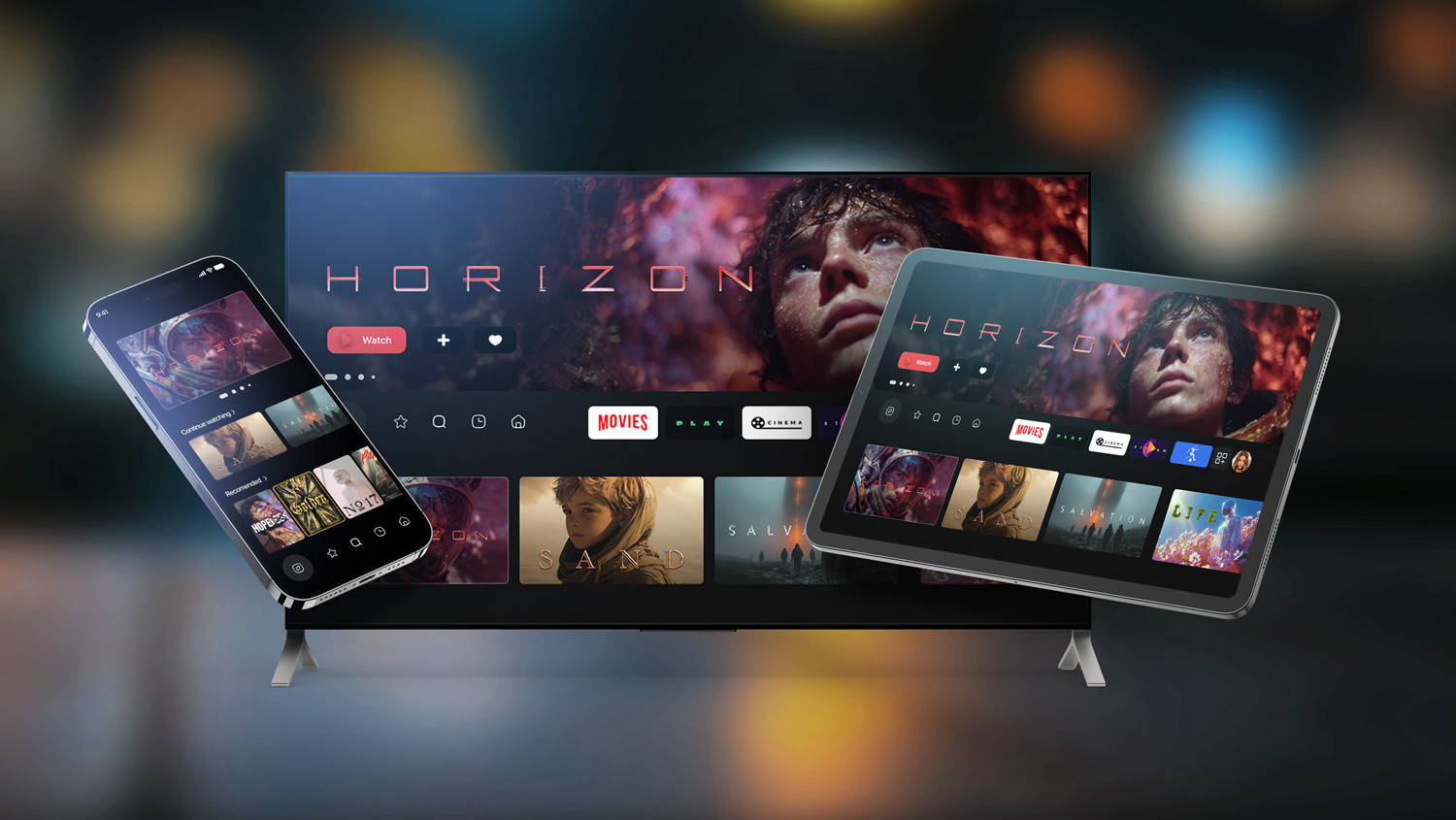
Hybrid monetization appears on Fire TV for one simple reason: a single revenue model rarely aligns with how every viewer approaches the same app. Some viewers arrive casually, some return on a schedule, and others show up only for specific moments. Hybrid setups make sense once these behaviors are separated instead of being pushed through a single decision flow.
Advertising supports discovery and low-commitment viewing, while the premium tier offers a cleaner, uninterrupted experience for viewers who stay longer. The free layer has to stand on its own, and the subscription should remove friction that naturally accumulates over time, such as interruptions or access limits, without feeling like a correction.
This structure suits viewers who avoid long-term commitments and prefer control over individual decisions. The app remains usable without payment, and in-app purchases appear only at moments of clear intent, such as unlocking a specific collection, feature, or event. Each purchase must justify itself immediately, since hesitation on TV often ends the session.
Subscriptions support regular usage, and pay-per-view monetizes exceptional moments without reshaping recurring pricing. This setup fits products with steady engagement and occasional spikes in attention, allowing committed viewers and one-time visitors to coexist without friction.
Hybrid monetization begins to fall apart once boundaries become blurred. If viewers struggle to understand what is free, what is paid, and why multiple options exist simultaneously, evaluation replaces engagement. On Fire TV, that shift usually ends with an exit, which directly affects retention.
Once the monetization model is chosen based on viewing behavior instead of habit, implementation on Fire TV becomes a matter of discipline and focus, not experimentation. At this stage, the goal shifts away from exploring options toward executing a single, coherent path to revenue and validating it under real conditions.
A practical rollout usually comes down to a short sequence of steps:
1. Confirm the monetization model
Lock the primary model before touching tooling. Decide what the first monetization moment is and where it appears in the user journey. Changing models later is possible, but designing without this clarity usually creates a fragmented UX.
2. Set up Amazon IAP (if subscriptions or purchases are used)
Define products, pricing, and entitlements cleanly in the Amazon Appstore, keeping naming and structure simple. Restoration logic should be treated as part of the core experience, not as an edge case.
3. Integrate advertising only if it fits the model
If advertising is part of the strategy, integrate it after core playback is stable. Ad delivery should be predictable, paced, and tested under real device constraints, since any instability will be attributed to the app itself.
4. Adapt UX for remote-first interaction
Monetization flows must be designed for directional navigation, limited input, and shared-screen usage. Every additional step carries a cost on TV, so clarity and hierarchy matter more than feature completeness.
5. Test billing and payment flows end-to-end
Sandbox testing should cover first-time purchases, renewals, cancellations, and restoration across sessions and devices. On Fire TV, billing issues surface as trust issues very quickly.
6. Validate compliance with Amazon policies
Subscription terms, ad behavior, disclosures, and content rules should be reviewed before submission. Policy issues discovered after launch usually delay revenue and disrupt momentum beyond the approval stage.
7. Publish and monitor the right metrics
Early focus should be on conversion points, early churn, session length, and exit behavior around monetization moments. During the first iterations, these signals are more important than raw installation numbers.
Monetization becomes real the moment it ships. From there, the difference between steady revenue and endless revisions comes down to commitment. Teams that release a clear setup, let it run, and study how people respond tend to stabilize faster. Teams that keep adjusting before patterns have time to form usually end up reacting to noise instead of behavior.
Earning on Fire TV rarely comes from stacking every available monetization option into a single app. It comes from choosing the model that matches how the product is used, how value is perceived on the TV screen, and how revenue fits into the broader business strategy, then executing that choice without dilution.
Subscriptions, advertising, and IAP all work on Fire TV, but only in the contexts they are built for. The teams that see consistent results are the ones that make a clear decision early and resist the temptation to compensate with complexity later.
When the choice is based on how people actually watch, Fire TV stops feeling like an experiment and starts behaving like a real revenue channel. And if you need help making that call, validating it across platforms, or getting it live without issues, Oxagile can step in and support the process from strategy through launch.
Smart TV app development tends to look straightforward until the same product needs to run on another platform, adapt to a different OS, or support new monetization logic without breaking UX or performance. Building with that reality in mind from the start is what allows TV apps to scale across platforms instead of being rewritten one launch at a time.

Fire TV app monetization is the process of generating revenue from a Fire TV application through subscriptions, advertising, in-app purchases, or a controlled combination of these models. The key factor is not the model itself, but whether it aligns with how viewers use the app on a TV screen, including session length, intent, and tolerance for friction.
Fire TV ads monetization works when advertising is introduced into experiences designed for free access and longer, less goal-driven sessions. It performs best in free VoD and channel-style apps, where interruptions feel proportional and expected, and performs poorly in short-session or premium-focused products where ads disrupt the core value.
Amazon Fire TV revenue potential depends less on platform mechanics and more on product fit. Revenue grows when the chosen monetization model matches viewing behavior, onboarding clearly communicates value, and monetization moments appear after trust is established. Misaligned models typically fail before scale is reached.
To monetize Fire TV apps effectively, businesses should choose a single primary monetization model based on product type and audience behavior, design the monetization flow specifically for remote-first interaction, and validate performance before introducing additional layers such as hybrid models or upsells.
The best-fit Fire TV monetization strategies are selective rather than comprehensive. Successful apps focus on one model that fits their product, subscriptions for continuity, advertising for free access and scale, or IAP for high-intent moments, and expand only when added complexity clearly improves retention or revenue.

