








This website uses cookies to help improve your user experience
Top object recognition development companies in 2026:
Scored on production proof, video depth, independent reviews, MLOps, and transparency. Last reviewed July 2026.
Object recognition is one of those technologies most people interact with every day without realizing it. It powers everything from self-checkout systems that recognize products to security platforms that detect suspicious activity from hundreds of camera feeds.
If you strip away the buzzwords, object recognition is the branch of computer vision that enables software to identify and classify specific objects within images or video streams. It could be people, cars, machinery components, inventory, or anything you can capture on camera.
Most vendors gloss over the fact that spotting that something is in the frame is the easy 20%. Knowing what it is well enough to act on is the other 80%, and that’s exactly what sets the best object recognition development company apart from other self-described computer vision experts.
Demand for image recognition isn’t slowing down any time soon. Research and Markets, for instance, reports that the global image recognition market has already cleared $73 billion in value and is projected to leap to $149.07 billion by 20301. This massive growth is being driven by a shift towards edge computing integration and AI-powered custom vision platforms.
This guide is the shortlist of who’s actually good at this, what each one brings to the table, and how to think about picking a partner you won’t regret 18 months from now.
Key takeaways:
Zoom in on the surveillance side of things, and the growth curve gets even steeper. Grand View Research found that AI in the video surveillance market, where object detection and tracking are core functions, is expected to grow from $6.5 billion at 30.6% annually, to eventually reach $28.76 billion by 20302.
Most of that growth is due to companies moving away from off-the-shelf APIs, which tend to fail when challenged by changes in camera angle or too many objects on screen.
That’s the gap a real object recognition company is brought to close, and it’s a lot more involved than swapping in a smarter model.
The work also involves building a full pipeline. That means:
Oxagile builds exactly this kind of thing for what it’s worth. So before putting this list of the best object recognition companies together, we went through dozens of vendors ourselves, weighing client reviews, portfolio depth, and how much of each company’s domain expertise is real versus just marketing, to land on a shortlist worth your time.
You can quickly shorten your long vendor list when you know the questions to ask. The right questions for an object recognition project aren’t quite the ones you’d ask a general computer vision shop.
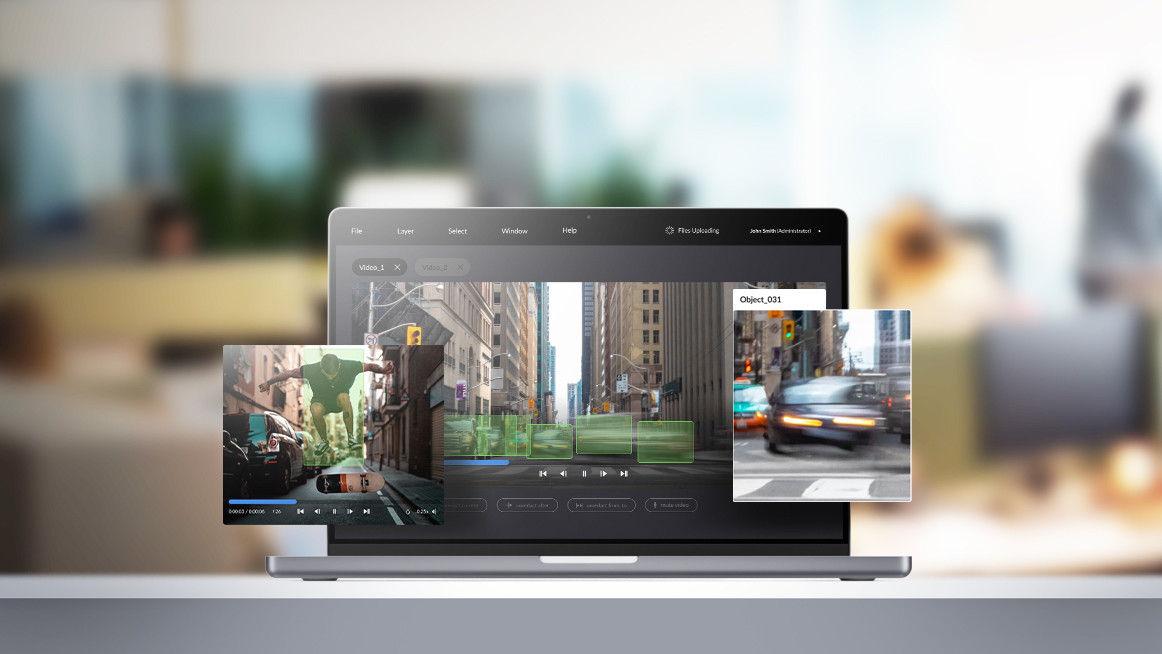
A vendor should be able to tell you how they handle annotation, dataset curation, and validation against the kind of footage you’ll actually run, not a clean public dataset.
Edge devices, mobile devices, and server-side cloud all have different requirements for latency and throughput. A partner should be able to walk through that tradeoff, including how confident a prediction needs to be before it triggers an alert, without dodging the question.
Real-world conditions are where most object recognition systems break. Partial occlusion, motion blur, low light, and camera-angle changes all affect accuracy in ways a lab demo doesn’t reveal. Vendors who can talk openly about handling these cases, instead of just listing frameworks and detection transformers, are usually the safer bet.
Finally, find out what happens after launch. Ongoing monitoring, retraining, and performance optimization should be part of the conversation.

Oxagile’s experts are here to discuss what’s realistic for your data and timeline.
This list was built by digging through Clutch, GoodFirms, and other industry sources, then checking each claim against each company’s own case studies and public client references.
A well-established object recognition development company offers object recognition as part of a broader practice, rather than as a single-product vendor selling a packaged detection API. This is a list of names that stand out in that regard.
Founded: 2005
Headquarters: New York, USA
Employees: 300+
Specialties: Video analytics, computer vision, object recognition, behavior analysis, facial recognition
Oxagile has been knee-deep in video technology for more than 20 years, and that’s the reason their object recognition work holds up. There’s a meaningful difference between building object detection models on curated image datasets and developing systems that have to perform reliably across continuous video streams in real-world conditions. Oxagile is firmly the latter.
The team has shipped object-tracking, edge-detection, person-attribute-detection, and behavior-analysis systems for public-safety, healthcare, retail, and media clients.
Everything runs under ISO 27001 certification, which matters whenever a project handles sensitive video or biometric data.
What sets the company apart is the range of object recognition disciplines it covers in production, including crowd analysis, occlusion handling, thermal-camera temperature screening, and emotion detection and attribution, in addition to standard detection and tracking.
Oxagile takes this a step further with complementary capabilities. It is also an emotion and facial recognition development company, so projects that need more than basic object detection don’t have to engage a second vendor.
Our AI engineers build object recognition for the footage your system will actually have to process.

Oxagile built a powerful video analysis platform that helps public safety operators identify and respond to incidents in real time. The system processes high-volume video streams for incident detection, supporting investigation pipelines, architected to scale across large monitoring environments, not just a single camera feed.
Founded: 1997
Headquarters: New York, USA
Employees: 750+
Specialties: Computer vision, medical imaging, image-based quality control, AI development, enterprise software
ScienceSoft has been operating for a long time, with deep roots in healthcare and financial services. Its AI practice extends that domain expertise into object detection and image-based quality control.
While many top object recognition companies emphasize AI usage, ScienceSoft’s strength lies in combining computer vision expertise with mature delivery processes and a focus on compliant development.
They are also certified to ISO 9001, ISO 27001, and ISO 13485. If your project needs to survive the grueling audits of a regulated industry, this kind of compliance documentation is mandatory and makes them an attractive choice.
Founded: 1997
Headquarters: New York, USA
Employees: 6000+
Specialties: Computer vision, AI engineering, data analytics, enterprise software integration, digital transformation
Building an object recognition model is the easy part. Wiring it into an actual enterprise stack without breaking everything is another animal altogether. DataArt has set itself apart by treating object recognition as one gear in a bigger machine.
To that end, their integration approach means their computer vision and image analysis plugs straight into analytics platforms, operational systems, business applications, and decision-making workflows.
DataArt has grown into a global engineering firm with more than 6,000 specialists across 20+ countries, a scale that eliminates concerns about properly staffing a project.
The client list spans multiple industries including finance, healthcare, retail, travel, logistics, and media. It’s also poured funding into AI, analytics, and R&D labs that allow teams to engage with emerging technologies early, maintaining the delivery discipline required for large-scale enterprise projects.
If your plan is to fold object detection, classification, tracking, and analytics into a larger digital transformation push, DataArt has the scale and engineering depth to support that decision.
Founded: 2002
Headquarters: North Miami Beach, Florida, USA
Employees: 2200+
Specialties: AI engineering, machine learning, data science, computer vision, cloud solutions
N-iX is known among top object recognition development companies for taking on engineering-heavy AI work. For those who want a custom object recognition system rather than a packaged computer vision solution, they deliver.
Their teams cover machine learning, data science, MLOps, and cloud engineering, which means they can handle the entire object recognition pipeline themselves: dataset preparation and annotation through model training, inference optimization, deployment, and ongoing monitoring. That full-range stack matters most for companies working on big projects where object detection is just one organ in a much larger machine-learning body.
N-iX has also demonstrated its capabilities across manufacturing, logistics, retail, and automotive organizations, where factors such as accuracy, throughput, and latency directly affect business operations.
For businesses looking for a computer vision development company to build long-term capabilities, not standalone proof-of-concept projects, N-iX is worth a look.
Founded: 2007
Headquarters: New York, USA
Employees: 200+
Specialties: Digital transformation, enterprise software, AI solutions, cloud engineering
Most object recognition projects start small and innocent, then grow into a full business transformation problem. New workflows, legacy systems that suddenly have to talk to each other, and processes no one documented all come together to compound the issue. That is the kind of mess Intellectsoft is built to handle.
They call themselves a digital transformation consultancy and engineering partner. Its AI capabilities include visual information processing, machine learning, data analytics, and enterprise AI solutions, making it a viable partner.
For businesses looking to integrate object recognition into broader operational workflows and not deploy it as a standalone computer vision model, the company provides AI capabilities that include visual information processing, machine learning, data analytics, and enterprise AI solutions.
They’ve worked in healthcare, retail, construction, insurance, logistics, and other enterprise sectors where object detection and image analysis often need to work with existing applications, databases, and decision-making systems. Intellectsoft is not chasing niche computer vision bragging rights; they connect an AI initiative to the bigger modernization goal behind it.
Founded: 1991
Headquarters: Tallinn, Estonia
Employees: 2000+
Specialties: AI and data science, computer vision, product engineering, R&D consulting
Some object recognition projects are relatively straightforward. Others show up with a weird dataset, a use case that doesn’t have a clean solution yet, and requirements that don’t fit any framework off the shelf. ELEKS has built itself on taking on that second category most vendors avoid. They are broadly viewed as a technology consulting and engineering partner, with research pedigree.
They have teams working across artificial intelligence, computer vision, machine learning, and data science, helping turn experimental ideas into production-ready solutions. For businesses exploring advanced object recognition use cases where off-the-shelf approaches may not be sufficient, they’re an option.
The company has experience delivering for the logistics, retail, manufacturing, automotive, and healthcare industries, often including broader analytics and automation initiatives. If you want a partner who can both write the code and tell you whether the idea is good in the first place, ELEKS earns a look.
Founded: 2002
Headquarters: Chicago, Illinois, USA
Employees: 3000+
Specialties: Automotive software, IoT, AI engineering, cloud solutions, digital products
A lot of object recognition never sees a server room. It lives on connected devices, industrial equipment, mobile applications, and intelligent transportation systems. Intellias has spent a long time operating in exactly this kind of situation.
Their reputation comes from automotive, mobility, telecommunications, and IoT work, fields where computer vision capabilities run in real time under performance constraints or chokes.
That background translates into practical experience with edge deployment, real-time inference, and distributed architectures that support object detection and recognition closer to where data is generated, instead of shipping it back to a data center and hoping latency doesn’t mess it up.
Add cloud engineering, data platforms, and digital product development to their portfolio, and Intellias makes a strong case to organizations building connected products that rely on visual intelligence.
They can bank on experience across mobility, logistics, retail, and industrial sectors, which is relevant to combine object recognition with larger IoT and automation projects.
Founded: 1995
Headquarters: Minneapolis, Minnesota, USA
Employees: 2000+
Specialties: Custom software engineering, AI and machine learning, data engineering, cloud solutions
Not every object recognition project requires extensive R&D or a multi-year transformation program. Sometimes, organizations simply need a partner that can build a reliable solution and integrate it into existing systems efficiently. That’s Coherent Solutions’ whole lane.
Nearly three decades of custom software development underpin their AI and machine learning work, which is exactly why their computer vision projects feel like engineering rather than experimentation.
They specialize in quality, scalability, and boring-but-essential stuff like uptime. Coherent shows up wherever object recognition needs to do one thing really well, across industries like healthcare, manufacturing, logistics, and retail. This combination of solid AI chops and old-school software engineering discipline makes them a good pick for going from idea to deployment without the drama.
Founded: 2007
Headquarters: Warsaw, Poland
Employees: 3500+
Specialties: AI and machine learning, custom software development, data science, cloud engineering
Where some object recognition projects might need a boutique outfit with niche specialties, others need an army. For organizations that require large, multidisciplinary engineering teams, Innowise is worth considering.
After two decades of operation, the company has grown into a large, full-cycle software engineering organization spanning AI, machine learning, data engineering, cloud platforms, and enterprise development.
That size means they can efficiently assemble multidisciplinary teams that cover the entire object recognition pipeline (dataset preparation, annotation deployment, and long-term maintenance).
The company works across healthcare, manufacturing, logistics, retail, and other industries where object recognition is just one part of a larger digital initiative. It has experience with both mid-sized businesses and enterprise clients and the delivery capacity to cover multiple areas that’ll allow to avoid the need for stitching together several vendors.
Founded: 2016
Headquarters: San Francisco, California, USA
Employees: 100+
Specialties: AI development, machine learning, computer vision, data engineering
If you don’t need an army to build your object recognition system, then the tight-knit, AI team at Azumo is worth considering. It was built from the ground up as an AI-focused shop, with a reputation that rests on machine learning, computer vision, data engineering, and whatever AI technology is genuinely new this quarter, not whatever’s two years old and finally safe to sell.
Unlike the bigger names on this list, where AI is one offering among others, here, it is the entire point. That may mean fewer layers between you and the engineer working on your project.
Azumo has built custom computer vision and object recognition across healthcare, logistics, retail, and technology. It may not match the scale of the previously mentioned firms, but it’s not trying to. The pitch here is depth and focus over size.
| Company | Founded | Team size | Best known for | Good fit for |
| Oxagile | 2005 | 300+ | Video analytics, object recognition, facial and emotion recognition | Public safety, healthcare, retail, and media organizations working with continuous video streams |
| ScienceSoft | 1997 | 750+ | Medical imaging, quality inspection, regulated-industry AI | Healthcare, financial services, and organizations with consequential compliance requirements |
| DataArt | 1997 | 5000+ | Enterprise AI integration, analytics platforms, digital transformation | Companies that need object recognition integrated into existing business systems and workflows |
| N-iX | 2002 | 2200+ | AI engineering, machine learning, data science, computer vision, cloud solutions | Manufacturing, logistics, retail, and businesses building end-to-end AI solutions |
| Intellectsoft | 2007 | 200+ | Digital transformation, enterprise software, AI solutions, cloud engineering | Organizations that mix object recognition with larger operational transformation initiatives |
| ELEKS | 1991 | 2000+ | AI and data science, computer vision, product engineering, R&D consulting | Companies facing complex or unusual object recognition challenges that need research |
| Intellias | 2002 | 3000+ | Automotive software, IoT, AI engineering, cloud solutions, digital products | Connected products, mobility platforms, transportation systems, and industrial IoT |
| Coherent Solutions | 1995 | 2000+ | Custom software engineering, AI and machine learning, data engineering, cloud solutions | Businesses looking for tested, production-ready object recognition deployments |
| Innowise | 2007 | 3500+ | AI and machine learning, custom software development, data science, cloud engineering | Organizations seeking a single partner for AI, analytics, cloud, and software development |
| Azumo | 2016 | 100+ | AI development, machine learning, computer vision, data engineering | Teams that want a specialized, AI-focused partner with a hands-on engineering approach |
The right partner depends less on who tops a ranking and more on whether their experience matches the kind of data you generate and the deployment environment.
A company built around video technology like Oxagile is a sensible choice for continuous feeds and real-time monitoring. One built around automotive engineering like Intellias makes more sense for in-vehicle detection, while large generalists like DataArt and Coherent Solutions can bring the scale an enterprise rollout might require in a way boutique shops can’t. And the list can go on.
All ten companies featured in this list of the best object recognition development companies were vetted for technical depth, client track record, and demonstrated delivery. Before you engage a partner, ask to see a deployment that has run in production for at least a few months. It is a much stronger signal of success than any portfolio slideshow you will ever watch.
Choosing the right technology partner is a significant decision, and it is easy to get lost in marketing claims. If you are figuring out the requirements or need an expert opinion on your data annotation and deployment strategy, we are here to help.
Let’s talk about your project and build a realistic plan.
1. Image Recognition Market Report 2026 — Research and Markets
2. AI In Video Surveillance Market — Grand View Research
The best object recognition development company for you entirely depends on your data and deployment target.
For instance, Oxagile’s video tech background makes it a strong choice for continuous video streams and real-time monitoring, while companies like Intellias or ELEKS may be a better fit for automotive or embedded use cases.
It all starts with what your environment demands and which vendor has the skill set or capabilities that match your needs.
Beyond general software engineering skills, your search for the right partners should be built around the following pillars:
The global market for object recognition development services is heavily driven by mid-market custom software engineering firms. They can provide end-to-end consulting, tailored algorithm training, and seamless integration into existing software architecture in a way that large, generalized IT conglomerates struggle to match.
They set themselves apart based on specialization:
If you need high-level contractors or consultants to solve a specific problem, talent marketplaces such as Toptal or Upwork Enterprise can be a good starting point.
For industrial object recognition initiatives that require end-to-end delivery, many organizations choose specialized computer vision development companies like Oxagile that assemble multidisciplinary teams of computer vision engineers, ML specialists, data scientists, solution architects, and software developers to design, train, deploy, and maintain production-grade recognition systems.
CCTV footage is complex, and so you’ll need a partner that specializes in multi-object tracking and live video data pipelines.
Focus on looking for video engineering infrastructure experience with a strong heritage, such as Oxagile, which has spent decades building video pipelines, streaming architecture, and low-latency integrations. Filter for your use case to make sure it matches the vendor’s portfolio of capabilities.
Several leading vendors specialize in engineering custom vision models to automate supply chains, warehouses, and fleet operations. The stand-out names include: Oxagile, N-iX, Intellias, Innowise, and ScienceSoft. Look for OCR integration and models optimized for varied lighting conditions to get the most accurate results.
To develop these apps, a vendor needs deep expertise in edge computing and model optimization. They should be able to shrink massive neural networks to run locally on a device without an internet connection. The top vendors mentioned on this page can be a match.
There is no single ‘best’ provider in the USA. The market is split by technical specialization, industry focus, delivery model, and location. The market is fragmented by industry focus, technical specialization, and location. The strongest contenders generally fall into three categories: AI-first consultancies, computer vision specialists, and large engineering firms with dedicated AI and object recognition practices. You can fall back on our list to find a few of the top companies worth noting.
Object detection finds where something is in an image or video frame, it usually draws a box around it. Object recognition goes further and identifies what that object is, classifying it against categories the model has been trained on. Most production systems need both: detection to locate, recognition to classify, then tracking to follow the object across frames. Oxagile builds all three as a single pipeline rather than separate stages.

