








This website uses cookies to help improve your user experience


Even with recent improvements, the scale of public safety challenges remains significant today. According to FBI’s recent Reported Crimes in the Nation, U.S. law enforcement agencies reported approximately 14 million criminal offenses nationwide1.
At the same time, road safety remains a persistent challenge. The National Highway Traffic Safety Administration reports that the United States experiences millions of police-reported traffic crashes every year. Official federal crash databases show that total crash volumes in 2024 remained above six million incidents2, and 2025 estimates indicate comparable levels, despite incremental safety improvements.
Safety challenges are not limited to cities and roads. In the workplace, particularly in construction, manufacturing, and logistics, data from the U.S. Bureau of Labor Statistics shows over 2.6 million non-fatal workplace injury and illness cases3 recorded just a while back, reflecting ongoing risks linked to missed hazards, delayed detection, and procedural non-compliance.
As these numbers continue growing along with technology breakthroughs and advancements, a sound way out is to get the most out of computer vision solutions for security and meet as many safety challenges as possible.
When applied accurately, powers of AI for security can prevent any uncontrolled situation and reduce the number of accidents, either on the road, at the workplace, or during the assessment. Take a look at the use cases where computer vision eliminates the risks of crimes, injuries, and non-compliance with regulations.
Besides assisting with making a more precise diagnosis and identifying the diseases at an early stage, computer vision solutions enable unprecedented safety at the workplace.
On the one hand, AI-driven systems carefully track whether workers follow the enterprise rules, like utilizing protective clothing and equipment or adhering to all workplace and safety regulations.
Anti-Covid-19 measures, which became essential some years ago, are another example. Making all efforts to provide a secure enterprise environment during the pandemic increased employee loyalty and prevented revenue losses due to a high sickness level across the organization.
CV contribution is multifaceted — first, a face mask recognition feature will instantly detect incorrect mask wearing as well as uncovered faces. Thermal cameras implemented won’t allow people having a subfebrile temperature to enter the building, showing high temperature determination accuracy, about 0.3 °C (~0.5 °F).
Real-time tracking of multiple objects is carefully searching for the number of people gathered simultaneously in the closed space, so a minimal safe distance is never ignored. Incorporating remote computer monitoring tools can further enhance security measures, allowing organizations to track and manage system activities seamlessly and ensure compliance across all devices.
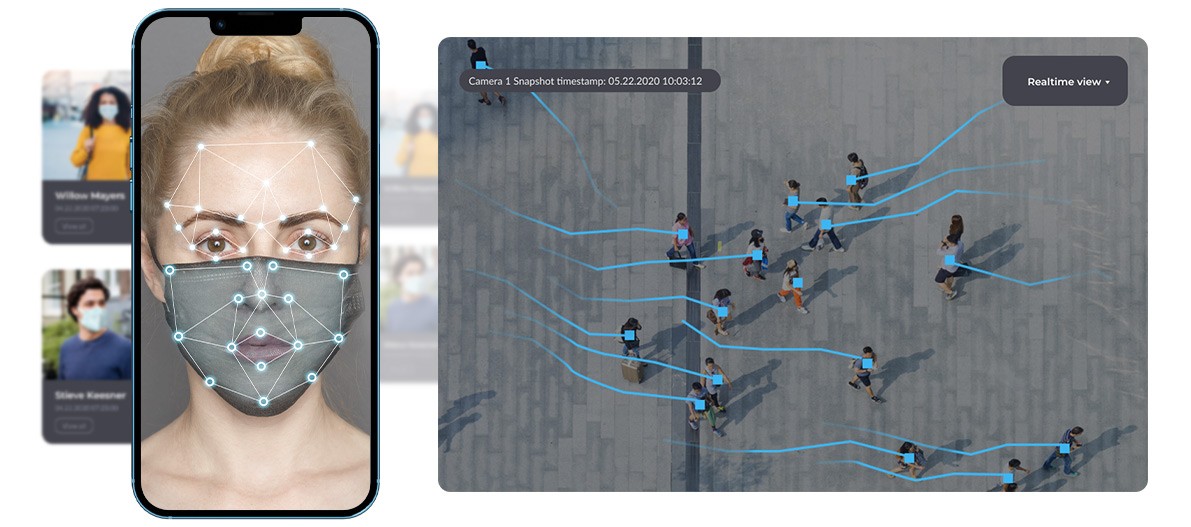
Face and object tracking system
Even the low quality of surveillance videos, constantly moving objects, or improper angles is not an issue for computer vision systems to demonstrate a high accuracy of video and image analysis.
If you need more details about the CV safety system performance and person detection accuracy, you’re welcome to explore our enterprise-grade computer vision solution accelerating employee safety at the workplace.

We’ll show you how advanced computer vision tech can provide actionable intelligence for your organization. From precise monitoring to predictive insights, our solutions will optimize safety workflows and support informed decision-making.
Is this even real?
Imagine a car accident involving injuries due to a bus driver’s sudden heart attack. Another automobile crash occurred because the chauffeur was drunk. Someone stole a car and crashed into a lamp post, moving at high speed. The things lost in the vehicle cost an office worker his monthly bonus, as he forgot the documents required for making a deal.
Each of the stories is not an out of the ordinary event. But when a lack of attention, emergencies, and a breach of law are threatening reputation and even lives, there’s one question that arises:
Are there any solutions capable of preventing all the issues above?
Let’s go in order: to improve driver and passenger safety, thus minimizing accident rates, CV-powered fleet safety software comes to assistance. While object detection and tracking features chase and analyze the suspicious pose and behavior of the driver, emotion and face recognition algorithms closely follow the driver’s engagement rate, sobriety, and fatigue.
Then, a computer vision surveillance system can support communication between cars and road infrastructure. When vehicles, roads, and surveillance cameras function like a single organism, drivers get more info about traffic conditions and transportation services detect suspicious “racers” timely.
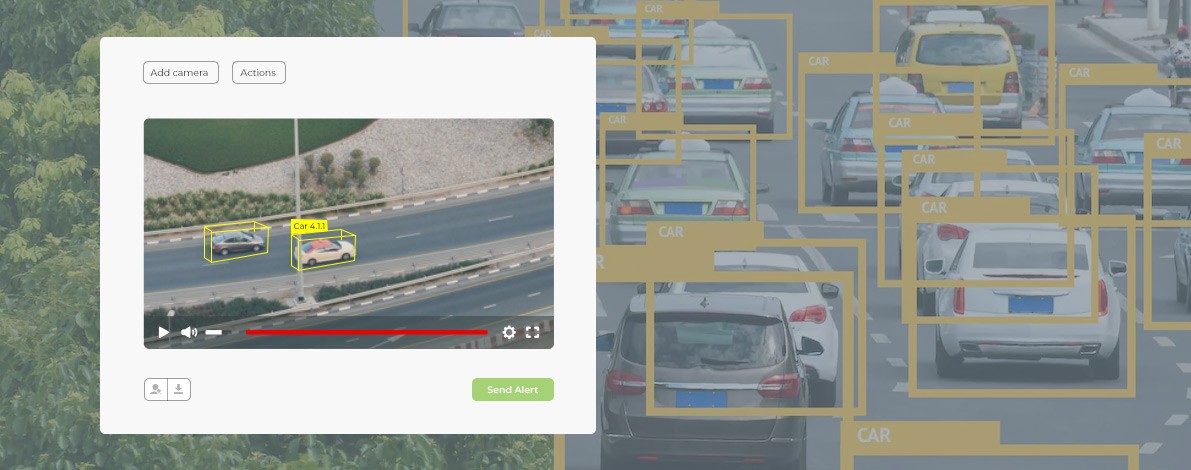
Face and object tracking system
How do AI surveillance services come to the rescue? They detect all means of transportation, other objects on the roadway and beyond as well as their precise location. Traffic flow and conditions are carefully monitored, whereas automatic number-plate recognition allows quickly finding troublemakers.
The interior monitoring systems armed by intelligent video surveillance analytics, behavior analysis, and action detection features prevent drivers or passengers from forgetting stuff or leaving pets inside the car. Neither absent-mindedness nor haste will become a source of big troubles.
What’s computer vision capable of in tandem with Oxagile’s CV team?
AI-based city surveillance systems shouldn’t be underestimated. Being a source of evidence for further investigations, they serve as invaluable assistants for law enforcement to quickly solve crimes. But wait, there’s more — computer vision for security can as well prevent store thefts or other criminal offenses, detecting threats in advance and sharing warning signals with the police forces or security officials.
Crowd collapses, accidents occuring due to unfavorable weather conditions — AI surveillance tools are monitoring the safety of people, being the first to scan doubtful or abnormal behavior.
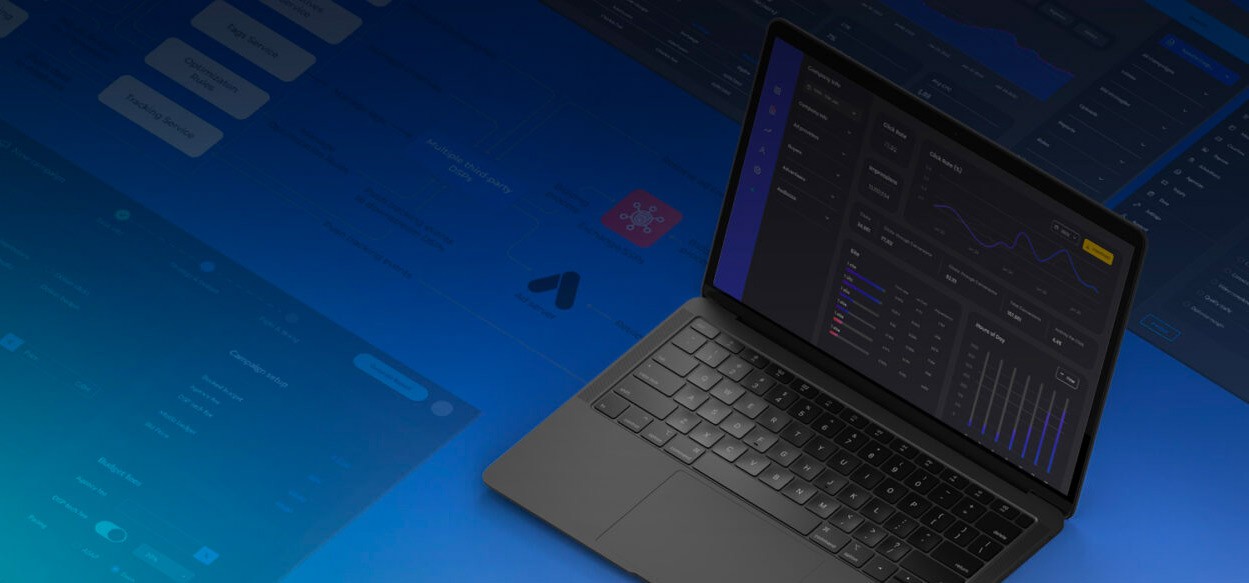
How many times can a video analysis solution increase the powers of the police force? We’re giving you the answer backed up with one of our project cases. Sick and tired of a long-hour manual analysis and redaction of video evidence, the police were searching for a solution to automate these processes, thus saving their time and efforts for more sophisticated tasks.
Almost 100% person detection accuracy, even during poor visibility conditions, the ability to blur any face or object on the video to use it in court, comprehensive reporting on the videos thanks to leveraging computer vision tech for effective security, we also managed to speed up the work of the police up to 60 times.
One of the most exciting recent developments is how computer vision is being used not just for physical surveillance, but to connect physical events with cyber events, enabling a unified approach to threats. Intelligent CV systems don’t just watch doors and perimeters — they observe and contextualize physical behavior alongside digital indicators, helping security teams see patterns that might have been missed before.
For example, a CV-enabled system can identify someone attempting to tailgate through a secure entry point and simultaneously correlate that event with unusual login attempts, privileged access requests, or anomalous network activity. By combining these streams of data, organizations gain a richer, more comprehensive security picture, reducing the blind spots that often exist when physical and digital security operate in isolation.
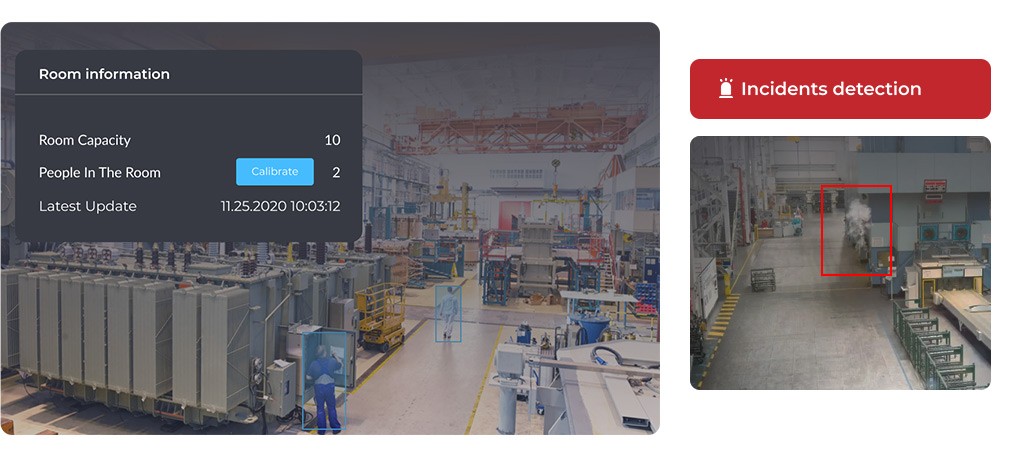
Employee safety solution
Beyond individual events, such systems can track longitudinal patterns: repeated minor anomalies that seem innocuous on their own may, when viewed across multiple sensors and timeframes, reveal coordinated attacks, insider threats, or emerging vulnerabilities. This lets security teams move from reactive responses to predictive, preventative strategies, mitigating risks before they escalate into serious incidents.
For example, a CV-enabled security system in a corporate campus may observe a sequence of small, seemingly unrelated events over several weeks: an employee repeatedly entering secure areas outside regular working hours, occasional tailgating incidents that do not trigger alarms, and brief visits to rooms that are unrelated to their role. Individually, none of these actions appear suspicious. However, when computer vision correlates these physical observations with digital signals, such as repeated failed authentication attempts, unusual access to internal repositories, or abnormal data transfer timing, a broader pattern begins to emerge.
Viewed together across cameras, access points, and system logs, these low-level anomalies can indicate early-stage insider activity or reconnaissance behavior. By detecting such patterns before any direct breach occurs, security teams can investigate, adjust access privileges, or reinforce controls proactively.
Computer vision is increasingly used not only to protect facilities from external threats, but also to improve internal safety and compliance. In many organizations, security risks arise from everyday situations such as human error, missed procedures, or unintentional policy violations rather than deliberate attacks.
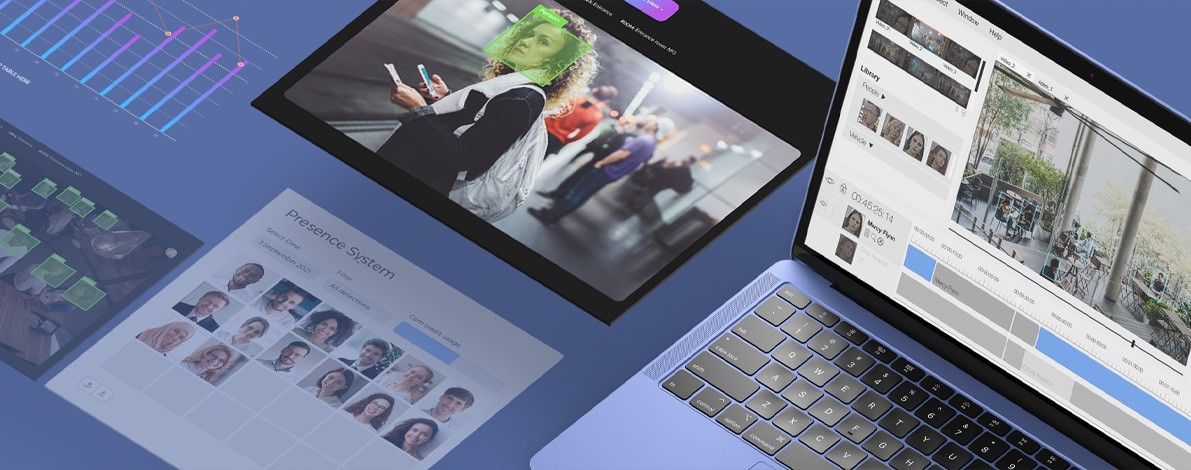
Person detection system
Modern CV systems can monitor how employees interact with sensitive areas and equipment. By analyzing visual data in real time, these solutions can detect unsecured doors, unattended workstations, or attempts to access restricted zones without proper authorization. Identifying such issues early makes it easier for security teams to respond before minor lapses develop into serious incidents. This also reduces the need for constant manual supervision.
Beyond access control, computer vision also supports workplace safety monitoring. Visual analytics can detect whether employees enter hazardous areas without required protective equipment or leave potentially dangerous equipment unattended. When combined with alerting or automation systems, this approach aids organizations in improving safety standards, reducing accident risks, and maintaining compliance using the same technology stack already deployed for security.
The application of computer vision for security and safety reasons isn’t limited to the cases we’ve described.
Our experience at Oxagile shows that using computer vision surveillance for safety extends far beyond standard scenarios. Across different industries, we’ve repeatedly seen the same CV approaches manifest in diverse ways depending on context, infrastructure, and the real-world risks organizations face.
In some cases, computer vision security acts as an early warning system, detecting visual anomalies in workplaces or public spaces before they escalate into incidents or downtime. In others, it helps connect disparate signals, like people’s behavior, movements, access to restricted areas, and digital activity, creating a more comprehensive understanding of potential threats. This is particularly valuable where the line between physical and cyber security is increasingly blurred.
We also observe a shift in CV’s role from reactive incident response to proactive prevention. Analyzing video streams, images, and sequences of actions over time allows organizations to identify minor recurring anomalies, which individually may seem insignificant but collectively indicate systemic risks: whether procedural violations, operator fatigue, rising accident rates, or early signs of insider threats.
Our hands-on experience with video, image, text processing, and multimodal data handling shows that computer vision is no longer an experimental technology. It is a practical tool that, when implemented thoughtfully, can reduce incidents, accelerate investigations, support regulatory compliance, and improve overall safety without excessive manual oversight.
When viewed as part of a broader risk management system rather than as an isolated “smart module”, the potential of computer vision becomes virtually limitless.
Drawing on our experience across industries, we can identify practical ways to leverage CV to reduce risks, be it physical security, workplace safety, or operational compliance.
1. FBI Releases 2024 Reported Crimes in the Nation Statistics — FBI.Gov
2. Traffic Safety Facts Annual Report Tables — NHTSA
3. There were 2.6 million nonfatal workplace injuries and illnesses in 2023 — U. S. Bureau of Labor Statistics
Computer vision surveillance goes beyond simply recording video footage. It uses AI algorithms to automatically detect and analyze objects, behaviors, and events in real time. Unlike traditional monitoring, a computer vision surveillance system can identify threats, track people and vehicles, and generate actionable alerts without constant human supervision.
Computer vision security makes proactive risk management simpler by detecting potential hazards, unsafe behavior, or unauthorized access. In workplaces, it ensures compliance with safety protocols, monitors the use of protective equipment, and helps prevent accidents. In public spaces, it can detect suspicious behavior or crowding, supporting timely interventions.
Modern computer vision surveillance software typically includes object detection, facial recognition, activity and behavior analysis, and integration with access control or IoT systems. These features allow organizations to track real-time events, identify anomalies, and generate reports automatically, making security and safety operations more efficient.
Yes. Advanced computer vision surveillance systems are designed to perform accurately even with low-quality video, unusual angles, crowded environments, or variable lighting. They combine object tracking, motion detection, and analytics to deliver reliable monitoring regardless of the conditions.
Computer vision security is highly adaptable and scalable. The same technology can be applied in industrial facilities, transportation systems, smart cities, and corporate campuses. Its flexibility allows organizations to implement solutions tailored to specific operational risks, whether for internal safety, road safety, or city-wide surveillance.

