













This website uses cookies to help improve your user experience


Those who own the data rule the world. At Oxagile, effective strategies don’t rely on guesswork; they are fueled by accurate audience insights and intelligent use of technology.
The future of digital advertising is not about replacing one channel with another, but about creating a connected environment where streaming, linear TV, and new interactive formats coexist. Recent Deloitte Media & Entertainment Outlook1 research highlights growing demand for audience intelligence, creator-led content, and AI-assisted media experiences as competition across platforms intensifies.
It centers on connected ecosystems where streaming, linear TV, and interactive formats coexist. This convergence improves reach, personalization, and cross-screen audience engagement. As video continues dominating content consumption, AI-driven creative production and audience insights play a larger role in TV advertising. Reuters reports that major media companies continue expanding streaming platforms even as traditional linear TV advertising revenue declines2.
The industry is changing fast, even in DOOH advertising. And several trends already influence how video ads work today. Below are seven key predictions shaping the market, along with two growing forces: generative AI in video ads and AI-driven influencers.
Key takeaways:
The truth is that convergent TV is no longer a buzzword. Both digital and linear TV paths are equally vital to follow to reach the maximum number of viewers. Linear TV still plays a major role in live sports, news, and event broadcasting. At the same time, streaming platforms dominate overall viewing time, with connected TV (CTV) accounting for more than 43% of total TV usage in the U.S., and ad-supported viewing representing over 70% of that share3.
Traditional broadcast TV is inevitably undergoing certain transformations (and this is not a one-time process) to keep up with digital channels, but there’s no mention of linear TV’s total disappearance. Its role is evolving toward complementing streaming strategies and supporting converged advertising models across channels.
How should advertisers behave? If you’re going to neglect linear sources by focusing solely on those video providers who rely on digital streaming channels only, you’re likely to be on the wrong track. The future of video marketing is shaped by hybrid strategies that combine the reach of broadcast TV with the targeting precision of streaming platforms.
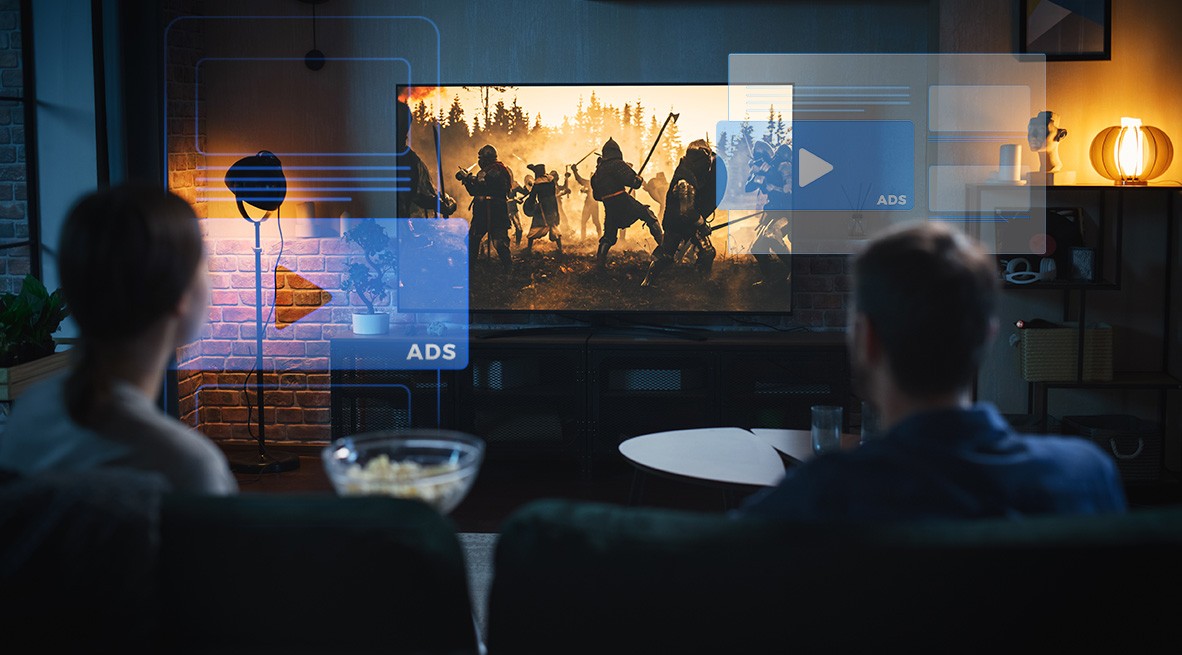
Having several streaming subscriptions has become the new norm for households so far, especially in the US, but there’s a snag. Such a multi-subscription approach contradicts a soaring tendency to save their pocket.
Consumers increasingly choose lower-cost streaming plans with ads. The Deloitte Media & Entertainment Outlook mentioned above also found that 68% of streaming subscribers now use at least one ad-supported tier.
Publishers, in turn, are up to every move in the game, generating bundled subscription packages. For a video streaming service consumer, this means mind-blowing cost savings, but what about advertisers?
What should the advertisers’ move be? Just like in the case of the previous prediction, there is a need for advertisers to chase those media providers possessing ad inventory across linear and streaming channels and representing a rich content portfolio that is particularly appealing to consumers. By targeting bundled services and ad-supported offerings, advertisers can maximize exposure across diverse audience groups while maintaining cost efficiency.
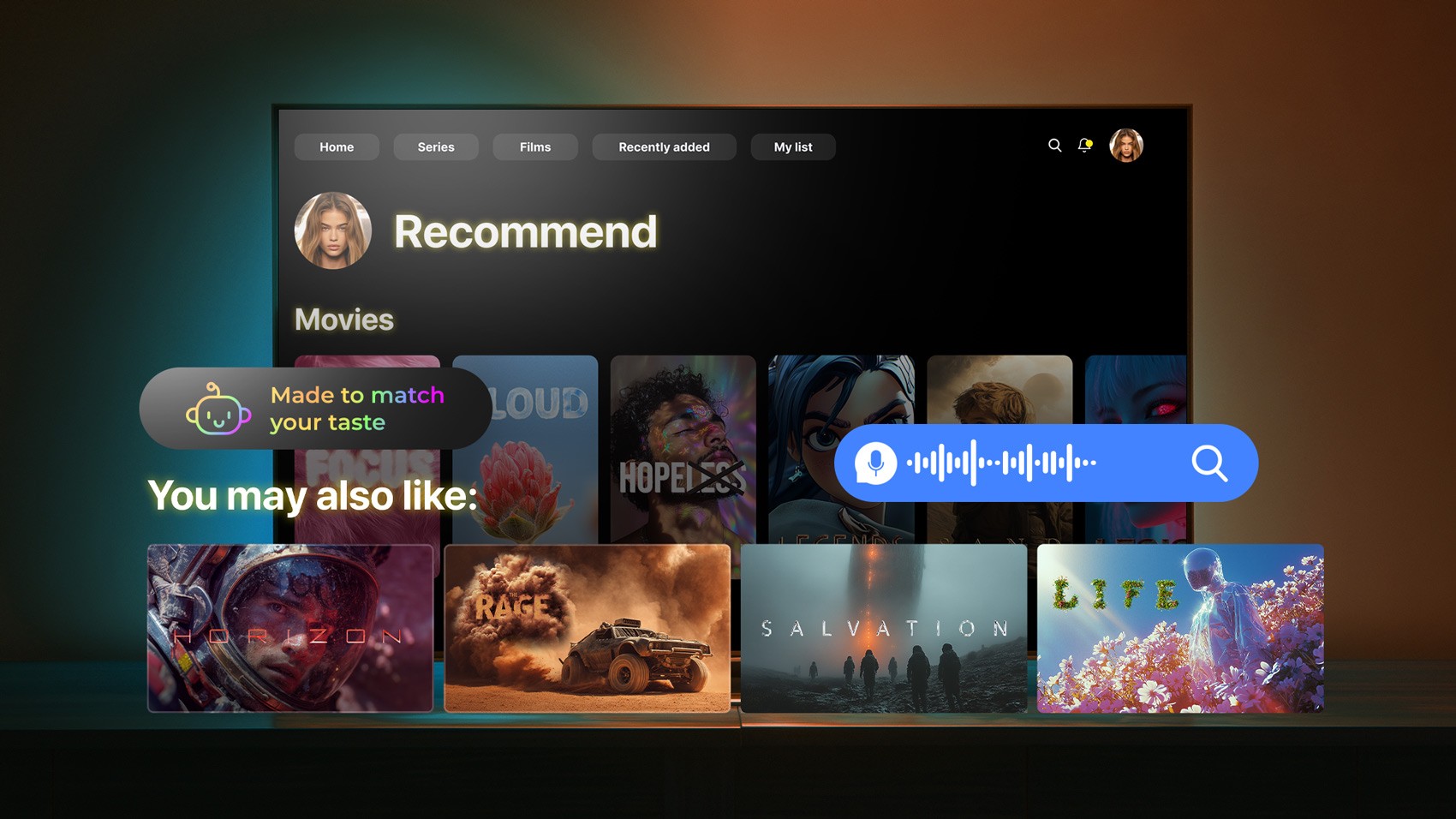
Oxagile built a custom AdTech platform combining audience targeting, ad inventory management, campaign analytics, and BI reporting in one ecosystem.
Key outcomes:
Third-party cookies are phased out, which makes all cookie-powered ad strategies obsolete and fruitless. To adapt to a new reality, good old methods come in handy, and contextual targeting is no exception.
Publishers seem to be in a privileged position, having a firsthand understanding of their content.
And does contextual targeting work for advertisers? As one of the scenarios for winning their core audiences with well-directed messages, yes, it does, especially if the advertisers are in the context of the content provided by publishers. But contextual ads are not a panacea, therefore, reliance on first-party data appears to be the case.
Privacy-first advertising strategies are becoming standard across digital media. After Google ended the Privacy Sandbox initiative in late 2025, advertisers increased investment in contextual targeting, first-party data, and AI-based semantic analysis to improve ad relevance without relying heavily on third-party cookies4.
The advice here can be as follows: deal with the parties using privacy-first data enablement platforms. This will help continue with behavioral targeting tactics that have been tried and tested for years.
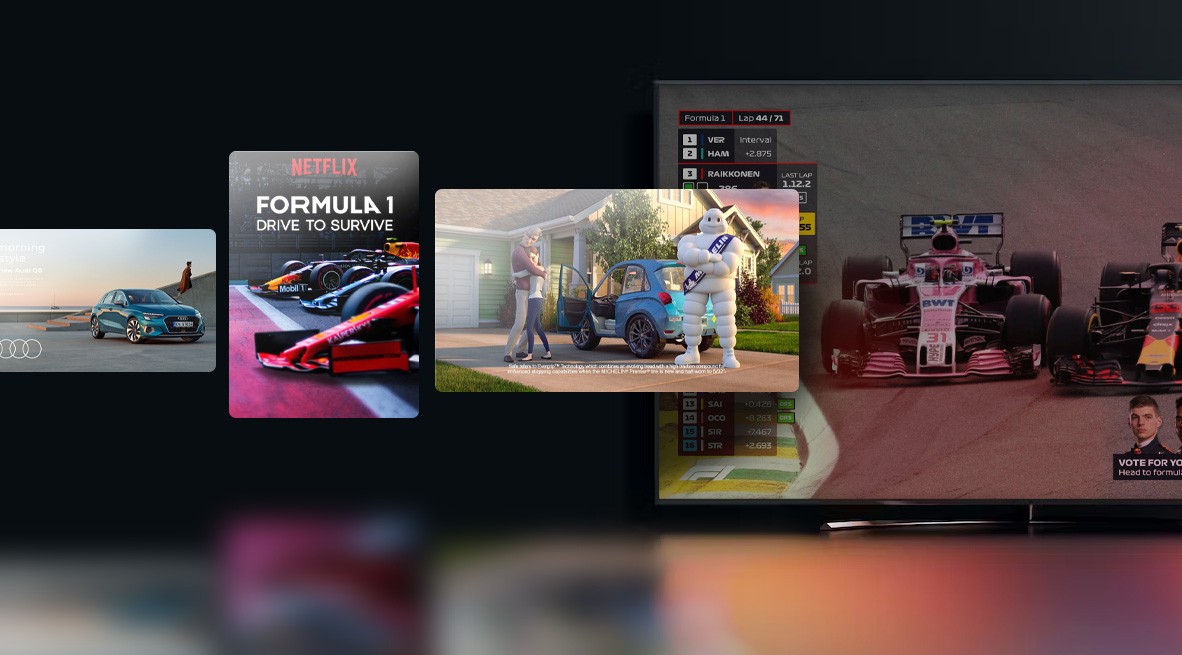
“Two heads are better than one” is not rocket science, right? As innovations are a way to compel clients’ attention, they should supercharge all ad ecosystem components, including cross-screen measurement, viewing experiences, and AdTech supply chains.
By the example of TV ad measurement, both buyers and sellers are searching for new discoveries in this field. Why not join forces, then?
What are the possible steps ahead? Collaboration across the advertising ecosystem will play a major role in what comes next. A standardized ecosystem is only possible when advertisers and publishers act together across linear, CTV, and streaming platforms. With multiple players like Nielsen, iSpot, and VideoAmp competing in this space, brands are increasingly engaging in cross-industry alliances to establish unified standards and reduce fragmentation.
Data clean rooms and joint audience insights initiatives are becoming more common, helping publishers and advertisers share information in privacy-compliant ways and improve targeting and campaign performance.
What do sustainability and multiscreen advertising have in common at all? It’s a sound question, and the tendency is that sustainability is not merely a trend or a “nice-to-consider” thing, but an obligatory RFP clause.
How do you shift to a business context here? Whether it’s about partnerships between ad ecosystem players or steps for acquiring new clientele, every single business action should be evaluated from the perspective of its favorable impact on Earth. Working on reducing carbon emissions is the responsibility of all industries and parties, without exception.
Today, sustainability is not just a checkbox; it has become an industry-wide standard. Advertisers are also optimizing supply paths and leveraging direct integrations with DSPs and DMPs to cut unnecessary intermediaries, reducing both costs and energy usage.
The business case is clear: companies that embrace sustainability strengthen client trust, enhance partner relationships, and secure long-term growth contributing to global climate goals at the same time.

Use AI to automate video operations, personalize content, optimize advertising, and improve viewer engagement across platforms.
Generative AI for digital video is quickly becoming part of everyday advertising workflows. Video platforms, advertisers, and media companies now use AI to speed up production, personalize creatives, and scale campaigns across channels without multiplying operational effort.
The biggest impact comes from automation across repetitive production tasks and audience adaptation.
Common Gen AI use cases include:
For advertisers, this creates faster production cycles, lower content costs, and more flexibility across streaming, CTV, and social video campaigns.
IAB’s March 2026 “AI-Powered Video Outcomes” note says AI is moving across planning, execution, measurement, creative production, and privacy. The video ad spend report adds a concrete market signal, with U.S. digital video ad spend projected to surpass $80B in 2026 and account for more than 60% of total TV and video ad spend for the first time5.
How should advertisers behave? The technology offers speed, lower production costs, and the ability to produce highly personalized ad variations across multiple channels. For advertisers, the key is to integrate GenAI into creative workflows to gain agility and relevance while maintaining brand consistency. Those who master GenAI will be able to deliver stronger engagement and measurable ROI.
AI-driven influencers are becoming more visible across advertising and social media campaigns in 2026. Recent coverage from The Verge6 showed AI-generated influencers flooding social media around Coachella 2026, with brands and creators using synthetic personalities to generate festival content at scale.
At the same time, Vanity Fair7 reported that major creators increasingly build AI clones of themselves to produce branded content, expand audience reach, and reduce production workload. These developments also hint at the future of mobile video advertising and show how AI influencers are moving beyond experimentation into mainstream advertising workflows.
What should the advertisers’ move be? Efficiency is attractive, but authenticity and trust remain critical. Brands should consider blending AI influencers with human ones to balance cost-effectiveness with emotional credibility. By experimenting with hybrid strategies, advertisers can test audience response and refine their influencer marketing for the future of advertising.
These are just a few brief predictions and some actionable advice for modern advertisers, so they can narrow down quite a blurred picture of what keynotes to address to maximize their reach and make a bigger impact on their target audience.
Today, the future of digital advertising rests on convergence, personalization, and innovation powered by AI. From linear TV’s evolving role to subscription shifts, privacy-first targeting, industry collaboration, sustainability, and now GenAI-driven creativity and AI influencers, every trend points to a market that rewards adaptability.
For advertisers, the path forward is not about choosing one channel or tactic, but about orchestrating all of them into a connected strategy that drives measurable outcomes. Partnering with the right AdTech experts can turn these predictions into practical steps for growth.
Oxagile’s team helps modernize video and AdTech ecosystems for AI, streaming, and privacy-first advertising.
1. 2026 Media & Entertainment Industry Outlook — Deloitte
2. Streaming Growth and Linear TV Decline — Reuters
3. Connected TV Is Transforming Advertising — Nielsen
4. Privacy Sandbox Technologies Update — Google
5. 2026 Digital Video Ad Spend & Strategy Report: Part One — IAB
6. AI Influencers at Coachella 2026 — The Verge
7. AI Creator Clones in Advertising — Vanity Fair
CTV and OTT will become core channels for video advertising because they combine streaming reach with more precise targeting and measurement. CTV and OTT support:
For advertisers, this means stronger personalization and more measurable campaign performance across streaming ecosystems.
AI transforms video advertising by automating creative production, targeting, personalization, and campaign optimization. Here’s how AI is commonly used to help advertisers launch campaigns faster and scale video production more efficiently:
Video advertising will adapt to a cookieless future through contextual targeting, first-party data, and privacy-focused audience analysis.
To maintain targeting accuracy without depending heavily on third-party cookies advertisers increasingly rely on:
The most effective future video ad formats will focus on personalization, interactivity, and cross-platform delivery. Common high-performing formats include:
These formats perform well because they align more closely with viewer behavior across streaming and mobile platforms.

