











If you are browsing the market for a payment service provider (PSP) for your current or upcoming project, you may soon discover that most of the options look surprisingly similar.

The majority of payment services support the same payment methods, have fairly comparable commissions, and come with highly functional, convenient APIs. But the day integration begins, important differences may start kicking in:

  • Fragmented payment stacks that don’t quite dovetail
  • Regional nuances that break perfectly good flows
  • Reconciliation glitches that manifest themselves weeks later
  • Payment orchestration challenges that have never been a part of the original plan
  • Other unforeseen integration or operational issues

This is exactly the reason why many teams don’t really struggle with the choice of a payment service provider, as there are plenty of perfectly good ones out there. Instead, they often have a hard time dealing with what happens after the service is paid for and when the work is well underway.

In this article, we’ll walk through a list of online payment service providers and look beyond raw features, examining how these platforms actually behave in production. We’ll also share practical insights from our own experience with payment integrations to demonstrate where complexity typically hides and what teams often severely underestimate when choosing a provider.

Key takeaways:

  • Most PSPs look like twins on paper. The real differences transpire during integration and in production.
  • Core payment features usually work as expected; edge cases (retries, refunds, async flows) carry most of the engineering complexity.
  • Poor reconciliation and inconsistent payment states create long-term operational issues, not just engineering ones.
  • A PSP choice is an architectural decision, since it directly affects your backend logic, reporting, and scalability potential.
  • Switching or expanding beyond one provider is rarely simple, so plan for it earlier than you think.

What is a payment service provider (PSP)?

A payment service provider is what allows your website or online store to actually accept payments from customers by securely connecting your checkout flow to card networks, banks, and alternative payment methods.

PSPs are integrated, all-in-one solutions. Instead of bridging together several third-party components, a PSP conveniently bundles everything into one:

Top Online Payment Service Providers (PSP) in 2026
A payment gateway
Captures and sends payment data from your checkout page
Top Online Payment Service Providers (PSP) in 2026
A payment processor
Pushes the transaction through banks and card networks
Top Online Payment Service Providers (PSP) in 2026
A merchant account
Securely holds the funds before they reach your business account

So instead of having to deal with three integrations, you only need to get one right. At least that’s the promise you see on their landing pages. Also, integrating a commercial product into your website is a substantially lower investment compared with the payment gateway cost if one is built from scratch.

PSP integration challenges

In practice, however, the bulk of integration complexity does not revolve around core features — they typically work as expected. It sits on the perimeter and in not-so-obvious edge cases that teams can’t always fully foresee while putting together an initial payment service providers list.

This complexity shows up in the parts no one really thinks about right away: for example, how refunds behave across different payment methods, or what happens when a payment is authorized but never gets captured, or how reliably transaction details make their way into your internal systems.

To give you some perspective, our payment software development experience is full of PSP examples where a refund was successfully processed on the PSP side, but never reflected correctly in the company’s reporting, creating reconciliation gaps at month-end. Or situations where a payment flow worked perfectly with debit/credit cards, but fell apart when a local payment method used asynchronous confirmation.

With that in mind, the real differences between PSPs become clearer when you look beyond the declared functionality and see how they behave in real integrations.

Case in point: PSP integration in a live environment

PSP integration in a live environment

In one of our projects, we helped a company evolve from a single PSP setup to a multi-provider architecture to improve reliability and reduce regional transaction failures.

Instead of a simple switch, this required building an integration layer. And it all happened in a running live production environment without disrupting active transactions.

Top online payment service providers

A company looking for the perfect PSP on the market would have zero problems finding one. Options range from globally recognized platforms to highly specialized, yet lesser-known regional payment solution service providers.

To give you some payment service provider examples, we put together a list of the most popular options available today. This is not a feature comparison table, but rather a reflection of how they tend to behave once real transactions start going through.
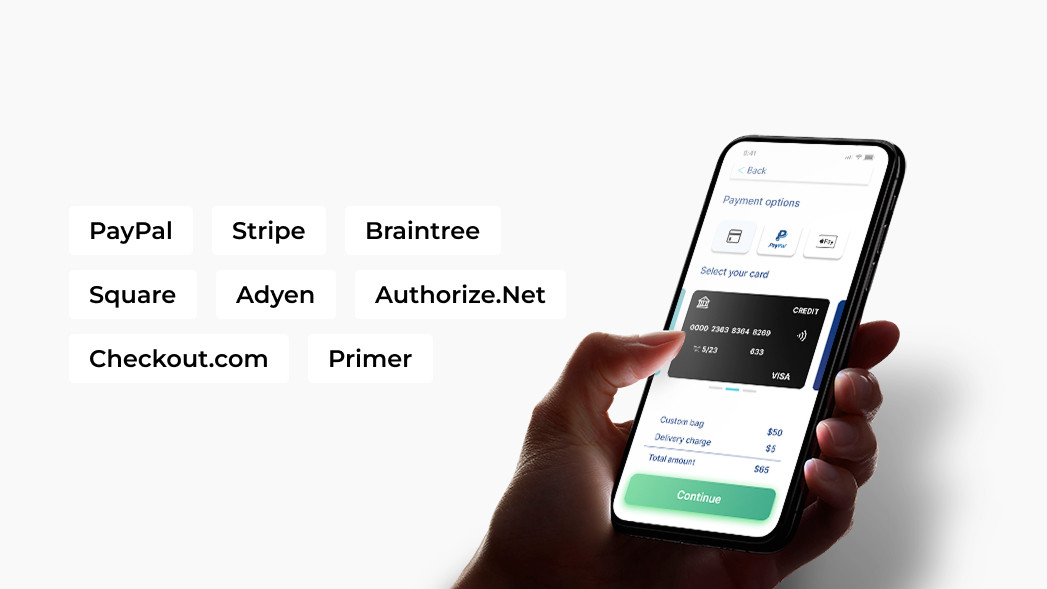
Top online payment service providers (PSPs)

Stripe

The go-to for developer teams who want full control and are comfortable handling the associated backend complexity. More than 195 countries, 135 currencies, and 100 payment methods, and various pricing tiers.

Top Online Payment Service Providers (PSP) in 2026
What it’s best at
Stripe is perfect for developer-driven teams that want to go for a clean, modular payment stack and fast time to market. It works especially well when payments are treated as part of a broader product workflow, not just a checkout step.
Top Online Payment Service Providers (PSP) in 2026
Where it can get tricky
The overall complexity ramps up quickly once you move beyond basic card transactions, because the real logic shifts into webhooks, retries, and payment state handling. Teams that try to keep everything in the frontend may end up failing to realize how much back-end orchestration Stripe expects.
Top Online Payment Service Providers (PSP) in 2026
Typical use cases
Best for SaaS, marketplaces, and digital-first businesses with strong technical teams that want outstanding flexibility and a modern development experience.

PayPal

Not the cleanest integration, but customers recognize it and often expect to see it at checkout. Quick setup makes it a practical choice, though fees can vary depending on payment type and region.

Top Online Payment Service Providers (PSP) in 2026
What it’s best at
PayPal is the strongest option when customer trust and familiar branding can improve checkout conversion. It is often used as a valuable complementary method for B2C businesses where customers already expect to see it as a payment option.
Top Online Payment Service Providers (PSP) in 2026
Where it can get tricky
PayPal offers several products that behave differently, which can complicate integration. The flow can be somewhat less intuitive than newer API-first PSPs, especially when it comes to order capture, redirects, and webhook reconciliation. Teams often need to put in extra effort to make sure the browser flow and the final payment status stay aligned.
Top Online Payment Service Providers (PSP) in 2026
Typical use case
Businesses aiming to boost conversion using payment methods familiar to wide audiences.

Braintree

A practical option for subscription businesses that need recurring billing, card vaulting, and PayPal support under one integration. Offers flexible pricing with standard per-transaction fees and no monthly charges.

Top Online Payment Service Providers (PSP) in 2026
What it’s best at
Flexibility with built-in PayPal support. Braintree is particularly strong in recurring billing and card vaulting, so it works great for subscription-first businesses that want a solid payment infrastructure without having to go all-in on a more complex enterprise orchestration layer.
Top Online Payment Service Providers (PSP) in 2026
Where it can get tricky
Development teams sometimes find the workflow more configuration-heavy than expected. Also, debugging can feel less smooth than with newer developer-first platforms like Stripe.
Top Online Payment Service Providers (PSP) in 2026
Typical use case
Best for subscription businesses, service platforms, and e-commerce teams that need PayPal, recurring payments, and vaulting in a single integration.

Square

Works well if your business operates both online and in person and you want one system for both. Has straightforward flat-rate pricing that’s easy to predict.

Top Online Payment Service Providers (PSP) in 2026
What it’s best at
Square is ideal when payments need to connect tightly with commerce, POS, and omnichannel operations. It is a natural fit for businesses that sell both online and offline.
Top Online Payment Service Providers (PSP) in 2026
Where it can get tricky
Less flexible for custom or non-standard payment flows. The integration can get messy around order synchronization, environment differences, and production debugging. Teams also need to be careful with duplicate requests, as network failures can make the same payment attempt look incomplete if idempotency (preservation of the original operation state) is not handled properly.
Top Online Payment Service Providers (PSP) in 2026
Typical use case
SMBs with omnichannel needs.

Adyen

Built for enterprise scale. Comes with a commensurate level of implementation complexity. Pricing is tailored and depends on region, volume, and payment methods.

Top Online Payment Service Providers (PSP) in 2026
What it’s best at
Enterprise-grade global infrastructure. Adyen was designed for global merchants who want a single payment platform across regions, payment channels, and acquiring methods.
Top Online Payment Service Providers (PSP) in 2026
Where it can get tricky
Longer onboarding and higher implementation complexity, because the system expects more operational discipline than simpler PSPs. Teams need to be ready for webhook-driven workflows, retries, and careful handling of payment lifecycle events.
Top Online Payment Service Providers (PSP) in 2026
Typical use case
Best for enterprise merchants, global marketplaces, and international brands that need an advanced, scalable, centralized payments infrastructure.

Authorize.Net

Dated developer experience, but stable and widely adopted. Still a solid choice if you don’t need a cutting-edge API, with predictable pricing that includes a monthly gateway fee plus per-transaction charges.

Top Online Payment Service Providers (PSP) in 2026
What it’s best at
Reliability and long-term stability. Authorize.net is an established, reliable gateway for merchants that look for a familiar and conventional setup. It’s a practical solution for businesses that value stability and broad adoption.
Top Online Payment Service Providers (PSP) in 2026
Where it can get tricky
A somewhat outdated developer experience. The integration can feel more old-school with a heavier emphasis on classic API-related work, sandbox discipline, and manual testing. Teams may also need to spend more time on result validation and environment-specific configuration.
Top Online Payment Service Providers (PSP) in 2026
Typical use case
Best for SMB eCommerce, legacy systems, and merchants that already have experience with Authorize.net.

Checkout.com

Good fit for teams that want more visibility and control over how payments behave, not just whether they go through. Offers flexible pricing tailored to volume, regions, and payment methods.

Top Online Payment Service Providers (PSP) in 2026
What it’s best at
Performance optimization and global coverage. Works great for merchants that seek a modern, high-control payments stack with strong checkout flexibility.
Top Online Payment Service Providers (PSP) in 2026
Where it can get tricky
Requires more hands-on management. The integration is more than just embedding a payment form, because the backend still has to manage session creation, authorization, and state updates properly.
Top Online Payment Service Providers (PSP) in 2026
Typical use case
Best for growth-stage and enterprise merchants that want more control over the payment experience and international processing.

Primer

Sits on top of your PSPs instead of replacing them, which is useful when you need to route across multiple providers or want redundancy built in. Pricing on demand, but typically based on usage and setup complexity.

Top Online Payment Service Providers (PSP) in 2026
What it’s best at
Powerful payment orchestration and multi-PSP setups. Primer is ideal for teams that need to connect multiple payment providers and is especially useful when the business is looking for routing flexibility, provider redundancy, or better optimization across payment methods.
Top Online Payment Service Providers (PSP) in 2026
Where it can get tricky
The extra abstraction is powerful, but it also adds another layer that the team must understand and maintain. Orchestration only makes sense if the merchant has a complex enough payment architecture to justify managing multiple providers through one system.
Top Online Payment Service Providers (PSP) in 2026
Typical use case
Best for larger merchants, marketplaces, and businesses that want to operate across several PSPs instead of relying on just one.

Top Online Payment Service Providers (PSP) in 2026

Tired of going through multiple PSP options that seem to be equally good on paper?

Let our experts walk you through this long payment service providers list and pick one that will work perfectly for your project and save you time and money during integration.

With years in the industry, we know exactly what determines how well payments work over time, what architectural decisions should be made, and how the entire system should be configured to make sure your revenue flow does not dry up at any point.

How to choose the right payment provider for your business

The PSPs above represent some of the most value-packed options available today, each with a distinct set of strengths and a slightly different integration approach. But knowing what each one offers doesn’t automatically tell you which one belongs in your stack.

When combing through a vast pool of payment services examples, feature-by-feature comparisons will only get you so far.

At a certain point, most providers can handle transactions. What actually matters is how they behave once payments start flowing through real scenarios and how much extra work they create around them.

A few pre-flight checklists will help separate a good fit from a costly one.

What happens when a payment doesn’t go through cleanly?

This is worth testing early, not after launch. Look at:

  • Failed authorizations followed by retries
  • Delayed confirmations (common with local payment methods)
  • Refunds issued before settlement

The key question is whether payment states remain clear and predictable at every step. If statuses feel unclear or hard to trace, be prepared to implement additional backend logic just to keep things in check.

Can your finance team reconcile this without manual work?

Payments don’t just end at checkout. They still need to make sense in reporting. Check:

  • How transactions, fees, refunds, and payouts are structured
  • Whether payouts can be confidently matched to internal records
  • How much manual adjustment is required at month-end

If reconciliation relies on spreadsheets or manual fixes, the integration is likely to become a massive ongoing operational burden (and a pain in the neck).

How does this behave outside your primary market?

A PSP may perform well in one region and fail to meet expectations in another. Pay attention to:

  • End-to-end behavior of local payment methods (not just availability/support)
  • Differences in timing, status updates, or failure handling
  • Any region-specific peculiarities that affect the flow

Inconsistent behavior across geos often requires extra normalization logic on the backend.

How much of your system will depend on this provider?

Some setups are easy to integrate but difficult to change in the future. Look for:

  • Business logic tied directly to provider-specific features
  • Heavy reliance on PSP-side workflows
  • Limited abstraction of payment states within your system

The more tightly coupled the out-of-the-box setup is, the more expensive future modifications become.

What happens if you need to add another provider?

Even if a single PSP is enough today, this may not be the case later down the road. To avoid PSP lock-in, you may want to explore the advantages of having multiple payment gateways in the future. Consider:

  • Whether another provider can be introduced without reworking core flows
  • How routing or failover would be implemented
  • Whether both providers can run in parallel during a transition

If adding a second PSP requires re-architecting the system, that cost is simply deferred and not avoided.

Concluding thoughts on the best payment solution service providers

What most PSP comparisons don’t tell you: PSP decisions often lead to re-architecture later, especially when expanding to new regions or adding providers. What starts as a simple integration can evolve into orchestration, routing, and reconciliation challenges that require a completely different system design.

And there’s no “ultimate” payment service provider that fits every business. It’s always a set of trade-offs that either align with your setup or make you change it. Stripe, Adyen, PayPal, and others all solve the same core problem, but they do it in ways that shape your architecture, your operations, and your ability to evolve later.

The right choice is the one that checks the most boxes under your real conditions: your markets, payment flows, reporting needs, and plans for growth. Get that alignment right, and payments become something you don’t have to think about. Get it wrong, and it’s something you’ll be fixing long after launch.

Top Online Payment Service Providers (PSP) in 2026

Still not sure which PSP is the right fit for your business?

Choosing a PSP is one of those decisions that looks simple at the start and gets expensive if done wrong. If you want to get it right from the beginning or fix an existing setup to stop leaking revenue, let our experts offer recommendations and practical help.

With a diverse project portfolio spanning over 20 years of software engineering, we have everything it takes to analyze your business case in detail and match it with the most efficient, scalable, and future-proof payment service provider in the market.

Tell us about your setup and we’ll tell you exactly where to go from here.

FAQ

What is the cheapest online payment service provider?

There’s no universally cheapest PSP. The implementation cost depends on your region, payment methods, and volume of transactions. Nominally lower fees can be offset by higher integration or operational overhead.

What is the difference between a payment gateway and a payment processor?

A payment gateway captures and securely transmits payment data, while a payment processor handles the actual transaction between banks. Most PSPs bundle both into a single solution.

Are online payment service providers secure?

Yes, reputable PSPs are natively PCI DSS-compliant and handle sensitive payment data securely. In practice, they also reduce your compliance burden by keeping card data off your systems.

Can I use multiple payment service providers on my website?

Yes, and many businesses eventually do. A multi-PSP setup can improve reliability and flexibility, but it requires proper orchestration and adds architectural complexity.

Categories
Table of contents

STAY WITH US

To get your project underway, simply contact us and an expert will get in touch with you as soon as possible.

Let's start talking!