









This website uses cookies to help improve your user experience



Most replatforming decisions look convincing on an architecture diagram. The real test comes once teams have to operate what they created.
Composable commerce is a way to build a commerce stack from independent, best-of-breed components. APIs connect those components into a working system. You pick a product engine, a cart, a search service, a payment layer, and so on, then assemble them into one storefront.
This guide is for teams weighing a move off a monolithic or packaged platform. It looks at where a composable commerce platform makes practical and financial sense, with catalog complexity, peak traffic, integration needs, and engineering capacity all part of the decision.
Key takeaways:
Composable commerce is an approach to building a commerce stack. The idea is simple: choose the catalog, cart, search, promotions, payments, and other capabilities separately, then connect them through APIs. Each remains an independent part of the architecture, so teams can replace or modify one without rebuilding the whole system.
The building blocks are often called packaged business capabilities, or PBCs. A PBC is a self-contained piece of business function, such as “search” or “checkout”. It ships with its own data and API and runs on its own and works like a Lego brick with a defined connector.
No single vendor owns the whole stack. You own the composition, and that ownership is both the point and the cost.
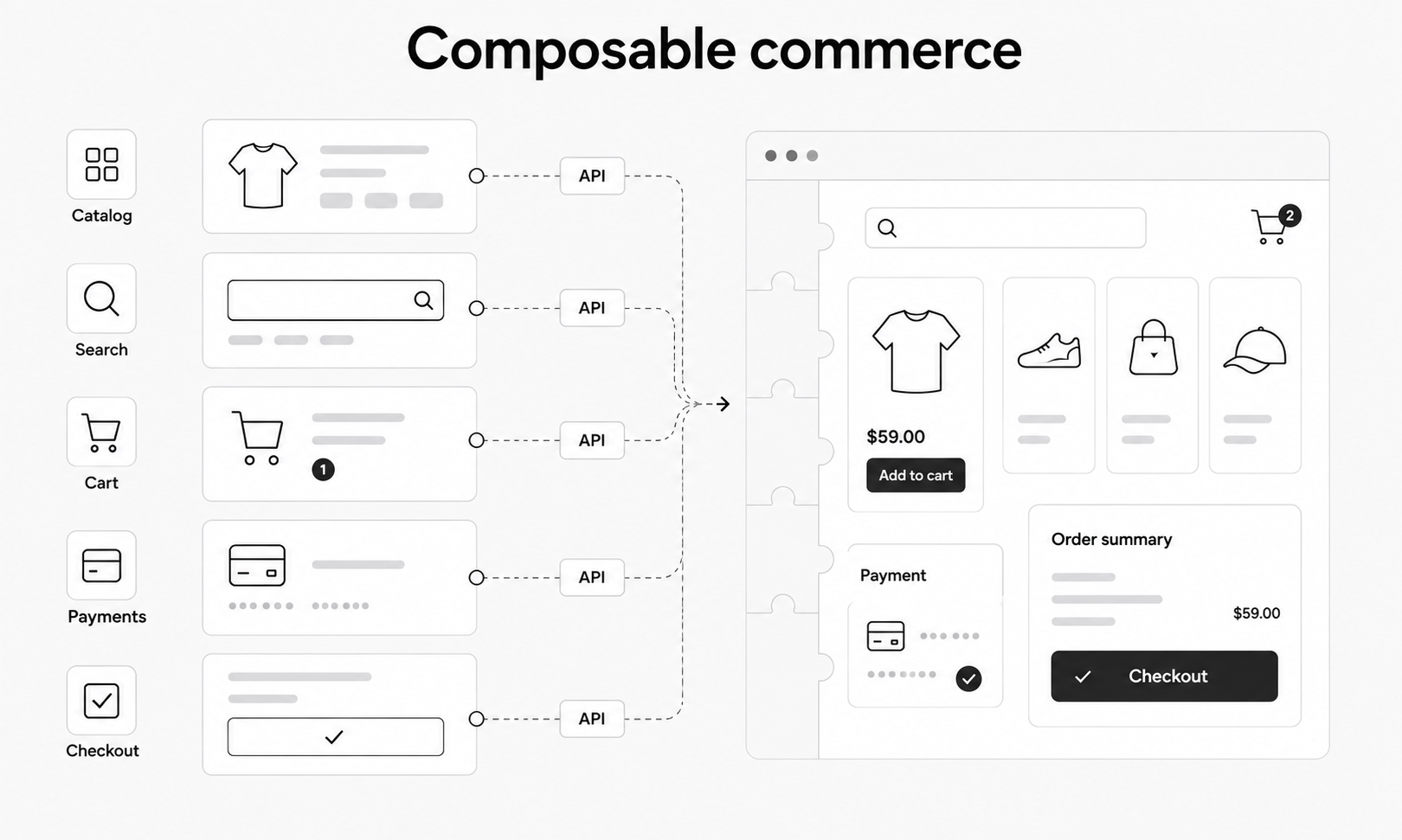
How is composable commerce different from monolithic and headless commerce? The main distinction is scope.
A monolith keeps everything in one system. Headless splits the frontend from the backend but often keeps one commerce engine behind it. Composable goes further and assembles the whole stack from separate services.
| Dimension | Monolithic | Headless | Composable |
| Ownership and control | One vendor owns the stack | You own the front end, the vendor owns commerce | You own the composition of every part |
| Speed of change | Slow, full-stack releases | Fast front-end changes | Change one service at a time |
| Integration burden | Low, built in | Moderate, front to back | High, you connect every service |
| Best fit | Standard catalog, small team | Custom UX on one engine | Complex needs, capacity to run it |
Headless is a front-end decoupling, while composable is a whole-stack assembly. Every composable setup is headless, but not every headless setup is composable.
If you split the storefront from one commerce engine, that’s headless. If you replace that engine with several independent services, you’ve gone composable.
MACH is the set of principles most composable stacks follow: Microservices, API-first, Cloud-native, and Headless. Each one carries an operational consequence you’ll feel in production.

That independence comes with more moving parts. Each service has its own APIs, dependencies, deployment cycle, monitoring, and failure modes. The more components in the stack, the more work falls on the engineering team to keep them connected and understand what happens when something breaks.
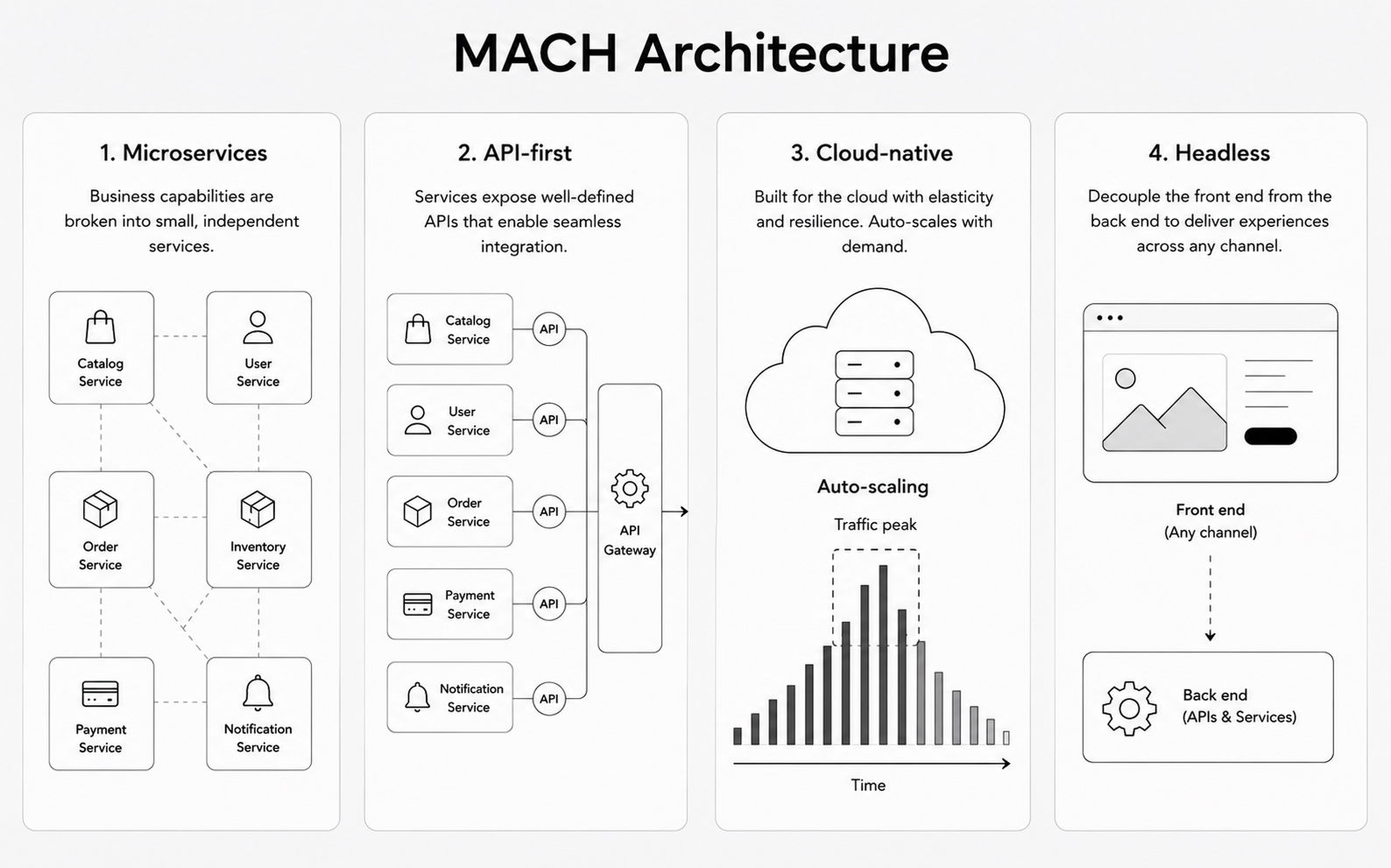
The composable commerce benefits are practical, and you can take each one to the board:
These benefits depend heavily on where you draw the boundaries between services. Splitting every function into its own component creates integration work without necessarily creating business value.
It makes sense to start with the parts of the retail stack that change frequently, hit platform limits, or need independent release cycles, and leave stable functions alone until there is a clear reason to separate them. That same principle applies more broadly to retail software development: fix the constraint first, then decide how much of the stack actually needs to change.
Composability doesn’t remove complexity. Such an architecture comes with integration and operational challenges that a packaged platform handles for you.
You now own the connections. In a packaged suite, catalog, orders, and fulfillment already talk to each other. In a composable stack, those functions may live in separate systems, and you keeping them in sync becomes your responsibility. Get it wrong and you oversell, because two channels sell the last unit while each reads a different stock number.
More vendors mean more contracts, renewal cycles, more support relationships to manage. Someone also has to own governance, decide which service is the source of truth, and settle version conflicts.
The skills bar rises too. You need engineers who can run distributed services and monitor across them, because a failed checkout might trace back to any one of six services. Without that team, the running cost is higher than the license savings suggest.
But before committing to new eCommerce architecture, audit the problems in the one you run today, perhaps your legacy stack requires an upgrade.

A move to composable starts with understanding where the current architecture is actually holding you back. Our eCommerce development services cover architecture assessment, replatforming, integration, and custom development.
The case for composable gets stronger when a packaged platform starts limiting the roadmap, struggling with peak traffic, or becoming too expensive for the value it delivers. Retailers with complex catalogs, multiple channels, or custom fulfillment tend to hit these ceilings first.
A standard catalog running on a healthy platform presents a very different case. If your current system isn’t blocking growth, the integration and governance overhead may cost more than it returns. Modernizing the platform you have is often the better first step.
Again, our recommendation is to conduct an audit before initiating a rebuild. Price the composable move against the systems you actually run and let the numbers decide.

For a food delivery platform, Oxagile has reworked architecture, introduced new technologies, and integrated payment and content services as the product developed. The engagement shows why commerce architecture needs room for continuous change.
You don’t rebuild everything at once. A phased migration keeps the existing platform running while individual capabilities move to the new architecture. Search, catalog, checkout, or another bounded function can go first, giving the team a chance to validate the new setup before more of the stack follows.
The strangler pattern is commonly used for this. A routing layer goes in front of the monolith, directing selected traffic to new services as they become ready. Each capability can be tested under real conditions before traffic moves over, with the original system still available as a fallback. Over time, more responsibility shifts away from the monolith until it can be retired.
Data usually requires just as much attention as the application architecture. Catalog information, customer records, inventory, and order history need clear ownership and mapping between old and new systems. Reconciliation should happen throughout the migration, with rollback plans in place for each cutover. Release timing matters too: major changes have little business being scheduled around Black Friday, a product launch, or another known traffic peak.
This work can also leave the business with a more useful data foundation. When product, customer, inventory, and transaction data are accessible beyond the systems that originally created them, teams have more options for analytics, personalization, forecasting, and effective AI in retail. Those opportunities shouldn’t drive the migration on their own, but they can add to the long-term value of an architecture that makes data easier to work with.
The replatform question rarely settles itself. The fastest way to a defensible answer is an audit. It prices a composable commerce move against the systems you run today, so the board sees real numbers, not a trend.

It means your store’s core functions, such as search, catalog, checkout, and payments, run as separate services connected through APIs. Teams can change or replace individual services without rebuilding the entire platform, but they also take responsibility for the integrations between them.
Headless commerce architecture implies separating your storefront from the backend, but usually keeps one commerce engine behind it.
Composable commerce goes further and assembles the whole stack from independent services, so you can swap the engine itself. Every composable setup is headless, but not every headless setup is composable. Headless is a frontend decision, while composable is a whole-stack architecture choice you make across the business.
It depends on how many services you run and who runs them. Beyond vendor fees, budget for integration work, monitoring across services, and the engineers who operate a distributed stack.
License costs tell only part of the story. A composable stack also brings integration, infrastructure, vendor management, and ongoing engineering costs. Calculate total cost of ownership against your current setup before committing to the move.
There’s no fixed timeline, because it depends on your catalog, integrations, and how much you replace. An incremental move lets you ship the first capability in weeks and phase the rest over quarters, so trade never stops. A partial migration off a monolith can deliver value much sooner.
It can be, when a packaged platform limits your roadmap or fails on peak days. Mid-market retailers with complex catalogs, several sales channels, or custom fulfillment tend to benefit most.
If your current platform handles traffic and growth without friction, modernizing it first is often smarter. Start with an audit, then decide whether a composable commerce move earns its cost.

