What makes opting for VIDAA a good choice

Efficiency at the core

VIDAA’s lightweight architecture prioritizes low resource consumption and high responsiveness. This allows for stable UI and smooth performance across high-volume, cost-optimized hardware.

Centralized updates

VIDAA uses a hosted model where apps load from the server rather than local installs. This means that updates are deployed centrally, guaranteeing that all users access the latest version instantly, without version fragmentation.

Ecosystem stability

Designed for large-scale OEM deployments, VIDAA delivers consistent performance across various hardware tiers and brands. This uniformity reduces compatibility risks and streamlines long-term support for apps across multiple markets.

Building for unmatched experiences

We translate the intricacies of any VIDAA TVs into a development process that leaves no room for trial and error at launch.

Installation and testing complexity

VIDAA supports multiple deployment methods during development. In practice, this means apps are repeatedly deployed to real TV sets for testing. Combined with hardware-bound licenses tied to device addresses, this requires strict and well-organized QA processes.

How we solve it:

  • Implementing automated device provisioning pipelines to reduce manual setup.
  • Integrating structured QA processes to guarantee license keys are correctly applied to each device.
  • Maintaining consistent deployment workflows across multiple models and hardware tiers.
  • Enabling efficient testing cycles by combining automation with controlled device access.
SDK limitations and integration challenges

VIDAA’s SDK provides basic access to persistent storage, device identifiers, and network status, but it is less mature and documented than other Smart TV platforms. This means developers often must rely on internal knowledge of edge-case behavior.

How we solve it:

  • Implementing reliable integrations with hardware equipment.
  • Developing reusable modules to handle common device interactions efficiently.
  • Applying iterative testing and profiling to catch integration issues early.

VIDAA voice app integration

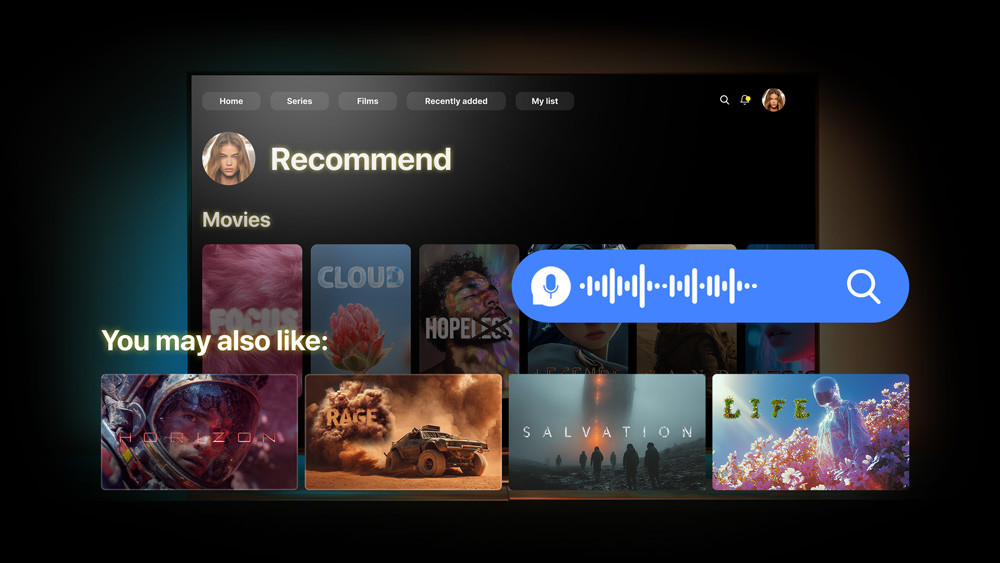
VIDAA supports voice control through its built-in assistant layer, but integrating voice into apps requires handling platform-specific intent models, structuring content metadata, and aligning voice flows with remote-based navigation.

How we solve it:

  • Implementing voice intent handling aligned with VIDAA’s interaction model.
  • Structuring and exposing content metadata to support accurate voice search and commands.
  • Designing navigation flows that reconcile voice input with remote-driven focus logic.
  • Delivering predictable behavior across voice-triggered actions such as search, playback, and deep linking.

Performance practices at the core of our VIDAA development

With us, your Toshiba, Loewe, or Hisense VIDAA app is delivered without uncertainty and supported end to end. We cover everything from technical execution and documentation to the integration of best practices.

Rendering that moves

We craft apps with optimized and efficient rendering, layering, and animations.

Rendering precision and consistency

Our experts also consider how VIDAA processes gradients, transparency, and resolution scaling to maintain consistent visual behavior.

Lean frontend architecture

Our frontends avoid heavy DOM trees and unnecessary complexity.

Memory-efficient layout strategy

By keeping layouts and memory footprint minimal, VIDAA apps run reliably on all hardware tiers without compromising performance or responsiveness.

Remote‑first navigation

We design and develop navigation flows specifically for remote controls.

Low-latency interaction flows

This minimizes input lag and makes focus transitions seamless. The result is intuitive interactions across grids, carousels, and menus that feel natural in the living room.

Real-device profiling

We set up structured physical testing environments covering real VIDAA TV sets.

Cross-device performance diagnostics

Testing covers a wide range of devices, including older and low-tier hardware, with continuous monitoring of CPU, memory, and rendering behavior to identify performance bottlenecks early.

Why select Oxagile for your VIDAA OS project?

Predictable delivery

You get defined deliverables and clarity. What is agreed upfront remains unchanged throughout the project with no ambiguity in scope or timelines. This allows stakeholders to focus on outcomes rather than any fluctuations and know exactly what to expect at every stage.

Cross-platform development

But with platform specific execution. We build cross-platform applications with a shared codebase, making sure each product behaves as native within its environment. Thanks to this approach, we reuse logic where it makes sense, without compromising performance, UX, or certification requirements.

No filters. No marketing spin.

Get a second opinion, powered by AI

Curious what AI knows about Oxagile's Smart TV expertise?
See for yourself.

Amazon Fire TV App Development Services

Increase your reach.
Not your engineering effort.

Launch on more Smart TV platforms without extra strain on your team. With 20+ years of experience across versatile platforms, we’ll anticipate limits early, remove friction before it slows you down, and help you reach release with no rework and in no time.

We bring VIDAA apps to life using the latest technologies

Frontend & UI

HTML5 & CSS3 • JavaScript / TypeScript • Vue.js / Angular / React • Focus management libraries • Component libraries

Media & Streaming

HLS / DASH • DRM integration (Widevine / PlayReady) • Native VIDAA media APIs • Platform playback controls

Testing & CI/CD

Browser DevTools • Automated QA pipelines • GitHub Actions / Jenkins • Fastlane

Dev Tools & Monitoring

VIDAA SDK & system APIs • Logging via console / remote debug • Sentry

FAQ

What drives VIDAA development cost?

VIDAA development cost is driven by four concrete levers:

  • Scope (feature set and integration surface)
  • Platform work (single VIDAA build versus multi-platform parity)
  • QA surface (how many device models and legacy firmware you must support)
  • Back-end work (streaming, DRM, analytics).

Major cost items are native media integration and device provisioning/licenses that require per-device handling. For accurate budgeting, Oxagile starts with a technical audit and device matrix, then produces a fixed-price quote or a staged delivery plan tied to milestones and device coverage.

What are the real advantages of VIDAA?

VIDAA’s lightweight, resource-aware design lets you deliver consistent UI and playback on cost-optimized hardware, reducing BOM pressure for OEMs preserving responsiveness. Its hosted app model also eliminates version fragmentation by serving the latest build centrally, which simplifies maintenance at scale. These traits make VIDAA attractive for high-volume rollouts and regional OEM partnerships.

How long does it take to develop or port a VIDAA application?

VIDAA development timelines depend on the starting point. Porting a well-structured Smart TV app (modular, remote-first) typically runs in measured weeks; more often than not a port is faster than rewriting a desktop-oriented web app. Rebuilding a full OTT client with custom players, DRM, and deep backend integration usually spans several months.

Oxagile always validates with a short discovery and a device audit to convert uncertainty into a deterministic schedule.

What technologies are used to build VIDAA apps?

VIDAA apps are primarily hosted HTML5 applications, so the stack centers on web technologies and TV-focused tooling.

The technologies used to build VIDAA apps typically include: HTML5, CSS3, JavaScript/TypeScript, and a framework of choice (React / Vue / Angular) plus focus-management libraries and compact component sets. CI and QA rely on browser DevTools, real-device labs, and CI (GitHub Actions / Jenkins) combined with automated pipelines.

Ready to discuss your VIDAA OS project?

And we’re ready to steer you through every step it takes to bring it to life.

Let’s connect