













This website uses cookies to help improve your user experience




By 2026, streaming had become the primary form of ad-supported television consumption. Nielsen’s 2026 Upfront Planning Guide shows that adults aged 18–49 now allocate 66.7% of their ad-supported viewing time to streaming platforms1, including FAST services and ad-supported tiers, leaving linear broadcast and cable with a diminishing share. What was once an alternative channel has become the default viewing context. This trajectory is not confined to the U.S.: significant increases in subscriber bases and viewing hours are now coming from APAC and Middle Eastern markets.
At the same time, the recent OTT Streaming Market Report 2026 projects that the global OTT market will grow to roughly $265 billion in 2026, with a near 20 % compound annual growth rate2, driven by increased internet penetration, broader adoption of connected devices, and expanded on-demand consumption worldwide. This trajectory is expected to continue through 2030, when the market could exceed $550 billion2, underscoring that streaming remains one of the most dynamic and fast-evolving sectors in media.
To studios, streaming providers, and distributors who are locked in a high-stakes battle for audience attention (not just against each other, but now against social platforms and creator-driven ecosystems as well) and trying to keep up with the relentless wave of new technologies and the ever-present question, “What’s coming next?” — this article provides the clarity. At least when it comes to that last question. As for the rest, we’ve charted those territories far and wide.
Drawing on observations from across the industry’s key forums, including ANGA COM, IBC, NAB Show, StreamTV, and London Tech Week, and informed by ongoing collaboration with partners and practitioners, this article distills the signals shaping the next phase of video industry trends.

Key takeaways:


What’s in demand today?
“Personalization isn’t only about content. It’s about the ability to discover it in the way a user would desire. A great custom user experience within streaming platforms feels intuitive for viewers. It shouldn’t take too much effort to leverage streaming services that are customized but do not seem user-friendly. Intuitiveness should be part of a user experience and interface.”
AI will be the major innovation, boosting video user engagement by customizing watching paths through advanced recommendation algorithms. Speaking about streaming platforms, there is a use case that will be a priority for video streaming services: putting the recommendation system to a new level.
What do we have now?
On-demand video platforms can bring content to viewers before they actually know what they are looking for. The existing OTT solutions blend easy content discovery into the UX based on viewing preferences and habits.
What is a viable use case in the near future?
Simply suggesting content is no longer enough. Platforms aiming to retain attention must integrate personalized UX across devices. Practical approaches include:
Translating these strategies into a responsive, cross-device interface is complex. However, examples from OTT app development show how front-end architecture, data pipelines, and rendering logic collaborate to make AI-driven personalization seamless and performant. This includes caching key content, dynamically updating carousels, and prioritizing modules based on predicted attention. The technical design directly influences engagement and retention outcomes.

Lean on Oxagile’s team. We’ve been building video streaming solutions for over 20 years, and we know what works.

What’s in demand today?
“The main challenge for the media streaming industry is data sources. They have too many of them to extract data from, with different levels of data quality and data sets collected from multiple devices. For fast experimentation, they need a reliable single source of truth they can easily access, rely on, react to, using the insights grabbed from data.
Data privacy regulations are another challenge. The success of video streaming services depends on personalization, and the task is to follow the data protection laws but not kill this personalization because of strict legislation. A consumer needs to understand why data is collected. If it does not add value to video consumption services, the user wouldn’t be willing to share their preferences or other info. The hard part is keeping data gathering transparent. They need to realize that the data will be used to improve their viewing experience. Building awareness of why data needs to be collected would be a priority.”
Data warehousing will become the lifeline for the video streaming industry. Establishing a centralized data lake creates a single source of truth, serving as the foundation for multiple operations like marketing, sales, and production. Data needs keep changing, so these systems are usually built iteratively. Though big companies have departments with smaller data lakes, they strive to build a huge, unified semantic layer on top of that. Growing it iteratively allows them to be flexible in meeting current data needs.
Why may streaming service providers require data warehousing? First, it’s data about content consumption, like the number of people who viewed or accessed films or TV shows, etc. This gives the grounds for reporting to content creators who analyze the information to assess the effectiveness of distribution campaigns.
Speaking about OTT streaming platforms and VoD services, content aggregators worry about getting more valuable insights into the profitability of their services. How do you drive more subscribers and retain the current users? Data warehouses will be the golden source of the answers to those questions.
Additionally, a centralized data lake may significantly enhance collaboration between business departments, synchronizing the insights within an overall business strategy. All these scenarios will make OTT platform owners do more to educate people on why data sharing is a must for VoD services, building brand trust and acting within data privacy guidelines.

What’s in demand today?
“Struggling to meet sustainability standards, broadcast companies moved from copper to fiber. It transmits data using light and consumes much less energy than copper. Fiber networks don’t need constant power to operate, compared to copper networks powered by electricity. All this provides better conditions for broadband providers to go green. Efficient fiber deployment at all stages is a new trend for sustainable broadband services.”
Planning is the main bottleneck in fast optical fiber deployment. Layouts rely on static infrastructure data, which quickly falls out of date, forcing constant revisions and delays. Thus, planning is a significant challenge for broadband companies, and automation and real-time infrastructure data can be turning points for optimized planning.
Fiber automation seems to be the best means of streamlining the process of fiber deployment. How can it be achieved? For example, advanced computing technologies like LiDAR (Light Detection and Ranging), artificial intelligence, and ML-based algorithms speed up fiber rollout planning and boost its accuracy and efficiency.
These tools use geolocation data to automatically generate layouts, factoring in ducts, trenches, underground routes, and other constraints. Such advanced automated techniques will help reduce the fiber deployment planning time as well as the environmental impact of extra rollout processes caused by project delays.

What’s in demand today?
“The OTT industry is entering a new stage of maturity. Growth is not defined primarily by subscriber acquisition anymore, but by how efficiently platforms convert scale into sustainable revenue. In mature markets, user growth has slowed, while revenue is increasingly driven by price adjustments and the expansion of ad-supported tier, not by net-new audiences.”
This shift is reshaping the operating logic of streaming platforms across several key areas.
During the early streaming boom, expanding the catalog was a priority: more titles meant broader appeal. Now, the focus has narrowed to performance. Each project is expected to justify its cost through measurable outcomes. Platforms are placing greater emphasis on how content contributes to core business metrics:
Research suggests that small improvements in retention can outweigh the financial impact of large-scale user acquisition campaigns. This explains why fewer projects are being greenlit, but with clearer expectations around long-term value and audience engagement.
As acquisition costs rise and competition intensifies, platforms are prioritizing lifetime value over subscriber volume:
Retention is a central component of growth strategy, not a secondary metric.
Recommendation systems are taking on a new role. They go beyond helping users find something to watch, guiding viewing across multiple sessions. By connecting content into longer viewing paths, platforms increase total watch time and reduce the likelihood of churn. This pushes discovery beyond usability into retention.
Another layer shaping this shift is bundling. Services are increasingly packaged together, either within ecosystems like Amazon Prime or through telecom partnerships, to make subscriptions feel less like isolated expenses. Bundles raise the perceived value of staying subscribed and make cancellation less likely, reinforcing the focus on lifetime value over one-time acquisition.
NAB Show delivered a packed agenda, offering a sharp perspective on where the industry is heading.
We paired those insights with our own on-the-ground observations to surface a few more of the most relevant, high-impact OTT market trends.

One of the general trends in video streaming is that subscription-only is going to be out. The future lies in flexible revenue models, mixing AVOD, SVOD, FAST, and transactional strategies to meet diverse viewer preferences and market demands.
At the forefront of this change is the rapid rise of Free Ad-Supported Streaming TV (FAST) availability. Leading platforms like Plex, Freevee, The Roku Channel, and Pluto TV have significantly expanded their channel lineups (some offering over 500 channels), signaling a strong shift toward lean-back viewing experiences that simplify content discovery and mimic the familiarity of traditional TV.
As FAST services continue to grow, the focus on quality of service, content discovery, and recommendation systems will be crucial for success.
What’s in demand today?
“With rising competition in the FAST market, implementing advanced personalization strategies will be key. AI and machine learning help analyze viewer preferences, such as demographics, viewing history, and contextual data like time of day or device type, so platforms can deliver tailored content recommendations and targeted ads. Audience analytics and segmentation further improve the experience: FAST platforms can enhance user satisfaction, making ad-supported content feel less intrusive and more relevant. Dynamic Ad Insertion (DAI) aligns ads with viewer interests instead of disrupting the experience. Advertising thus becomes part of the product, not a disruption, driving engagement and retention.
As FAST continues to expand, platforms that prioritize content discovery, recommendation systems, and ad personalization will lead the market. The ability to deliver a seamless, customized experience will determine which services attract and retain the largest audiences.”

A significant trend in media consumption is the dominance of social media as the preferred activity for Gen Z, shaping how younger audiences engage with entertainment. Data on daily average hours of North American media and entertainment activities by generation3 reveals that Gen Z spends 1.4 hours per day on social media, the highest among all activities for this group, contributing to their total of 6.9 hours daily across media.
In comparison, Millennials spend 1.1 hours, Gen X 0.5 hours, Boomers 0.3 hours, and Matures just 0.2 hours on social media. This stark contrast highlights Gen Z’s preference for interactive, community-driven platforms over traditional media like cable or live-streaming TV (1.3 hours for Gen Z) or streaming video (0.8 hours).
Meanwhile, older generations like Gen X, Boomers, and Matures allocate more time to video content, with 2.1, 2.3, and 2.3 hours respectively across platforms, underscoring a generational divide in media habits. For Gen Z, social media is a central hub for connection and content discovery, driving new habits that increase overall daily media consumption.
What’s in demand today?
Given that Gen Z practically lives on social media, platforms should capitalize on this trend to boost engagement during live streams. Integrating community features like real-time chat and companion experiences — such as linking social accounts via QR codes — helps create a more interactive and immersive viewing environment. Real-time chats and companion device features, like QR-based social account linking, make the experience more immersive.
For instance, incorporating social media feeds directly into live sports streams, allowing fans to view real-time reactions, polls, or player stats, can deepen engagement. Additionally, offering gamified elements like trivia or prediction games linked to social profiles can encourage participation, fostering a sense of community and keeping Gen Z hooked in an environment where they already spend a significant portion of their day.

AI and machine learning are still a top priority in media tech, especially for analytics. According to a survey by IABM, 60% of respondents identified AI & ML as a key focus in their technology roadmaps with 26% citing it as their main priority. Additionally, analytics and personalization, closely tied to AI capabilities, were highlighted by 33% of respondents as a developing area of interest, reflecting a growing need for granular tracking of viewer data. Other priorities like OTT and streaming platforms (46%) and cloud computing (43%) follow, but AI’s dominance signals its pivotal role in shaping the future of media technology4.
What’s in demand today?
AI powers dynamic content recommendations by analyzing viewer preferences like genre interests and viewing habits, so suggestions match their tastes. Additionally, AI-powered interactive live streaming solutions can enhance engagement through features like real-time polls and quizzes tailored to individual viewers, or automated highlight generation that curates key moments based on user behavior. AI also facilitates adaptive bitrate streaming, adjusting video quality in real-time based on a viewer’s network conditions for a seamless experience.
What’s in demand today?
“Sports fans now expect more than just passive viewership during the live streaming of sports events. They want to actively participate, connect with fellow fans, and have a sense of belonging. The demand for personalized, interactive, and social experiences has skyrocketed. Fans want to feel the excitement, emotions, and camaraderie that come with being part of the game.”
Sports organizations are doubling down on UX to capture and sustain fan attention. Intuitive navigation, real-time interactivity, and tailored live and on-demand experiences come together to shape viewing environments that feel natural and engaging. As streaming services and platform interfaces evolve, they open the door to deeper, more enduring connections with fans.
For instance, fans are happy to actively participate during live streaming events and share their emotions with fellow enthusiasts. Offering real-time interactive features, such as live polls, social media integrations, and chat functionalities, allows fans to engage with each other, express opinions, and feel connected to the larger community.
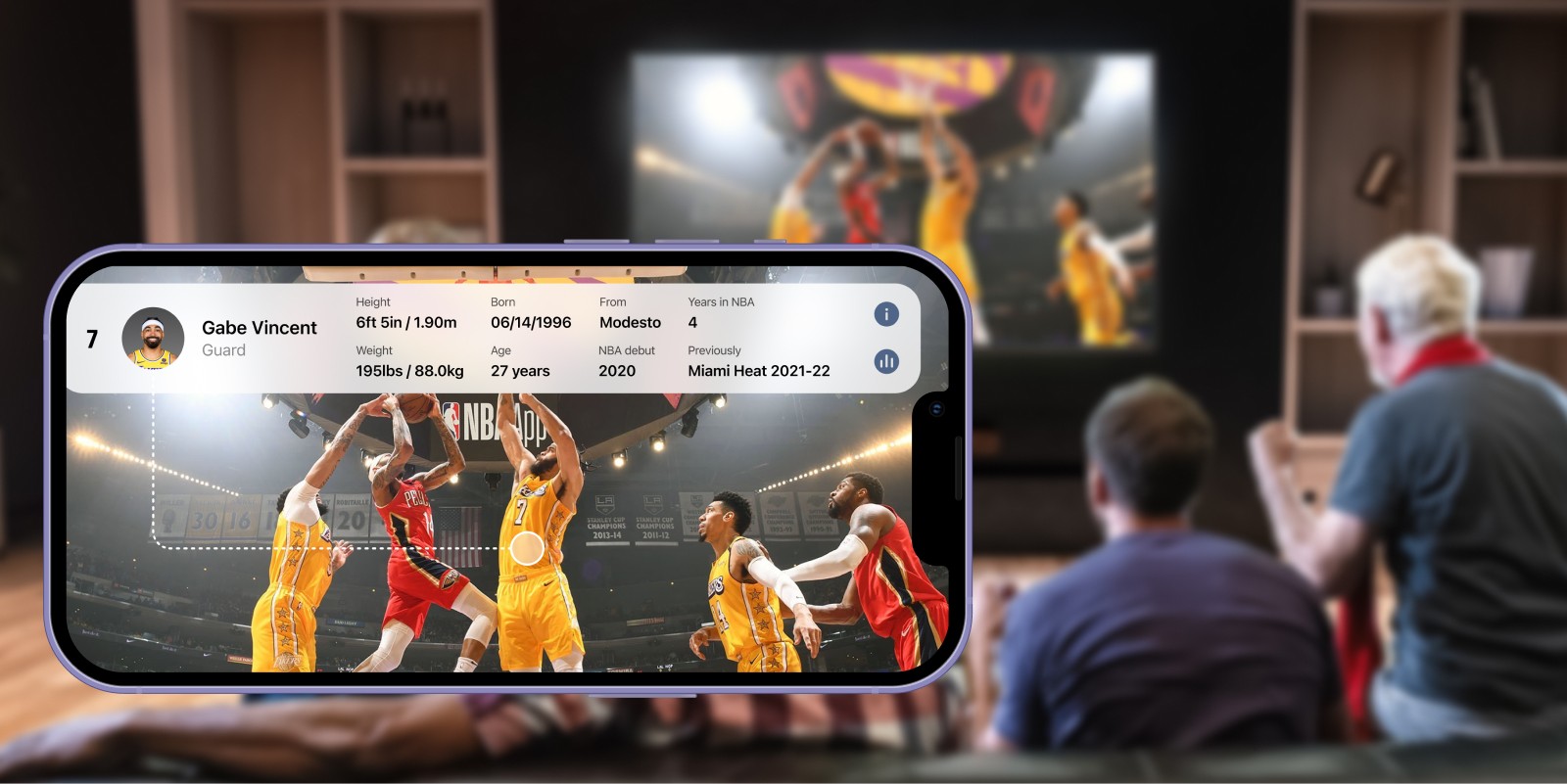
Highlights published after live broadcasts will support the engagement scenario. The integration of AI into post-viewing highlights has transformed the way sports fans interact with the game. AI algorithms and facial recognition allow sports organizations curate hyper-specialized moments, offering fans a personalized experience like never before. Gone are the days of generic compilations; now, fans can watch curated highlights tailored to their specific interests. AI-powered highlights can focus on what matters most to each viewer, from a team’s defensive strength to standout individual performances, creating a more personal way to follow the game.
We’ve been on the ground and online at the industry’s key touchpoints. Every year we visit industry events like NAB Show, IBC, and StreamTV, tracking the pulse of streaming innovation and decoding We’ve been present across key industry touchpoints, including NAB Show, IBC, and StreamTV, observing how streaming continues to shift in real time and what is starting to take shape next. The space is moving into a new phase shaped by AI-driven personalization, more iterative approaches to data use, and deeper automation across the stack. At the same time, FAST services are scaling quickly, and social platforms are taking on a larger role in how audiences discover and move through video content.
Streaming is moving toward systems that react in real time, adjust to context, and align audience expectations with commercial logic more naturally than before.
Stay ahead of the trends driving the future of OTT and video streaming. Discover how Oxagile’s team can help you enhance personalization, optimize data management, and streamline the user experience.
1. Nielsen Launches 2026 Upfront Planning Series With New Data To Help Marketers and Agencies Unlock Growth, Innovation Opportunities — Nielsen
2. OTT Streaming Market Report 2026 — Researchandmarkets
3. 2025 Digital Media Trends: Social platforms are becoming a dominant force in media and entertainment — Deloitte
4. IABM Industry Impact Briefing — IAMB

Here are a few key video streaming trends 2025 is seeing:
The main OTT trends 2025 is witnessing are driven by artificial intelligence, machine learning, and cloud computing, which improve personalization, analytics, and scalability. Other important factors include automation for network efficiency, advanced data solutions, and technologies like dynamic ad insertion and low-latency streaming.
OTT market trends are strongly shaped by Gen Z, who spends more time on social media than watching traditional video. Their demand for interactive and community-driven content pushes services to add real-time features, while older generations remain more focused on long-form video, creating different audience expectations that platforms must balance.
The industry will continue to grow steadily, but not through rapid subscriber expansion. Most forecasts expect strong revenue growth (around 18–20% CAGR in the near term), driven by ad-supported models, pricing strategies, and better monetization of existing users than via new sign-ups.
In mature markets, growth is slowing in terms of audience size, but watch time, multi-device usage, and total revenue per user are increasing. Expansion will come from hybrid monetization (SVOD + AVOD + FAST), wider smart TV adoption, and improved infrastructure like 5G and fiber.
Innovation in streaming is shaped both by the platform and the operating system it runs on:
However, most video streaming services don’t rely on a single OS, they distribute across the dominant smart TV and connected device ecosystems. A few operating systems consistently lead in reach and influence.

