













This website uses cookies to help improve your user experience


Streaming is no longer just a trend, it’s how most people prefer to watch content. Connected TV (CTV), which blends traditional viewing with the flexibility of the internet, is steadily replacing old-school linear television for millions of people worldwide.
Connected TV is currently fully embedded in everyday media consumption in the United States. Around 90%1 of U.S. households already use at least one internet-enabled TV device, such as a Smart TV or streaming device, and overall penetration continues to grow as CTV becomes the default way people watch video content. Recently, more than 250 million people2 in the U.S. were consuming content via connected TV, underscoring CTV’s role as one of the dominant platforms for video viewing.
This behavioral shift is directly influencing advertising. Connected TV is one of the fastest-growing advertising channels in the U.S., as brands follow audiences into streaming environments. CTV ad spending has already exceeded $30 billion3, and sustained double-digit growth predicted throughout the coming years highlights the increasing strategic importance of CTV within the broader digital and video advertising ecosystem.
In this piece, we’ll unpack how CTV compares with linear TV, what makes their metrics so different, and how marketers can better understand campaign performance after CTV app development.
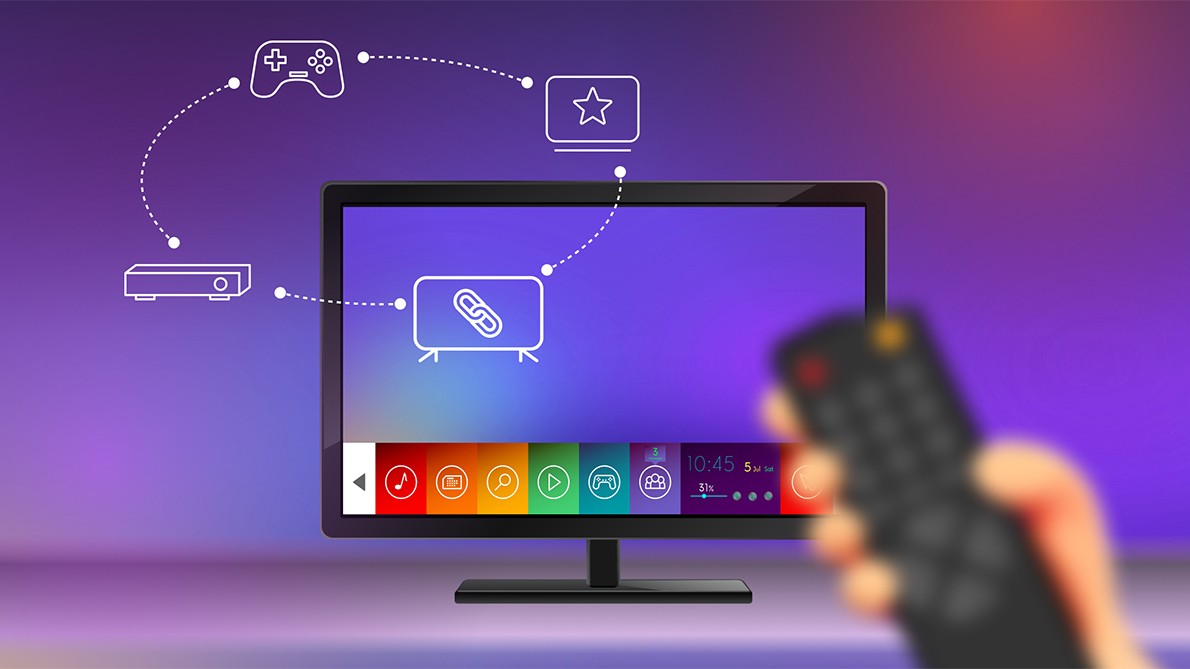
Today, connected TV refers to any television set that is connected to the internet and supports the streaming of video content. This includes not only external devices like gaming consoles (e.g., Xbox or PlayStation) and streaming sticks (such as Roku or Amazon Fire TV), but also Smart TVs, which come with built-in internet capabilities. For example, a Smart TV by Samsung allows you to surf the internet without the need for auxiliary connectivity devices. This solution appears to make life a lot easier, creating a new space for opportunities.
A key element in this ecosystem is OTT (Over-the-Top), which delivers video content via the internet without requiring a traditional cable or satellite subscription. Major platforms like Netflix, Max (formerly HBO Max), and Disney+ are well-known examples of OTT services. While often mentioned together, OTT and CTV are distinct: OTT refers to the service delivering the content, while CTV refers to the device used to access it.
Both CTV and OTT play a major role in shaping modern viewing habits. They enable highly personalized content experiences driven by user preferences, watch history, and account-based behavior. This stands in contrast to linear TV, which relies on fixed programming schedules and broad geographic targeting. For instance, while a streaming platform might recommend a foreign-language film based on your interests, linear TV would typically only broadcast content suited to the general local audience.
Broadly speaking, linear TV advertising refers to the traditional format of cable or broadcast television, which is steadily losing ground to digital alternatives. In this model, viewers have no control over what content airs — each channel follows a fixed broadcasting schedule that includes pre-planned ad slots. As a result, audiences cannot skip or rewind the content or commercials until the scheduled program ends.
At first glance, this might suggest guaranteed exposure, with one hundred percent viewability of ads. However, in practice, this is rarely the case. Just because a television is on doesn’t mean it’s being actively watched. This is one of the key limitations of programmatic advertising linear TV measurement, which often fails to reflect actual audience engagement.
That said, programmatic advertising in linear TV is evolving to bring more precision to this space. While still developing, these advancements offer potential for smarter targeting and performance tracking, giving linear TV some staying power, even in a digital-first world.
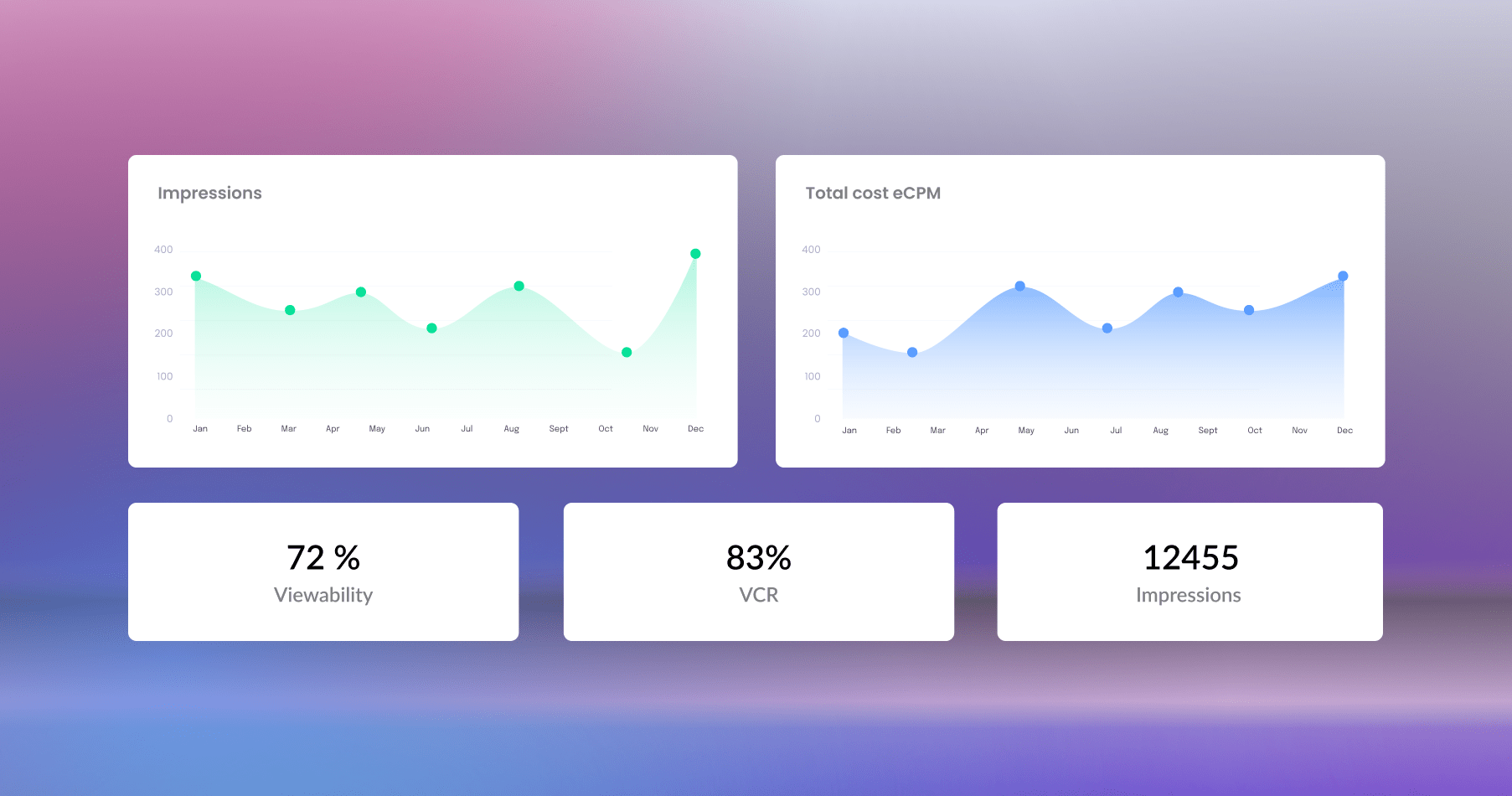
It is vital to know not only the number of ad impressions, but also how customers act after browsing the content. This includes assessing viewer attention, time spent with the ad, and what actions follow, such as clicks, app installs, or purchases.
Moreover, cross-platform measurement is becoming increasingly important, as advertisers seek to understand how CTV ads perform alongside campaigns on mobile, desktop, and traditional TV.
Big data processing must also be connected to succeed. After all, big data is the key to personalizing content for customers. Today, AI and machine learning play a major role in processing this data, helping optimize ad delivery and forecast viewer behavior in real time.
At the same time, stricter privacy regulations demand privacy-first solutions, making it essential for advertisers to balance personalization with compliance. Considering everything mentioned, maximizing the use of extended television advertising can be a real challenge.

Have you checked out the Oxagile OTT advertising bespoke solution? Despite the high rate of growth in popularity, CTV measurement also has its fair share of hurdles when it comes to gathering information. We’ll make them all clear to you.
CTV advertising measurement offers many advantages for companies. First is the reach of an audience that has given up on linear television. And the percentage of such customers is increasing every year. After all, CTV is gaining popularity in seven-dimensional steps.
A further advantage of CTV measurement is the opportunity to get a client’s opinion. Customers’ actions after watching your ads, the number of views, impressions of your brand — all of this is available through Connected TV measurement. In addition, advertisers can access real-time analytics, allowing them to adjust campaigns on the go based on viewer engagement and behavior.
CTV also enables detailed audience segmentation and targeting, helping brands deliver more relevant and personalized advertising experiences.
While linear TV can only provide an approximate customer perception, CTV measurement indicates a more detailed picture of an advertising campaign. It can also track user journeys across devices, offering cross-platform attribution and a clearer view of campaign impact throughout the funnel. So, using this method of broadcasting content, the marketing campaign performance can be analyzed in more detail. Beyond views and impressions, advertisers can measure attention time, ad completion rates, and even conversions, making CTV a powerful performance-driven tool.
CTV attribution is a complex process, primarily due to the lack of uniform standards. There are no cross-platform indicators in the CTV advertising space, making it challenging to capture viewer audiences. Moreover, to correctly size the number of spectators, it is necessary to be skilled in handling big data.
The next difficulty will be the complexity of identifying the user. The CTV measurement platforms rely on IP addresses, which makes counting tricky. After all, one or more people can see an advertisement from the same address. There is also a separate issue if the same user is viewing ads on different devices.
Many people always switch between linear and Connected TV. As different kinds of television do not exchange data, this creates a measurement problem, too.
And there is also the challenge of dishonest advertising. Indeed, it is much easier to fake a commercial for CTV than it is for linear TV or a mobile app.
Measuring the success of advertising with a single indicator is impossible. Several approaches need to be used to assess the whole picture of the campaign’s progress. Today, advertisers increasingly rely on AI-powered tools to analyze audience behavior, predict outcomes, and improve decision-making in real time.
This approach means the need to measure users and their interaction with advertising in a hybrid way.
Combinations of signals such as people counters and Automatic Content Recognition Techniques eliminate duplicate content.
It often involves using both deterministic and probabilistic methods to connect viewership data across multiple devices and platforms.
Cross-device identity resolution is also crucial for tracking users who move between smart TVs, smartphones, tablets, and desktops.
Accurately measuring the audience of CTV advertising is quite complicated. But selecting there are two possible solutions:
Additionally, attention-based metrics such as viewability, time spent watching, and ad completion rates are now used to better understand real engagement.
Make sure that the content displayed is effective by checking the activity of the advertisement. For example, exclude the display of CTV advertisements when the device is switched off.
Incrementality testing can also be conducted to measure the true impact of your campaign by comparing exposed and control audience groups.
Evaluate the impact of CTV advertising on brand perception. Combine customer surveys with behavioral data to measure brand lift and overall campaign success.

Just like Connected TV, linear TV measurement has its strengths and weaknesses. In many cases linear TV is no less powerful than the innovator of streaming TV. However, this approach is extremely effective paired with Connected TV, so, let’s break it down.
Ad campaigns can be launched to coincide with particular events through linear television, for instance, a commercial before a sporting event or a specific event. Timed campaigns are often highly effective, generating positive customer attitudes.
Also, most older people prefer linear television. Do not forget about this segment of the population, because it also accounts for a sizable percentage. The older generation is renowned for its gullibility to ads, which means they are more reactive to such content than anyone else.
Particularly relevant is the fact that linear television is strictly segmented following the topic of the channel. This allows us to carefully choose the right channel for effective linear TV advertising, as well as the time of the demonstration. By selecting the exact time, it is easy to find the period in which the advertisement will be seen by a larger number of users.
Extensive targeting and the lack of accuracy common to CTV and OTT are among the major drawbacks of linear TV measurement. In fact, just because the television is on, it doesn’t mean it is being watched. A person may fall asleep, be distracted, and not see the linear TV advertising.
Targeting might not be precise enough, even when considering the subject matter of the channel. After all, linear television does not collect any user info.
Let’s explore a list of firms proposing to change the way we look at linear TV ad measurement.
VideoAmp has positioned itself as a major player in the shift toward cross-platform measurement, offering tools that unify data from linear TV, CTV, digital, and walled gardens. It continues gaining traction among agencies and advertisers as an alternative to traditional providers like Nielsen.
Notable for: Unified audiences, custom attribution models, clean room integrations.
While not new, Comscore has significantly expanded its TV measurement tools, especially for local and national linear TV. It uses data from millions of smart TVs and set-top boxes, integrating with digital platforms to provide a deduplicated, cross-platform view.
Notable for: Large passive TV data sets, political campaign measurement, deduplicated reach.
605 offers data-driven TV analytics that combine return path data from set-top boxes with advanced attribution modeling. It’s been increasingly mentioned in the linear TV attribution space in previous years for its work with MVPDs and advertisers seeking deeper insights into viewer behavior.
Notable for: Attribution modeling, audience segmentation, custom reporting for linear.
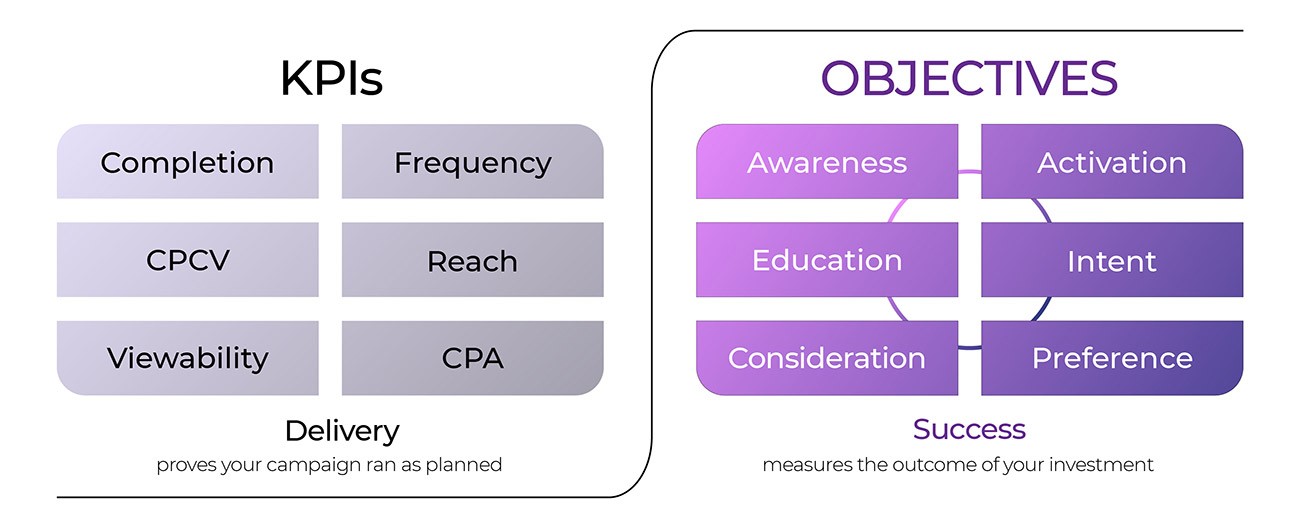
Choosing the right platform for a given aim is extremely important. But it is also vital to be able to determine the effectiveness of the advertisement. When it comes to evaluating the impact of various ad campaigns, there are a bunch of metrics to consider.
The performance metrics may differ by geography, industry, distribution channel, type of device, and type of media buying. However, it is worth noting that only one of these is not enough for a meaningful evaluation.
CTV and linear TV represent two fundamentally different advertising ecosystems, each with its own strengths, limitations, and ideal use cases. A successful marketing strategy isn’t about choosing one over the other, but about learning how to combine them effectively.
CTV offers precision targeting, real-time analytics, and performance metrics that go far beyond what linear TV can deliver. At the same time, linear TV still holds massive value for broad reach, brand awareness, and cultural relevance, especially for live events and large-scale national campaigns.
By repurposing linear TV creative for CTV and refining delivery through personalized targeting, advertisers can significantly expand their reach and relevance. CTV doesn’t replace linear — it extends it, reinforcing messaging and increasing brand recall among digitally engaged audiences.
Blending both formats allows for smarter budget allocation, diversified ad placements, and a richer understanding of viewer behavior. With tools now available for unified measurement, attribution, and campaign optimization, marketers can finally analyze and act on data across platforms, no longer treating linear and CTV as isolated silos.
The world of CTV and addressable TV, as well as of Linear TV, is full of exciting opportunities beyond just ad measurement. If there are any confusing aspects that you need assistance with, our AdTech experts and CTV app development services are at your disposal.
1. CTV Household Penetration — Adwave
2. Connected TV Statistics — MarketingLTB
3. Streaming TV Ad Spend Adwave

Linear TV advertising refers to the traditional model where content is delivered based on a fixed broadcast schedule, with predetermined commercial slots. In contrast, Connected TV (CTV) advertising uses internet-connected devices, offering more flexible and targeted ad delivery. The key difference lies in the ability of CTV to personalize ads based on viewer data, whereas linear TV typically lacks this granularity.
Programmatic advertising in linear TV is a developing field that aims to bring more automation and precision to ad placement. Using data-driven technologies, programmatic ads allow advertisers to buy and sell ad space on linear TV channels more efficiently. This leads to more targeted campaigns compared to traditional ad buying methods. However, it still lags behind CTV in terms of real-time optimization and audience segmentation.
CTV ad measurement provides a more detailed understanding of viewer behavior, including metrics like time spent on ads, interactions, and conversions. Unlike traditional TV, which often relies on broad audience estimates, CTV offers real-time analytics and can track viewers across multiple devices, making it a more powerful tool for performance-driven advertising. CTV also supports cross-platform attribution, which is crucial for marketers seeking comprehensive insights into campaign effectiveness.
The primary advantage of CTV over linear TV is the ability to deliver personalized ads based on viewer behavior and preferences. CTV allows for more precise targeting, immediate performance metrics, and the opportunity to optimize campaigns in real time. On the other hand, linear TV still excels in offering broad reach, cultural relevance, and high-impact advertising during live events or national broadcasts. Combining both strategies lets advertisers maximize their campaign effectiveness across diverse audience segments.

